
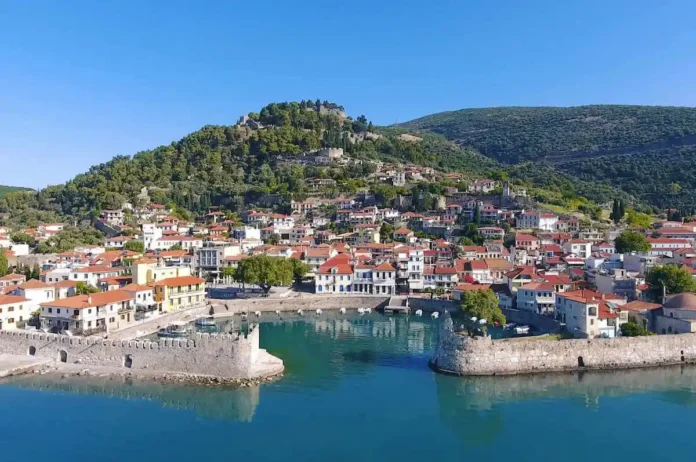
A coastal municipality on the Gulf of Corinth spanning 43 villages, mountains, and rivers
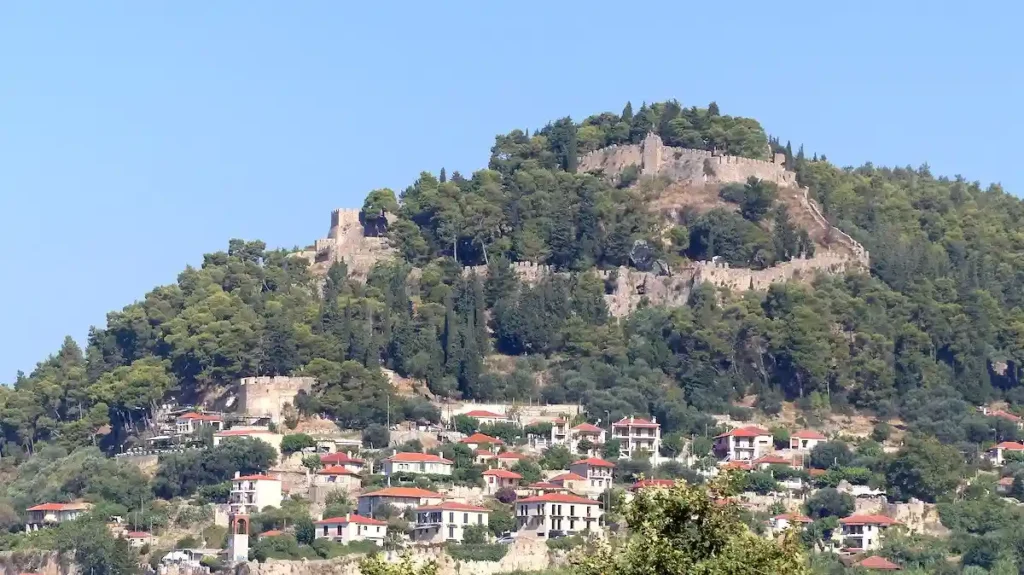
Nafpaktos has something that is becoming harder to find along the Greek coast: a genuine town where the sea is part of everyday life, but tourism does not dictate the rhythm of the year. Set on the northern shore of the Gulf of Corinth in Western Greece, it is best known for its circular Venetian harbor, overlooked by a castle that climbs the hillside above the old town. Yet its appeal to someone considering retirement goes well beyond its postcard setting.
Around 13,000 people live in the town itself and roughly 30,000 across the municipality, which includes 43 villages scattered through a surprisingly varied landscape. This means that a morning walk along the waterfront can be followed by an afternoon in a mountain village, among stone houses, old bridges and traditions that have changed little over the years. Places such as Ano Chora, Platanos and Simos offer a glimpse of an inland Greece that remains largely unfamiliar to foreign visitors.
Nafpaktos is a functioning regional town, with schools, banks, bakeries, supermarkets, a weekly market. The Citizens Service Centre (KEP) remains available throughout the winter. Greek visitors bring extra life in summer, but the town does not empty when the holiday season ends. That distinction matters when you are choosing somewhere to live rather than somewhere to spend a fortnight.
Its position is another advantage. The Rio–Antirrio Bridge provides direct access to the Peloponnese, while Patras, with its university, major hospitals and international port, is about 40 minutes away. Athens is roughly three hours by road. Nafpaktos is therefore a good candidate for retirees who want a walkable coastal town, a recognisable local community and plenty of opportunities to explore. It will appeal less to those looking for a large international expat network, nightlife or the familiar island setting of whitewashed houses and ferry connections. There is also a trade-off: Western Greece is green partly because it gets considerably more rain than the Cyclades or Attica.
Location, Access & Connectivity
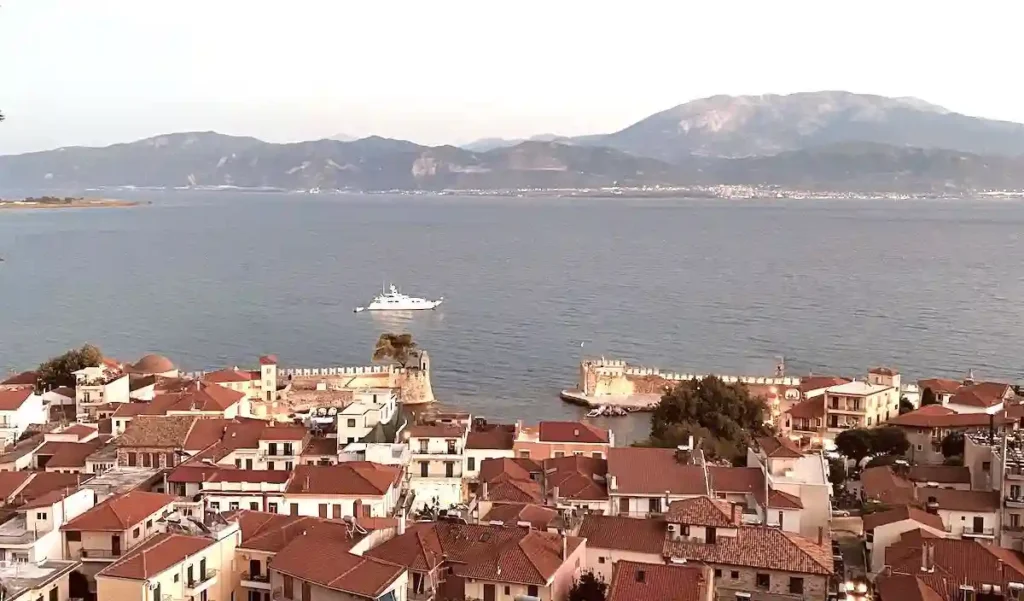
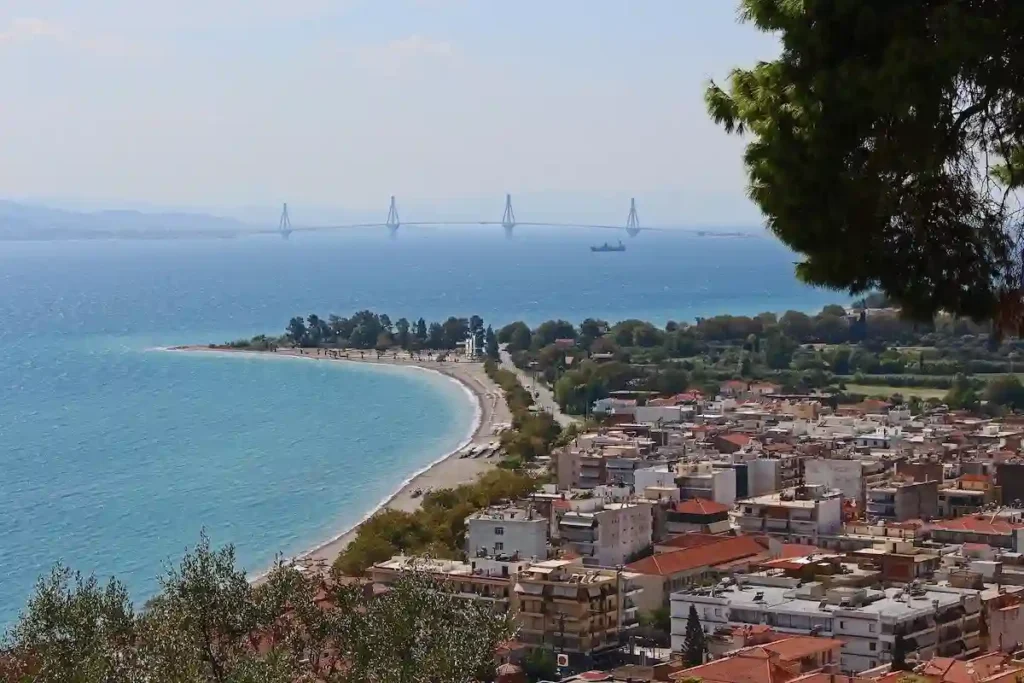
Nafpaktos occupies a strategic position on the northern shore of the Gulf of Corinth. The Rio–Antirrio Bridge connects it to the northern Peloponnese, making Patras, about 40 km away, readily accessible. Athens lies roughly 210 km to the east. What might look like a relatively remote corner of Greece on a map is, in practice, better connected than many island destinations.
Driving is the easiest way to reach the town. From Athens, the journey takes approximately 2.5 to three hours, using the motorway towards Corinth, crossing the bridge and continuing along the coastal road. The main routes remain open throughout the year. Strong winds can occasionally interrupt traffic over the bridge, while heavy rain may slow travel on mountain roads, but prolonged disruptions are uncommon. The bridge toll, however, is an expense worth including in your travel budget, particularly if you expect to visit Patras regularly.
Intercity KTEL buses connect Nafpaktos with Patras and Athens, although schedules vary and should be checked before travelling, especially outside the main season. There is no airport, railway station or passenger port in town. Most international arrivals therefore involve flying into Athens and continuing by road or bus. Patras offers another option, with its port serving ferry routes to Italy and the Ionian Islands.
For retirees, the absence of ferry dependence is a practical advantage. Winter weather rarely cuts Nafpaktos off from the mainland in the way that rough seas can affect island communities. Family and friends can reach you relatively easily, and access to Patras makes specialist medical appointments and hospital visits more manageable. In an emergency, call 166 for an ambulance or 112 for the general emergency service. Serious cases are usually transferred to Patras by road.
Climate & Seasonal Rhythm
Nafpaktos enjoys a Mediterranean climate, but this is the greener, wetter side of Greece. Anyone arriving from Athens or the Cyclades should be prepared for a noticeably different winter, with more rain, higher humidity and fewer reliably sunny days.
Summer is hot. July and August temperatures commonly reach 32–36°C, with heatwaves occasionally pushing them above 38°C. The combination of heat and humidity near the sea can make afternoons uncomfortable, so daily life tends to move indoors during the hottest hours and outdoors again in the evening. Air conditioning is essential for most households, rather than an occasional convenience.
Winter temperatures are relatively mild by northern European standards. Daytime highs are often around 11–15°C, while nights can fall to 3–6°C. Rain is the bigger consideration. From November through February, expect frequent heavy showers, grey skies and periods of damp weather. Snow is unusual in the town itself but much more common in the mountains behind it.
Spring and autumn are arguably Nafpaktos at its best. From April to early June and again from mid-September into November, temperatures are comfortable, outdoor life becomes easier and the surrounding countryside is particularly attractive. Swimming can remain pleasant into October, depending on the weather.
Housing makes a significant difference to how comfortable the winter feels. Many older apartments have limited insulation, and a damp, poorly oriented flat can feel cold even when outdoor temperatures are relatively mild. Heating arrangements vary, from heat pumps and air-conditioning units to pellet or wood stoves and oil systems. Before renting or buying, check the windows, insulation, orientation and any signs of mould or moisture. A bright, south-facing home can make a considerable difference to both comfort and heating costs.
Daily Life & Local Community
Nafpaktos is a town where people live and work throughout the year, not a seaside resort that wakes up for the summer. Its residents include families with deep local roots, public-sector employees, shopkeepers, fishermen, farmers and people who commute to Patras. Athenians also maintain second homes in the area, adding to the summer population without fundamentally changing the town’s character.
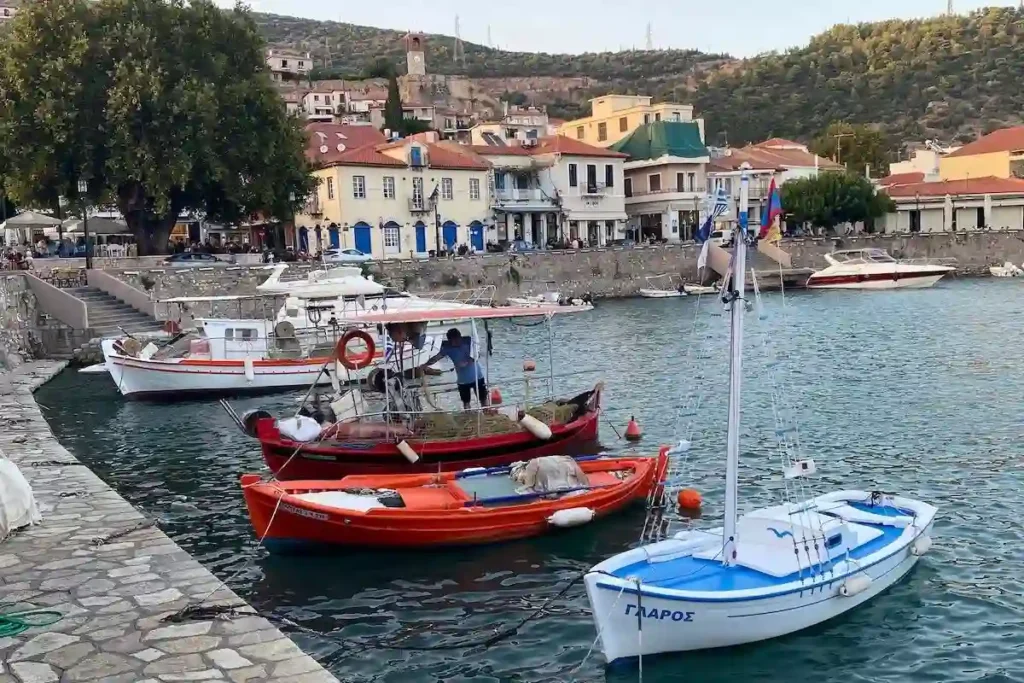
The daily rhythm is recognisably Greek. Mornings begin with coffee and a stop at the bakery, shops often close for the afternoon break, and the harbor and waterfront fill with walkers as the temperature drops. In the evening, cafés and tavernas become meeting places, and familiar faces are part of the experience. You may not know your neighbours when you first arrive, but if you visit the same café, market stall or pharmacy regularly, people will soon recognise you.
The municipality’s 43 villages add another dimension to community life. Some preserve their traditional stone architecture, old bridges and local customs, while others are quieter settlements where daily life revolves around a much smaller circle of residents. You can live in Nafpaktos and make regular excursions inland, or settle in a village and use the town for shopping, appointments and social activities. Few coastal locations offer such an immediate change of scenery within the same municipality.
Social integration takes time. Name days, church celebrations, village festivals and local events are good opportunities to meet people, but friendships generally develop through repeated contact rather than instant introductions. The foreign community is relatively small, so newcomers should expect to interact mainly with Greeks rather than rely on an established expat network.
English is taught in Greek schools, and many professionals, including doctors, pharmacists and bank employees, have some command of the language. Nevertheless, fluency varies, particularly among older residents and in the surrounding villages. Learning basic Greek will make everyday transactions easier and help considerably with neighbours, landlords, friendships and official paperwork. The effort is usually appreciated.
For practical purposes, the town has most of what you need without having to travel elsewhere. Supermarkets, banks, the post office, the citizen service centre (KEP), clinics, pharmacies, schools and a weekly street market operate throughout the year. Some businesses along the seafront close or reduce their hours between October and April, but Nafpaktos does not become a ghost town when summer visitors leave.
Healthcare & Essential Services
Nafpaktos provides basic healthcare locally, including general medical services and initial emergency assessment through its public health facilities. However, the range of services and opening hours can change, so newcomers should establish exactly what is available before relying on local provision. For routine medical needs, check-ups and less complicated conditions, the town offers a useful starting point.
There are also private general practitioners, specialists and diagnostic facilities. Dentists, cardiologists, ophthalmologists and physiotherapists are among the professionals available locally, and many private practitioners have some knowledge of English. Private consultations are generally less expensive than comparable appointments in Northern Europe or North America, and patients often pay directly.
Pharmacies are easy to find, and pharmacists are an important part of everyday healthcare in Greece. They can advise on minor complaints and direct patients towards a doctor when necessary. A rotating duty system ensures that at least one pharmacy is available outside normal opening hours, including nights and holidays.
For serious conditions, specialist treatment or hospital care, residents generally turn to Patras, about 40 minutes away. The city has a university hospital, other public hospitals and private clinics, providing a much wider range of services. More complex cases may require treatment in Athens, approximately three hours away by road.
The national ambulance number is 166, while 112 is the general emergency number. Response times are generally more manageable in the town than in remote mountain settlements, where distance and road conditions can complicate access. Anyone with a condition requiring frequent specialist attention should take this into account when choosing where to live. Being close to the town centre, having a car and establishing a reliable local support network can all make a difference.
Residents who are eligible for Greek public healthcare generally need to register for a social security number (AMKA) and establish their entitlement to coverage. Some also choose private health insurance, particularly if they want faster access to appointments or a wider choice of specialists.
Cost of Living Overview
Nafpaktos offers a relatively affordable alternative to Athens and Greece’s more fashionable islands. It is not among the country’s cheapest locations, partly because it is a pleasant coastal town with good access to Patras, but everyday expenses remain manageable for retirees who are not looking for a luxury lifestyle.
Housing will usually be the largest variable. Long-term rents for one- and two-bedroom apartments generally sit in the low-to-mid hundreds of euros per month, with renovated properties, central locations and sea views commanding more. Summer accommodation is a different market altogether. Owners can often earn more from short-term holiday rentals, making a 12-month lease a better option for anyone planning to settle permanently.
Electricity deserves particular attention. Air conditioning in summer and heating in winter can push bills up considerably, especially in older buildings with poor insulation. Wood and pellets may offer a cheaper alternative to electric heating, depending on the property and local prices. Internet is generally reliable and moderately priced, while water and other household expenses are usually less significant.
Food shopping is one of the pleasures of living in the region. Local vegetables, olive oil, cheese, fish and bakery products are readily available, and weekly farmer’s market takes place every Saturday. Eating out is also relatively affordable. A meal at a traditional taverna will generally cost less than in Athens or the major tourist destinations, particularly if you favour neighbourhood establishments over seafront restaurants.
Transport is where costs can add up. Many residents own a car, and fuel is expensive in Greece. Regular trips across the Rio–Antirrio Bridge also mean repeated toll payments. Buses are cheaper, but their frequency and routes make them less convenient for people who want to explore the surrounding villages or travel regularly to Patras.
As a broad guide, a couple can often live comfortably on approximately €1,500–€2,200 per month, including rent, groceries, utilities, car expenses and some private healthcare. This is an indicative budget rather than a fixed cost of living. The final figure depends on the size and condition of the home, heating requirements, transport habits and how often you travel. Check current rents and household costs locally before committing to a move.
Housing & Real Estate Landscape
Nafpaktos is a place where renting before buying makes particular sense. A six- to twelve-month rental will give you time to experience the town beyond its attractive summer waterfront, discover which neighbourhoods suit you and see how the climate affects different types of housing.
The property market is relatively quiet and largely local, with prices generally more accessible than in many popular coastal destinations. Most homes in town are apartments in concrete buildings dating from the 1970s to the 1990s. Balconies are common, but central heating is not always available, and insulation can be limited.
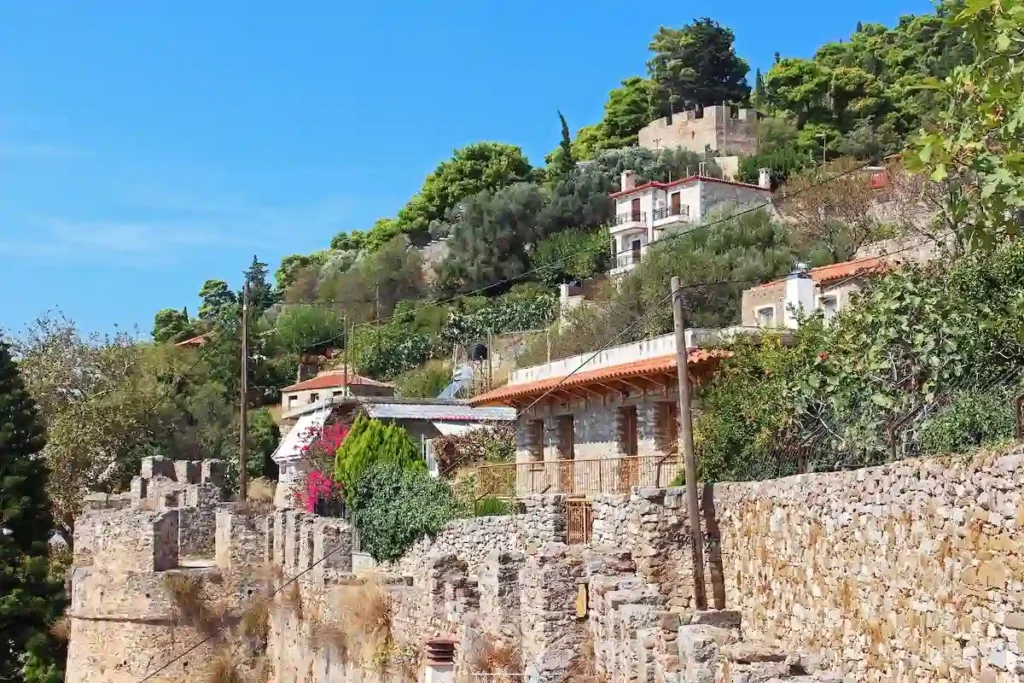
The old town, particularly around the castle, offers a different kind of property. Older stone houses have considerable character, but steep streets, steps and limited parking can make everyday life less convenient. Traditional houses and detached properties with gardens are also found in the surrounding villages, although living outside town almost always means depending on a car.
Location within Nafpaktos matters. The harbor and old town are atmospheric but can be noisy during summer weekends, while parking becomes difficult at busy times. The flatter central area is more practical for people who want to walk to shops, pharmacies and services. Higher neighbourhoods offer wider views, often across the Gulf of Corinth, but the slopes and stairs may become an issue over time. Along the Gribovo waterfront, mature plane trees provide welcome shade and make the area particularly pleasant during the warmer months.
Building restrictions in the traditional settlement and limits on building heights help preserve the town’s architectural character. For prospective buyers, this can be reassuring: the surroundings are less exposed to the kind of uncontrolled development that has transformed parts of the Greek coastline. However, restrictions vary by location and property, so an independent engineer should establish exactly which planning rules apply before a purchase.
Older homes may require substantial work, including electrical and plumbing upgrades, insulation, window replacement and treatment of damp. Renovations can take longer and cost more than initially estimated, while permits and technical checks need to be handled through qualified professionals. Western Greece is also an earthquake-prone region, making an assessment of structural condition and building age particularly important.
Long-term rentals can become harder to find in summer, when owners often prefer holiday lets. Starting your search in spring or autumn may give you more options and time to negotiate a longer lease. Before paying a deposit or signing a purchase agreement, appoint an independent lawyer and engineer, obtain a Greek tax identification number (AFM), and check the property’s title, outstanding debts and building permits.
Lifestyle, Nature & Leisure
One of Nafpaktos’s greatest advantages is the variety of things to do without having to travel far. The town centre and harbor are largely walkable, and the Gribovo waterfront, with its mature plane trees, offers a shaded place for a stroll or a coffee during the hottest months. The old town and castle streets are steeper, so comfortable shoes are essential if you plan to explore them regularly.
Daily leisure tends to revolve around simple pleasures rather than organised entertainment. A coffee overlooking the harbor, a visit to the fish market, lunch at a traditional taverna or an evening walk along the waterfront can easily become part of the weekly routine. The market and local bakeries provide their own rhythm, while the cafés offer familiar meeting places throughout the year.
The landscape beyond the town is where Nafpaktos really distinguishes itself. Swimming is possible from late spring into October, while inland the Evinos and Mornos river systems, their tributaries, forests and mountain routes offer opportunities for walking, fishing, photography and exploring traditional settlements. The contrast between the Gulf of Corinth and the cooler mountain interior makes the area particularly appealing to people who enjoy being outdoors. You can spend the morning by the sea and the afternoon among forests and stone villages.
History is equally difficult to escape, although here it is part of the everyday scenery rather than something confined to a museum. Nafpaktos Castle rises in five defensive zones from the harbor towards the hillside, offering views across the town and the gulf. Nineteen Ottoman-era fountains survive in the old town, reminders of the different powers that shaped the settlement over the centuries.
The Battle of Lepanto, fought nearby in 1571, remains central to the town’s historical identity. Miguel de Cervantes, the author of Don Quixote, was wounded in his left hand during the battle. Nafpaktos was also once an important trading centre and a base for North African corsairs, earning the nickname “Little Algiers” in some historical accounts.
Local traditions keep that history alive. At Easter, two Epitaphios processions circle the harbor, accompanied by fires along the waterfront, creating one of the town’s most distinctive celebrations. In October, events and reenactments commemorate the Battle of Lepanto. These occasions offer more than an attraction for visitors: they are opportunities to take part in the local calendar and experience how the town marks its own history.
Local Reality Check
The 43 villages are one of Nafpaktos’s strongest selling points, but they also raise the most important practical question for anyone considering retirement: where exactly should you live?
A village property may offer a beautiful stone house, a garden, quiet surroundings and a much closer relationship with the landscape. It may also mean driving for almost everything. Shops and pharmacies are fewer, public transport is limited, and access to medical services can take considerably longer. In winter, when rain is frequent, daylight hours are short and some neighbours may be away, the quiet can become more pronounced.
For some retirees, that is precisely the attraction. For others, it can eventually feel isolating. The town offers more opportunities for spontaneous encounters, regular social contact and access to everyday services. Its cafés, market, pharmacies and waterfront provide a routine that is harder to maintain in a small settlement.
The sensible approach is not to choose a property based on a summer visit. Rent in Nafpaktos for a full year if possible, and explore the villages in different seasons, including January. Pay attention to road conditions, access to shops and healthcare, heating requirements and how many people actually live there during winter.
You may find that the best compromise is neither the centre nor a remote village, but a property on the edge of town, close enough to walk or drive to services while enjoying more space and quieter surroundings. Wherever you settle, assume that a car will be necessary for regular trips beyond the town and that Patras will remain your destination for many larger needs. If you become a permanent resident, check the deadlines and procedures for exchanging your foreign driver’s license early, as delays and requirements vary by country of issue.
Who This Destination Is Best Suited For
Nafpaktos is particularly attractive to active retirees who want more than a pleasant place to sit by the sea. Walking, swimming, hiking and cycling are all within reach, while the surrounding villages offer opportunities to explore a part of Greece that remains relatively unfamiliar to international newcomers.
It also suits people who want to keep their living costs under control without sacrificing access to shops, healthcare and everyday services. Compared with Athens and the better-known islands, housing and daily expenses can be more manageable, especially outside the summer season. A couple with a moderate budget can enjoy a comfortable life here, provided they take transport and winter heating costs into account.
History and culture lovers will find plenty to engage with, from the castle and Ottoman fountains to the legacy of Lepanto and the town’s year-round celebrations. Those who value community will appreciate the fact that Nafpaktos remains a lived-in Greek town, although a willingness to learn the language and build local relationships will make a significant difference.
The choice between town and village living is especially important. The centre offers convenience, walkability and more opportunities for social contact. The surrounding settlements offer space, quiet and a closer connection to nature, but require greater independence and regular driving. Living without a car is possible in central Nafpaktos, but much less practical if you intend to explore the municipality or visit Patras frequently.
If your idea of retirement is a functioning small town with a historic harbor, a genuine year-round community and an unexpectedly varied mountain hinterland, Nafpaktos deserves a place on your shortlist.
Explore More Coastal Towns
If Nafpaktos’s mix of coastal calm and authentic daily life appeals to you, explore our guides to Living in Messolonghi, a flat, lagoon-side town, or Living in Keramoti, a laid-back northern seaside town with long sandy beaches.
For larger coastal hubs, look into Chalkida, an easygoing waterfront city an hour from Athens, or Kalamata, the sunny Peloponnesian port city offering strong year-round amenities.
***