
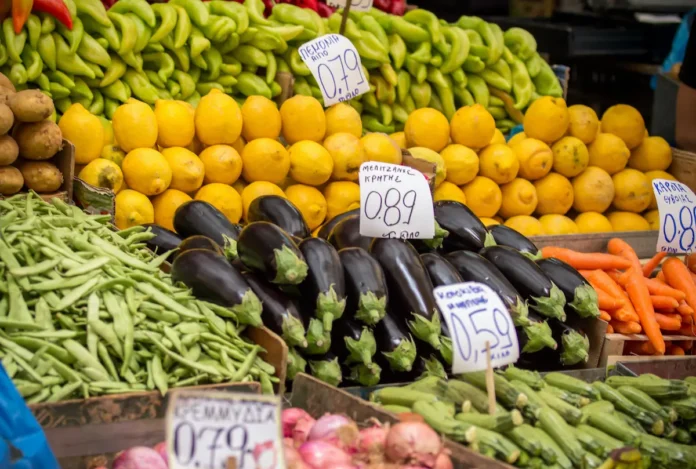
Laiki agora is where fruit and vegetables, loud vendors, and slow living converge
For a few hours each week, ordinary streets across Greece change completely. Cars disappear, traffic stops, and long rows of stalls take their place. This is the laiki agora (λαϊκή αγορά), Greece’s traditional open-air fruit and farmers’ market. Although it may look like a simple place to buy food, the laiki is much more than that. It is a deeply rooted part of everyday life, where shopping, socializing, and local culture come together under colorful canopies.
The word “laiki” means “people’s,” and this is exactly what the market represents. Everyone shops here: older residents who arrive early in the morning, parents comparing prices, professional cooks choosing the best produce, and neighbors who pause to talk and exchange news.
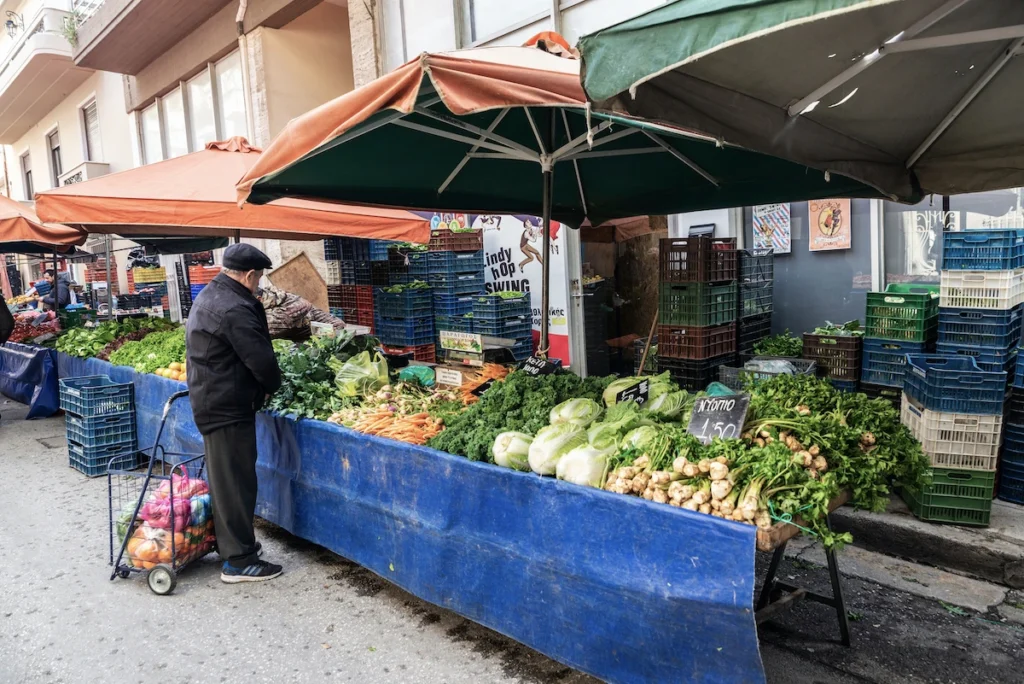
Sourcing Health at the Laiki
From around seven in the morning until early afternoon, sellers fill designated streets with fresh, seasonal fruits and vegetables, herbs, olives, eggs, honey, and often fish. While these merchants are very noisy in the morning, they will stop screaming to promote their products when the Afternoon Quiet Hours arrive. The quality is usually very high, prices are low, and much of the produce has been harvested very recently, sometimes just hours before it reaches the stall.
Eating fresh, minimally processed food is not a trend or a luxury in Greece. It is part of daily life, and for foreigners it can become a meaningful reason to choose the country as a place to live. The Mediterranean diet, often linked to longevity and lower rates of heart disease, diabetes, and inflammation, depends on this kind of freshness. It is built around vegetables, fruits, legumes, olive oil, fish, and moderate portions rather than processed foods with long ingredient lists. Shopping at the laiki naturally supports this way of eating and quickly becomes part of a weekly routine.
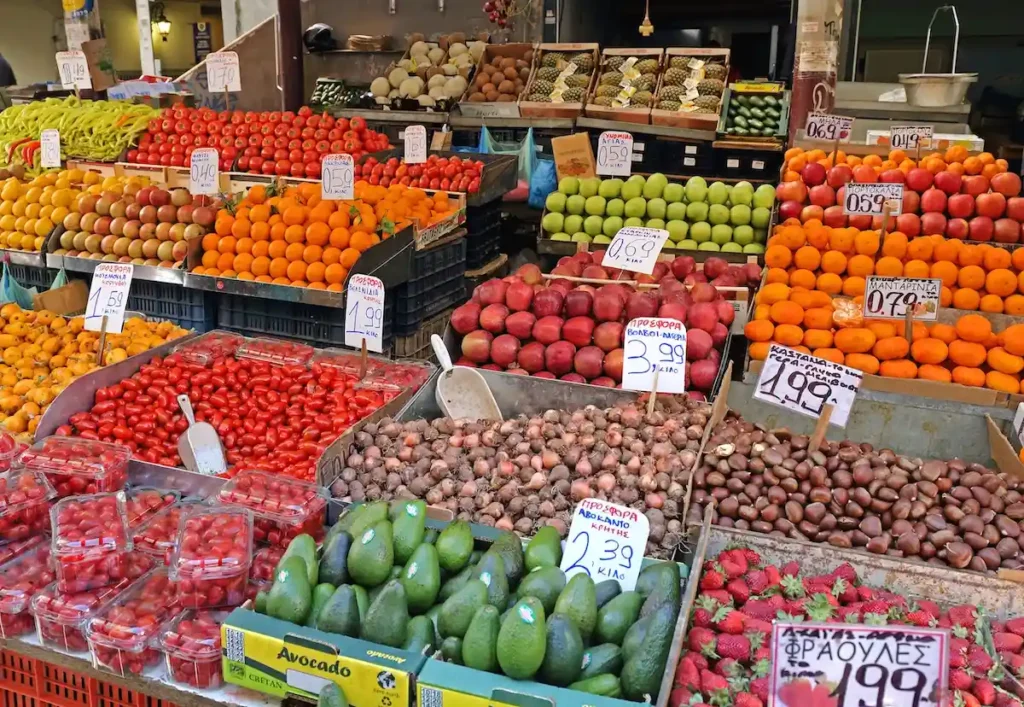
Each neighborhood has its own market day, which stays the same week after week. This creates a rhythm that people plan their lives around. The sounds of sellers calling out jokes or special offers, the smell of ripe fruit, and the sight of shoppers pulling small wheeled carts are familiar scenes in towns and cities across the country. By mid-afternoon, the stalls are taken apart, the street is cleaned, and daily life returns to normal until the following week.
The Social Fabric of the Market
Unlike farmers’ markets in some other countries, the laiki brings together two types of sellers: farmers who sell what they grow themselves and professional vendors who buy goods from wholesalers and resell them. This mix offers variety while keeping prices competitive.
The focus of the laiki is always on seasonal Mediterranean food, but larger markets often include much more. Alongside fruit and vegetables, shoppers may find olives, olive oil, honey, nuts, eggs, flowers, plants, household items, and inexpensive clothing.
After the financial crisis, these low-cost non-food items became more common as people looked for affordable options. Following the severe cut on pensions, retirees increasingly relied on these markets to stretch their tight budgets. In recent years, demand for organic products has also grown, and some markets, especially in larger cities, are now entirely organic.
Beyond shopping, the laiki agora plays an important social role. People greet familiar vendors, discuss prices openly, and enjoy the friendly, informal atmosphere. Sellers often shout humorous phrases to attract attention, turning the market into a kind of street performance. Many Greeks still prefer the laiki to supermarkets because of this personal connection, as well as the freshness and value.
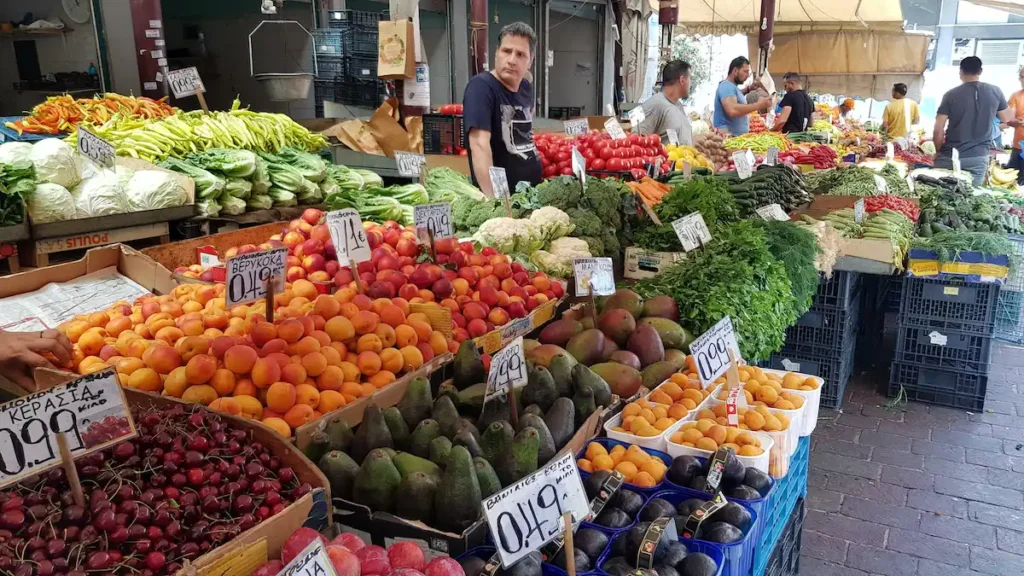
Prices also change as the day goes on. Early shoppers enjoy the widest choice, but those who arrive after one o’clock often find much lower prices, as vendors try to sell everything before packing up. While there isn’t a single national website that lists all laiki markets, you can easily discover their fixed schedules.
Asking locals is often the most reliable method, and in many areas it is enough to follow people carrying shopping baskets or wheeled carts. Markets usually operate from Monday to Saturday, from early morning until mid-afternoon, and wherever one lives in Greece, a laiki agora is never very far away.
For retirees, this routine offers clear benefits. Cooking simple meals with fresh ingredients encourages regular movement, social interaction, and a more mindful approach to food. Many expats find themselves walking more, eating more slowly, and enjoying meals as part of daily life rather than as a task. Over time, the laiki often becomes more than a place to shop, it becomes a small but meaningful anchor in everyday life.
***