
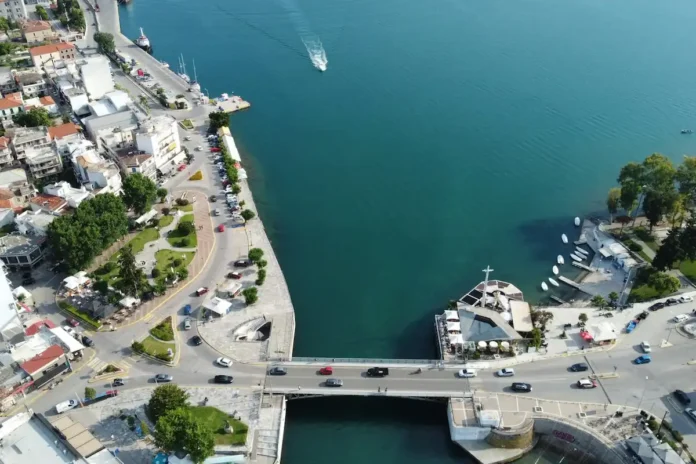
A large working city by the sea, one hour from Athens, with a hospital and empty beaches within reach
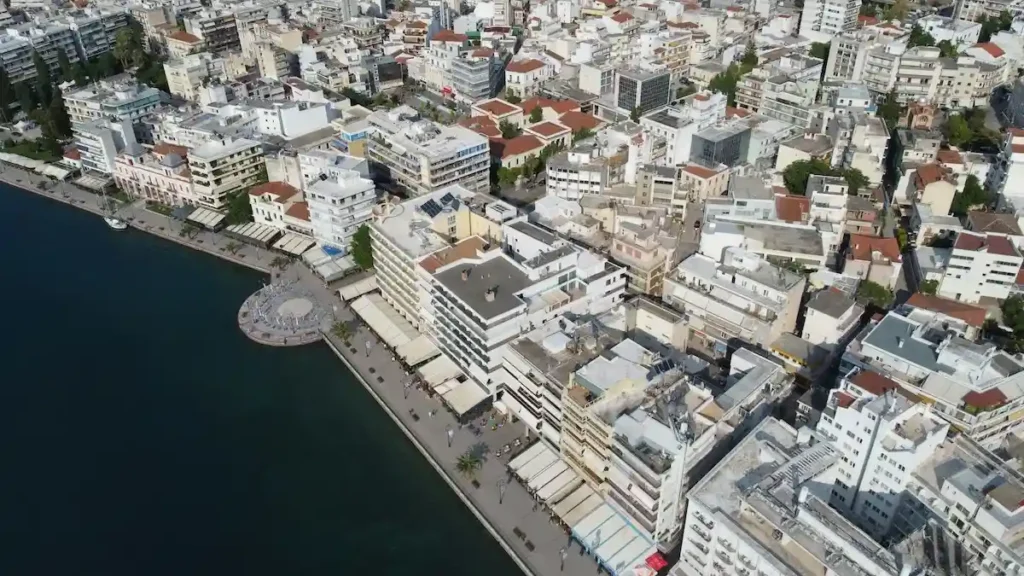
Chalkida is the largest city of Central Greece, with about 60,000 residents, and it lives by its own rhythm. Shops open, offices work and schools run from September to June, whatever the tourist numbers are. The first impression is of an ordinary, busy Greek city built around a waterfront, with a narrow strait that gives the place its character.
That strait, the Euripus, separates the island of Evia from the mainland. Two bridges cross it, so nobody here waits for a ferry. The water moves in strange currents that change direction several times a day, and locals still stop to watch them over a coffee.
Foreign retirees consider Chalkida for a simple reason. It offers the infrastructure of a real city together with the sea, at prices that suit a pension. A hospital, supermarkets, banks and public services are all within a short drive, and the capital is an hour away. Just beyond the city begins the wild side of Evia, with mountains, lakes and empty beaches.
The unique angle is that Chalkida is not an expat destination. There is no established foreign community and no retirement industry. The city has only begun to think about attracting foreign pensioners. The subject comes up in our exclusive interview with the region’s governor, Fanis Spanos.
It suits people who want to live among Greeks and build a routine in a working city. It will disappoint those looking for a picturesque village, a silent retreat or a ready-made international circle.
Location, access and connectivity
Chalkida sits on the western coast of Evia, about 80 kilometres from Athens. The two bridges link it to the mainland, so the journey by car takes roughly an hour, depending on traffic. Athens International Airport is about 85 to 90 kilometres away, which usually means one hour to one hour and fifteen minutes by road.
Public transport covers the link to Athens. Intercity buses run regularly, and a suburban railway line offers a direct connection, although its frequency is lower than on a metropolitan line and should be checked against your real needs. Beyond that corridor, public transport thins out quickly, and life on the island itself requires a car. Newcomers should consider exchanging their driving licence for a local one.
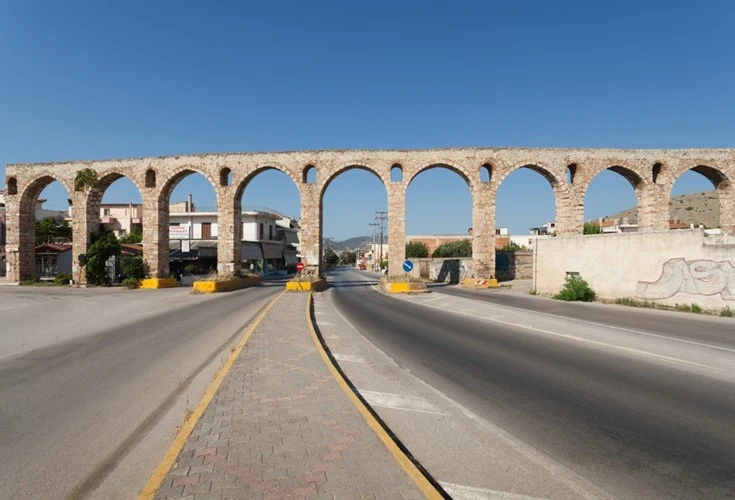
Because the city is reached by bridge, transport does not depend on the sea in the way it does on a small island. Winter storms do not cancel your way home. The main seasonal difficulty is on mountain roads in northern and central Evia, where snow and strong winds can slow travel, while the road to Athens stays open almost all year.
For retirees this matters in three practical ways. Medical travel is easy, since specialist hospitals in Athens are about an hour away, a little more in heavy traffic. Family visits are simple, because relatives can fly into Athens, take a bus or train, or be collected by car. Emergency access is strong in the city itself and weaker in the villages beyond it, where distances grow quickly.
Ferries to the Cyclades or the Sporades leave from other ports. Rafina and Piraeus are one to two hours away by road.
Climate and seasonal rhythm
Summers in Chalkida are hot and dry. July and August often bring temperatures in the mid-thirties, and the humidity near the strait can make evenings heavy. Residents adapt by shifting their day, with errands in the morning, a long rest in the afternoon and the waterfront walk after sunset. Air conditioning is part of normal life, and the electricity bill reflects it.
Winters are mild compared with northern Europe but not warm. Daytime temperatures usually stay above freezing, and the cold comes from damp air and strong northerly winds that funnel through the strait. Rain arrives in bursts between November and March. Snow is rare in the city, although it often covers the nearby mountains, including Dirfys, and can make the drive north difficult.
Many older apartments have no central heating. Residents rely on oil or gas heaters, inverter air conditioners, wood stoves or fireplaces, and a cold apartment is the most common complaint of newcomers. Insulation, orientation and heating type should be part of any rental or purchase decision.
Spring and autumn are the best seasons for daily life. From April to early June and again from late September to November, the weather is comfortable for walking, gardening and long meals outside. Foreign retirees often say these months are the real argument for staying.
The seasons here change the pattern of the day but not the life of the city. In summer the pace slows in the afternoon, and in winter the cafés move indoors. Services stay open throughout, and that is the main difference between Chalkida and a seasonal island.
Daily life and local community
Chalkida is a working city. People here are civil servants, teachers, shopkeepers, doctors, port and industrial workers, and students. The permanent population stays year-round, and the weekly calendar follows school, work and family, not the tourist season.
The pace is that of a provincial city. Mornings begin early at the bakery, the open-air market and the bank. Afternoons are quieter, and the evening belongs to the waterfront, where families, couples and older residents take the traditional volta along the promenade. A newcomer who walks it regularly is soon recognised.
Social integration happens through both daily routine and an established expat network. The café owner, the pharmacist,the neighbour on the stairs, and the stall holder at the Saturday market become the first local contacts, as residents are generally welcoming and helpful toward foreign newcomers. Alongside these everyday interactions, an active international community connects through the Facebook group Evia for Foreigners, which gathers roughly 2,000 members and organizes monthly meetups at various tavernas and restaurants around Chalkida.
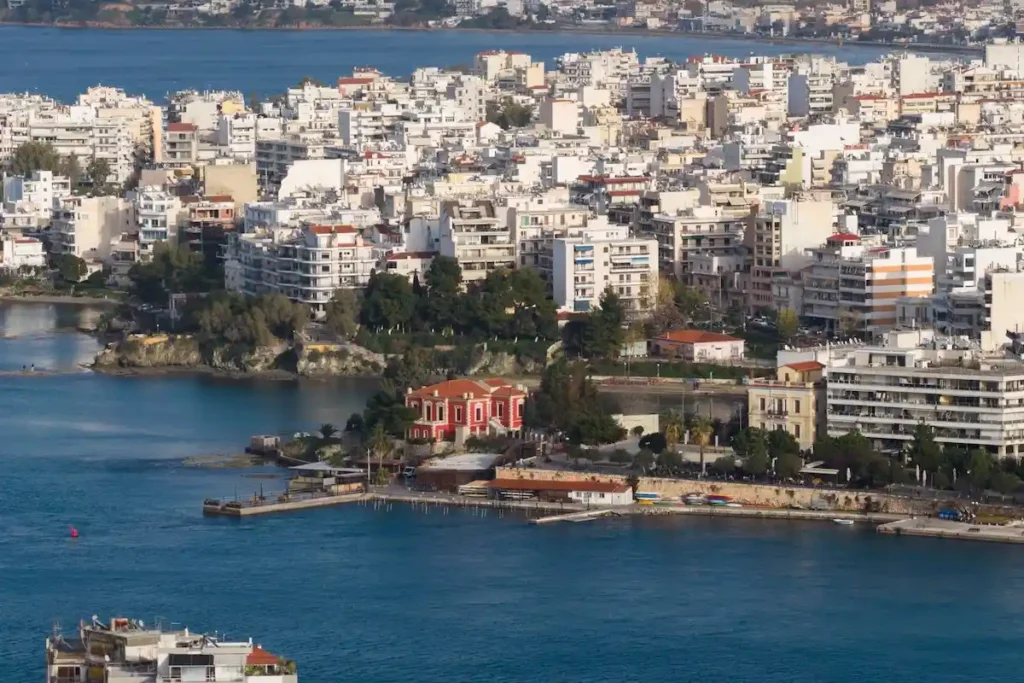
Language is a practical advantage but not a barrier. English is taught in every school, and doctors, bank staff, lawyers and property agents in Chalkida commonly speak it, as they do across the country. Everyday conversation, however, happens in Greek. Learning the language, even at a basic level, changes the quality of friendships and small daily exchanges.
Local culture is active throughout the year. The carnival season ends with a sea parade on the strait, the Epiphany blessing of the waters draws the whole city to the old bridge, and a documentary festival takes place each autumn. Associations, choirs, hiking groups and a municipal conservatory welcome new members and offer an easy way to meet people.
Healthcare and essential services
Healthcare is one of Chalkida’s strongest arguments. The General Hospital of Chalkida operates from a modern building that opened in 2020, with about 300 beds. It handles emergencies, internal medicine, surgery and many outpatient services, which puts it well ahead of what smaller islands and villages can offer.
Highly specialised treatment, such as complex cancer care or advanced cardiac surgery, may still require a transfer to Athens. The major public and private hospitals there are one to one and a half hours away, and many residents combine local care with periodic Athens consultations.
Alongside the public hospital, Chalkida has private clinics, diagnostic centres and a wide range of private doctors, from general practitioners to dentists and specialists. Many speak English. Appointments are usually quick and affordable compared with Western Europe. Many foreign retirees take out private health insurance to avoid public waiting lists and to choose their doctors.
Pharmacies are plentiful, and a rota ensures that at least one is open at night and on Sundays. Pharmacists are trained professionals who give useful advice, and many speak English.
In an emergency, residents call 166 for an ambulance or 112 for the European emergency line. In the city, response times are reasonable. In villages outside Chalkida and in the mountains, distances can mean a longer wait, and serious cases are often moved by road to the nearest large hospital. Anyone considering a rural property should check the distance to the hospital and to a health centre.
The honest summary is that Chalkida provides solid everyday and emergency care, with Athens as a backup for the most complex needs.
Cost of living overview
Chalkida is a city where everyday life is affordable. The biggest savings are in rent and eating out, while utilities and fuel cost about the same as anywhere else in the country.
Long-term rents are stable because Chalkida does not depend on tourism. A one-bedroom apartment in the centre or near the waterfront typically costs roughly 400 to 600 euros per month. Quieter residential areas, such as Neapoli, can be cheaper. Rents change with the market, so these figures are only a guide.
Utilities need attention in winter. Heating oil, gas or electricity can double a monthly bill compared with spring, depending on the age and insulation of the apartment. Summer air conditioning adds a smaller seasonal peak.
Food is affordable. The weekly open-air market sells fruit, vegetables and fish at lower prices than supermarkets, and bakeries, butchers and fishmongers are part of daily shopping. Traditional neighbourhood tavernas cost a fraction of what visitors pay in tourist areas, and a meal out can be a regular habit.
Transport costs are modest for the city and the Athens link, where buses and the train are cheap. A car, however, is a necessary expense and not an option. Fuel, insurance and annual road tax belong in every budget, and a household can usually manage with one car instead of two.
As a rough guide, a single retiree can live comfortably on about 1,100 to 1,500 euros a month including rent, and a couple on about 1,800 to 2,300 euros. Habits, health costs and the quality of housing can move these totals either way.
Athens is the only comparison that matters for most residents. Chalkida offers similar daily services at noticeably lower rents, and the capital is close enough for the occasional visit.
Housing and real estate landscape
Renting first is the sensible approach in Chalkida, as in most places. Long-term rentals are available throughout the year and are not squeezed by summer visitors as they are on islands. A rental of six to twelve months lets a newcomer learn the neighbourhoods, test the winter and decide whether to buy. Our housing section explains contracts, deposits and tenant rights in detail.
Buying is affordable. Prices across Evia are generally moderate, although the island-wide average hides large differences, and neighbourhoods in Chalkida vary a lot. Use any average with caution.
The typical housing stock is the Greek apartment block, built between the 1970s and the 1990s. These flats are practical and central, but many lack insulation and modern heating. Older houses in the old town have character and can need heavy restoration. Newer buildings are more efficient but cost more.
Renovation is possible but requires patience. Budgets, permits and contractor schedules often move slower than expected, and a technical check before purchase is essential.
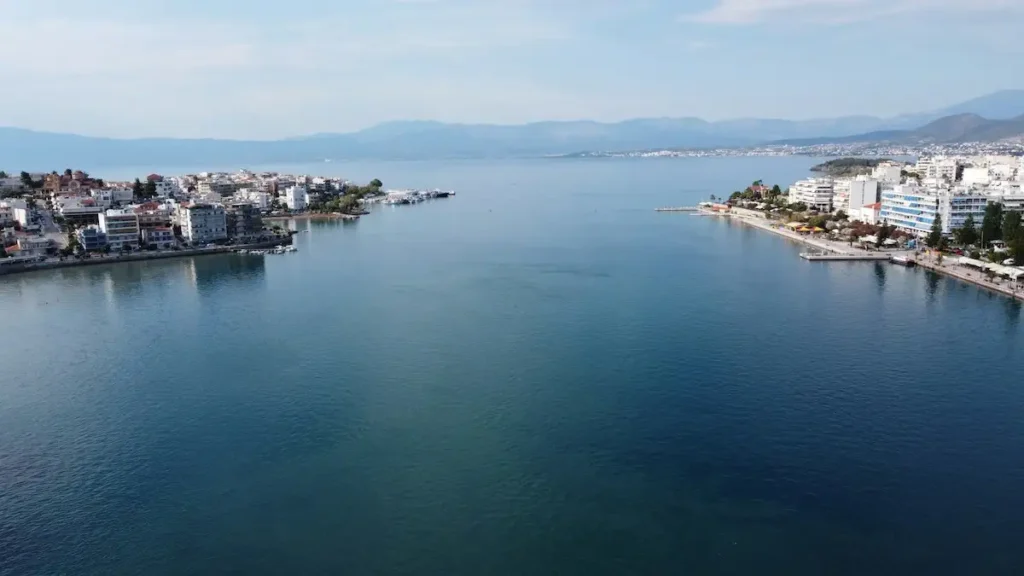
Neighbourhood choice shapes daily life. Around the Kastro and the old town, streets are narrow and historic, with the waterfront close. The central waterfront is the most convenient for walking to cafés, shops and the market, though noise and parking can be a problem. Kanithos, across the strait, offers views of the city and a quieter residential feel. Agia Marina and other coastal areas suit people who want to live closer to the sea.
These areas are for comparison, not recommendation. Visit outside the summer, walk each neighbourhood in the morning and in the evening, and speak to residents before deciding.
Lifestyle, nature and leisure
Chalkida offers two kinds of daily life. In the centre, the waterfront, the market and the old town are a walk apart, so errands rarely need a car. A short drive away, the wild side of Evia opens up, with forest, lakes and beaches you can have to yourself in July. Moving between the two takes a car.
The cafés and social rituals structure the day. A morning coffee at the waterfront, a pause at a neighbourhood kafeneio and a long evening stroll give retirement its rhythm, and the Saturday market adds a weekly meeting point. The main attraction, however, is the tsipouradika. Tsipouro is a clear spirit distilled from grapes, strong like vodka, and in these taverns it is served with shared plates, mostly of seafood. On Sundays and holidays they draw visitors from Athens, who come for the day just for this. For residents, a long, slow lunch of tsipouro and small plates is an easy way to meet people.
Within an hour’s drive lies a landscape that few retirement towns can match. Mount Dirfys rises behind the city with pine and fir forests, and the Dimosaris gorge offers one of the island’s best walks. On the eastern side, facing the open Aegean, the coast is long and thinly settled. Many beaches stay almost empty even in the middle of summer, with no beach bars and no crowds. Lakes and wetlands, such as the one at Dystos, add another quiet landscape, and thermal baths in the north are popular with older residents. Hiking clubs organise weekly walks and welcome newcomers.
None of this is practical without a car. Trails start at villages with few buses, and the best beaches lie at the end of long country roads, some of them unpaved. For anyone who wants this side of Evia, a car is not a convenience but a condition.
Cultural life is modest but real. An indoor cinema shows foreign films in the original language with subtitles, an open-air cinema runs in summer, and an outdoor theatre hosts concerts and plays. For opera or major theatre, Athens is one hour away.
The working side of the city
Visitors often expect a picture-perfect Greek waterfront. Chalkida is something more honest. It is an active city with traffic, apartment blocks, commercial areas and industry in the wider region. Some streets are noisy, and some parts of the coast are neither pretty nor suitable for swimming. Choosing the right neighbourhood matters more here than in a small village.
A car is essential. The centre can be managed on foot, but everything that makes Evia special requires one: the mountain trails, the lakes and the empty beaches of the east coast. The train to Athens is valuable for trips to the capital, but it does not replace a car for life on the island.
Local business leaders have recently discussed attracting European pensioners, pointing to the hospital, the coast and the strong local economy. They have also acknowledged weaknesses in road access, sanitation and the frequency of the suburban railway. That honesty is useful. Chalkida has many ingredients of a retirement destination, but it has not yet built the services or the international profile of established ones.
For the newcomer, this means some pioneer work. Finding an English-speaking lawyer, accountant or property agent takes research, and the foreign network is thin. The reward is a city that has not been shaped for foreigners and a community that welcomes those who arrive.
Who this destination is best suited for
Chalkida suits retirees who want a real Greek city and are happy to learn the language and join local life. It is a good choice for those who want the sea and a Mediterranean routine, with a hospital and everyday services within reach.
Budget-focused retirees will find it attractive, with rents and daily costs that stretch a pension comfortably. Those who still enjoy city life will appreciate that Athens, its airport and its specialists are about an hour away.
Nature lovers and active retirees are among the best matches. Mountains, trails, lakes and almost empty beaches are within an hour, provided the household owns a car. Culture lovers can find carnival, film and theatre in the city and a larger scene in the capital.
It is less suitable for those looking for an established international community, a silent village or a car-free life. People with highly specialised medical needs should plan for regular trips to Athens. Anyone unsure should rent for a winter first, since Chalkida is best judged outside the summer.
More seafront cities
If you are thinking of relocating to a seafront city, consider reading our comprehensive relocation guides about Messolonghi with its flat bike trails, Keramoti with its scenic wetlands, and Kalamata with its vibrant seaside promenade.
***