
Feeding, Adopting, Travelling, and Protecting the Cats in Greece
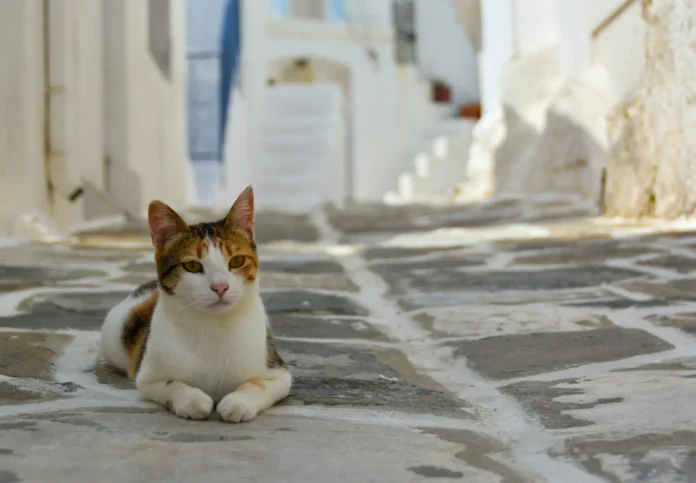
For anyone planning a retirement in Greece, the cats are one of the first things you notice and one of the last things you stop noticing. They sleep on warm marble steps in the Cyclades, patrol the tavernas of Athens at dinner time, doze on car bonnets in Peloponnesian villages and hold court in the courtyards of Ionian harbours. They are not exactly pets and not exactly wildlife. They are neighbours, and in most communities they are treated as such. Greeks say a cat has seven lives, not nine, and anyone who has watched one stroll away unhurt from a passing scooter, a July heatwave or a sudden winter downpour will not argue the point. Street cats are survivors in every situation, which is part of why the whole country has grown so fond of them.
A Long Tradition, a Changing Mindset
For generations, living alongside cats in Greece was entirely informal. The taverna owner set out a saucer of water and the day’s leftover fish, the grocer kept a bag of kibble behind the counter, and the grandmother on the corner fed the same three cats every morning without anyone thinking much about it. Strays were considered part of the neighbourhood, unowned but not unloved.
Over the past decade that affectionate habit has acquired a more organized shape. Awareness around animal welfare, veterinary care and population control has grown considerably, and many Greeks now speak about looking after animals as a matter of civic responsibility rather than simple sentiment. A new animal protection law, passed in 2021, was one of the reasons people began to take animal welfare more seriously: cruelty that was once ignored is now reported, talked about and punished. Municipalities run sterilization programmes, volunteer groups coordinate feeding and rescue, and the state keeps a national digital registry of companion animals. For a newcomer, it helps to understand both sides of this picture at once: a warm, deeply rooted tenderness toward cats, and an increasingly structured system that expects people to act responsibly around them.
Bringing Your Cat From Abroad
If you already share your life with a cat and plan to bring her with you, the good news is that the arrival paperwork is manageable, provided you start early and get the details right. Every owned cat needs an ISO-standard microchip, so if yours has one, ask your vet at home to confirm that it can be read by a standard scanner. Greece follows the EU’s pet travel rules, and what you need depends on where you are travelling from.
Arriving from another EU country is the simplest case: your cat needs an EU Pet Passport, an ISO microchip and a current rabies vaccination. From a country on the EU’s list of approved third countries, the passport is replaced by an official health certificate, with the same microchip and rabies requirements. If you are travelling from a country that is not on that list, a blood test called the FAVN titer test is added, with a result of at least 0.5 IU/ml, followed by a three-month wait before your cat can travel. That wait is the part that catches people out, so begin months ahead rather than weeks. Whichever route applies, your cat must enter through an authorized border inspection post, known as the Travellers’ Point of Entry, and Athens, Thessaloniki and Heraklion airports all have inspection facilities.
Since April 2026, the EU’s pet movement rules have moved to a new framework. The core requirements are the same, a microchip, a rabies vaccination and either a pet passport or an Animal Health Certificate, but border authorities are now checking documents more strictly. The sequence matters in particular: if your cat’s rabies vaccination was given before the microchip was implanted, that vaccination is not valid for entry into the EU. The Animal Health Certificate must be issued within ten days before you arrive and is valid for six months for onward travel within the EU. Before you go, check that every document is complete, that the dates are in the right order and that the microchip number is identical on every certificate.
Greece also has a requirement of its own for travellers arriving from the United States and other non-EU countries. The certificate must be in a bilingual English and Greek format, and it must be typed, because handwritten certificates are rejected at the border inspection post, as is the standard English-only EU certificate. US-based owners need to request the bilingual version through USDA APHIS before the certificate is issued, since the usual English-only APHIS certificate will not be accepted. Arriving with the wrong format means your cat is turned away at the border, so ask for the correct one well in advance of travel.
Once you have settled in, the next step is registration. A Greek veterinarian needs to enter your cat into the national companion animal registry within about ten working days of your arrival, linking her microchip to your name and your Greek tax number, the AFM. If you do not have an AFM yet, getting one is the first administrative job to do, because nothing else can be registered without it. The vet will also open her digital health record, which replaces the paper vaccination booklet and is where annual rabies shots and treatments are logged from then on.
Finding a vet before you need one makes the first weeks much easier. Ask neighbours, the local volunteer feeders or other expatriates which clinic they use, and book a first visit soon after you arrive. It is a good moment to register her, check her vaccinations, agree a plan for sterilization if she has not been done, and ask the vet about parasite prevention, which matters year-round in a mild climate. Many cats find a move unsettling, so keep her indoors for the first few weeks until she knows her new home, and consider a light-handed introduction to the garden or balcony only once she is settled.
How the Street Cat System Actually Works
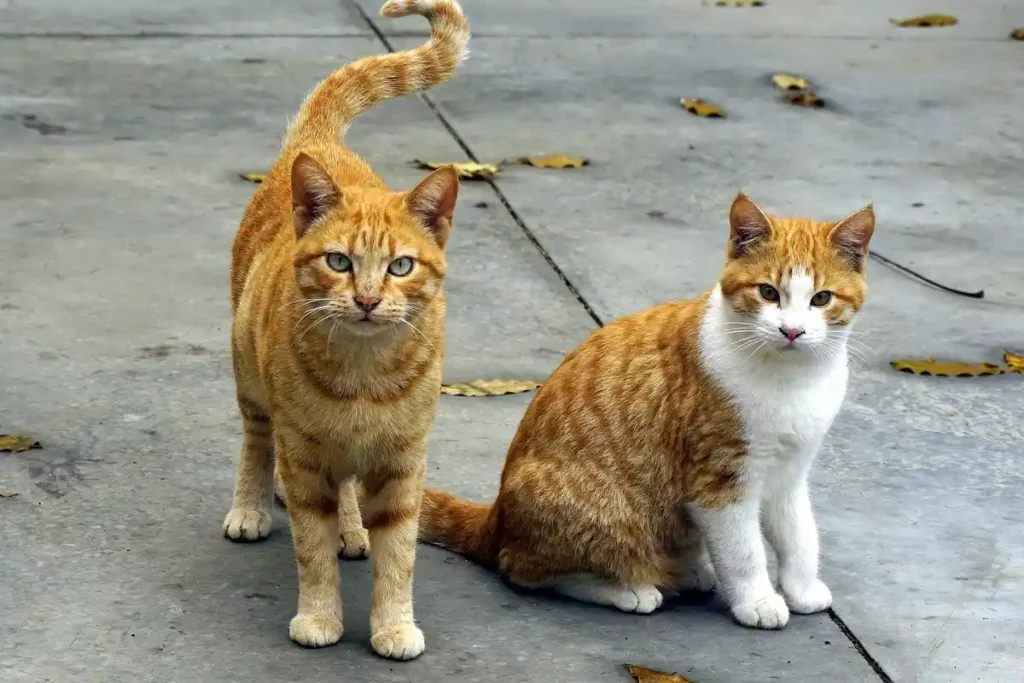
Most of the free-roaming cats you meet are looked after through a catch, neuter, vaccinate and return approach. The local municipality is responsible for stray animals within its borders, and it works with licensed veterinary clinics to have them sterilized, microchipped and vaccinated against rabies before they are returned to the spot where they were found. Cats that have been through the process are easy to recognize: a small part of one ear is cut off during the surgery, so the tip looks clipped or straight-edged. It can look startling at first, but it is simply the way Greece identifies a cat that has been through the programme, a quiet signal to volunteers and officials that this one has already been sterilized and vaccinated and should be left where she is.
In practice, a great deal of this work is carried out by volunteers. In almost every town and island community there is a small, tireless group of people who feed colonies, trap newcomers for sterilization, arrange transport to the vet and raise money for emergency treatment. They often operate independently or in loose cooperation with the municipality, and they are by far the best introduction to how things work in your particular corner of Greece. Retirees who offer even modest help, a few bags of food, a lift to the clinic, an hour of translation for a foreign visitor who wants to adopt, tend to find that it opens the door to local friendships faster than almost anything else.
Feeding the Neighbourhood Cats
Feeding strays is widely accepted and, for many people, a daily ritual. It does not make you the owner of the cats you feed, and it does not make you financially responsible for them. They remain the community’s cats, and the community, broadly speaking, looks out for them. Feeding in the shared outdoor areas of an apartment building, such as a courtyard or the ground-level spaces beneath it, does not require the approval of every resident, and neighbours or landlords are not entitled to harass or obstruct anyone who does it quietly and sensibly.
The word to hold on to is sensibly. Most of the friction that arises around feeding has little to do with the cats and everything to do with cleanliness. Use proper bowls rather than leaving food directly on the pavement or the marble of a narrow alley, favour dry kibble or easily cleaned wet food over table scraps that turn in the summer heat, and collect empty cans, pouches and leftovers soon after the cats have eaten. A tidy feeding spot is rarely a problem. A messy one attracts rats, insects and complaints, and it puts the whole informal arrangement at risk for everyone else who relies on it. If you would rather not start a new feeding point yourself, join an existing one. The local volunteers usually maintain a few discreet, well-kept locations and will gladly tell you when an unfamiliar, unsterilized cat has turned up and needs to be dealt with.
Taking a Cat Home
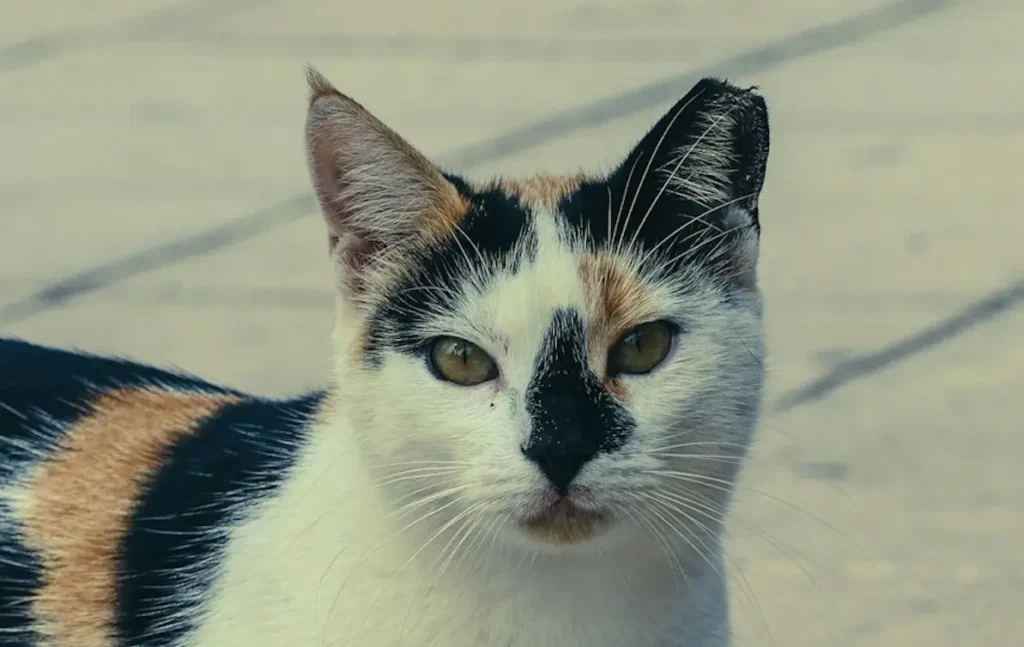
Sooner or later, many retirees find that one particular cat has made the decision for them. Adopting a street cat in Greece is straightforward, and you do not need Greek citizenship to do it. Any adult can adopt, provided they have the basic paperwork in order. The most important item is a Greek tax number, the AFM, because the cat is registered under your name in the national companion animal registry. If you have bought or rented a home or opened a Greek bank account, you almost certainly have one already. You will also need your passport or residence document, a local address and a Greek phone number.
There are two common routes. The first is simply to take the cat to a licensed private veterinarian. The vet scans for an existing microchip, implants one if there is none, and registers the cat to you in the national database. If the cat already carries a municipal stray chip, the vet transfers the registration from the municipality to you. The vet will also open the cat’s digital health record, which has replaced the old paper vaccination booklet, administer the core vaccines and the rabies shot, and set a date for sterilization.
The second route is to adopt through a shelter, a municipality or a rescue group. Many of these appear on the national adoption platform, and island and neighbourhood associations such as Nine Lives Greece and Syros Cats also help people find animals in need of a home. You will fill in a short application and sign an adoption contract, and the organization transfers the microchip into your name. Shelters and municipalities may ask you to cover documented costs such as veterinary care, microchipping or transport, but they cannot charge a purchase price for a stray.
Sterilization is the expected default for owned cats. An adopted stray over one year old should be sterilized within six months, and given the practical difficulties and fees attached to the alternative, almost every owner simply has it done. Breeding is tightly restricted and requires prior permission from a municipal committee, so it is not something a casual owner will stumble into.
Living With a Cat in Greek Homes and Buildings
Building rules in Greece cannot forbid you from keeping a pet in your own apartment, which is reassuring for anyone moving into a condominium. Renting is a different matter, however: a landlord can still refuse a tenant with a cat without giving any explanation, or add a no-pet clause to the lease, and where that leaves the tenant is something of a grey area. What the rules do expect is ordinary good behaviour: keep noise and hygiene in check, and do not use a balcony, veranda or shared space as a permanent place to keep a cat. A cat confined to a cage is not acceptable either.
Many retirees in villages and on the islands let their adopted cats move freely between house and garden, which is how most Greek cats have always lived. If you do, remember that owners are held fully responsible for any damage or harm their animal causes. Registration details, up-to-date vaccinations and a microchip are what protect you and the cat if she wanders, gets injured or ends up in a neighbour’s kitchen.
When you travel within Greece, a ferry, train or bus trip requires a valid rabies vaccination given at least three weeks beforehand and a secure carrier marked with your name, address and phone number. Ferry staff do check, particularly in high season, so keep the digital record handy on your phone.
If you later decide to take your cat back to Canada or the United States, your Greek vet can issue an EU pet passport. You will also need a rabies vaccination given at least 21 days before travel and, depending on the destination, an official health certificate from the regional veterinary authority. It is worth asking your vet to walk you through the timeline several weeks in advance, since the requirements differ from one destination to another.
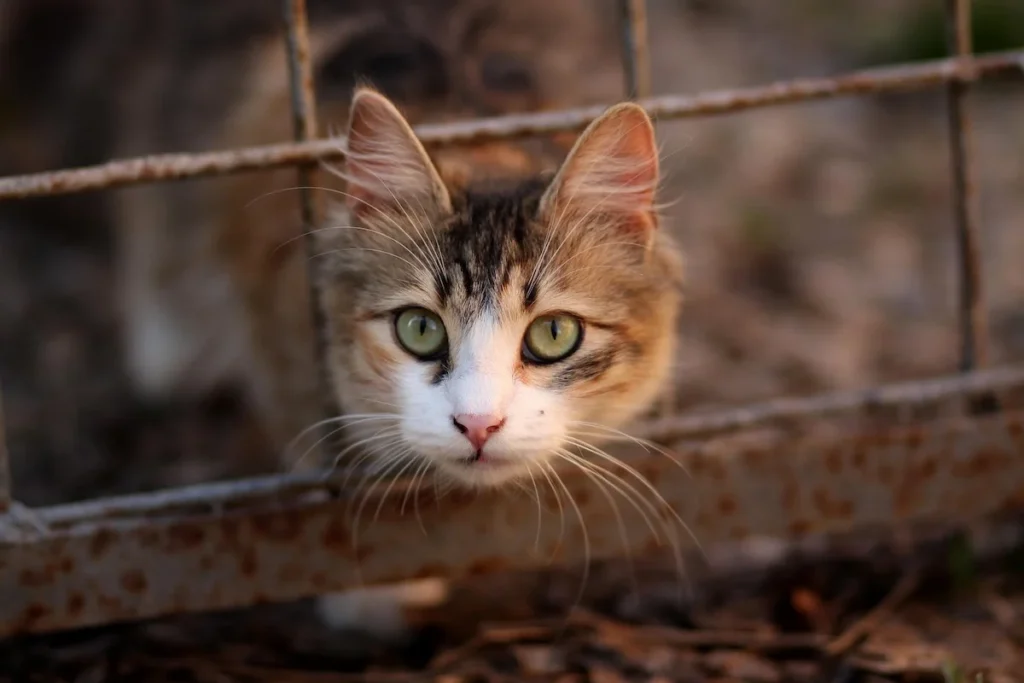
Greece’s animal welfare legislation mandates strict penalties for abandonment and encourages sterilization and adoption programs to protect vulnerable stray kittens. Photo: Adina Voicu / Pixabay
When Cats Are Harmed
There is a darker side to the story, and since 2021 Greece has stopped looking away from it. For years, cruelty toward street cats was something people whispered about and rarely saw prosecuted. In some neighbourhoods, residents who felt there were too many strays took matters into their own hands and left out poisoned food, known in Greek as φόλα (fola), and cats, dogs and sometimes wildlife died in agony. Today these cases make the news. Animals found poisoned, beaten or abandoned are reported by local media, volunteers publicize them on social media, and the people responsible are increasingly identified and punished. One widely reported case involved a man who threw a kitten into the sea; he was tracked down and fined. For a newcomer, the message is simple: harming a cat, whether she is a pet or a stray nobody owns, is treated as a crime, and neighbours are watching.
The penalties are severe. Killing or torturing an animal, which expressly includes poisoning, drowning, strangling, burning, shooting and mutilation, is classified as a felony, punishable by up to ten years in prison and a criminal fine of up to €50,000. On top of that comes an administrative fine of €30,000 to €50,000 for each animal and each incident, so poisoning three cats means three separate fines, adding up to between €90,000 and €150,000. Lesser forms of cruelty, such as beating or deliberately injuring an animal, abandoning her, hoarding, or driving off after hitting a cat without stopping to notify the authorities, are treated as a misdemeanour carrying at least one year in prison, criminal fines of up to €15,000 and administrative fines of €5,000 to €15,000 per animal. Cases are pursued automatically by police and prosecutors, so no owner needs to file a complaint, which matters for street cats. Convicted offenders can have their animals taken away and be barred from keeping pets in the future, and administrative fines double for repeat offenders.
If you see a cat being abused or find one that has been poisoned, you can report it at once to the local police station, by calling the emergency number 100, or through the Hellenic Police’s animal protection hotline at 10410. The volunteers in your area will also want to know, and they can often help get an injured animal to a vet quickly.
Finding a Good Vet and Keeping Costs Manageable
One of the quiet pleasures of life in Greece for animal lovers is the quality of veterinary care. Greek veterinarians are well trained, and many have completed additional studies elsewhere in Europe or in North America. You will find modern clinics with ultrasound, diagnostic equipment and surgical facilities not only in the big cities but also in provincial towns and on larger islands. English is taught in Greek schools from an early age and is widely spoken by professionals across the country, so most newcomers have little trouble explaining what is wrong with their cat, and if one person at the clinic is less comfortable in English, a colleague or another client will almost always step in.
Costs are considerably lower than in Canada, the United States or Northern Europe, which makes cat ownership very manageable on a fixed income. A daytime consultation usually runs between €20 and €50. Microchipping and registration cost about €30 to €50. Sterilization at a private clinic generally falls between €60 and €100, with male cats at the lower end and females at the higher, and it is often free or reduced to €30 to €50 if arranged through a municipal programme or a volunteer association. The initial vaccination series, including rabies, comes to about €40 to €60 in total.
Once the first-year medical work is behind you, the ongoing budget is modest. An annual check-up with booster vaccines costs roughly €30 to €70, and monthly flea, tick and worming prevention about €5 to €15, which is worth keeping up all year given the mild climate. Good-quality food and litter for a single cat comes to €30 to €50 a month. A home visit from a pet sitter while you are away is typically around €15, and an after-hours or holiday emergency consultation starts at €50 to €100 before any tests or treatment. Altogether, a healthy cat will cost somewhere between €600 and €900 a year. If you prefer to help neighbourhood cats without adopting, €15 to €30 a month covers bulk kibble and basic parasite treatment for several animals.
A Few Last Thoughts
The rules around cats in Greece are stricter than newcomers sometimes expect, and fines for skipping registration or sterilization can be steep, but the spirit behind them is one most retirees will find easy to share. Register your cat, have her sterilized, keep her vaccinated, feed tidily, and get to know the people in your area who are already doing the same. Do that, and the cat on your doorstep tends to become something more than a pet. She becomes your way into the neighbourhood.
More about pets
If you have a dog, our Leash on the Beach guide explains where four-legged swimmers are welcome, how organized and unorganized beaches differ, and the small courtesies that keep you and your dog on good terms with everyone else on the sand.
KEY LEGISLATION
Law 4830/2021: Companion animal registration, sterilization, adoption and the protection of stray feeders are governed by this law, which also assigns responsibility for stray animal populations to municipalities.
SOURCES
Ministry of Interior: National Registry of Companion Animals, in Greek
***