
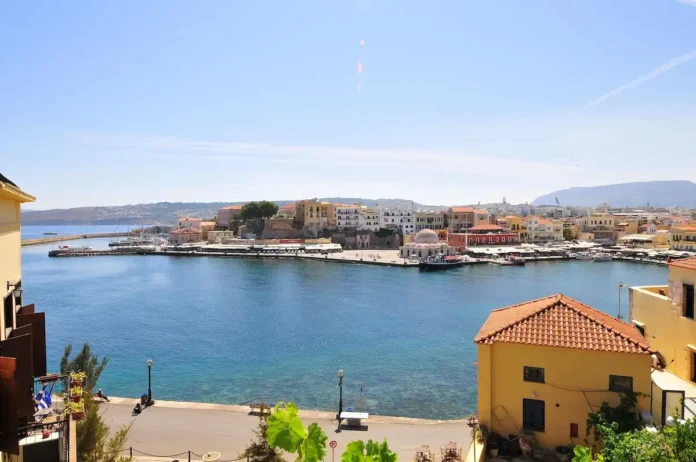
A Cretan City That Doesn’t Depend on Tourism
Chania is one of the few places in Greece where an island lifestyle doesn’t require giving up the infrastructure of a proper city. The city itself has around 54,500 permanent residents, while the wider Municipality of Chania counts 111,375 according to the 2021 census. It is the second-largest city in Crete and the main urban centre of the island’s western half.
That distinction matters for retirees. Chania is not a beautiful seaside town that empties out once the tourists leave. It has hospitals, doctors, pharmacies, supermarkets, schools, government offices, cafés and businesses that run year-round, and a resident population large enough that daily life doesn’t depend on the summer trade.
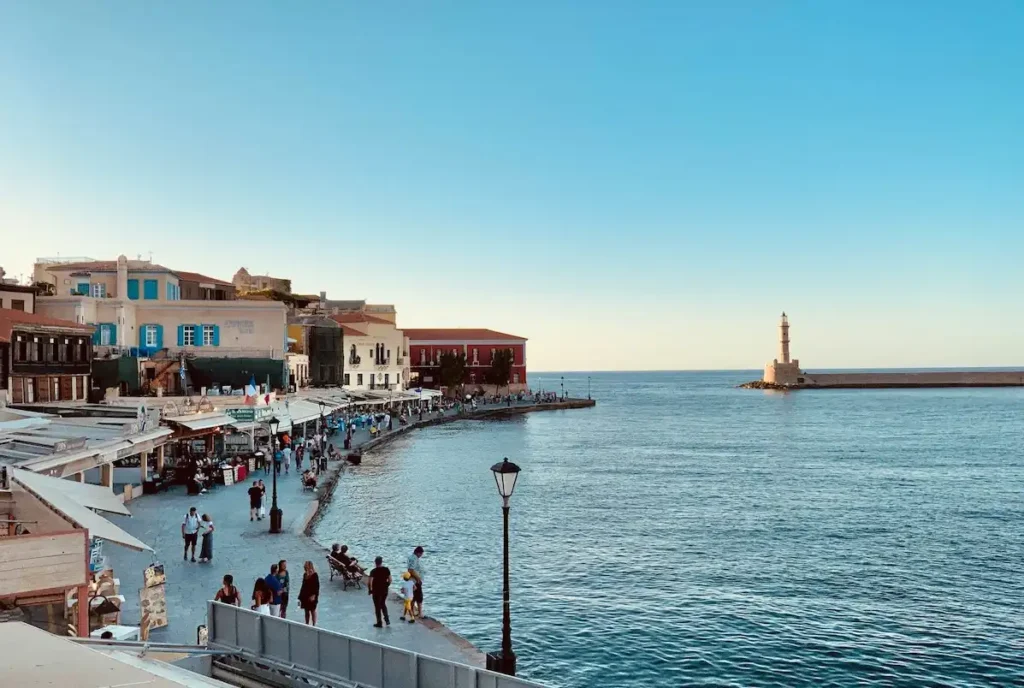
The Venetian harbour and old town give Chania its postcard image, but someone weighing retirement here should think past it. The neighbourhoods south and east of the centre, the Akrotiri peninsula, Souda, and the surrounding villages each offer a different version of the same city.
Chania tends to suit retirees who want culture, services, an international environment and easy access to nature, rather than total isolation. It’s a weaker fit for anyone chasing a bargain retirement, a village where everybody knows everybody, or a fully car-free rural life.
Location, Access and Connectivity
Chania sits on Crete’s north-western coast. Its two gateways are Chania International Airport, “Ioannis Daskalogiannis,” about 15 kilometres from the city, and the port of Souda.
For a retiree relocating from abroad, the airport is one of Chania’s strongest advantages: direct international routes run through the tourist season, alongside year-round domestic connections to Athens. The distinction worth noting is that the international schedule is far more seasonal than the Athens link. Check winter flight schedules directly rather than assuming a summer route continues year-round.
Souda handles the sea option, including ferries to Piraeus. For medical treatment or anything not available locally, Athens is reachable by air or ferry, and Heraklion offers another major centre on Crete itself.
Crete has no railway. Public transport runs on the KTEL bus network, connecting Chania to the airport, Rethymno, Heraklion, and towns and villages across the west of the island, with a direct bus service to and from the airport as well.
For retirement purposes, Chania’s connectivity is well ahead of most smaller Greek islands. The real limitation isn’t isolation. It’s weather and seasonality. Bad weather can disrupt flights or ferries, and bus services to smaller villages thin out once the season ends.
Climate and the Seasonal Rhythm
Chania has a Mediterranean climate, and “mild” shouldn’t be read as “permanent spring.” Average temperatures run around 11°C in January and 26°C in July, with July highs regularly touching 30°C or more. Rainfall concentrates heavily in the winter months. January and December are typically the wettest, each averaging somewhere in the range of 90 to 140mm, depending on the year, with humidity often above 70 percent.
The summer issue for retirees isn’t just heat. It’s sustained heat. July and August bring long stretches of strong sun, and air conditioning becomes a normal part of household life for most people.
Winter is a different city. Chania is wetter than the “sunny Crete” stereotype suggests, and heating matters more than visitors expect. A house that feels wonderful in August can be genuinely uncomfortable in January if it has poor insulation, single glazing or no efficient heating system, so it’s worth checking carefully in older stone houses and village properties.
The payoff is the shoulder seasons. Spring and autumn are often the most pleasant stretches for everyday life, with outdoor cafés and long walks possible without summer’s intensity.
Daily Life and the Local Community
This is where Chania has a real edge over many Greek retirement destinations. You can have a morning coffee, do the shopping, see a doctor, handle a public service errand, meet friends for lunch, and get home again without leaving town. The city has a genuine year-round population and doesn’t shut down once the season ends.
The local culture stays firmly Cretan: family, food, coffee, the kafeneio, and close social ties remain central to daily life. Chania also has a long-established international presence, partly from tourism and partly because foreigners have settled across the wider region for decades, including a substantial British, German and Scandinavian retiree community concentrated in areas like Apokoronas to the east.
English is near-universal among people working in tourism, healthcare and other public-facing roles, and most Greeks who deal with the public in any capacity, including bank staff, doctors and pharmacists, have functional English from compulsory schooling, regardless of their age. That said, a retiree settling permanently shouldn’t expect English to replace Greek entirely. Greek becomes increasingly relevant for property paperwork, tradespeople, healthcare administration and ordinary neighbourhood life, and learning even a working level of it is the difference between managing your own life here and depending on others to manage it for you.
The seasonal contrast is significant. In August, Chania can feel crowded and intensely commercial. In January, the same streets feel local again. That contrast is worth experiencing in person before buying anything.
How well a foreign retiree actually settles into that local rhythm has as much to do with attitude as location. Crete’s deputy regional governor has spoken candidly about what it really takes for an outsider to become part of the community, and his perspective is worth reading before assuming integration happens on its own.
Healthcare and Essential Services
Healthcare is one of Chania’s stronger arguments for retirees. The General Hospital of Chania, “Agios Georgios,” in Mournies, has operated since 2000 with a capacity of around 450 beds and a broad range of departments, including pathology, surgery, an intensive care unit, oncology day care and a psychiatric department.
Chania also has local health centres and primary care structures, alongside private doctors and diagnostic clinics that offer an alternative to the public system, with shorter wait times and generally reliable English-speaking specialists. EU pensioners can access public coverage through the S1 form, and residents can register with EFKA, the national social security system, once settled.
For a retiree, the key point is geography, not availability. Someone living in or near the urban area has much easier access to care than someone who buys a scenic house in an isolated mountain village and assumes that “the Chania area” means being close to the hospital. For highly specialised treatment, Athens or another major centre may still be necessary. Chania covers most needs well, but not every need.
Cost of Living
Chania is no longer one of the obvious budget choices in Greece. Food and everyday expenses stay reasonable by northern European or North American standards, particularly for anyone shopping at local markets and bakeries rather than defaulting to imported goods. Housing is where the real pressure sits.
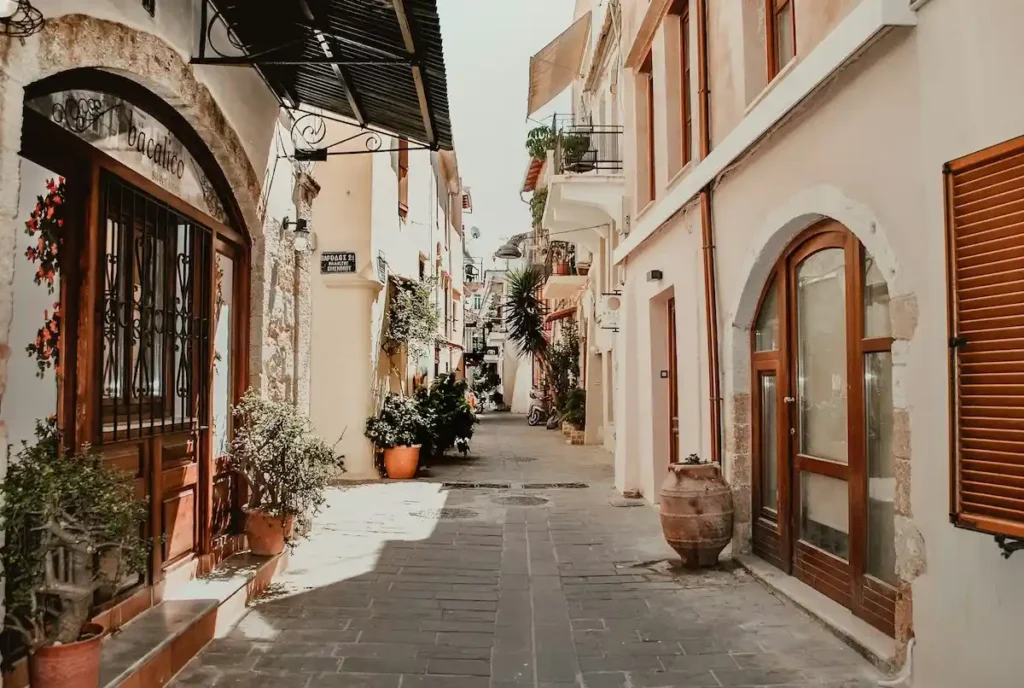
As of mid-2026, asking prices for residential property in the Municipality of Chania have run considerably higher than the Crete-wide average, and the wider Chania prefecture ranks as the most expensive on the island for both sale and rental listings. Rents vary sharply by location: a one- or two-bedroom apartment inside the city typically costs more than an equivalent property fifteen to twenty minutes outside it, and the historic old town commands a premium on top of that, often without easy parking.
A retiree should budget for something closer to Athens-level housing pressure than the “island equals cheap” assumption. Moving away from the historic centre and the most sought-after coastal strips opens up considerably more affordable options.
Utilities depend heavily on the property itself. An efficient modern apartment is manageable to heat and cool; an old detached house with poor insulation can produce a very different monthly bill.
Housing and the Real Estate Market
Chania’s housing stock covers nearly everything: modern apartments, older city flats, detached houses, renovated village properties, traditional stone houses, and larger properties outside the city.
Neighbourhood choice matters enormously. Living in the city gives the best access to shops, doctors, cafés and public transport. Souda and Akrotiri offer a different lifestyle and closer proximity to the airport, while the villages and inland areas trade convenience for space and a stronger rural character. Apokoronas, to the east, has become a particular draw for the international retiree community, with Almyrida, Kalyves and Vamos among the more established spots.
The common retirement mistake is buying a property for its holiday appeal rather than its winter practicality. An old stone house with a spectacular view can require significant investment in insulation, heating, plumbing and windows. A property that looks cheap per square metre can get expensive fast once renovation starts, and what an older Greek property actually costs to bring up to standard is usually far more than buyers budget for going in.
Renting first is particularly sensible here, given how strong the seasonal rental market is. A property that looks available in winter may be marketed to tourists at a much higher rate come summer.
Lifestyle, Nature and Leisure
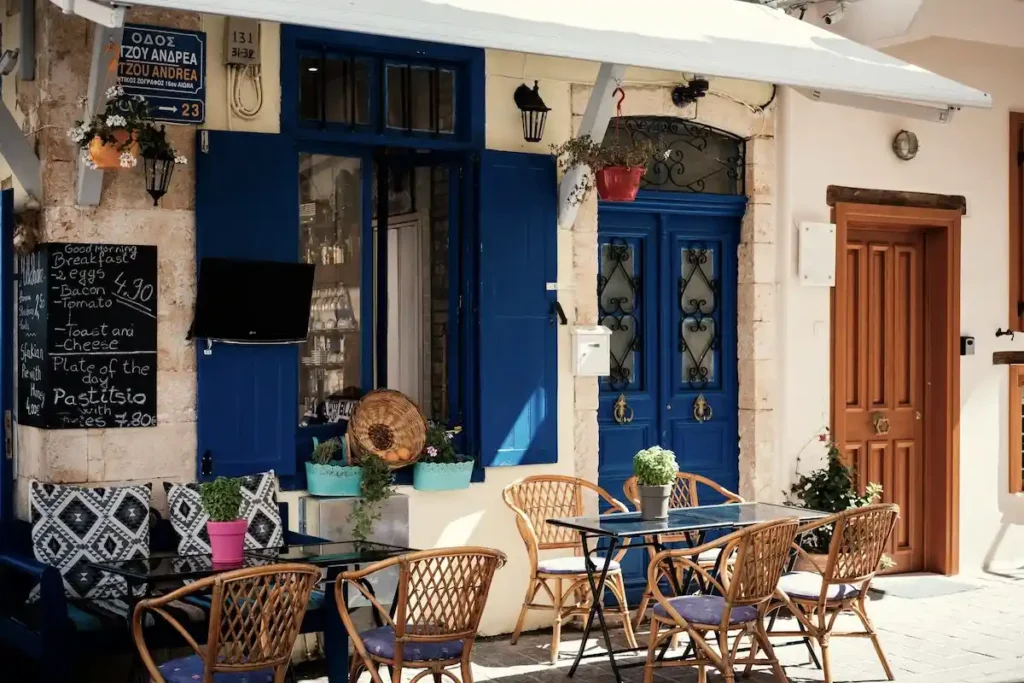
Chania rewards retirees who want to make ordinary days enjoyable rather than chase a checklist of attractions. The old town offers cafés, restaurants and places to walk; the wider city adds supermarkets, gyms and cultural activity; the waterfront and surrounding neighbourhoods make daily walking part of normal life rather than an outing.
Outside the city, western Crete brings mountains, gorges, beaches and agricultural villages within easy reach. The real advantage for retirement isn’t a list of sights to visit. It’s having different environments available for an ordinary weekend.
An active retiree gets a combination of city life, mountains and sea that’s hard to match elsewhere in Greece. Someone who prefers quiet may do better living just outside the centre and treating Chania as the place they go for what they need, rather than where they live day to day.
Anyone settling in the villages or on the city’s outer edges also inherits Crete’s agricultural streak, and growing at least some of your own food is more within reach than most newcomers assume: it’s entirely possible to keep a productive food garden going without a large plot, even for someone starting from scratch.
Chania Has Two Seasons
The most important thing to understand about retiring in Chania is that you are choosing two different places.
In summer, the city is busy: traffic increases, parking gets harder, restaurants and beaches fill up, and housing comes under real pressure from tourism. Then the rhythm changes. Winter brings rain, shorter days and far less international tourism; some businesses close or cut their hours, and the tourist areas go quiet. But Chania itself doesn’t disappear. The permanent population stays, shops keep operating, schools stay open, and the hospital and essential services run all year.
For retirement, that’s actually the point. Someone splitting the year between Greece and elsewhere may find the seasonal contrast appealing. Someone planning to live here permanently should visit in January or February before buying, not judge the place from a September holiday.
There’s a second reality worth naming: the best retirement location may not be Chania city itself. A retiree with a car might prefer one of the surrounding villages or suburbs and use the city as a service and cultural hub. Someone without a car should make close to the opposite calculation, and prioritise a spot within easy reach of the centre and regular public transport.
Who Chania Suits
Active retirees tend to do well here. The city, mountains, beaches and wider Cretan landscape offer plenty without requiring a tourist’s itinerary. Culture lovers find a substantial historic centre and a strong local identity to settle into. Retirees prioritising healthcare access get one of the stronger options in Crete, thanks to the general hospital and the wider medical infrastructure around it. International retirees generally do well too, particularly those prepared to build enough Greek to handle everyday life independently rather than relying entirely on others.
Car-free retirees can make it work, but location becomes critical. Living centrally is a completely different proposition from living in a mountain village or an isolated coastal property. Budget-focused retirees will find Chania a harder sell, since its housing market ranks among the most expensive in Crete; affordability improves significantly once you move away from the most sought-after areas. Anyone seeking complete isolation is probably better served elsewhere, since Chania is an active regional city with real tourism, real traffic and a sizeable international population.
For retirees looking to balance Greek life with the infrastructure of a functioning modern city, Chania may be the strongest case on the island, an island lifestyle without giving up what a proper city provides.
Explore More Year-Round Islands
If you want to keep your options open, several other large islands suit full-time living. You might consider Kefalonia for its dramatic mountain landscapes, dramatic coastline, and reliable year-round services. Aegina provides a vibrant local lifestyle just a short ferry ride from Athens. Further east, Lesbos offers a rich cultural identity and a self-sufficient economy that stays active all twelve months of the year.
***