
Between everyday life and the short-term rental economy
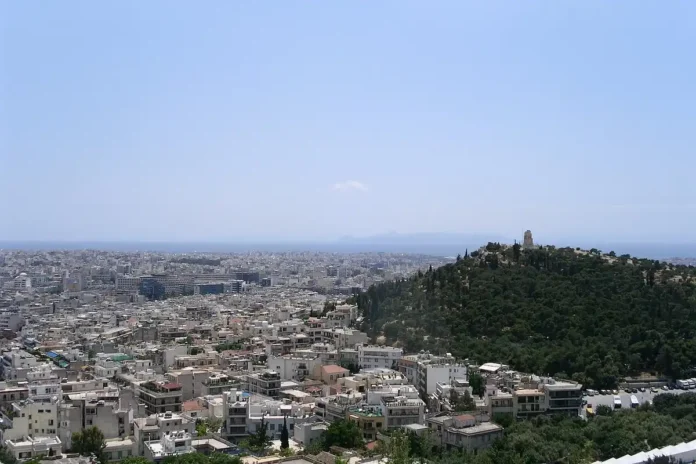
Koukaki sits just south of the Acropolis, with Filopappou Hill on its western edge and busy Syngrou Avenue to the east. For decades it was a plain grid of concrete apartment buildings, raised in the 1960s and 1970s . Streets were narrow, trees were rare and balconies held laundry. Teachers, vendors, estate agents, plumbers, tailors and bakers lived and worked in the same streets, and some residents rarely left the neighbourhood, which had its own tavernas, three cinemas, gyms and municipal centres for the young and the old. Because Koukaki stood close to the Acropolis and Plaka, it attracted many expats, who built a parallel community life of their own.
The singer Nana Mouskouri spent her childhood here. Her father worked as a projectionist at the old Proteas cinema on Veikou Street, and the family lived in a small apartment inside the building, so she fell asleep to the soundtracks of Hollywood films coming through the walls. That is the Koukaki of memory: a modest neighbourhood where ordinary lives unfolded behind identical facades.
Concrete built by engineers
The apartment buildings of Koukaki tell you who lived here, and the clearest way to see it is to compare them with those of Kypseli and Kolonaki. The bourgeois families of those neighbourhoods commissioned polykatoikies, the multi-storey apartment blocks that fill Athens, in the 1940s, 1950s and 1960s from well-known architects, with grand entrance halls, large apartments with a room for a maid and a separate guest toilet, and balconies of 60 square metres or more.
Koukaki followed another path. Many of its neoclassical houses were demolished and replaced by polykatoikies designed by engineers, with small entrances, narrow corridors and bathrooms that often have no window, only a tiny ventilation shaft. The materials in Koukaki were cheap, and marble and wood are rare. Apartments are significantly smaller, and some families of four have lived in 60 or 70 square metres. Larger units exist, but they cannot compare with the homes of the districts where the bourgeoisie lived. After the 1970s Koukaki was a petit-bourgeois neighbourhood, and its buildings still show it. For a buyer, the layout deserves as much attention as the address, including the size of the entrance, the lift, the corridors and the bathrooms.
When the visitors arrived
Several developments reshaped the area. The pedestrianisation of Dionysiou Areopagitou in 2003 turned the approach to the Acropolis into a long public promenade, and the new Acropolis Museum opened in 2009 at the neighbourhood’s edge. The Fix brewery on Syngrou Avenue, a modernist building designed by Takis Zenetos, stood empty for years as a dead zone along the avenue. It now houses the National Museum of Contemporary Art, and the Syngrou-Fix metro station sits beside it.
Then came the short-term rental boom. Koukaki was close to the Acropolis and the historic centre yet cheaper than Plaka, so investors bought older apartments and converted them for visitors. As early as 2018, foreign buyers were already pushing up values. Hardware stores and old coffee houses gradually gave way to specialty cafés, wine bars and design studios, and laundrettes appeared to serve people staying a few nights.
Mornings on Drakou and Georgiou Olympiou
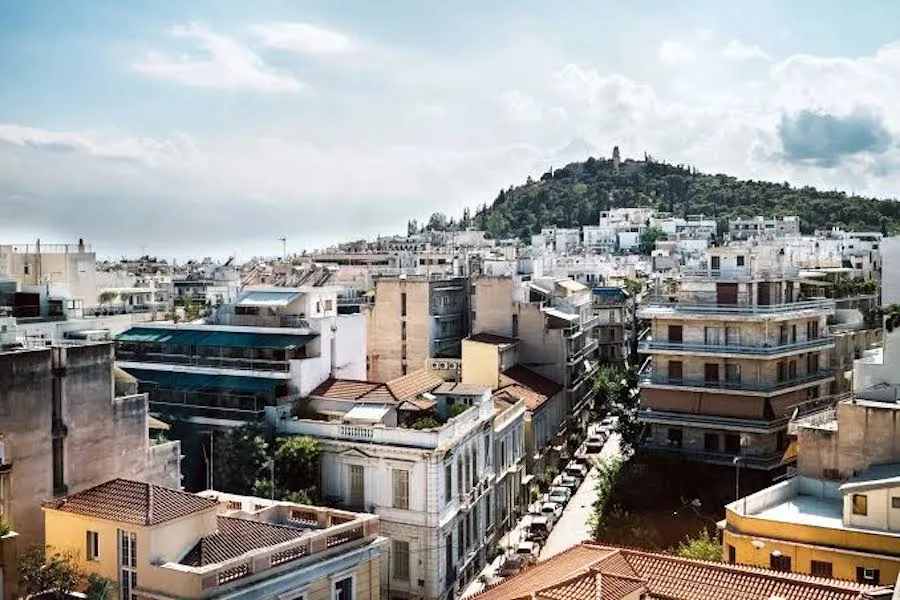
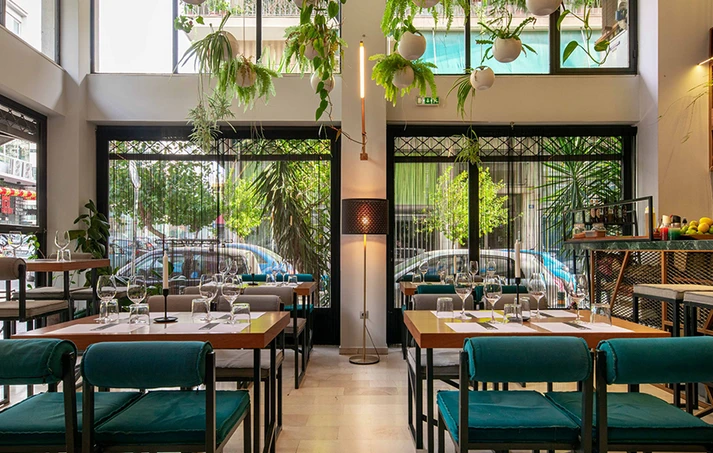
Drakou Street and Georgiou Olympiou Street are the neighbourhood’s living room. Once the cars were removed, cafés placed tables under awnings and the concrete canyon opened into a social space. Bakeries, ouzeries and brunch spots sit side by side, and long-time residents share the pavements with travellers stepping off the metro. Falirou Street, behind Syngrou Avenue, has a different memory. In the late twentieth century it was known for street sex work after dark, particularly by trans sex workers, while families lived in the apartment blocks above. That history belongs to the neighbourhood, and today the former garages and storerooms at street level hold crowded coffee shops and small restaurants. The area also has supermarkets, greengrocers and services that keep serving permanent residents, which is why Koukaki still works as a place to live rather than only a place to visit.
A small place inside a big city
Koukaki has the attitude of a small place inside a big city, and the residents are the reason. On Fridays the laiki, the weekly street market, sets up in the neighbourhood and brings people out to buy their vegetables and fruit in the traditional way. The position adds to the ease of daily life: downtown is one step away on foot, the Onassis Stegi cultural centre stands nearby on Syngrou Avenue, and the Niarchos complex and the sea are a short tram or bus ride further south. Nobody needs a car for any of it. Young professionals, digital nomads and alternative people have been drawn to the area, and they find the energy of the city centre without the unrest that Exarcheia is known for. The mix works because the long-time residents still set the tone.
Heat, shade and the hill
Summer heat and a shortage of trees define the outdoor experience in Koukaki. The average street is a narrow canyon of apartment blocks, with balconies facing each other across the road and, in front of them, the grey facade of the next building, often left unpainted for decades. Only the upper floors have a view of the Acropolis. Cars are parked bumper to bumper, motorbikes stand on the pavements and rubbish bins crowd the kerb. Very few streets have trees, so the concrete soaks up the sun all day and gives the heat back at night. In July and August the neighbourhood becomes infernal, and air conditioning is a necessity rather than a luxury. Winters are mild and short, and spring and autumn are the best seasons for walking.
The relief comes from a handful of pedestrian streets with mature trees, and from Filopappou Hill. The hill once had a reputation for voyeurs and after-dark mischief, but today it is a safe forest park, with pine-shaded paths, viewpoints over the city and cooler air than the streets below. Pedestrian streets lead from the neighbourhood to Thissio and Plaka, so a long, mostly car-free walk is possible. A top-floor flat should be judged on its insulation and shading as much as on its view.
Getting around and getting care
The location makes daily errands easy. The Acropolis, the museum and the historic centre are all reachable on foot, and Syngrou-Fix metro station connects the area to the rest of Athens and, with a change, to the airport. Convenience depends on the street, because the eastern edge near Syngrou Avenue has quick transport but also traffic and noise, while the interior blocks are quieter and a little further from the metro.
Koukaki has pharmacies and private practices close by, and the main hospitals are a short ride away. Residents head to the hospitals around Kolonaki, Evangelismos being the best known, and the metro, a bus or a very cheap taxi will take you there. Retirees who apply for a visa must hold private health insurance, and private clinics and specialists are easy to find across the city.
The price of staying
Koukaki can no longer be described as a cheap alternative to the historic centre. In August 2026, the average asking price in the wider Koukaki–Makrygianni market was about €3,914 per square metre, with asking rents near €14.89 per square metre per month. Asking prices rose less than one per cent over the year, while asking rents climbed more than eight per cent.
These are advertised figures, not completed sales or signed leases, and they cover a broad area. Makrygianni, closest to the Acropolis, is noticeably dearer, while the Fix and Pediki Chara areas sit a little lower. These averages are pulled upwards by renovated units. An older, unrenovated 70 square metre apartment can still be bought for around €140,000, while a renovated one with a lift, balcony and view can cost far more. Maintenance in older buildings, energy performance and shared costs belong in the budget as well.
Life inside the buildings
The deeper change is inside the buildings. An Athenian apartment block has traditionally been a small shared community, with owners and tenants using the same entrance, lift and staircase, and neighbours who knew one another. When several flats become short-term rentals, the people passing through change every few days, and key boxes, luggage and cleaning crews become part of the routine. Late arrivals and noise can wear on the residents who remain.
The scale is real. At the end of 2025, Koukaki counted 1,331 active short-term listings, a rise of 14 per cent. A listing is not the same as a flat permanently removed from the housing market, so the figure shows the pressure without measuring displacement exactly.
The rules are tightening. First-time registration of new short-term rentals is restricted in central Athens, and the government has said the restriction will continue through 2027. Existing registered properties may keep operating, so the neighbourhood will not change overnight.
Choosing the right building
Two apartments on the same street can offer very different lives. A well-kept building with mostly permanent residents may be calm, friendly and predictable. The building next door, with half its flats let to visitors, may feel like a small hotel without a front desk. Before buying, ask how many units operate as short-term rentals, read the building’s regulations, review recent disputes and shared expenses, and have a local lawyer and engineer check permits and any unauthorised alterations. Visit at night and at the weekend as well, because Koukaki’s character changes with the hour.
Ask also whether the building has a lift and how shared expenses are divided when some flats operate commercially. A block raised in the 1960s may need work on its facade, wiring, plumbing and insulation, so ask to see the maintenance record and any plans for repairs. The answers will tell you more about daily life than the address on the listing.
Who feels at home in Koukaki
A large expat community has lived in Koukaki for many years, some families since the 1970s. These foreign residents live like their Greek neighbours, with the same bakeries, the same building routines and the same walk to the Acropolis, and many have stayed for decades. A newcomer arrives in a neighbourhood where foreign and Greek neighbours already share the stairwell, the café and the street.
Koukaki suits retirees who want a walkable urban life, enjoy cafés and culture, and would rather live without a car. It is a good fit for someone who splits the year between Athens and another home. People who prize silence, long-established neighbours and low costs may be happier on a side street away from the visitor routes, or in another neighbourhood altogether.
***