
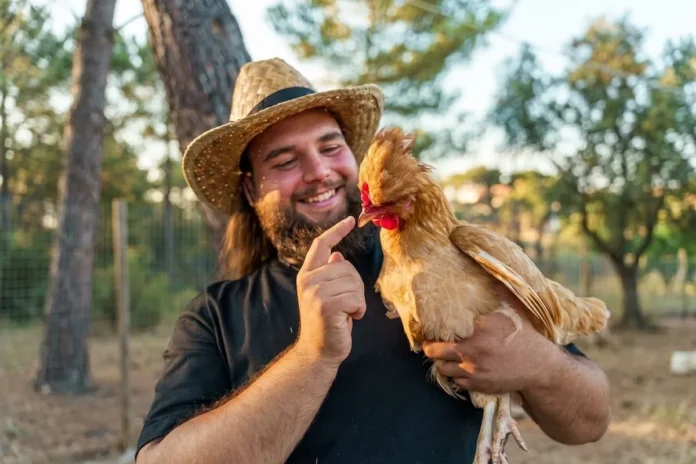
Thanassis Kallinteris, Microgreens Farmer and Botanic Educator, Gives Advice on Starting Your Retirement Garden
Thinking about a food garden after your move to Greece? You don’t need a green thumb, a big plot, or years of experience to get real results. We spoke with Thanassis Kallinteris, who cultivates microgreens and teaches beginners how to grow their own food, about where to start, how much space and time it actually takes, and what a realistic first year looks like for someone who has never picked up a trowel.
For someone who moves to Greece after retirement and has never grown anything in his life, where would you tell him to start? Does he need to know something about soil, seeds, and plants first, or can he learn it all along the way?
The first thing I’d tell him is: don’t read six books before you put your first seed in the ground. One of the biggest mistakes we make today is thinking we need to know everything before we start. With growing food, it’s exactly the opposite. You put something in the soil, you make a mistake, you see why it didn’t work, you try again, and that’s how you learn.
He doesn’t need to know in advance what pH his soil has, every plant deficiency there is, or fifty different tomato varieties. He needs to know five basic things: a plant wants light, water, decent soil, nutrients, and a bit of room to grow. He’ll pick up the rest along the way.
I’d tell him to start with a bed of two or three square meters, not a hundred-square-meter garden. Plant five things he actually eats: two lettuces, a few radishes, spring onions, basil, a tomato plant when the season’s right. And learn those.
Because the first harvest is what hooks you on growing food. Not the theory.
How quickly can a beginner eat something he’s grown himself? If he starts today, what would realistically be the first vegetable or product he could put on his table?
If we want to cheat a little, microgreens. Within about a week he can have something in front of him that he sowed himself and is now eating. And I think that’s tremendously important for a beginner, because it gives him an immediate first win. That’s actually how I started. My first harvest was a tray of radish microgreens.
If we’re talking about a regular vegetable patch, radishes are again one of the first choices I’d make. They’re fast and simple. You can also get baby leaves from lettuce, arugula, and other leafy greens fairly quickly. You don’t need to wait six months to feel like you’ve “become a producer.” In a few weeks you can have made a salad where quite a bit of what’s in it, you grew yourself.
And that first salad, funny as it sounds, tastes different.
How much space does someone actually need to grow a portion of the vegetables they eat? Can it be done in a small garden, or does it need a proper plot of land?
Much less space than most people think. We picture growing food as needing a field with a tractor in the middle. It isn’t like that.
You can produce a very decent share of the vegetables you eat in a few square meters, as long as you use the space well. If you have ten square meters and work them well, you can have a steady supply of salad greens, herbs, arugula, spring onions, radishes, some tomatoes, peppers, and quite a few other things depending on the season. With 50 or 100 square meters, now we’re talking about a real small vegetable garden that can produce serious quantities.
And of course we’re not limited to the horizontal plane. We can grow cucumbers, beans, and tomatoes vertically. We can have pots, raised beds, walls of herbs.
The problem usually isn’t that we don’t have enough space. It’s that we don’t use the space we have.
If someone has, say, a 50- or 100-square-meter garden, what could they expect to produce in a year? How many different kinds of vegetables could they realistically put on their table?
Quite a lot. And especially in Greece, we have the enormous privilege of being able to grow food almost all year round. Tomato season ends, but that doesn’t mean the garden closes.
In winter you can have broccoli, cabbage, cauliflower, lettuce, spinach, chard, leeks, carrots, beets, radishes, onions. Then spring and summer arrive with tomatoes, cucumbers, zucchini, eggplants, peppers, beans, melons, watermelons, and plenty of herbs. So on 50 or 100 square meters, if someone organizes their succession plantings properly, they can very easily see twenty or thirty different kinds of food come out of that same space over the course of a year.
That doesn’t mean full self-sufficiency. Producing a large share of your vegetables is one thing; producing all the calories you need to live is another. But for one or two people, a hundred well-organized square meters can genuinely change what ends up on the table every day.
How physically demanding is growing food? Are digging, hoeing, weeding, and the rest of it something a healthy retiree can manage, or are there tasks that require real physical strength?
There’s a myth here I think we need to break a little. Growing food doesn’t have to mean picking up a hoe and digging for eight hours under the sun. That’s one way to do it. And not necessarily the best one.
There are certainly jobs that are heavy: hauling sacks of soil, moving compost, setting up infrastructure, digging a virgin plot for the first time. But those are usually one-off jobs, or ones you can easily ask for help with.
Day-to-day gardening can be very gentle. Step outside in the morning with your coffee, tie up a couple of tomato plants, pull five weeds, pick two cucumbers, check whether anything needs water. For a healthy retiree, I don’t see that as a problem. Quite the opposite. I consider this gentle, daily physical activity one of the garden’s great gifts.
Is there a way to organize the garden so as to limit physical strain? Can raised beds, the right tools, or other techniques make the work easier?
A hundred percent. And this is exactly the difference between working for the garden and designing the garden so it works for you. Raised beds so you don’t have to bend over. Automatic watering so you’re not dragging hoses around every evening. Mulch, covering the soil, so it holds more moisture and produces fewer weeds. No-dig growing methods. The right tools with long handles. Vertical structures so the plants come up closer to your height. And above all, a garden built to human scale.
If you’re 70 and want to enjoy your garden, there’s no reason to plant 200 tomato plants.
Plant six.
Take good care of them, enjoy them, eat your tomatoes. We don’t get a medal for wearing ourselves out more.
How much time does a small vegetable garden actually take in practice? Are we talking about a few hours a week, or daily work?
A small, well-organized vegetable garden can need just a few hours a week. There’s daily contact with it, of course, but that doesn’t necessarily mean labor. You might step out for ten minutes: look at the plants, cut a tomato, notice an insect, pull a weed. There are days you’ll spend more time, when you’re sowing, transplanting, preparing a new bed. But with automatic watering and a sensibly sized garden, it doesn’t have to become a chore.
And personally, I think that’s where all the beauty lies. The garden gets you outside a little every day without anyone having to tell you “you need to exercise.”
It gives you a reason.
Are there periods when the garden demands a lot more work than others? Could a retiree treat gardening as a pleasant daily activity without feeling like they’ve taken on a second job?
Of course there are busier periods. When the growing season changes and you have to clear out old plants, prepare beds, add compost, sow and transplant the new ones, you’ll have a bit more running around. Same when production suddenly picks up and you’re out there every day picking tomatoes and zucchini. But even that comes down to planning. If you plant 30 zucchini plants and then complain you’ve got 150 zucchini, that’s not the zucchini’s fault.
That’s a planning problem.
For a retiree, I’d set up the garden exactly with a hobby mindset: a little production from lots of different things, staggered sowings, and enough space to move around comfortably. The goal isn’t to become a farmer. The goal is to be able to step outside at 8 a.m., spend half an hour on something real, get your hands a little dirty, and then bring your salad in.
What happens when the garden’s owner wants to go away for two or three weeks? Can a vegetable garden “survive” an absence, or does someone need to water and tend the plants every day?
If the garden is designed properly, yes, they can go. The biggest issue in Greece, especially in summer, is water. If you expect to stand there with the hose for an hour every evening, then yes, you’ve built yourself a garden that holds you hostage. I would never do that.
Automatic watering on a timer, proper drip lines, mulch on the soil, and a basic check that the system is working. With that, you can leave. For two or three weeks in August, ideally you want a neighbor or a friend to stop by once or twice a week, not necessarily to water, but to check that a pipe hasn’t broken, the timer hasn’t stopped, or nothing unexpected has happened.
Technology today lets us have a garden without being its prisoner.
And what about longer or unplanned absences? Are there crops that suit people who travel often or spend part of the year outside Greece?
Absolutely. If someone is away a lot, I wouldn’t have them build a garden that relies entirely on demanding annual plants. I’d put far more emphasis on perennials: rosemary, thyme, oregano, sage, lavender, artichokes, and other plants that, once established, don’t need you hovering over them every day. And of course fruit trees: a lemon tree, a fig tree, a pomegranate, olives, depending on the area and the microclimate.
The real move for someone who wants more freedom is to gradually turn their garden from a space that starts from zero every six months into a small ecosystem that grows more stable year after year. That’s one of the things that fascinates me most.
I don’t want a garden that depends on me to survive. I want a garden that, the older it gets, needs me less and less.
For a retiree living in Greece, which vegetables, herbs, or other edible plants would you suggest as a “core repertoire”? Are there varieties that can give production for much of the year?
I’d start with what they actually cook with. There’s no reason to grow fifteen things you don’t even enjoy eating just because they’re easy. For a Greek kitchen, I’d definitely plant tomatoes, cucumbers, peppers, zucchini, onions, and some green beans for summer. In the cooler months: lettuce, arugula, spinach, chard, broccoli, cabbage, carrots, beets, and radishes. And then herbs: basil, parsley, mint, oregano, thyme, rosemary, sage.
These matter enormously to me, because you might need five grams of parsley or two sprigs of thyme. It’s ridiculous to have to get in the car, drive to the supermarket, buy a plastic packet, and throw half of it away. You step outside, cut what you need, and go back to cooking.
That’s quality of life.

How much can a garden like this actually reduce shopping at the supermarket or the farmers’ market? Is it realistic to talk about a significant share of daily consumption, or is it mainly supplementary production?
It can reduce it significantly, but let’s be honest too. You don’t put in a ten-square-meter vegetable garden and suddenly stop going to the supermarket. That’s not how it works. But you can wipe entire categories of products off your list for long stretches of time. You might go months without needing to buy lettuce. You won’t need to buy herbs. In summer you’ll have more tomatoes than you can eat, plus zucchini, cucumbers, peppers.
And the financial side is only one part of it. Because a tomato cut at 7:30 and served in a village salad at 8 is not the same product as a tomato that was picked unripe, shipped, stored in warehouses, and sat around until you bought it. So yes, it can seriously cut down your shopping.
But often the biggest gain isn’t in the euros you saved. It’s in what you’re eating.
Is there an age at which growing food becomes too demanding? Or, with the right choice of plants, tools, and methods, can someone keep going well into old age?
I don’t believe there’s an age where you suddenly can’t grow food anymore. There’s each person’s physical condition, and there’s how they’ve designed their garden. Being 80 and having to bend down to the ground and carry 25-kilo sacks is one thing; having two raised beds next to your house, automatic watering, and cutting your lettuce fresh every morning is another.
You might of course scale down at some point: from 100 square meters to 20, from 20 to four raised beds, and at some point, maybe just your pots. But that doesn’t mean you’ve stopped growing food. It means you’ve adapted growing food to your life.
And I think it’s a far more beautiful image, an 85-year-old cutting basil from a pot every morning, than an 85-year-old who’s been told he’s “too old for that now.”
Beyond the seeds and trees you sell, you also run online courses for people who want to learn to grow their own food. What exactly can a beginner learn from these courses? And how much can written instructions and online guidance replace the experience that a neighbor or relative who knew about growing food used to provide?
What I’m trying to do through the courses and the teaching material isn’t turn someone into an agronomist. I want to take away the first ten reasons someone is afraid to start: how to build a simple bed, how to choose soil, when to sow, how to transplant, how to water, what can go wrong, how to handle the most common problems, and above all, how to observe their plant.
Because that’s the real skill. The plant is talking constantly. It shows you if it’s thirsty, if something’s eating it, if it doesn’t like where it is, if it’s growing well. You just don’t know the language yet, at first.
Written instructions and online teaching can save you a huge amount of time and a huge number of mistakes, but they can’t and shouldn’t replace experience. Experience only comes when you put your hands in the soil. What online guidance can do, though, is act a bit like that grandfather, grandmother, or neighbor who used to exist in every village, someone you could ask: “Hey, why did my tomato turn out like this?”
Because today we’ve lost a huge part of that transfer of knowledge from one generation to the next. So we’re trying, with modern tools, to rebuild something that was once completely normal.
If you were sitting across from a 65 or 70-year-old foreigner who’s just settled in Greece, has a small garden but is afraid he won’t manage, what would you tell him to plant the first year, and what goal would you set for him?
First of all, I’d tell him: you didn’t move to Greece at 70 to be afraid of a tomato plant. You’ve done much harder things in your life than putting a seed in the ground. And you don’t need to “succeed” the way you’re picturing it in your head.
We’re not taking exams here. If you plant ten lettuces and six of them make it, you’ve won. If you plant four tomato plants and one of them grows huge and gives you the best tomatoes you’ve ever eaten, you’ve won. If the snails eat everything and you have to replant, you’ve still won, because you learned something you didn’t know before.
For the first year, I’d tell him to keep things very simple. One small bed. Tomatoes, cucumbers, zucchini, and basil for summer. Some lettuce, arugula, radishes, and spring onions once the temperature drops. Two or three Mediterranean herbs that will stay for years. And if he has room, one tree, just one: a lemon, a fig, a pomegranate, something that suits his area and something he genuinely loves.
And the goal I’d set for that first year wouldn’t be self-sufficiency. I’d tell him: “By this time next year, I want you to have eaten ten meals where you can look at your plate and say: I grew that, from my own soil.”
That’s all.
Because the moment you do that for the first time, something shifts inside you. You realize you’re not only a consumer. You can still produce. And I think that matters enormously, especially for someone who’s just finished their working life. Because retirement doesn’t mean you’ve stopped being useful, creative, or productive. It means that for the first time in many, many years, you finally get to decide where you want to give your time. And personally, I can’t think of many better ways to spend it than planting something, watching it grow, and in the end, sharing it with someone you love.
Finding the Right Location for Microfarming
Five affordable mainland cities seem similar initially, but evaluating daily life, healthcare, airport access, and local growing conditions reveals sharp differences—and which locations truly give you the opportunity to thrive with a home garden. Explore our comparative overview of five key mainland cities, to see which destination offers the ideal environment for your lifestyle and retirement bostani.
ABOUT THE EXPERT
Thanassis Kallinteris
Microgreens Farmer and Botanic Educator
Wizden Microgreens
Public Commercial Registry Numbe (ΓΕΜΗ): 195438201000
thanasis.kallinteris599@gmail.com
***