
Reliable Transit and Healthcare Links
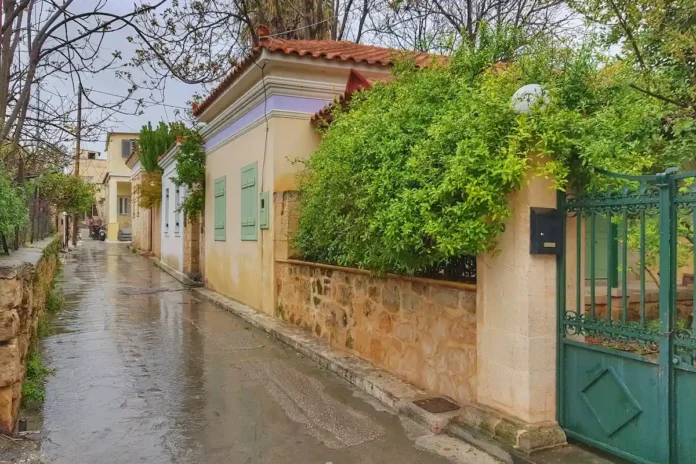
Aegina is a short ferry ride from Athens, an island that breaks the usual stereotypes of Greek island life. It offers something increasingly rare: a place where everyday life unfolds at a human pace, supported by strong traditions, a living local community, and effortless access to the mainland. For visitors, it feels like a peaceful escape. For retirees and long-term residents, it often becomes home.
Aegina has been shaped by centuries of continuous habitation, and that sense of continuity is felt everywhere: in its neoclassical harbor, its pistachio orchards, its family-run tavernas, and its year-round social life. Unlike islands that empty out after summer, Aegina remains alive in every season. Shops stay open, cafés stay busy, and neighbors greet each other by name. This stability makes it especially appealing to retirees who want more than beauty. They also want reliability and connection.
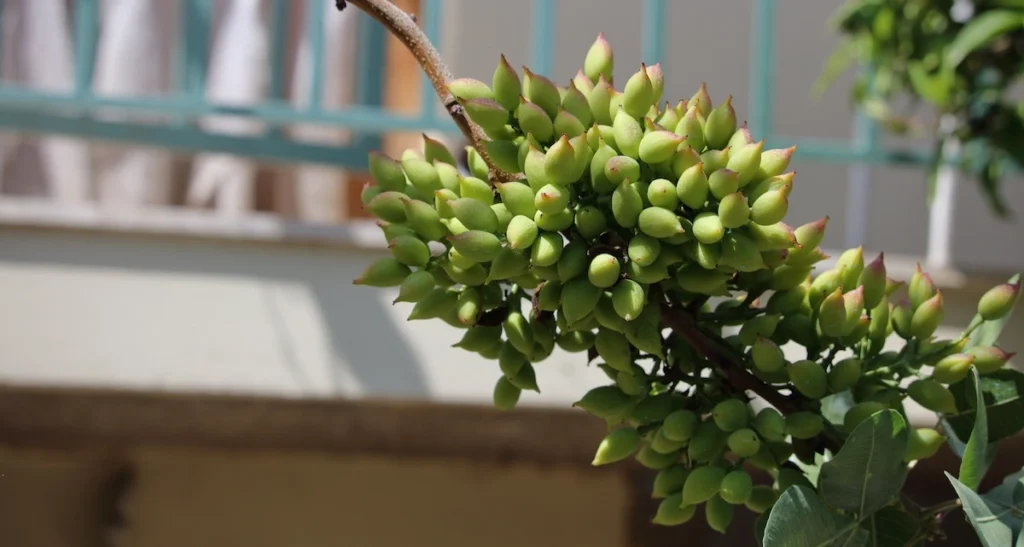
The island is internationally known for its exceptional pistachios, celebrated each year during the Fistiki Festival, yet its appeal goes far beyond agriculture. Ancient sanctuaries, quiet beaches, walkable towns, and a creative legacy tied to some of Greece’s most important cultural figures all contribute to its character. A short ferry ride connects residents to Athens, with access to major hospitals, international flights, and urban amenities. Aegina is a rare hybrid: traditional and tranquil, without ever feeling isolated.
Location, Access & Connectivity
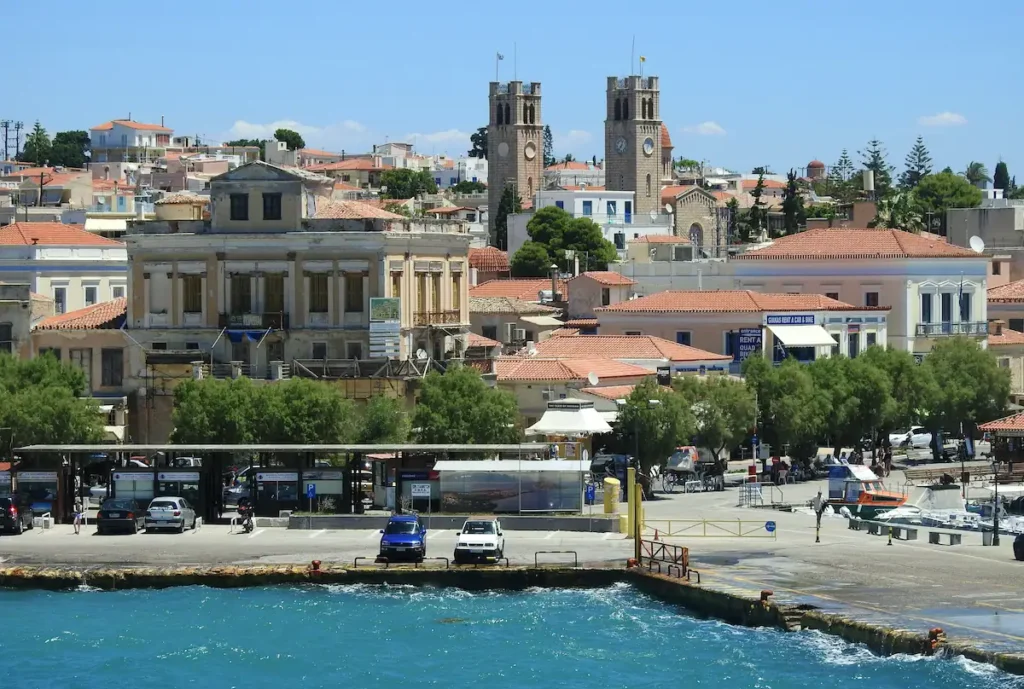
Aegina sits in the Saronic Gulf, just southwest of Athens, making it one of the closest inhabited Greek islands to the mainland. Ferries depart from Piraeus multiple times daily throughout the year. Conventional ferries take about one hour; high-speed vessels reduce the trip to approximately 35 minutes.
This frequent and reliable connection ensures year-round accessibility. Weather-related cancellations can occur during strong winds, but disruptions are generally shorter and less frequent than on more distant islands. Residents and visiting family reach Athens International Airport via Piraeus, making international travel straightforward.
For healthcare, the short ferry distance allows same-day access to major hospitals in Piraeus and central Athens. Emergency transport coordination with mainland facilities is well established.
Within the island, a local bus network connects Aegina Town with villages such as Perdika and Agia Marina year-round. Taxis are always available, and while many residents keep a small car, daily life in Aegina Town can be managed without one.
Climate & Seasonal Rhythm
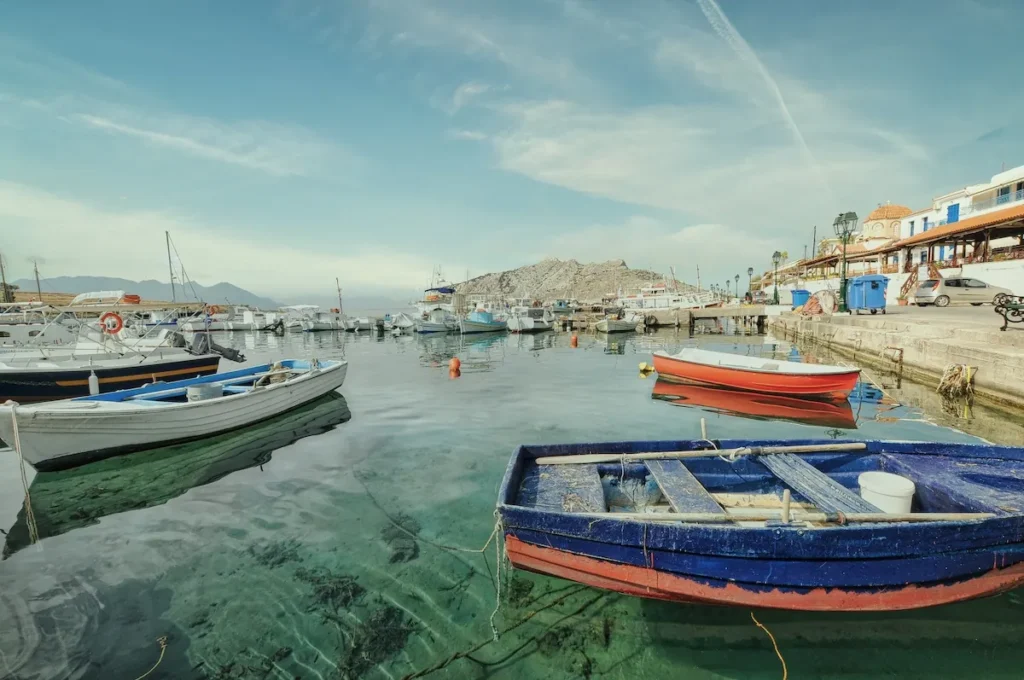
Aegina has a typical Mediterranean climate, but its seasonal rhythm is more balanced than that of many tourist-driven islands. Summers are warm to hot, with dry conditions and cooling sea breezes that help moderate the heat along the coast. Humidity is generally manageable.
Winters are mild but noticeably cooler than summer residents often expect. Temperatures can drop, especially at night, and periods of wind and rain are common. Snow is extremely rare, but winter weather can affect ferry schedules and increases heating needs for homes without proper insulation.
Spring and autumn are the most comfortable seasons for daily living. Temperatures are moderate, visitor numbers are lower, and life moves at an unhurried pace.
Homes require both cooling in summer and heating in winter, and energy costs should factor into long-term planning. Unlike islands that shut down in winter, Aegina remains functional year-round.
Daily Life & Local Community
Aegina supports a stable permanent population, and this year-round presence shapes daily life in ways retirees often find reassuring. Children attend local schools, fishermen work the harbor, and small businesses stay open outside the summer season. The island does not rely exclusively on tourism, which preserves continuity and routine.
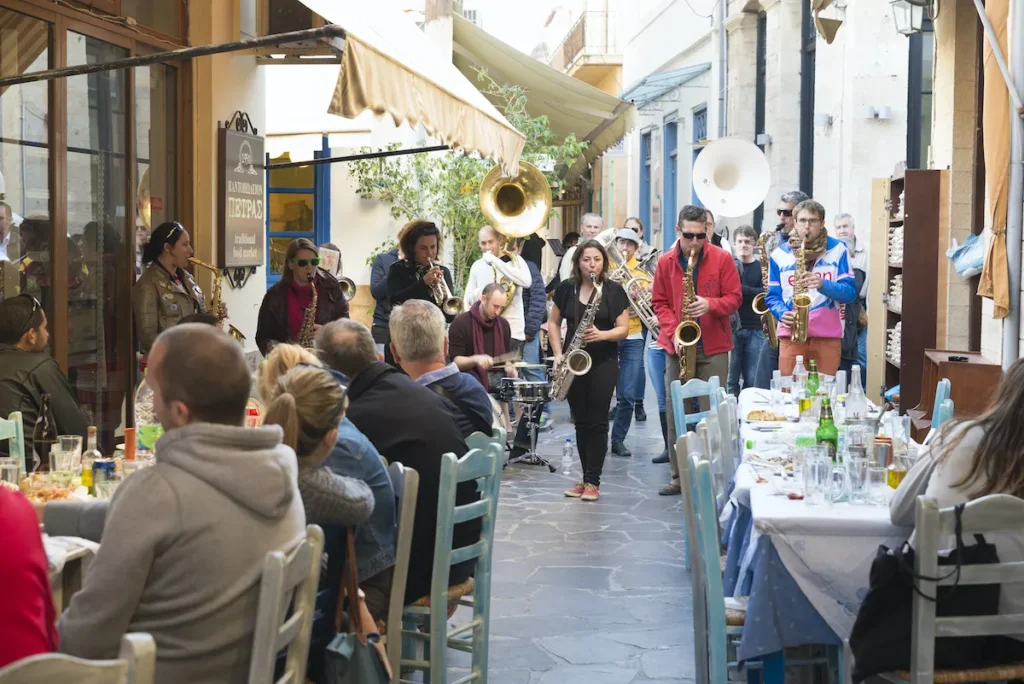
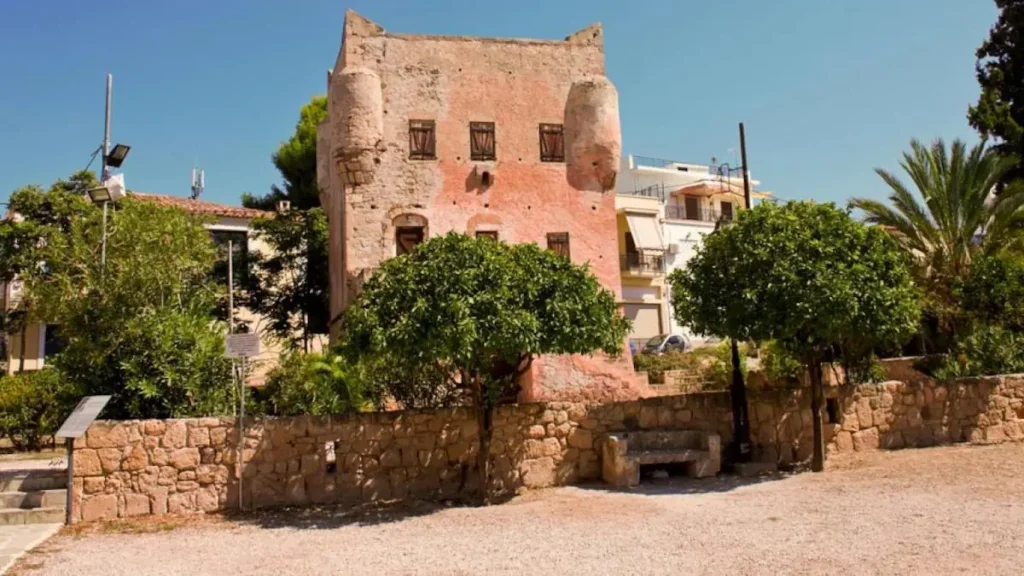
Mornings often begin at bakeries, cafés, or the local market, where social interaction weaves naturally into daily errands. Regular faces quickly become familiar at cafés, which serve as meeting points. A short drive away, the ancient Temple of Aphaia crowns a hill, a silent witness to Aegina’s classical heritage. This familiarity helps newcomers integrate over time, particularly those who stay through the quieter months.
Local culture emphasizes relationships, consistency, and shared rhythms. Retirees who approach integration with patience, learning basic Greek and respecting local customs, tend to feel welcomed rather than treated as temporary outsiders. Long-term residents find that even limited Greek significantly improves social connection.
Healthcare & Essential Services
Aegina has a public hospital and a 24-hour health center providing primary care, emergency treatment, and basic diagnostic services. Several private doctors operate on the island, including general practitioners, dentists, and selected specialists. Pharmacies operate year-round, and pharmacists often play an advisory role for minor issues.
Ambulance services are available, though response times can vary depending on location and demand. For serious or specialized care, proximity to Athens is critical. Same-day ferry trips make accessing major hospitals and clinics in Piraeus and central Athens practical.
Retirees with Greek residency can access the public healthcare system. Many residents also maintain private insurance for quicker appointments and a broader choice of specialists. This hybrid approach is common and practical.
Compared to more remote islands, the balance between local services and mainland access offers a level of medical security that many retirees prioritize.
Cost of Living Overview
The cost of living on Aegina sits below Athens and well below high-profile tourist islands, while remaining slightly higher than rural mainland areas. Proximity to the capital keeps supply chains efficient and helps stabilize prices year-round.
Housing costs vary depending on location, condition, and season. Long-term rentals are more affordable outside summer, while seasonal demand pushes prices upward near the port and popular coastal areas. Utilities require careful budgeting, particularly for winter heating in older homes and summer cooling during heatwaves.
Food costs are moderate. Supermarkets offer mainland-level pricing, and local markets provide fresh produce, seafood, and pistachios at reasonable rates. Dining out is generally affordable, especially at family-run tavernas catering to locals. Ferry costs should factor into monthly budgets for those traveling frequently to Athens.
Housing & Real Estate Landscape
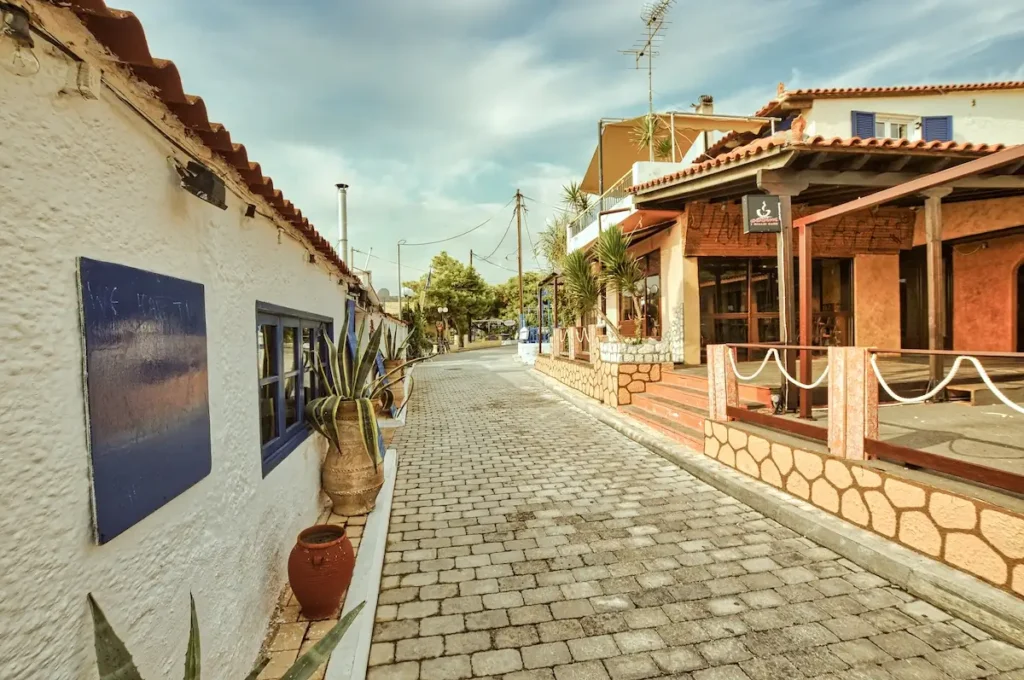
Aegina’s housing stock reflects its long-standing residential character. Options range from neoclassical apartments in Aegina Town to detached houses in villages and more spacious rural properties inland. Many homes were built for year-round use rather than short-term tourism, which benefits retirees seeking stability.
Renting is common among newcomers, especially during the first years. Long-term rentals are more readily available in winter, while summer demand can limit options or increase prices. Buying property is possible for those planning permanent residence, but older homes often require renovation, particularly regarding insulation, plumbing, and heating systems.
Neighborhood choice plays a significant role. Aegina Town offers walkability and access to services, while areas like Perdika and Vathi provide quieter, more sea-focused living. Retirees are advised to secure housing arrangements outside peak summer months.
Lifestyle, Nature & Leisure
Small, repeatable pleasures rather than spectacle shape life on Aegina. Walkability is a defining feature, especially in Aegina Town, where daily errands, café visits, and waterfront walks require little planning. Café culture plays a central role in social life. People rarely rush, and frequent visits cultivate familiarity. Swimming remains part of the daily routine well beyond summer, and many residents develop year-round relationships with the sea.
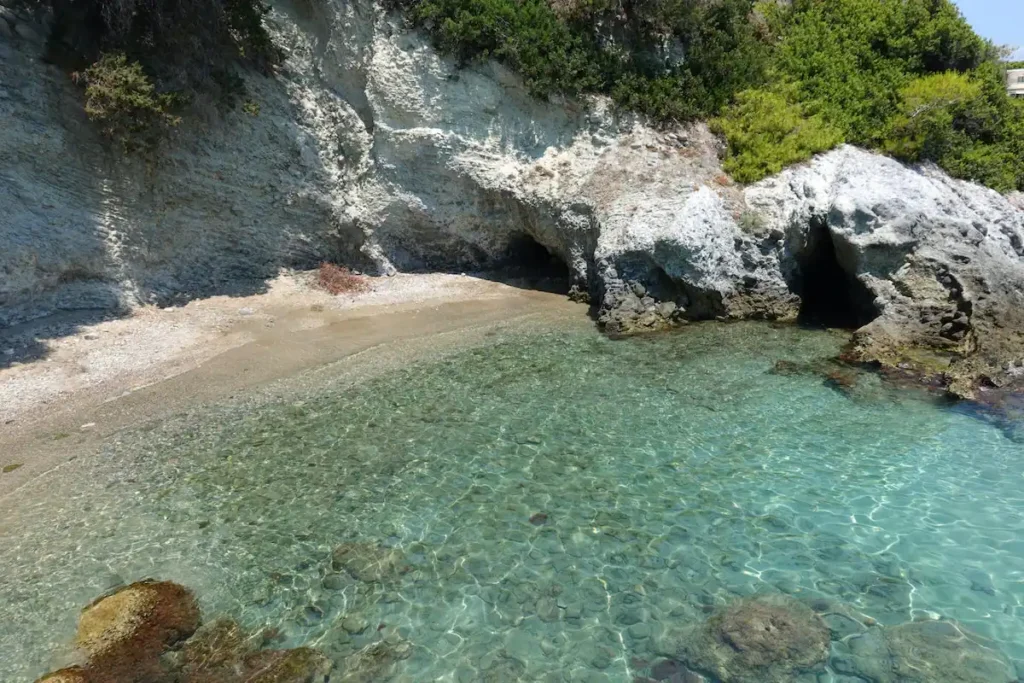
Nature is accessible without effort. Pistachio orchards, pine-covered hills, and quiet coves are part of everyday movement rather than reserved for excursions. Walking paths and gentle terrain support an active but manageable lifestyle.
Cultural life blends small local traditions with a few larger festivals. Residents celebrate religious events including Agios Nektarios, the Dormition of the Virgin Mary, and Agia Marina, which provide insight into the island’s social rhythms. The Aegina Fistiki Fest in mid-September celebrates the island’s famous pistachios, and the Aegina Music Festival runs through July and August.
Aegina has long attracted writers and artists seeking calm and clarity, including Nikos Kazantzakis and Yannis Moralis, who found inspiration in the island’s light and unhurried pace. Leisure here is less about entertainment and more about rhythm: walking, reading, conversation, and connection to place.
Local Reality Check
Aegina’s closeness to Athens is both an advantage and a defining reality. While it offers calm and separation, it never feels fully detached from the capital. Daytrippers and weekend visitors increase activity in summer, and ferry traffic shapes daily timing.
This proximity brings convenience but means Aegina does not provide total isolation. Retirees seeking complete detachment from urban life may find the island more connected than expected. Those who value flexibility, medical access, and easy transitions between island and city often consider this balance ideal. Aegina is not a retreat from society. It is a softer edge of it.
Who This Destination Is Best Suited For
Aegina suits retirees who want island living without logistical complexity. It appeals to those who value healthcare access, reliable transport, and the ability to host visiting family easily. Car-free retirees benefit from walkable areas and public transport. Budget-conscious retirees will appreciate moderate living costs compared to high-tourism islands. Culture-oriented individuals drawn to history, everyday rituals, and quiet creativity often feel at home.
It is less suitable for those seeking dramatic landscapes, intense nightlife, or complete seclusion. Aegina rewards people who value balance: calm without isolation, tradition without stagnation, and independence supported by connection.
***
Discover why the traditional village of Mesagros is the ideal base for those seeking a home near the Temple of Aphaia in Aegina.