
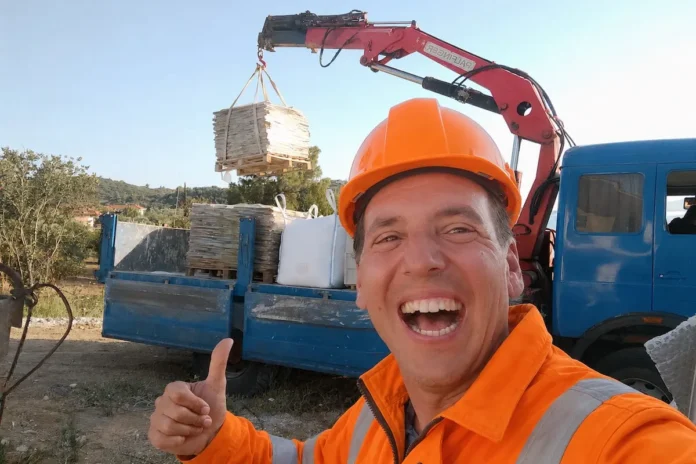
Maarten G. Verhoef Supervises Construction Sites for Owners Living Abroad
Building a home in Greece from another country comes with a specific kind of stress. You can approve the plans, wire the payments, and trust the photos your contractor sends — but you can’t be there to see what those photos leave out. A window installed slightly off. A shortcut taken on waterproofing before it disappears under tile. A pipe that should have been laid before the concrete went down.
This is the gap independent construction supervision is meant to close. Rather than relying solely on the contractor’s own updates, retirees building or renovating in Greece increasingly hire someone who represents only their interests — inspecting the site in person, verifying that materials and workmanship match what was agreed, and flagging problems while they’re still cheap to fix.
We spoke with Maarten G. Verhoef, founder of Dream House Greece, who has spent years supervising construction projects on behalf of owners living abroad. He explains what the job actually involves day to day, what tips him off that something’s wrong before he’s even seen it in person, and the small detail he once caught that would have cost a client a freshly poured driveway.

How did you get into this work?
Dream House Greece grew out of a problem I kept seeing. Foreign owners managing a build from hundreds or thousands of kilometres away run into more than a language barrier — they run into a difference in mindset. Greece has talented craftsmen and a relaxed way of working that can clash with the precision and pace international clients expect. What counts as “good enough” locally often isn’t what a homeowner from Northern Europe or North America had in mind.
So I represent the owner, not the contractor. I check that agreements are kept, that workmanship meets the agreed standard, and that problems get caught before they turn into expensive ones.
How would you describe the role to someone who’s never heard of it?
Think of it as your eyes on the ground. If you live abroad, you can’t drop by the site to check progress, so I do it for you — inspecting the work, verifying materials and timelines, and flagging issues before they get costly. A lot of it comes down to translating between two sets of expectations: what’s normal in Greek construction practice, and what an international buyer assumes will happen without being told.
What areas do you cover, and how many projects do you take on at once?
Mainly Western Greece and the Ionian — Corfu, Lefkada, Kefalonia, Zakynthos — along with Aetolia-Acarnania, Epirus, and the mainland from Metsovo down into the Peloponnese. I take on other regions selectively, depending on the project and how much supervision it needs.
I keep the number of active projects deliberately small. Proper supervision means being on-site regularly, not managing a portfolio from a spreadsheet. A handful of projects done well beats a long list done thinly.

Walk us through a typical week — how often are you on site, and what determines a visit versus a call?
There’s no fixed schedule; it follows what’s actually happening on site. During critical phases — foundations, structural work, waterproofing, roofing, electrical and plumbing — I’m there more often, because those are the stages where mistakes are expensive or impossible to fix later. In quieter periods, photos, video calls and regular updates from the contractor are usually enough, though I never rely on photos alone for quality checks — they can’t replace being there in person.
After every visit, clients get a written report with photos and clear notes on what’s done, what needs attention, and whether any decisions are pending.
What are you actually looking for when you inspect a site?
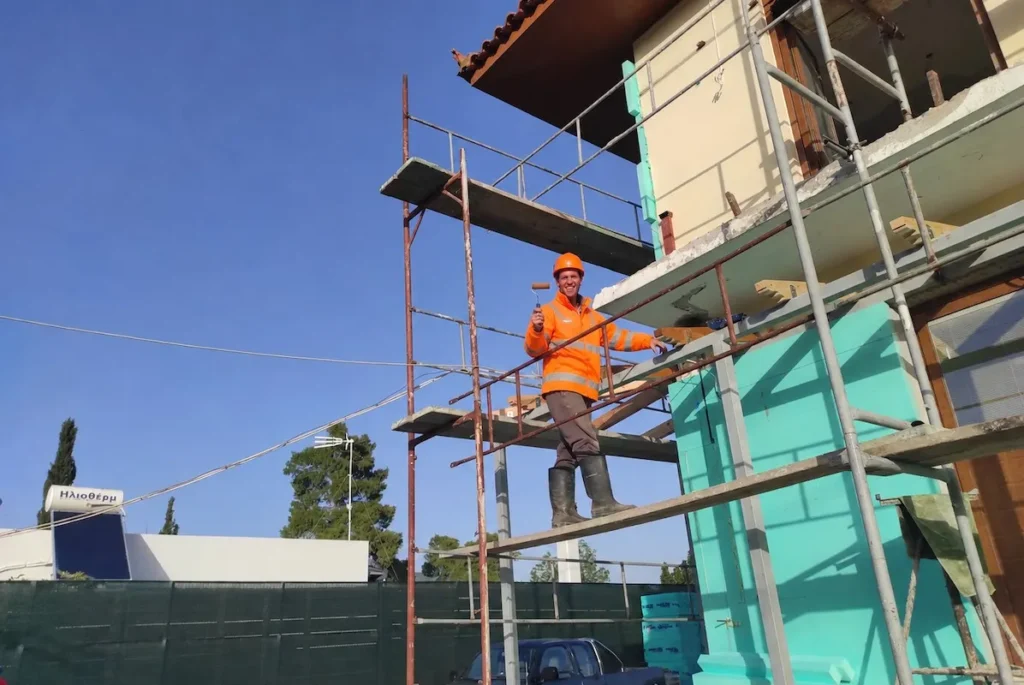
Several things at once: whether the workmanship holds up, whether what’s being built matches the approved plans, whether the right materials are being used and installed correctly, and whether progress matches the schedule. I pay particular attention to work that’s about to disappear behind concrete, plaster or tiles — structural elements, waterproofing, insulation, wiring — because once it’s covered, it’s covered.
I also look at how organised the site is generally. A well-run site tends to reflect a well-run project, and disorganisation is often an early sign of bigger issues.
How do you keep a client on the other side of the world in the loop?
The goal is for the report to feel like you visited the site yourself. After each inspection I send a written summary in plain language, photos, video where it helps show detail that stills can’t, and notes on anything that needs a decision. I’m also reachable between visits — building a home shouldn’t leave you wondering what’s happening on your own property.
Tell us about a time you caught something important.
Before the concrete base for the paving and driveway was poured, I noticed no one had planned to run PVC conduit underneath it — no sleeves for future irrigation, garden lighting, gate automation, outdoor power, or internet cable. It looked like a small oversight. Left alone, it would have meant breaking up finished paving later for something that a few cheap pipes could have solved beforehand.
That’s really the point of the job: the best outcomes are the ones that never become stories, because the problem got caught before it affected the client, the budget, or the finished house.
How do contractors typically react to being checked on by someone representing an owner abroad?
Reactions vary, and they’ve shifted over the years. Some contractors initially assume I’m there to find fault or get in the way — I’m not. Once it’s clear I’m there to keep communication clear and prevent misunderstandings, most professional contractors are fine with having one point of contact who can make timely decisions with the owner.
That said, the relationship has become more transactional over time — less personal, occasionally curt, with less interest in anything beyond getting paid on schedule. Part of my job now is holding a professional balance: good work done properly, payments made on time. International clients also expect more transparency than they did ten or twenty years ago — regular reports and documented inspections are becoming the norm rather than the exception, even if they’re still not universal.
What makes for a good working relationship with a crew on the ground?
Respect, mostly, in both directions. I respect the contractor’s experience and craft; in return I expect openness and a willingness to raise concerns before they become problems. When something looks off, the conversation is about solving it, not assigning blame — that’s easier and cheaper for everyone than a dispute after the fact. Most contractors work better with someone who understands both the local building culture and why a foreign owner might expect a different level of documentation or finish.

How do you structure your fee?
Mostly a fixed project fee, though some clients prefer to pay per visit or by hours travelled. For smaller jobs — a pre-purchase inspection, a one-off quality check, a milestone review — I can quote a flat fee per visit. Every proposal spells out the scope, the number of visits, what reporting is included, and any travel costs.
When should someone bring you in — before signing, once construction starts, or only when there’s a concern?
As early as possible, ideally before any contract is signed. That’s when reviewing plans and asking the right questions can prevent problems altogether. Once construction is underway, the role shifts to monitoring quality and progress against the plan.
It’s never too late to ask, though. Some clients call after delays, workmanship issues, or unexpected costs have already piled up. I can’t undo what’s already built, but I can assess where things stand and help stop further problems.
What kind of client tends to seek this out?
Three broad types. Some come in proactively, before construction starts, because they’d rather avoid problems than fix them. Others are experienced investors who’ve been through a build before and know what oversight is worth. And some come to me after something’s already gone wrong — delays, poor communication, quality concerns — and the same line comes up often: “I wish I’d brought you in from the start.”
From a distance, what’s a warning sign in emails, invoices or photos?
A few patterns stand out. Vague answers to direct questions, or deadlines that keep shifting without explanation. Invoices asking for payment ahead of the actual progress on site. Photos that always show the same angle and never the wider picture. Finishing work starting before the hidden work underneath it has been properly done. A string of small, undiscussed changes to the plan that add up. None of these prove something’s wrong on their own, but they’re worth checking before money changes hands.
If someone is renovating right now with no one checking on it, what’s the first thing you’d tell them to do?
Don’t wait until you suspect something’s wrong — arrange an inspection before the next major phase begins. Ask for regular progress photos, copies of invoices, and written confirmation of any changes to the plan or budget. Verbal agreements aren’t worth much once a dispute starts. By the time you’re able to visit in person, a lot of the work may already be hidden behind plaster, tile or paint.
If you are interested in the practical timeline of building a new home, we have also featured an exclusive interview with architect Katerina Valsamaki, who guides us through the step-by-step process of constructing a villa with a pool in the Cyclades. Furthermore, to ensure your property is ready to live in, interior designer George Eftimiou shares his expert input on the nuances of luxury decoration and the final touches that turn a house into a home.
ABOUT THE EXPERT
Maarten G. Verhoef, Independent Construction Supervisor
DREAM HOUSE GREECE
info@dreamhousegreece.org
***