
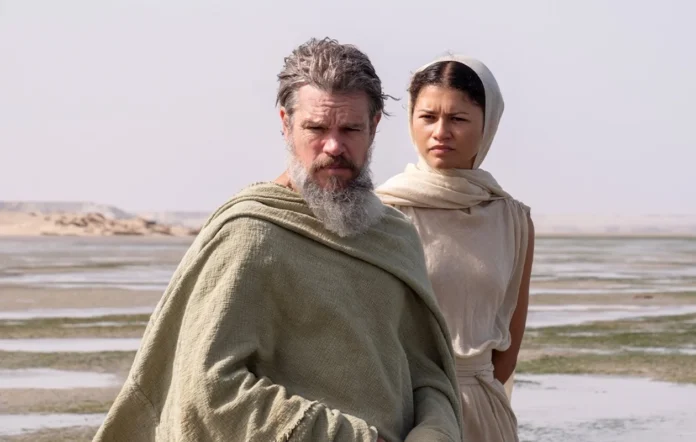
From Screen, Into Settlement: Where You’d Actually Live
The Peloponnese is one of those places where the landscape does most of the talking. Cliffs drop straight into water the color of glass, castles sit where they’ve sat for eight hundred years, and villages still run on the rhythm of a slow coffee and a long lunch. It’s a region that has always made a strong case for itself to foreigners looking to relocate, not through marketing, but simply by being what it is: dramatic, unhurried, and still deeply, ordinarily Greek. Christopher Nolan’s new adaptation of The Odyssey, starring Matt Damon as Odysseus and Zendaya as Athena, filmed several of its key sequences here, across Messinia and at the ancient fortress of Acrocorinth. This piece follows the camera through three of those Peloponnese locations, and looks at what’s actually nearby: the village next door, whether property is on the market, how far the nearest hospital or airport really is.
Acrocorinth: The Fortress on the Hill
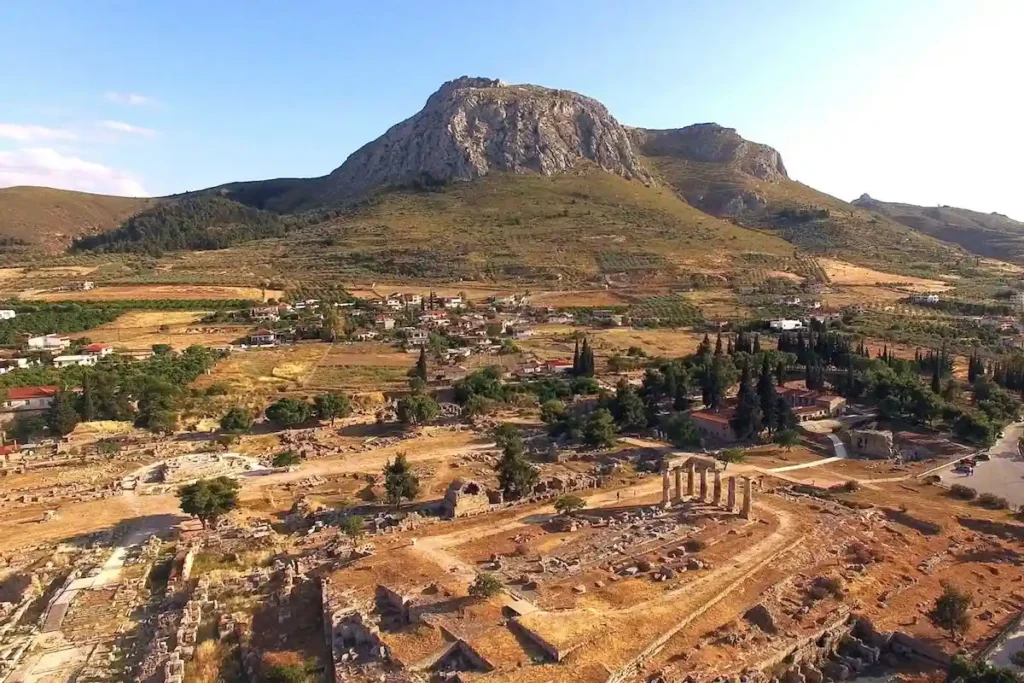
Acrocorinth is a steep, fortified citadel that has stood watch over the city of Corinth since antiquity, rising nearly 1,800 feet (548 metres) above the plain below. The precipitous rock served as the fortified acropolis and the “eye” of the Peloponnese, where within its 3-kilometre-long walls, traces of Byzantine, Venetian, and Ottoman history coexist. In The Odyssey the imposing fortress serves primarily as the backdrop for the island of Ithaca. Its windswept stone walls are featured prominently in exterior landscape shots representing the approaches to Odysseus’ palace, and it is easy to see why very little dressing was needed—the place already looks like it belongs to myth
Ancient Corinth: Village Life at the Foot of the Citadel
At its foot sits Ancient Corinth, a small, quiet village where life still moves at village pace, tavernas open onto a square shaded by plane trees, and the archaeological site is close enough to visit on a morning walk. It is not a resort town. It’s a place where people know each other, and where a foreigner who wants a genuinely Greek daily rhythm, rather than an expat bubble, tends to settle in easily.
Loutraki: Thermal Springs and Seaside Retirement Near Corinth
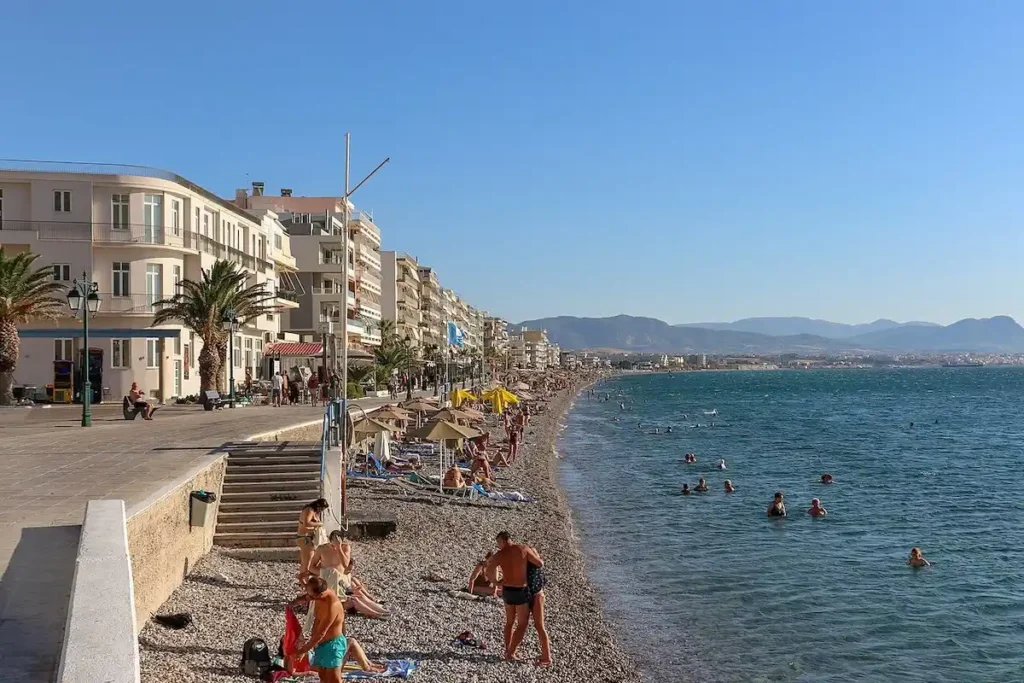
Twenty minutes away, across the Corinth Canal, Loutraki is a different register entirely: a proper seaside town with a long pebble beach, natural thermal spas, and a boardwalk that fills with locals every evening. It already has a modest but real international community, drawn partly by the spa culture and partly by the ease of getting here. Long-term rents in Loutraki run around 500 to 550 euros a month for a typical two-bedroom apartment, making it one of the more accessible entry points to seaside living in the Corinthia region.
Property, Healthcare, and Transport Around Corinth
Both towns share the same practical advantage: Athens is about an hour away, connected by highway and by the Proastiakos suburban rail line from Corinth station, which makes Eleftherios Venizelos Airport and Athens’ major hospitals genuinely reachable rather than theoretical. Corinth’s own general hospital covers day-to-day care locally. Buying here, particularly inland in Ancient Corinth, still counts as one of the more reasonable entry points into the Peloponnese property market compared to the coastal hotspots further south. Winters are mild and wet by Greek standards, summers hot and dry, tempered in Loutraki by the sea.
Voidokilia Beach and Nestor’s Cave
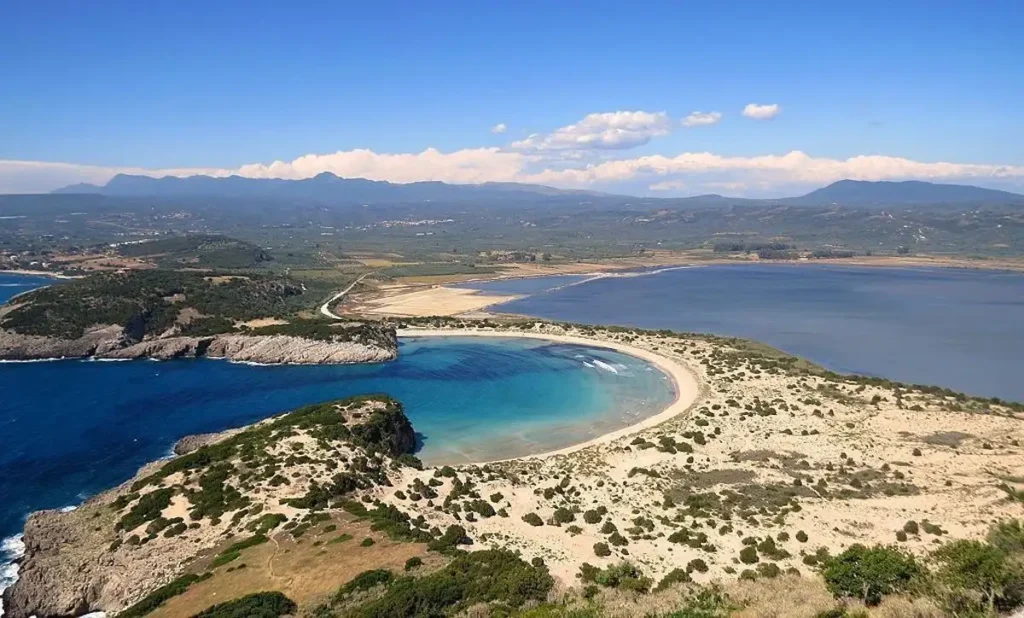
Voidokilia is the beach with the famous horseshoe curve, so symmetrical that it looks drawn rather than eroded, and it’s where the film stages Odysseus’s meeting with the goddess Athena. Above it, cut into the cliffs, Nestor’s Cave has been widely reported as the setting for the film’s Cyclops sequence. Standing on that beach, looking up at the cave, it’s not hard to understand why a director looking for something otherworldly would choose it.
Gialova: Lagoon Living Near Costa Navarino
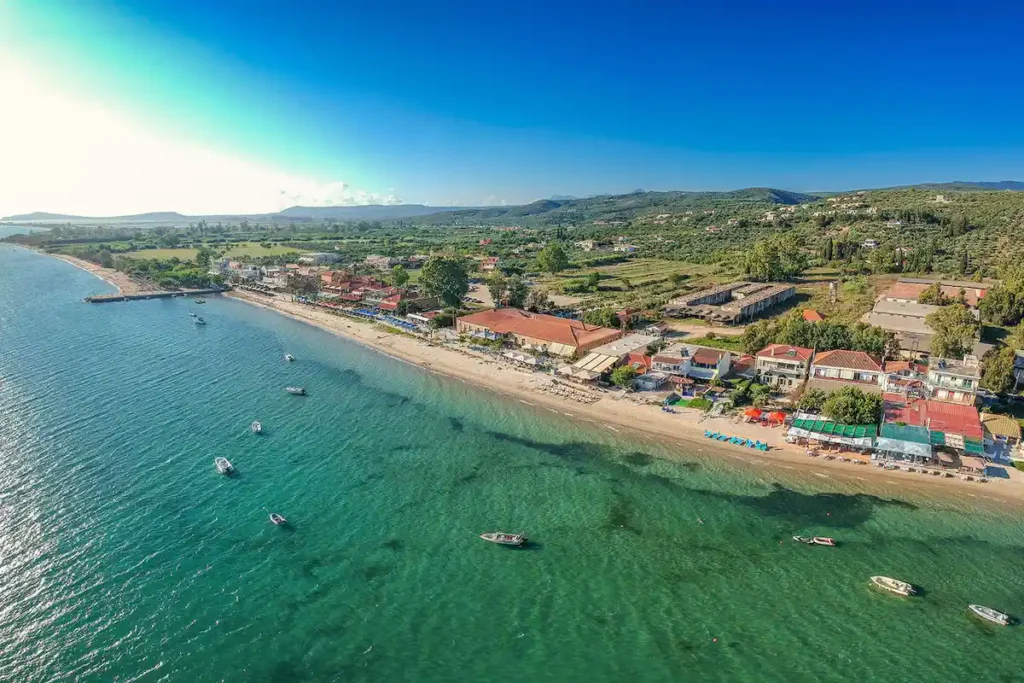
The village closest to all of it is Gialova, flat, walkable, and built right along the water, with a string of waterfront tavernas and, just behind the beach, the Gialova Lagoon, a protected wetland where flamingos overwinter. It has a relaxed, slightly upscale character, helped along by the Costa Navarino golf resort next door, and it has become one of the more established small international communities on this coast.
Pylos: Everyday Life in a Messinian Harbor Town
Ten minutes south around the bay, Pylos is the area’s real working town: built like an amphitheater over Navarino Bay, with a shaded central square, a working marina, and the everyday infrastructure a retiree actually needs, pharmacies, banks, a health centre, without losing its historic character.
The Messinia Property Market Around Pylos and Gialova
This is one of the more active corners of the Messinia real estate market, driven largely by Costa Navarino’s presence. Renovated stone houses and villas are available both to buy and to rent, foreign buyers face no special restrictions, and several boutique agencies based in Pylos handle the process from plot to finished house for those who’d rather build than renovate. Property values around Pylos and Gialova are premium due to high short-term rental demand. This coast is also one of the region’s best-served areas, relying on Kalamata as its main infrastructure anchor. A 45-to-60-minute drive connects you directly to Kalamata’s international airport and general hospital, while daily KTEL buses offer easy transit into the city for non-drivers. This proximity to Kalamata adds immense practical value to an area already famous for its short, mild winters and breezy Navarino Bay summers.
Methoni Castle and the Pylos Coast
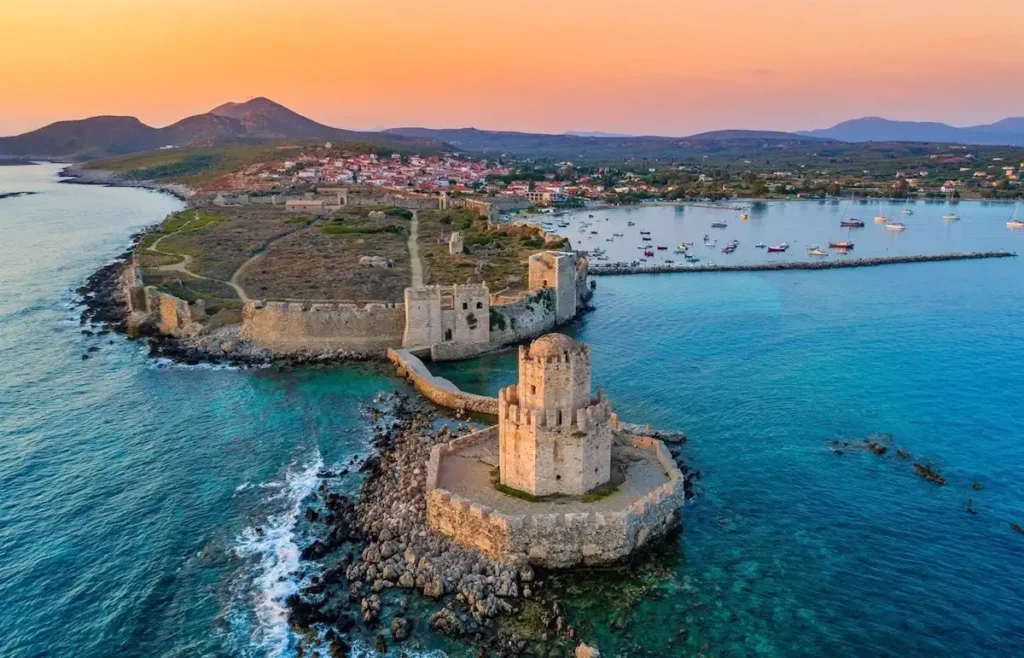
The 13th-century Venetian fortress at Methoni juts directly into the Ionian Sea, joined to the mainland by a long stone bridge, its octagonal sea tower standing alone in the waves. Reports from the production describe it standing in for Odysseus’s stronghold on Ithaca, and set photos from filming show scenes shot from a wooden ship just offshore, part of the same sea-faring sequences that carried through this stretch of coast. It’s a fitting choice. Few places in Greece look quite so much like the end of a long journey.
Methoni: Stone Houses Beneath a Venetian Castle
Live in the town of Methoni and the castle is simply there, at the end of the street, something you walk past on the way to buy bread rather than something you visit. That closeness shapes the whole place. August brings crowds who come for the walls and the sand, but by September the town settles back into itself, into the kind of quiet where a foreigner buying a stone cottage in the historic centre, generally in the high 300,000s to low 400,000s for something with two bedrooms, isn’t buying a holiday house so much as a spot in a village that still knows its own rhythms. Larger villas further out, some looking straight at the castle across the water, run well into seven figures, and there’s no shortage of undeveloped plots for anyone who’d rather build than restore.
Finikounda: A Retiree Favorite on the Messinian Coast
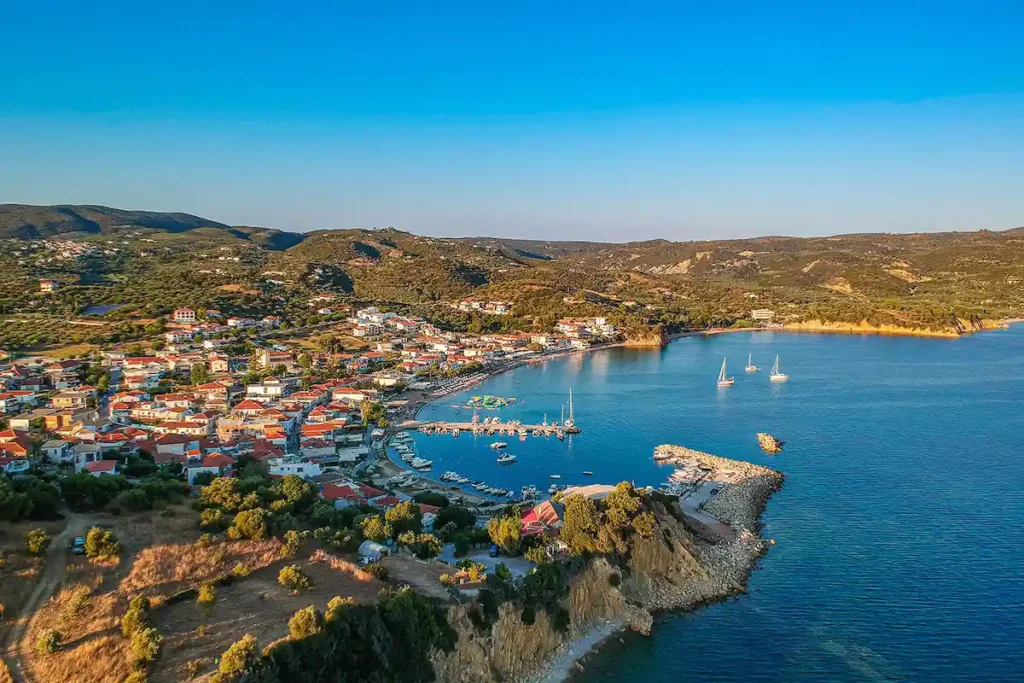
Fifteen minutes down the coast, Finikounda tells a slightly different story. It was a fishing village not long ago, and it still has that unhurried, low-key feel, but the long golden beaches and the steady arrival of European retirees over the past decade have given it a more mixed, more international character than Methoni. It’s the sort of place where a newcomer finds a ready-made community rather than having to build one from scratch.
Reaching Kalamata: Airport, Hospital, and Daily Practicalities
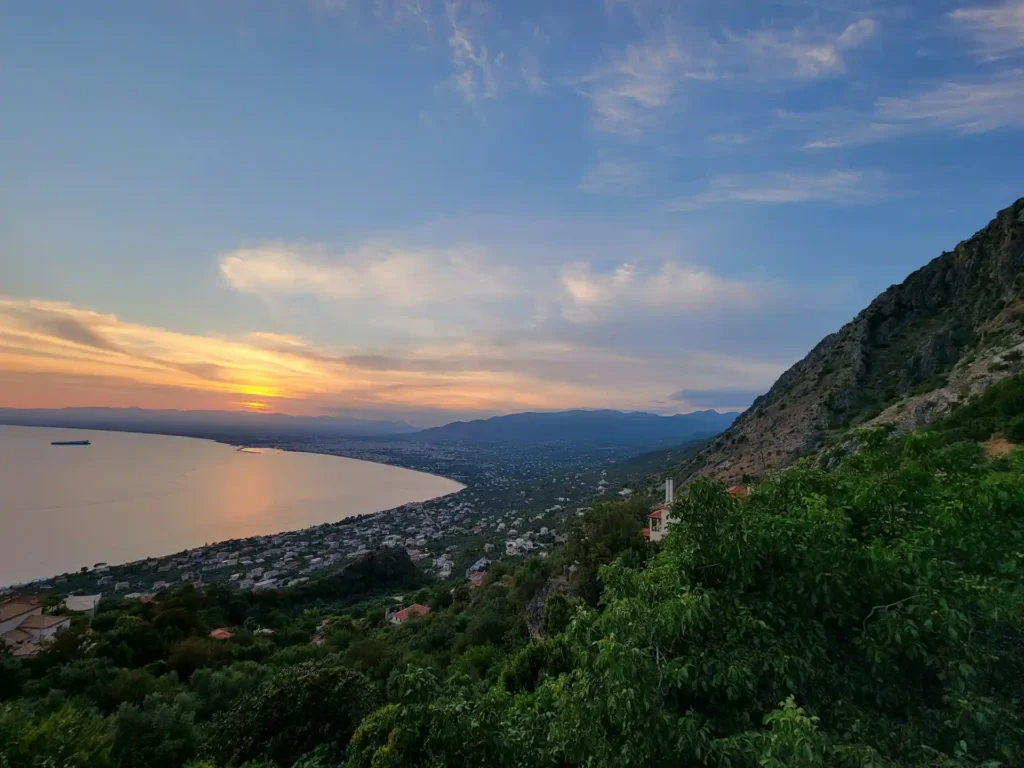
What ties both towns together, and what determines how workable this end of Messinia actually is as a full-time home, is the region’s real hub, Kalamata, with its own beaches, an international airport, and a general hospital that covers everything Methoni and Finikounda don’t. About an hour’s drive separates both towns from that safety net, close enough to matter but far enough that daily life here still feels like its own thing, not a suburb of somewhere bigger. Public buses thin out the further you get from Pylos, so a car stops being optional out here and becomes part of how you live. What you get in exchange is a stretch of coast where summer runs long, hot and dry but never oppressive with the sea close by, and winter arrives mild and gray rather than genuinely cold, the kind of climate that makes year-round living feel like less of a compromise than it does further north.
Inspired by the landscapes of The Odyssey? Many visitors discover the Peloponnese through its history and breathtaking scenery, then begin wondering what life here is really like. To help you explore beyond the filming locations, the testimonial of a retiree who chose Nafplio as his new home, discover why the Mayor of Sikyon believes the Kiato area is attracting more foreign retirees, and learn what a local real estate expert says every foreign buyer should know before purchasing property in the Peloponnese.
The Odyssey (2026), directed by Christopher Nolan, starring Matt Damon, Zendaya, and Tom Holland.
Universal Pictures, 2026.
***