
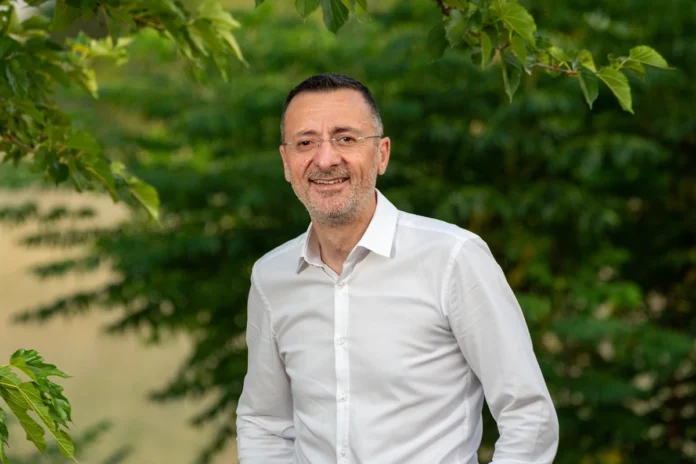
Spyros Stamatopoulos, Mayor of Sikyonians, on Why This Seaside City Is the Ideal Home for Foreign Retirees
Born in a mountain village at the foot of Mount Ziria, Spyros Stamatopoulos milked sheep as a boy, earned a scholarship to study Regional Policy in the United States, and built a career as an economist and parliamentary adviser before returning to public life. Elected continuously for 17 years, first as councillor and then as mayor, he has quietly transformed the Municipality of Sikyonians into one of the most dynamic corners of the Greek provinces. In this conversation with the Greece Retirement Guide, he makes the case for Kiato, a flat, walkable seaside city with direct rail and road links to Athens, as the ideal destination for foreign retirees seeking quality of life, safety, and authentic Greek living at a fraction of the cost of the capital or the islands.
What are the greatest advantages of living in Kiato for people over 60?
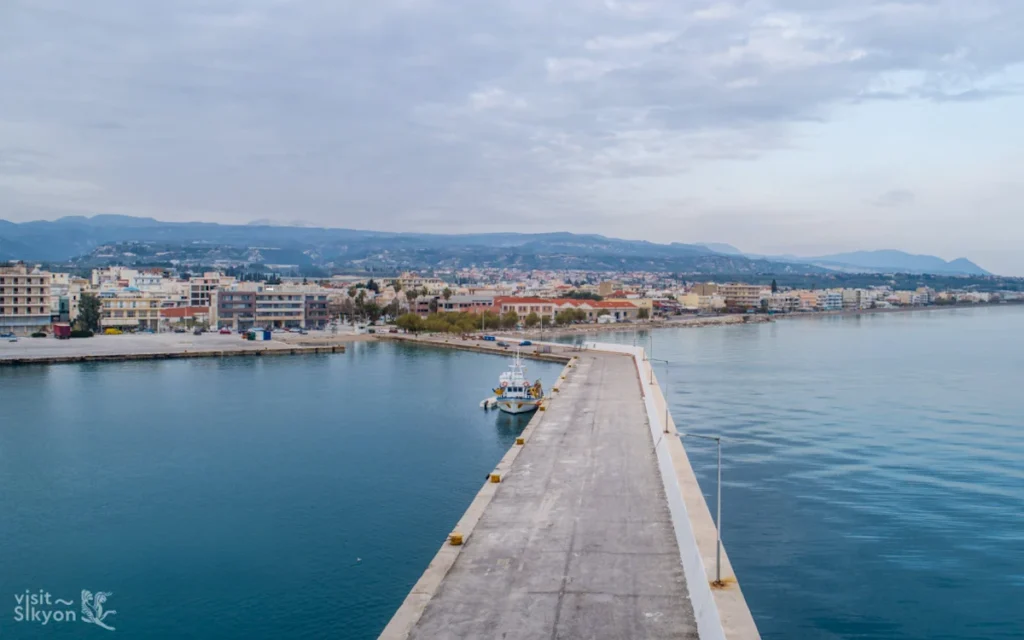
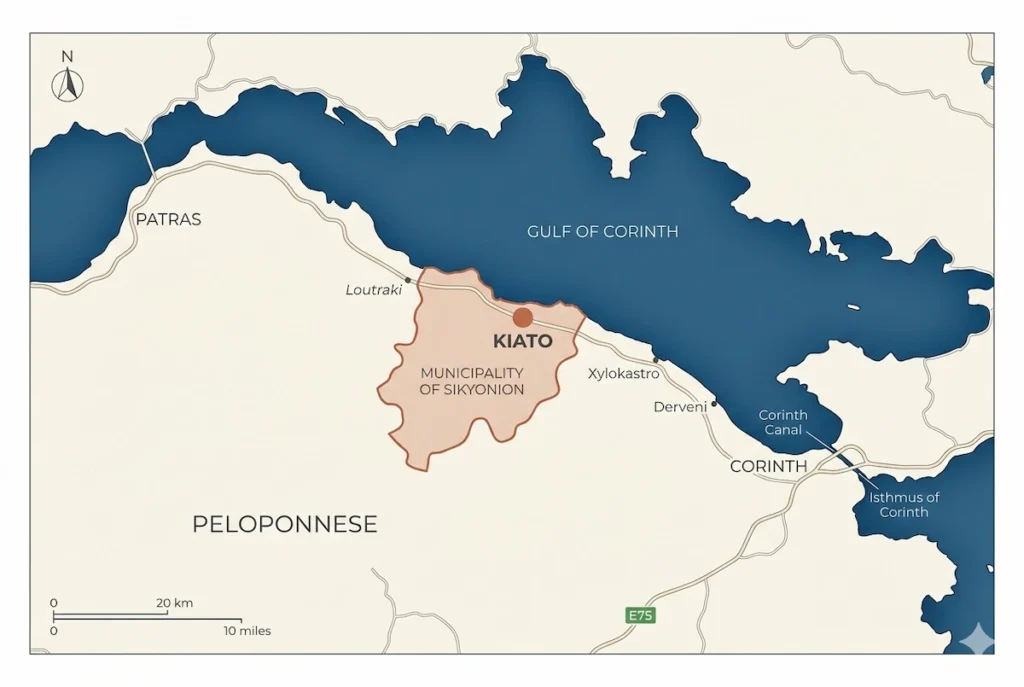
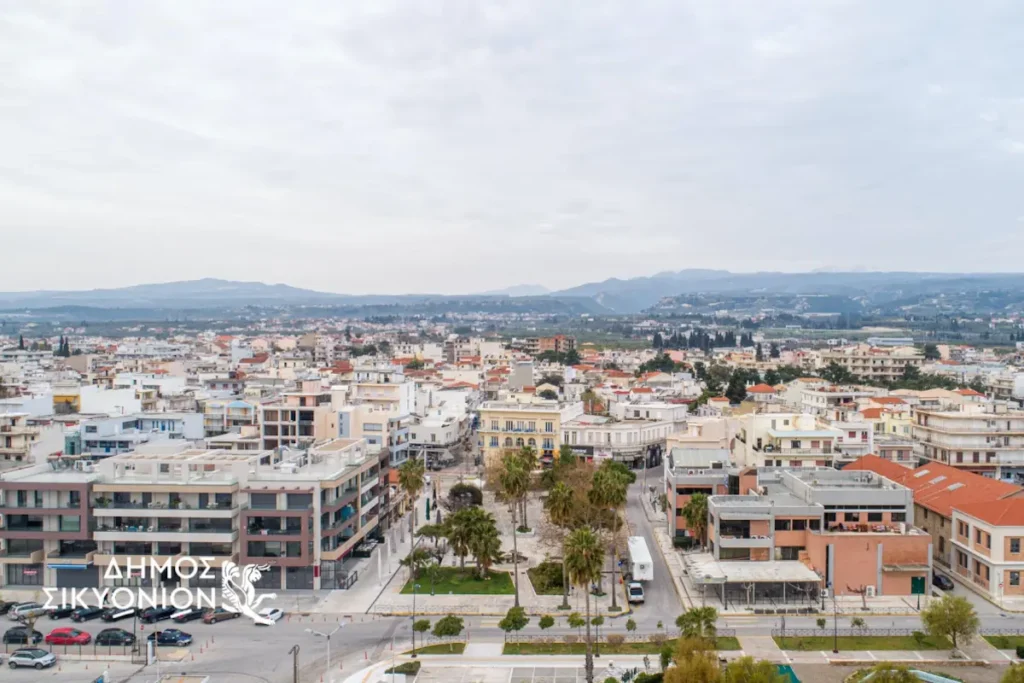
Kiato offers a rare balance that is hard to find concentrated in other provincial towns. The first and foremost advantage is its unique geographical location and accessibility. We are a seaside city, which makes getting around effortless and safe. At the same time, we combine the tranquility and safety of a provincial town with the infrastructure of a modern city, while enjoying the enormous advantage of a direct connection to the capital. For a person over 60, Kiato offers quality of life, a slower pace, a clean environment, immediate access to the sea, and fresh, quality products at their doorstep, without feeling cut off from the metropolitan center of Athens.
How easy is daily life without a car? Can one get around on foot or by bicycle?
I would say that Kiato is a walker’s and cyclist’s delight. Thanks to the flat terrain, using a car for daily needs within the city is almost unnecessary. A permanent resident can go to the supermarket, the pharmacy, public services, the market, or for a coffee by the beach entirely on foot or by bicycle, covering distances of just a few minutes. This offers a sense of freedom and, naturally, promotes the health and wellbeing of our older residents.
Are there safe cycling routes, or plans for a more bicycle-friendly city?
Embracing micromobility and creating a city friendly to cyclists and pedestrians is a central pillar of our strategy. At this moment, a major project is underway: the redevelopment of the city’s seafront, which includes clear provisions for safe cycling. Furthermore, through the Sustainable Urban Mobility Plans we are implementing, we are planning to connect the city’s key points via a cycling network, so that using a bicycle becomes not just a leisure activity but a safe and primary means of daily transportation.
The Climate and Natural Environment
For how many months a year can one enjoy swimming in the sea?
Thanks to our geographical position on the Gulf of Corinth, the sea at Kiato is generally calm and warm. The swimming season traditionally begins in mid-May and comfortably extends through the end of October. We also have a noteworthy community of winter swimmers, as the mild winters allow the more adventurous to enjoy our crystal-clear waters, which are consistently awarded the Blue Flag, throughout the entire year.
How would you describe the local climate compared to other parts of Greece?
Our climate is the typical, temperate Mediterranean climate, but with some important characteristics that make it ideal for seniors. Kiato does not suffer from the extreme, bitter winters of northern or central Greece, nor from the suffocating, dry heat found in summer in enclosed plains or in southern Greece. The sea breeze cools the city in summer, while humidity, due to the city’s northward orientation, is kept at low, manageable levels, which is extremely beneficial for people with respiratory or arthritic conditions.
Is it easy to find organic products, local fruit, and fresh food?
Access to fresh, natural, and quality food is our everyday reality. Our weekly farmers’ market is a local institution, where producers sell their products directly. There are also numerous local shops, greengrocers, and cooperatives offering excellent organic products, fresh fruit and vegetables, as well as outstanding local olive oil and wine.
How important is local agricultural production to the daily life of the city?
Agricultural production is the oxygen and the economic backbone of the Municipality of Sikyonians. Our fertile land produces some of Greece’s most renowned products, such as sultana raisins, citrus fruits, apricots, and table grapes. And if you venture further into the mountains, you find renowned PDO and PGI products, such as Feneos beans, Feneos fava, as well as Agiorgitiko wine from vineyards cultivated in Asprokampos and Psari. This agricultural identity permeates the daily life of the city: its rhythms follow the seasons of the land, local gastronomy is based exclusively on our own products, and there is a deep culture of respect for nature and its fruits. A consumer in Kiato knows exactly which village and which estate the food on their table comes from.
The Property Market and Cost of Living
What is the approximate cost of buying a home in Kiato and the surrounding villages today?
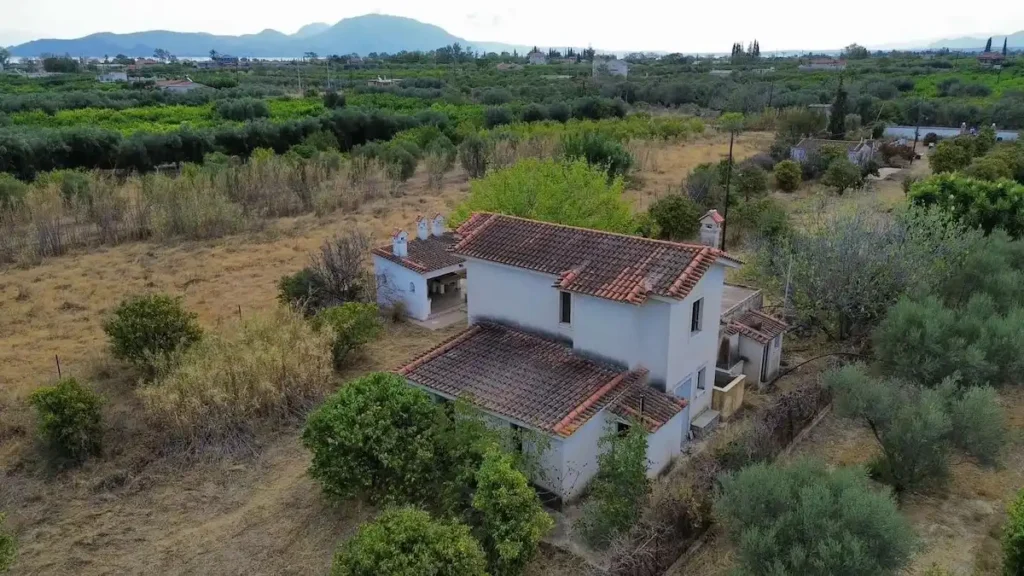
The cost remains extremely competitive, especially when compared to Athens or the country’s overpriced tourist destinations. Prices have certainly been rising in recent years due to the area’s development. In the center of Kiato, prices for newly built or recently renovated apartments range from approximately 1,800 to 2,500 euros per square meter. In the surrounding villages, however, and particularly in our semi-mountainous areas, one can find excellent standalone houses or traditional homes in need of renovation at much lower prices, starting from as little as 1,000 euros per square meter.
Are there still opportunities to buy affordable housing close to the sea?
Yes, there are, although the window is narrowing as demand increases. Because the Municipality’s seafront is not limited to the narrow urban core of Kiato, a buyer can find significant opportunities in coastal settlements such as Kato Diminió. There, properties with great potential exist, which with a reasonable renovation investment can be transformed into ideal seaside residences.
Are you seeing increased interest from foreign property buyers?
We are observing a steady and clearly growing trend. Kiato has begun to make a strong entrance onto the radar of European, and not only European, buyers. We have many friends from countries across Europe who are discovering that here they can have the real estate they dream of, in a location that combines sea, easy access to Athens, and reasonable prices.
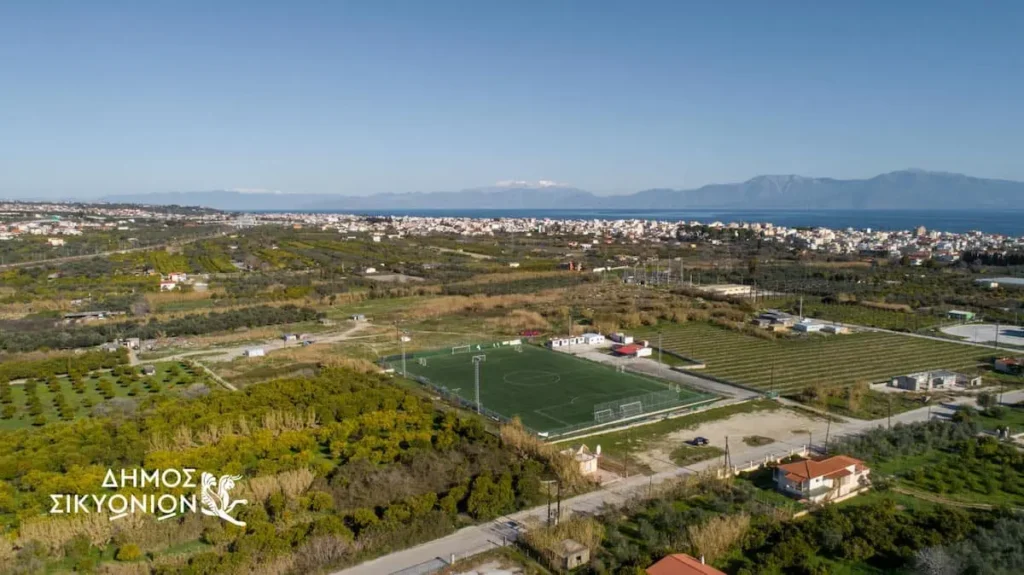
Are there new construction plans or organized residential developments aimed at foreign retirees?
At this point, private initiative is moving primarily toward the construction of modern, self-contained residential complexes and the thorough renovation of existing buildings. While there are no large-scale organized retirement villages of the kind found abroad, I know that there are private projects in the pipeline for the creation of homes built to accessibility and energy-autonomy standards, aimed precisely at this audience.
Infrastructure and Daily Life
How easy is it for a foreigner to find reliable tradespeople, engineers, or lawyers in the area?
It is extremely easy. Thanks to our proximity to Corinth and Athens, and our own strong local market, our municipality has an excellent pool of scientists and professionals. There are experienced civil engineers, architects, lawyers, and notaries who are fully familiar with the property purchase process for foreign nationals and who speak fluent English. As for tradespeople, the area’s long building tradition guarantees the presence of skilled and reliable craftsmen for every need.
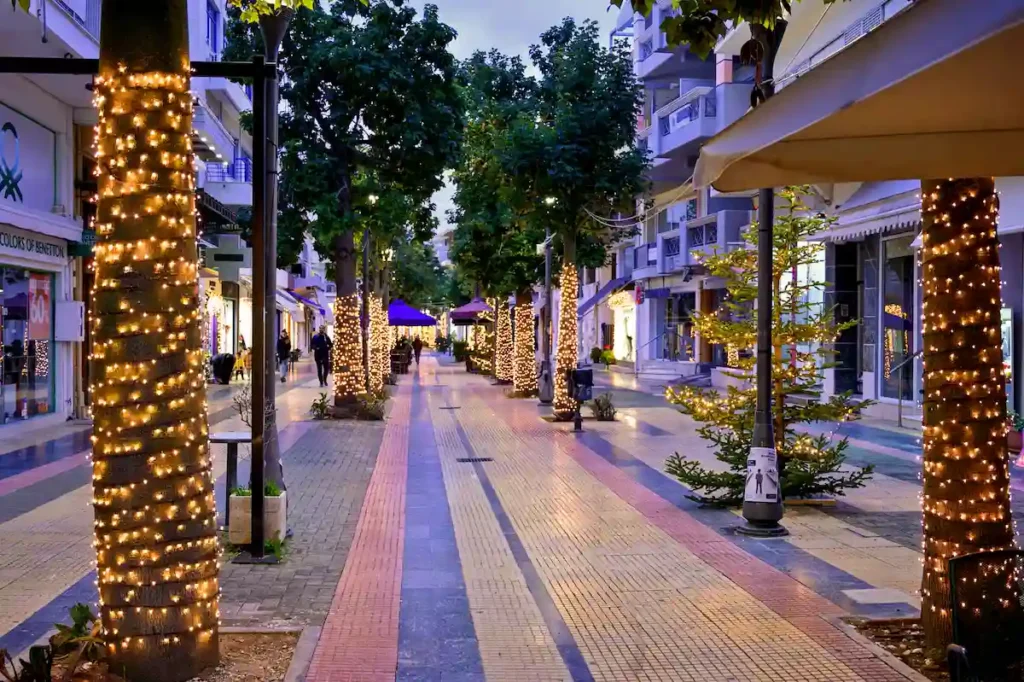
Do locals speak enough English for a foreigner to integrate easily into society?
The younger generation of our residents, as well as the majority of professionals in retail and hospitality, speak very good English. Even the older residents, who may not have an excellent command of the language, call upon the well-known Greek hospitality and their own willingness to help. Communication here is never an insurmountable obstacle. There is always a way, with a smile and goodwill, to assist and make a foreign visitor feel welcome.
How do residents react to foreigners who choose to live permanently in Kiato?
The residents of Kiato are open, cosmopolitan people, shaped by the city’s commercial history, and deeply hospitable. For us, whoever chooses Kiato as their home becomes a part of us. We do not treat foreign residents as tourists or wallets, but as new neighbors. We integrate them into our neighborhoods, invite them to our celebrations, and take joy in seeing our city acquire a multicultural, vibrant note.
Is there an existing community of foreign residents in the area?
There is no defined, clearly established core of foreign permanent residents. Those foreigners who do live here are fully integrated into the social life of Kiato. They participate in cultural events, frequent the same gathering spots, and have developed strong bonds of friendship with the locals.
Health and Safety
What healthcare services are available in Kiato, and how accessible are they for older people?
Kiato has a functioning Health Center, which covers primary healthcare needs, emergency duty, and prescriptions, with its staff doing remarkable work every day. The city also has a broad network of private doctors across all specialties, as well as modern diagnostic centers and physiotherapy clinics. Access to all these facilities is extremely easy, as they are located within the urban area and, as I mentioned earlier, the city is flat and accessible.
How close is the city to larger hospitals or private clinics?
This is one of our strongest cards. The General Hospital of Corinth is just a 20-minute drive away. Moreover, thanks to the highway and the suburban railway, access to the major specialized public hospitals and top private clinics in Athens is possible in under an hour. This provides an enormous sense of security to older residents, who know that for any serious health matter, tertiary care is immediately within reach.
How easy is access to Athens for someone who wants to travel frequently or use the airport?
The access is exemplary. Driving on the modern motorway, one can reach the northern or western suburbs of Athens in approximately 50 to 60 minutes. For the international airport Eleftherios Venizelos, the journey is around 1 hour and 15 minutes, with no inconvenience, as one travels exclusively on a closed motorway. Additionally, the suburban railway connects our city directly, with regular services, to Athens, Piraeus, and the country’s international airport.
How important is the suburban railway to the quality of life of residents?
I believe the suburban railway is gradually changing the map and the destiny of the wider area. Kiato is the terminal station of a main line, which means we have a direct, hourly connection to Athens airport and the center of the capital. For a retiree, this means being able to board a train in Kiato and arrive at the airport or the center of Athens comfortably, affordably, and without the stress of driving and traffic. It is a key piece of infrastructure that dramatically elevates the quality of life and freedom of movement.
The Role of the Municipality
What does the Municipality do to help foreign residents with bureaucracy or everyday matters?
As a municipal authority, we try to stand by every resident, and especially those who face the obstacle of language or unfamiliar Greek bureaucracy. The Citizens’ Service Center of our municipality is staffed by experienced personnel who help guide foreign residents through their dealings with public services. Additionally, municipal departments are always open to provide solutions and guidance on whatever is needed.
Is there any thought of offering services in English or a welcome desk for foreign residents?
It is an excellent idea, one that we could incorporate and implement as part of the Municipality’s digital and tourism upgrade. Creating a digital and physical Welcome Desk, functioning as a one-stop shop for foreigners who choose to settle here, could become one of our near-term objectives.
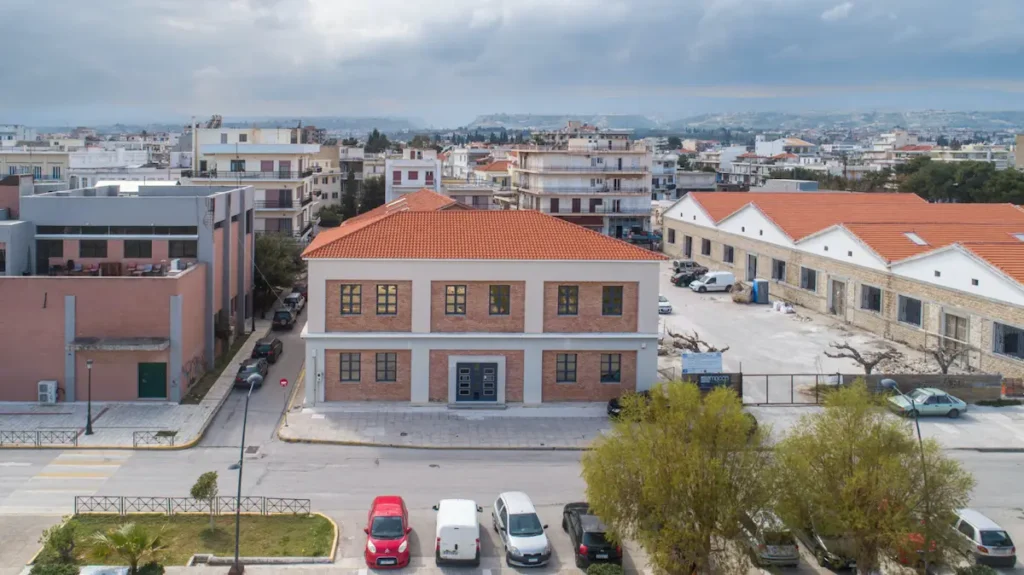
What is daily life like in winter? Does the city stay lively, or does it only operate in summer?
Kiato is not a dead, seasonal tourist resort. It is a living, self-sufficient city 365 days a year. Naturally, in summer the activity increases due to holidaymakers, but winter has its own wonderful energy. Our market remains fully operational, cafés, ouzeries, and restaurants are open, and cultural life does not stop. At Christmas and during Carnival, large, multi-day festive festivals take place that leave no one bored. Because our economy is based on agricultural production and trade, and not exclusively on tourism, the city retains its vitality, authenticity, and rhythms throughout the entire year.
What is the safety situation in the area for older people?
Kiato remains a safe provincial city. Crime rates are very low. Our elderly residents, as well as foreign residents, can walk freely in the streets, along the beach, or by the harbor late at night, sit in the squares, and leave their homes without the sense of threat that dominates in large urban centers. For us, the safety of residents is a non-negotiable social good. In this direction, we recently welcomed, in collaboration with the Ministry of Civil Protection, an additional police presence in the area in the form of a DIAS motorcycle unit that patrols the city daily.
What options are there for social life, culture, or activities for seniors?
We are particularly proud of the work done in our facilities, such as the KAPI, the Open Protection Center for the Elderly, which offers older people creative activities, exercise, excursions, cultural events, preventive health programs, and above all, companionship. Furthermore, the Municipality’s Cultural Department organizes a rich range of activities: theatrical performances, concerts, choral groups, art workshops, and lectures. There are also many local cultural and environmental associations where one can get involved, meet people, and stay active.
Can one live here at a lower cost than in Athens or other well-known seaside locations?
Categorically, yes. The cost of living is significantly lower than in Athens or the cosmopolitan islands. Getting around costs very little, rents and fixed expenses are reasonable, and access to affordable, quality local products dramatically reduces everyday food costs. Here, a person’s pension goes much further and allows them to enjoy a comfortable life without deprivation.
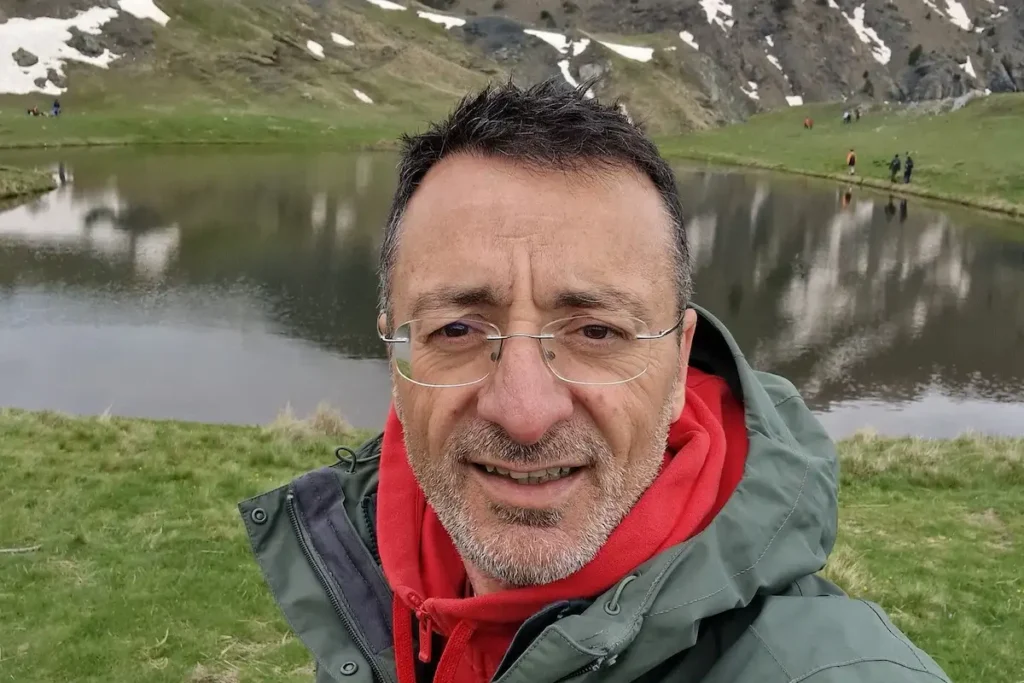
Are there programs or plans to develop services specifically for retired residents?
Beyond strengthening the KAPI facilities and the Help at Home program, which does outstanding work for those who need support in their daily lives, we are exploring the creation of specialized active ageing programs. Our goal is to expand free programs of gentle exercise and swimming, digital skills seminars for older people, and the creation of volunteering schemes, where both foreign and local retirees can contribute their knowledge and experience to the local community.
How does the Municipality address issues of cleanliness, accessibility, and public spaces?
It is a daily battle, and one we give our best to. We continuously invest in modernizing the sanitation fleet and strengthening recycling. On accessibility, all new redevelopment projects are carried out to strict standards for the movement of people with disabilities or reduced mobility, including ramps and tactile guidance paths for the visually impaired. Our goal is public spaces that are clean, well-lit, and above all accessible to all citizens without exclusion.
What are the biggest challenges a foreigner should be aware of before moving permanently here?
I want to be completely honest. This city, despite the great strides it has made, remains a Greek provincial town. This means that a foreigner will encounter the classic ailments of Greek public administration and bureaucracy, although we work hard to mitigate them. Also, the absence of a large, standalone hospital within the city itself, despite its proximity to Corinth and Athens, is something an older person needs to be aware of and factor in. Finally, the pace of life here is slower. What for us is quality of life may initially seem like dysfunction to someone accustomed to the relentless pace of a northern European metropolis.
How do you envision the city in ten years? Could it develop into an international destination for retirees seeking a quiet life by the sea?
This is not merely a vision; it is one of the goals we are working toward methodically. In ten years, I envision a model smart and green seaside city, a place that will have completed its major infrastructure projects, with a beautiful, unified seafront, a zero environmental footprint, and full accessibility. This city has all the prerequisites to become an international premium retirement destination. We do not want to become a mass, impersonal tourist resort. We want to remain a living, authentic Greek city that offers those who choose it the most precious of gifts: a peaceful, safe, and high-quality life by the sea, wrapped in the warmth of hospitality.
Thank you very much!
To learn more about what it is like to move to this beautiful region, read our exclusive interview with Nikol Lafazani—a local Corinthia realtor who shares expert advice and practical tips on how foreign retirees can find their perfect home here.
ABOUT THE EXPERT
Spyros Stamatopoulos, Mayor of Sikyonians
Municipality of Sikyona
In office since: 2010 (Next local elections: 2028)
CITY HALL: 2 Georgiou Gennimata Street, Kiato 202 00, Greece
d-sikyon@otenet.gr
***