
Where Everyday Life Doesn’t Wait for Summer
Volos does not perform for visitors. It is a port that still ships things, a university that still teaches people, and a mountain that has been watching over both for longer than anyone bothers to mention. That indifference to being admired is precisely what makes it interesting to live in.
Most people who end up considering Volos are not chasing a view. They are looking for a city that keeps functioning after the last ferry of the season leaves, one where the pharmacy, the bakery, and the local newspaper stand were never dependent on tourists in the first place. The presence of the University of Thessaly means the streets do not go quiet in November, and the tsipouradika, the small taverns where a shot of tsipouro arrives with its own unbidden plate of food, do not shut for winter either.
This suits people who want a real address rather than a seasonal one, and who would rather argue about the price of fish at the morning market than pose for a sunset. It does not suit anyone looking for silence, or for the particular kind of solitude an island in December can offer. Volos gives you a mountain, a gulf, and a city that carries on regardless of who is watching. Some retirees find that reassuring. Others find it insufficiently dramatic. Both reactions are correct.
Location, Access & Connectivity
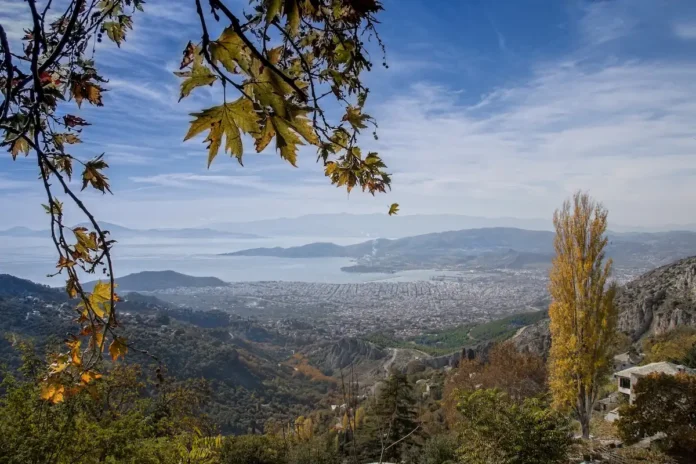
Volos sits on the Pagasetic Gulf, a sheltered body of water that behaves nothing like the open Aegean, with Mount Pelion rising directly behind the city. Athens is roughly three and a half to four hours by road, Thessaloniki closer to two, and the regional bus network covers both routes with the kind of reliability that does not require faith, only patience.
A small regional airport, Nea Anchialos, handles limited domestic and seasonal charter flights, which means international arrivals will almost always route through Athens or Thessaloniki first. Ferries leave from the port for the Sporades islands, useful in summer, irrelevant the rest of the year. None of this should be mistaken for isolation.
What matters more, from a retirement seat, is the university hospital in Larissa, forty five minutes away, which absorbs anything the city’s own hospital cannot handle. Family visiting from abroad will add a few hours through Athens, not a full day. Winter occasionally slows the mountain roads above the city, but the city itself keeps moving. You are not choosing an outpost here. You are choosing a mainland address with a coastline attached.
Climate & Seasonal Rhythm
Summer in Volos is thick and long, the kind of heat the gulf holds onto well into September, softened only by the fact that the water stays warm enough to swim in for most of that stretch. Winter is where the city quietly contradicts the postcard idea of coastal Greece. Pelion sits close enough to pull down real cold, real wind, and rain that means something, and higher up the mountain, snow arrives reliably enough to keep a small ski slope running most years.
Down in the city, snow rarely settles, but the damp cold of a Pelion winter is not the mild affair islanders further south are used to. Spring and autumn are the reward for enduring both extremes, with long stretches of clear, walkable weather and none of the crowding.
The detail that actually shapes daily comfort is not the season but the building. Much of the housing stock in Volos predates serious insulation standards, and a winter spent in an unrenovated apartment will cost considerably more in heating than the mild Mediterranean image suggests. This is not a complaint about the climate. It is a note about what to check before signing a lease.
Daily Life & Local Community
Volos has a permanent population going about its own business, which changes the texture of everything else. The university keeps the cafés and bookstores alive through the months when other Greek towns fold up entirely, and the result is a city with genuine generational overlap rather than the usual retiree enclave sealed off from everyone under sixty.
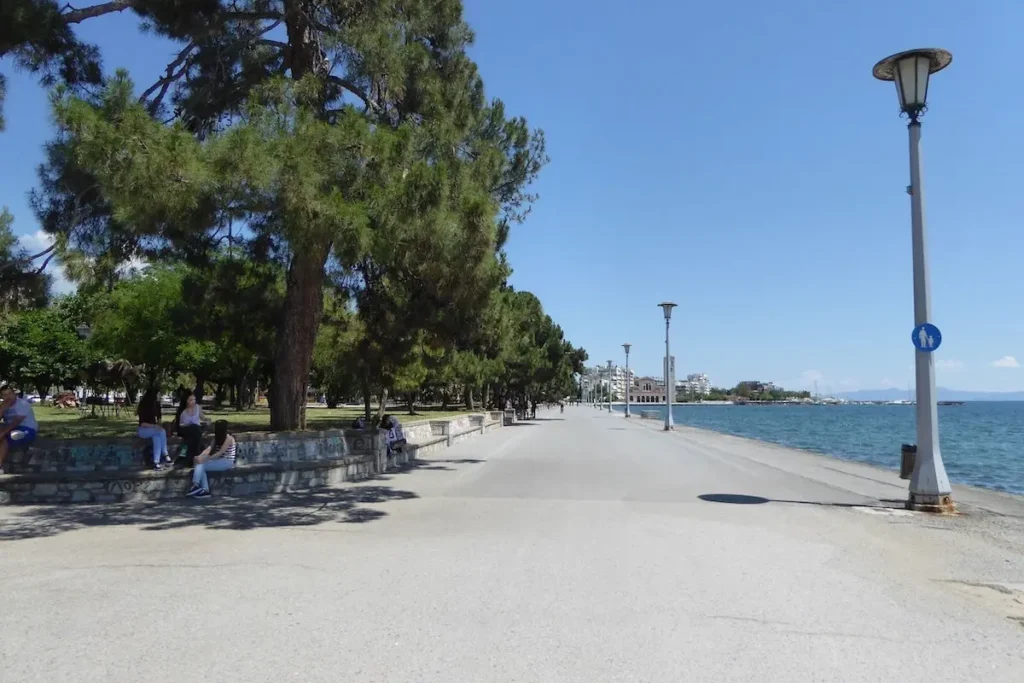
The rhythm of the day runs along Argonafton, the waterfront promenade, where mornings are for walking and coffee and evenings collapse into long dinners, often at a tsipouradiko, where the food arrives unordered alongside each round of tsipouro and the conversation is expected to last. This is not staged hospitality. It is simply how the city eats.
Integration here asks something of you. English travels easily among students, shopkeepers, and anyone connected to sailing or shipping, but the civil servant behind the counter, the pharmacist, the elderly neighbor, none of them owe you English, and basic Greek changes how included you feel within weeks rather than years. The foreign community is small and largely unorganized, drawn here by Pelion and the sea rather than by any retirement infrastructure, and it tends to dissolve into the city rather than stand apart from it. Nothing here runs on a summer switch. The pharmacies, the repair shops, the town hall, all of it operates in February exactly as it does in July, which is the quiet detail that separates a city from a resort.
Healthcare & Essential Services
The Achillopouleio General Hospital covers the city’s public healthcare needs, handling most emergencies and routine treatment without requiring anyone to leave town. Anything more specialized moves forty five minutes down the road to the university hospital in Larissa, a distance that reads as inconvenience on paper and as manageable in practice.
Private clinics fill in where speed matters more than cost, and most residents move fluidly between the two systems depending on what a given week requires. Pharmacies are plentiful and, as anywhere in the country, function as an informal first line of medical advice for anything short of serious.
Ambulance response within the city itself is dependable. It stretches, as it does everywhere, once you move up into the villages of Pelion. None of this amounts to a flawless system. It amounts to a functioning one, with enough redundancy that a bad afternoon does not become a crisis of logistics.
Cost of Living Overview
A single person can live in Volos on something in the range of nine hundred to thirteen hundred euros a month without adjusting their habits to poverty. A couple living well, eating out regularly and heating the apartment properly through winter, tends to land between fifteen hundred and two thousand two hundred.
The weekly open air markets do most of the work of keeping food costs low, and the tsipouradika tradition means socializing over food does not carry the price tag it would elsewhere, since the meze arrives folded into the price of the drink. Transport within the city barely registers as an expense, given how little of Volos requires a car in the first place.
The one line item that punishes carelessness is heating. An unrenovated apartment in an older building will run up a winter bill that has nothing to do with the mild reputation of the coast and everything to do with the mountain standing behind it. Budget for the building, not the brochure.
Housing & Real Estate Landscape
The rental market in Volos has enough supply that looking for an apartment does not become a project in itself. A one bedroom in the center generally runs from three hundred fifty to five hundred euros a month, slightly less outside it, and a two or three bedroom apartment typically lands between six hundred and eight hundred.
Much of the stock predates modern insulation, so the condition of the building matters more than its address, and apartments with upgraded heating or a sea view move quickly once listed. There is one seasonal wrinkle worth knowing: small studios tighten up considerably in August and September as the university year begins, though this rarely touches the larger units retirees tend to look for.
Neighborhood character varies more than the map suggests. Nea Ionia, shaped by refugee communities that arrived after 1922, remains the more affordable option, while the center and the Anavros seafront carry the premium that comes with proximity to the water. The full detail on renting versus buying lives in the Housing section of this guide.
Lifestyle, Nature & Leisure
The pleasures here repeat rather than accumulate, which is the point. The waterfront is flat, long, and built for walking rather than driving, and the day tends to organize itself around it, a slow lap in the morning, a longer one after dinner.
The tsipouradika ritual is worth understanding on its own terms. You are not ordering a meal so much as entering an arrangement: a small bottle of tsipouro, a plate that arrives without being asked for, and each subsequent round bringing something a little more considered than the last. It rewards patience and a lack of hurry.
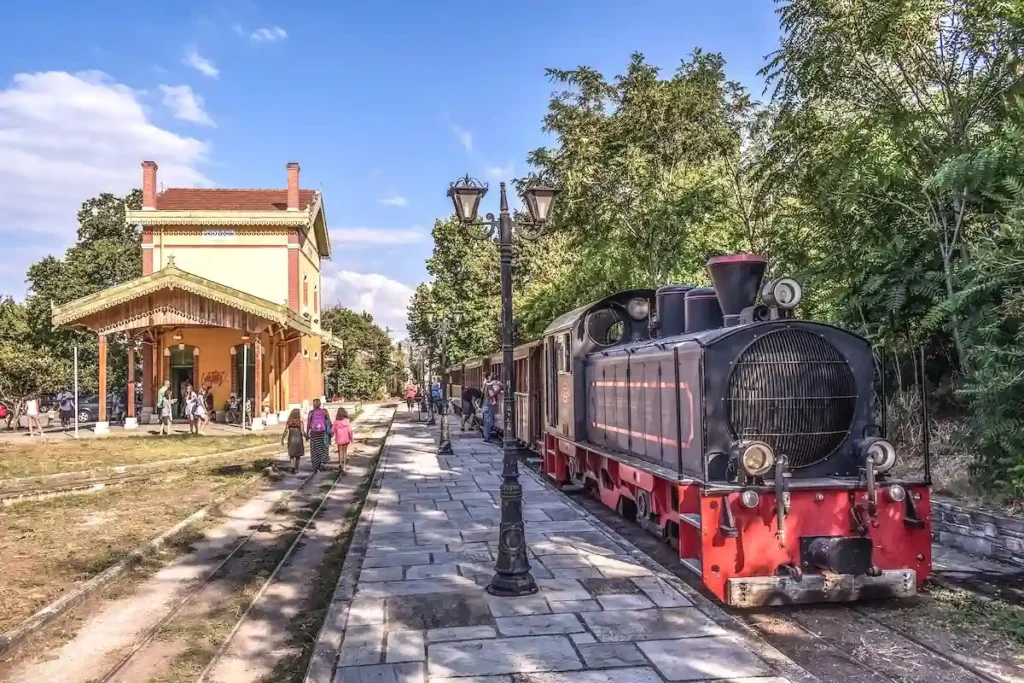
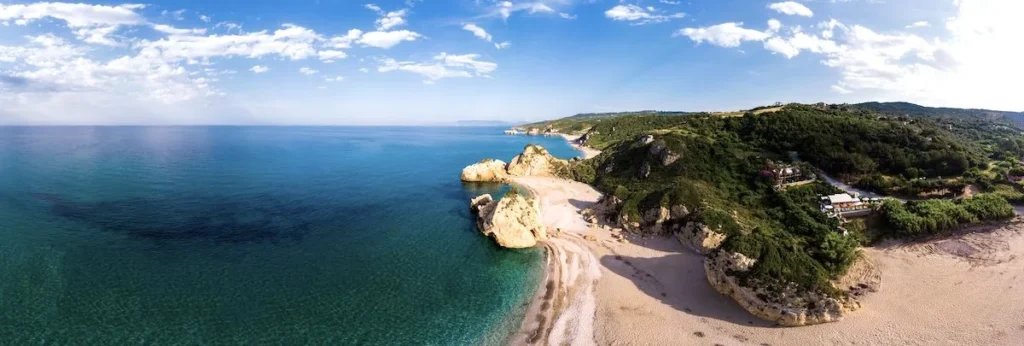
Beyond the city, the gulf offers calm, swimmable water within a short drive, while Pelion climbs into stone villages, forested trails, and a small ski slope that operates for a few weeks each winter, close enough that the sea is still visible from partway up the mountain. A municipal theatre, a symphony orchestra, and a museum built inside a former brick factory round out a cultural life that punches well above what a city this size usually offers.
Local Reality Check
Most Greek towns either stay awake all year or go dark the moment the tourists leave. Volos does something rarer: it stays lit because of students, not despite the absence of visitors. The cafés and bookstores that would otherwise shutter in January keep their lights on, and the city never takes on the hollowed out feeling common to smaller places once summer ends.
The cost of this arrives briefly each autumn, when returning students compete hard for the same small studio apartments, and the market tightens for a few weeks in a way it does not for the rest of the year. Larger apartments are barely touched by this. It is a narrow, predictable inconvenience in exchange for a city that never fully sleeps, which is not a bad trade.
Who This Destination Is Best Suited For
Volos suits people who want a city that behaves like one all year, with a mountain and a gulf attached rather than built around them. It fits active retirees who like walking and hiking, and people who want cultural life, theatre, conversation, to continue uninterrupted through winter.
It fits budget conscious retirees without asking them to sacrifice infrastructure, and it fits anyone who would rather integrate slowly and informally into Greek life than join an established expat circuit, since here there mostly isn’t one.
It does not fit anyone seeking total isolation or the particular hush of an island in the off season. Volos has a pulse. If what you’re after is the absence of one, look elsewhere.
***