
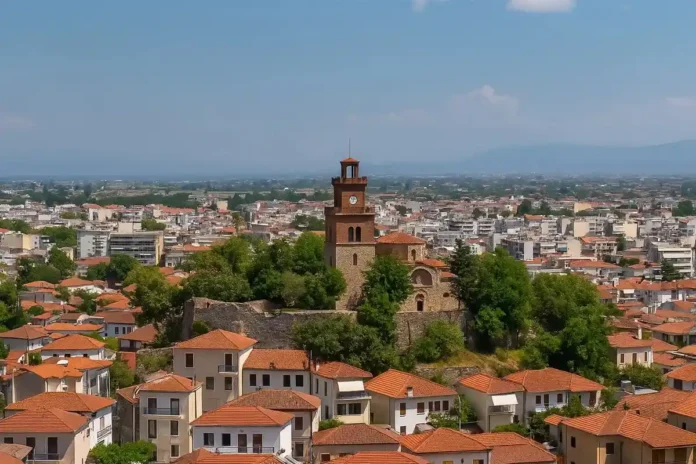
A flat, cycle-friendly city on the Thessalian plain offers retirees an affordable, authentically Greek life without the tourist crowds
Trikala has no sea, no whitewashed lanes, and no seasonal shutdown once summer ends — because tourism was never really the point here. What it offers instead is a functioning, year-round Greek city with a genuinely different reputation.
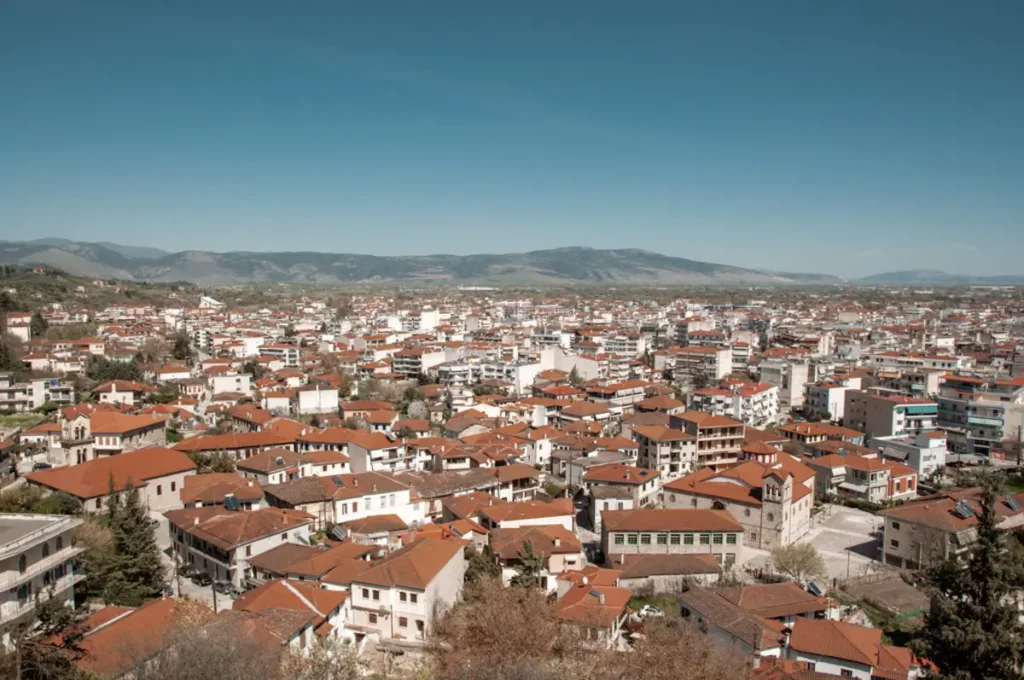
Trikala is known first for its early adoption of smart-city technology — free municipal Wi-Fi, digitized local government requests, and a level of administrative efficiency that’s unusual in Greece — and second for its cycling infrastructure, among the most extensive in the country. Built on flat ground along the Lithaios River, the city itself is home to roughly 60,000 people, on the Thessalian plain in the country’s mainland interior.
Trikala appeals immediately to retirees who want lower costs, a walkable and bikeable city, and genuine immersion in everyday Greek life rather than a seasonal expat bubble. It appeals less to those picturing retirement as a morning walk to the beach within an established English-speaking community — and there’s nothing wrong with wanting exactly that. Islands like Corfu, Crete, or parts of the Peloponnese are simply a better match for that particular vision. Knowing which type of retiree you are is the first useful filter here.
Location, Access & Connectivity
Trikala sits in western Thessaly, on the mainland, roughly equidistant from Athens and Thessaloniki by highway — each about a three-hour drive. There’s no airport in the city itself. The nearest options are the small airport at Nea Anchialos, near Volos, or the larger international hubs in Athens and Thessaloniki, both of which mean additional driving. For retirees who fly home often to see family, this is worth weighing against island living, where a local airport or ferry connection is usually closer at hand.
Overland, the highway connections to Athens and Thessaloniki are generally solid, but not without disruption. One recurring exception is worth knowing about: farmer protests over agricultural policy periodically block sections of the national highway network in Thessaly, most often after Christmas. In some years these standoffs with the government have dragged on for close to a month before roads reopened fully. It’s a genuine seasonal risk factor, not a rare footnote, and worth building into any travel or medical planning around that time of year.
Locally, none of this matters much day to day — the city center is compact and flat, and most errands are within an easy walk or bike ride. If you plan to drive, note that exchanging your foreign driver’s license for a local one involves a specific administrative process that depends directly on your country of origin.
Climate & Seasonal Rhythm
Trikala has a continental climate, a real departure from the image most people carry of Greek weather. Summers are genuinely hot, regularly climbing past 35°C and occasionally beyond 40°C, without the cooling sea breeze that softens island heat. Winters, by contrast, are properly cold — frost is common and snow isn’t unusual, meaning real heating costs rather than the mild space-heater winters typical of the Aegean.
The shoulder seasons, spring and autumn, tend to be the city’s best-kept secret: mild, colorful, and comfortable.
The practical implication is straightforward. A home with poor insulation or an unreliable heating system will be genuinely uncomfortable here in January, in a way it might not be on a milder island. This isn’t a place to underestimate winter when choosing a property.
Daily Life & Local Community
This is where Trikala distinguishes itself most clearly from Greece’s retirement hotspots. There’s no seasonal switch-flip — no shops shuttering in October, no town emptying once summer ends. Services, markets, cafés, and municipal offices run on a steady, year-round rhythm because the population using them is permanent, not seasonal.
English is spoken widely and comfortably here — among younger residents, in professional and medical settings, and by many others across the community generally. Some older residents and certain local services still operate primarily in Greek, so basic Greek remains genuinely useful for smoother day-to-day dealings, but this isn’t a city where English leaves you stranded.
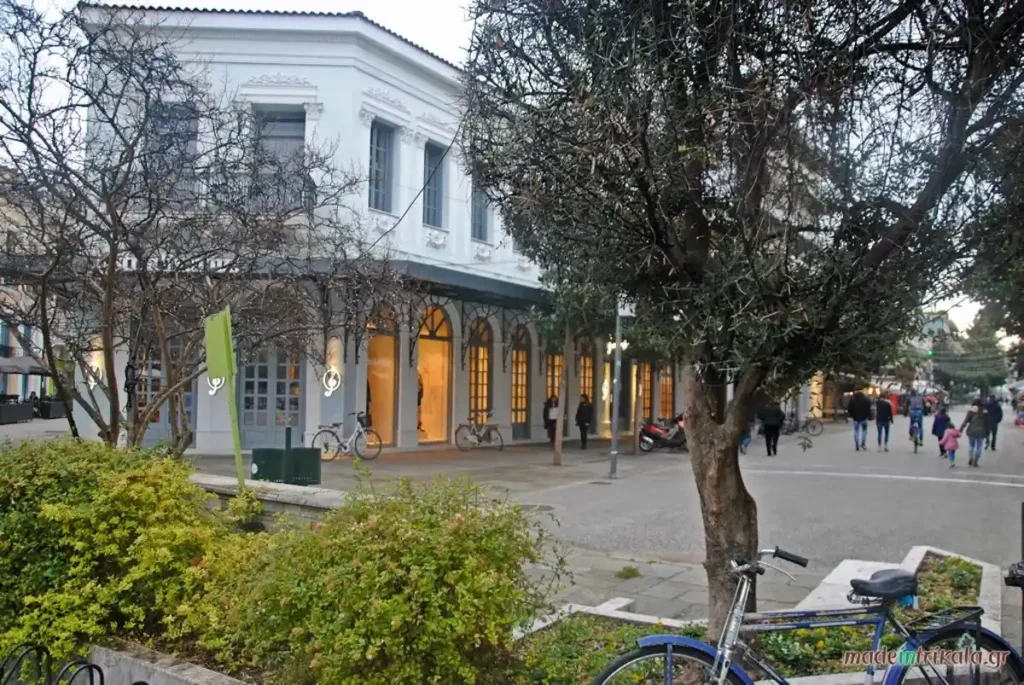
The pedestrian streets in the city center are where daily life is most visible, and most accessible. Mornings bring out shopkeepers opening up, locals running errands, and a steady rhythm of coffee at outdoor tables. Simply spending time there, rather than passing through, is one of the easiest ways for a newcomer to start becoming a familiar face rather than a stranger.
Because there are relatively few foreign retirees in Trikala, newcomers tend to become known quickly within their neighborhood rather than remaining anonymous within a larger expat colony. The weekly laiki agora, the tsipouradika, the riverside walks along the Lithaios — these are shared spaces used by residents of all ages, not attractions curated for visitors. For a retiree seeking an authentic, unhurried version of Greek life, this is the city’s real offer.
Healthcare & Essential Services
Trikala is home to its own General Hospital, along with a range of private diagnostic clinics and specialists, some of whom speak English. For day-to-day medical needs — GP visits, routine tests, pharmacy access — the city is well equipped, and pharmacies are plentiful throughout the center.
For more specialized or complex care, Larissa, roughly an hour away by car, hosts larger hospitals and a broader range of specialists, making it the practical backup for anything beyond routine treatment. This hour-long distance is worth being honest about: manageable, not an inconvenience, but not literally on the doorstep either.
Non-EU retirees will need private health insurance to meet visa requirements regardless of destination. As a general range, these policies typically run from around €50 to €200 per month depending on age and medical history — well below North American equivalents, though the exact figure depends entirely on individual circumstances.
Cost of Living Overview
Cost is arguably Trikala’s strongest card. As a general range, a single retiree can live comfortably on roughly €1,300 to €1,800 per month, including rent — noticeably below Athens, Thessaloniki, or popular island destinations such as Crete, Corfu, or Mykonos.
Housing typically represents the largest line item, with rent for a comfortable one- or two-bedroom apartment near the city center running roughly €350 to €550 per month. Utilities and internet, including electricity, water, trash collection, and fiber internet, generally fall between €120 and €180 — and this figure deserves attention given the climate discussed above, since winter heating adds real cost that a retiree coming from a milder island destination might not anticipate.
Groceries typically run €300 to €400 per month and are especially affordable for those who make regular use of the weekly laiki agora rather than relying solely on supermarkets. Dining out and leisure, including the city’s tsipouradika and local tavernas, generally cost €200 to €350 per month and remain inexpensive relative to more touristic destinations. As always, treat these as general guides rather than fixed figures, since prices shift and are worth checking against current listings.
Housing & Real Estate Landscape
Because Trikala isn’t a seasonal tourist destination, its rental market doesn’t experience the summer squeeze that pushes prices up temporarily in coastal towns. This makes long-term renting comparatively stable and straightforward throughout the year, a meaningful advantage for retirees who prefer to rent before committing to a purchase.
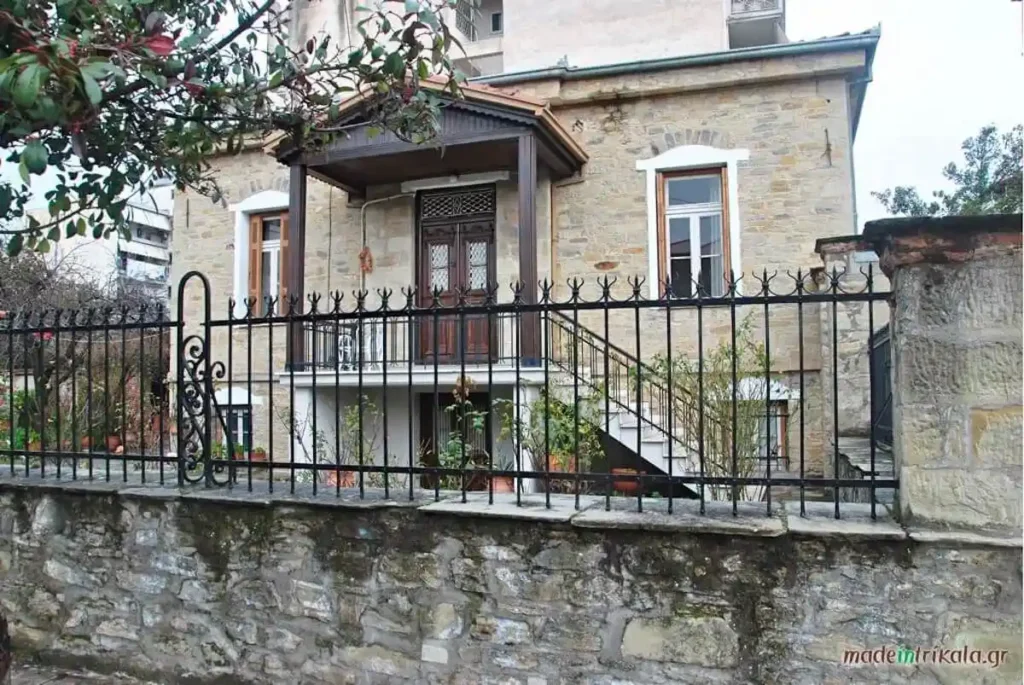
Housing stock in the center is a mix of older apartment buildings and renovated properties, with the historic Varousi and Manavika neighborhoods offering more character — mansions and homes reflecting the city’s 18th- and 19th-century prosperity — alongside more functional newer housing further out. As with much of Greece, older properties may require renovation investment, particularly around insulation and heating systems given the winter climate.
Neighborhood choice matters: proximity to the center favors walkability and access to daily services, while outer neighborhoods may offer more space at lower cost in exchange for needing a car more regularly.
Lifestyle, Nature & Leisure
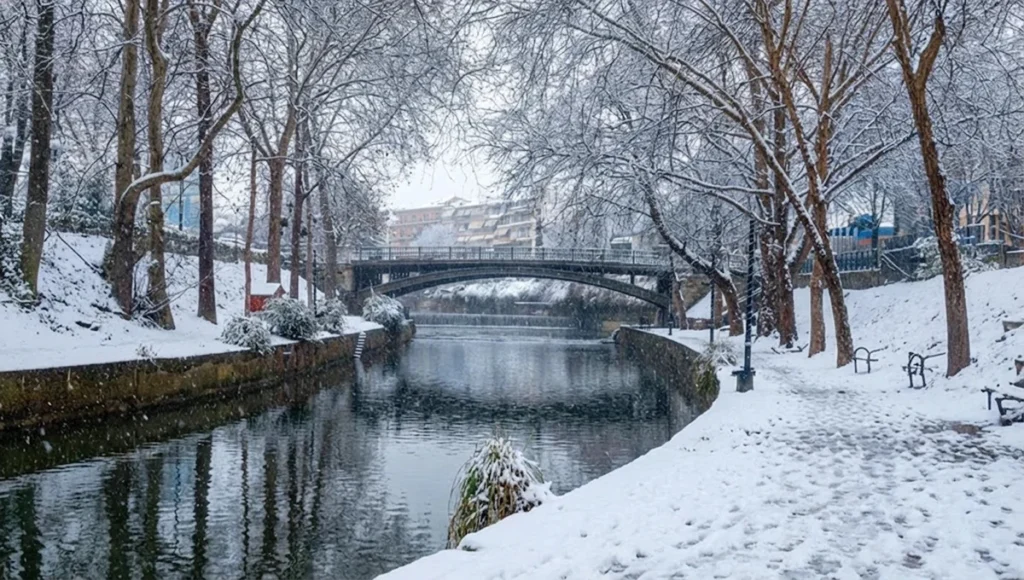
Daily pleasures in Trikala tend to be simple and recurring rather than event-driven. The city’s flat terrain and extensive bike lanes make cycling a genuine daily transport option rather than a novelty, and the riverside paths along the Lithaios, including the well-known pedestrian bridge, function as an everyday gathering point rather than a tourist landmark.
The historic castle, built on the ancient acropolis of Trikka, offers sweeping views over the city and the surrounding plain, while the wooded Prophet Elias Hill sits within easy reach of the center. The city’s proximity to the Pindus mountains and the UNESCO-listed rock monasteries of Meteora means dramatic nature is a short drive away without needing to live directly amid it.
This is a lifestyle built around routine rather than spectacle — walking, cycling, markets, and unhurried socializing — which suits some retirees far better than a destination organized around sightseeing.
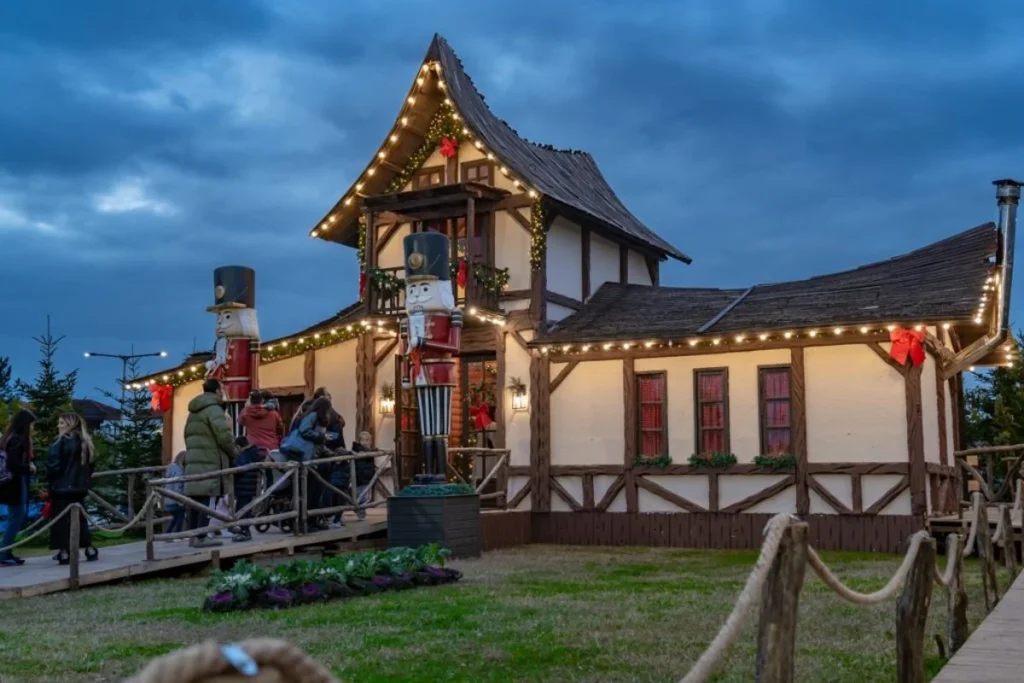
Trikala also has a claim that surprises most newcomers: the city is home to the Mill of the Elves (Μύλος των Ξωτικών), the largest Christmas theme park in Greece, held annually at the historic Matsopoulos Mill right in the city itself. Running from late November through early January, with free general admission, it draws visitors from across the country and beyond, and during the December holiday peak Trikala and its surrounding area regularly reach full occupancy. For retirees with grandchildren visiting from abroad, this is a real asset rather than a passing curiosity — it gives visiting grandkids a reason to look forward to Trikala specifically, not just Greece in general.
Local Reality Check: Life Without the Coast
The single adjustment most incoming retirees underestimate is simply the absence of the sea. There’s no morning swim, no coastal view — the nearest beaches are roughly ninety minutes to two hours away by car. What Trikala offers in exchange is a lower cost of living, efficient municipal administration, and a slower, more embedded version of Greek life than most coastal or island destinations provide. For retirees who associate Greece primarily with the Aegean, this trade needs to be a conscious choice, not an afterthought discovered after arrival.
Who Trikala Is Best Suited For
Trikala suits retirees who prioritize affordability and a genuinely local pace of life over coastal scenery, who enjoy walking or cycling as part of daily routine, and who are comfortable navigating some Greek-language interactions rather than relying entirely on an English-speaking community. It particularly suits those who value safety, routine, and integration into a small but welcoming community over a large expat social circle — retirees expecting regular visits from grandchildren will find the Mill of the Elves, held annually in the city itself, a genuine seasonal draw.
It’s a weaker fit for retirees counting on daily coastal access, frequent low-friction international flights, or a ready-made English-speaking retiree network with year-round cosmopolitan entertainment.
Comparing Mainland Greek Cities
If you are evaluating options across central and northwestern Greece, explore our relocation guides to coastal living in Volos and the lakefront atmosphere of Ioannina.
***