

Comparing Volos, Trikala, Ioannina, Kalamata and Nafplio for permanent life
For a foreign retiree, choosing a city is not simply a matter of finding somewhere attractive, affordable and sunny. The differences between places that look similar on a map become far more important once the move is permanent rather than seasonal. How much can be done on foot? How often is a car actually needed? How difficult is it to reach an international airport? What happens when the requirement moves from a pharmacy visit to a specialist doctor? And what does the city feel like in January, once the summer visitors are gone?
Volos, Ioannina, Trikala, Kalamata and Nafplio occupy an interesting middle ground. None is a major metropolitan centre, but none is so small that everyday life depends on a neighbouring city. All have enough shops, restaurants, public services, healthcare and banking to support a permanent population. What they offer, once the surface similarities are set aside, are five distinctly different versions of life on the Greek mainland.
Walking Around
All five cities can support a relatively car-free routine, but Trikala has the clearest advantage. Its compact, flat centre makes everyday journeys straightforward, and its investment in cycling and pedestrian infrastructure is unusual for a Greek city of its size.
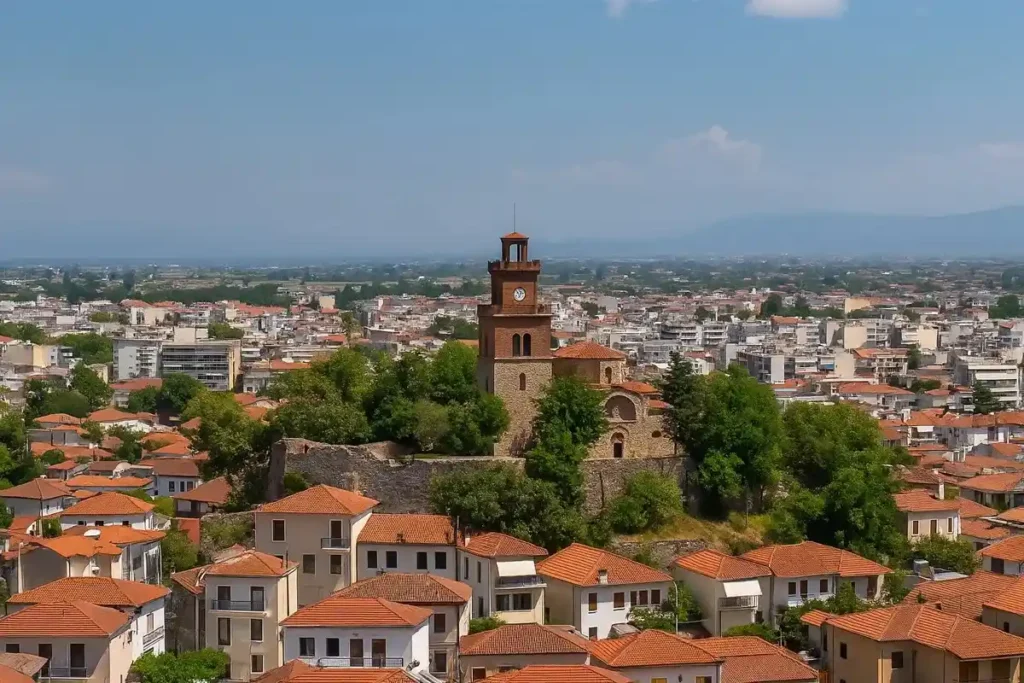
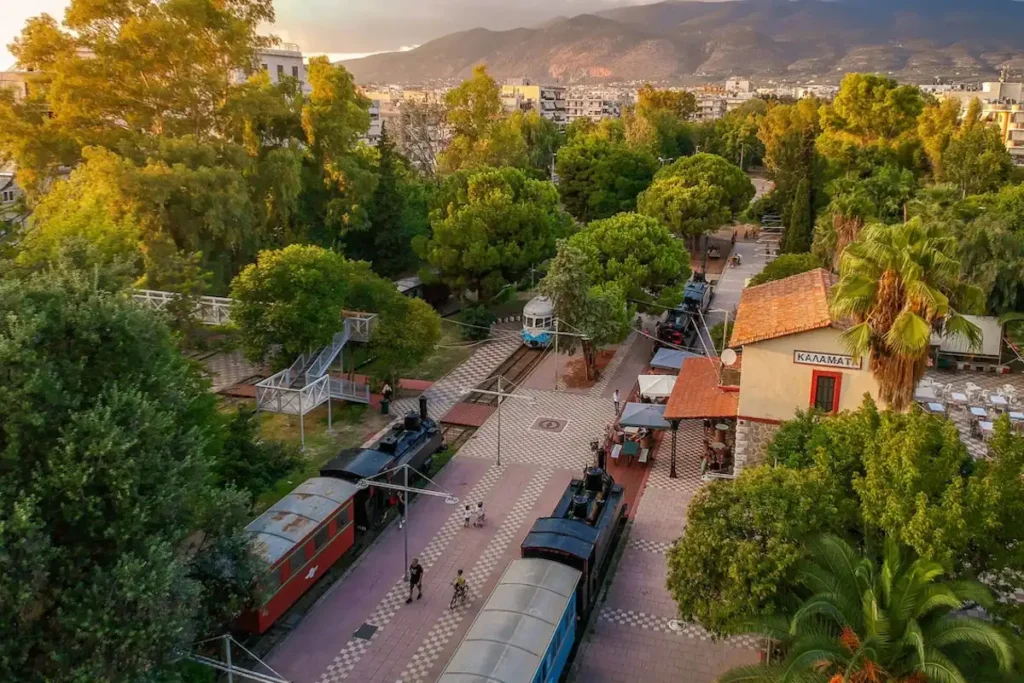
Kalamata comes close, particularly in the central area between the historic centre and the waterfront. The city is larger and more spread out than Trikala, so the exact address matters more here than elsewhere: a central apartment makes daily life easy without a car, while a property on the outskirts is a different proposition entirely.
Volos is also highly workable on foot. Its centre is substantial rather than tiny, so shopping, banking, cafés and appointments can be combined without crossing a sprawling urban area, and its flat central districts help.
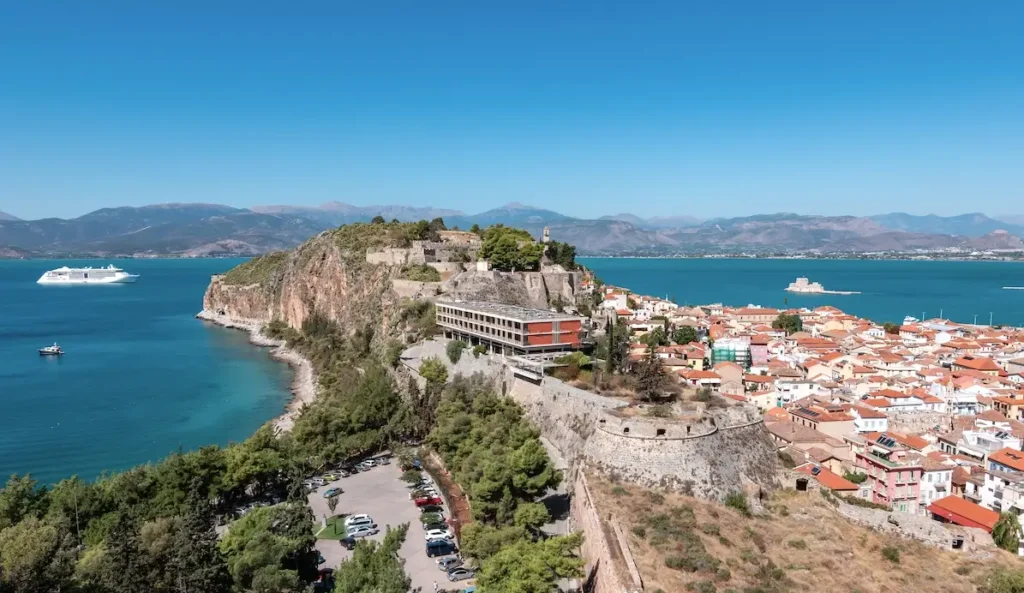
Nafplio may be the most enjoyable of the five simply to walk around, though that is not quite the same as being the easiest place to run a life. The old town and waterfront are exceptionally pedestrian-friendly, but once a property sits outside the historic core, distances grow.
Ioannina’s central districts, particularly around the lake and the old town, are similarly manageable, but the urban area extends farther and the surrounding geography makes it less compact than Trikala.
For retirement purposes, walkable should not simply mean pleasant to stroll through. The more useful test is whether the supermarket, pharmacy, doctor, bank, KEP and bus stop sit within a comfortable walk of home. On that test, Trikala leads, with Kalamata and Volos offering the most choice of neighbourhoods in which to build the same kind of life.
When a Vehicle Becomes Useful
There is an important distinction between not needing a car every day and not needing one at all. None of the five removes the case for a car entirely, but the frequency with which it becomes useful varies considerably.
Trikala is again the easiest place to leave a car parked, with buses and taxis covering what walking and cycling do not. Kalamata and Nafplio offer similar possibilities in town, though a car becomes considerably more useful once beaches, villages and archaeological sites outside the city enter the picture.
Volos is particularly interesting because the city itself does not demand a car, while the surrounding region almost invites one. Pelion, and the villages and beaches around the Pagasetic Gulf, are part of the reason people choose Volos in the first place, so a retiree who plans to spend weekends exploring the region will probably want a vehicle even if it stays parked during the week.
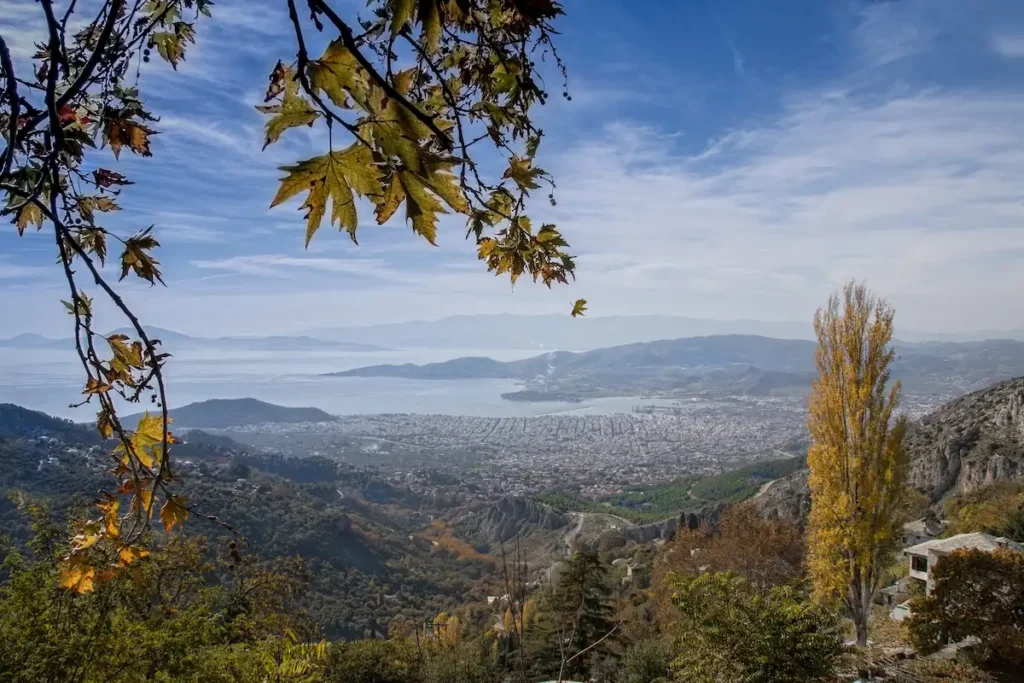
Ioannina has the sharpest contrast between city and countryside. Life in the centre can be managed without a car, but Epirus is mountainous, and its villages, landscapes and beaches are far easier to reach by road.
The more useful question, then, is not simply whether retirement without a car is possible, but how much of the wider region a resident wants to reach without one. For a genuinely car-light life in town, Trikala has the advantage. For anyone who wants to use their city as a base for regular exploration, access to a car improves the experience in all five.
Reaching an Airport
This is one area where the differences are unusually clear.
Kalamata has the strongest airport advantage of the five. Kalamata International Airport sits close to the city and serves international destinations, though the range of direct flights is seasonal and changes from year to year. For a retiree who expects to travel abroad regularly, or who wants family and friends to visit without first navigating Athens, this is a genuine practical advantage.
Ioannina also has its own airport, though its role is more domestic: it provides an important connection to Athens rather than Kalamata’s breadth of international routes. The Hellenic Civil Aviation Authority lists both among Greece’s operating commercial airports.
Volos has access to Nea Anchialos Airport, serving the wider Magnesia region, with KTEL Volos, the regional intercity bus network, running routes to it, but its international services are more limited and seasonal, and it should not be regarded as equivalent to Kalamata’s.
Nafplio has no airport of its own, though the disadvantage is softened by its relatively easy access to Athens International Airport, roughly two hours away by road, with regular KTEL connections into the capital.
Trikala is the least convenient of the five for international air travel, with no airport and a reliance on road and rail to reach the major gateways. For someone flying abroad several times a year, this is a meaningful disadvantage rather than a minor inconvenience.
The ranking is therefore unusually clean: Kalamata leads on international connectivity, Ioannina follows for domestic reach, Nafplio compensates for the lack of an airport with proximity to Athens, Volos has a regional option with a thinner international network, and Trikala asks for the longest overland journey of the five.
Getting Around Without Flying
International connectivity favours Kalamata, but the domestic picture is more even.
Ioannina has an especially strong intercity bus network, with regular services to Athens and Thessaloniki and connections across Epirus, making it particularly useful for a retiree without a car.
Nafplio also has solid regional connections for a city of its size, including regular services to Argos and Athens, and its closeness to the capital makes it easy to combine bus travel with the wider transport network there.
Volos has a substantial KTEL network covering Magnesia and linking the city to the rest of Greece as well as to its airport.
Trikala is well placed for road travel between central Greece, Athens and Thessaloniki, and its KTEL services offer an important alternative for residents who do not drive.
The practical conclusion is that a retiree without a car does not necessarily need a city with an airport. A strong intercity bus network compensates surprisingly well for the absence of direct flights, provided the centre and the bus station are easy to reach on foot.
Access to Specialist Healthcare
Healthcare is one category where the differences matter more as retirement goes on.
All five cities offer public healthcare, private doctors, pharmacies and diagnostic services, but they do not offer the same depth of specialist care.
Ioannina has the strongest position here, home to a major university hospital serving the wider region, which gives it a clear edge once care moves beyond routine visits into specialist departments and complex treatment.
Volos also functions as a substantial regional healthcare centre through its public hospital and private facilities, and Kalamata plays a similar role in Messinia, with its General Hospital complemented by private doctors and diagnostic centres.
Trikala provides the essential infrastructure expected of a regional city, but its specialist options are more limited, which may matter little for routine care and considerably more for a complicated problem.
Nafplio is the most exposed of the five on this point. Local healthcare covers ordinary needs, but residents may need to travel to a larger centre for certain specialist services.
This is a good reason to avoid comparing cities on whether they simply “have a hospital.” A general hospital is not the same thing as a major specialist centre, and the distinction matters more with every passing year.
Two Different Climates
The five cities divide fairly cleanly by climate.
Kalamata and Nafplio offer the strongest Mediterranean proposition, with milder winters and long stretches of sun, which for someone leaving a cold northern climate can be one of the main reasons to choose the southern Peloponnese in the first place.
Volos sits between the two climatic worlds: warm summers and relatively moderate winters, but noticeably wetter than the Peloponnese, with a coastal position that softens it compared with inland central Greece without giving it Kalamata’s dry winter.
Trikala and Ioannina suit someone who genuinely wants four seasons. Both can turn hot in summer, but their winters run colder and wetter, with Ioannina taking on a distinctly northern feel and Trikala’s inland position producing wider seasonal swings.
The distinction matters more to a permanent resident than a visitor. Someone moving from a northern European or Canadian winter may welcome any Greek one at first, but living somewhere for twelve months is a different experience from visiting it for two weeks in August. Anyone particularly sensitive to cold or damp should see their preferred city in January before buying property there.
There is also a consideration that runs the other way: the warmer the climate, the more summer heat, air conditioning, shade, insulation and wildfire risk matter. Warmest should not be read automatically as best.
What Housing Actually Costs
All five cities are less expensive than Athens across most of daily life, but housing is where the real differences appear, and where a city’s reputation can mislead.
Trikala generally offers the strongest value of the five, particularly outside its most desirable central streets. It carries none of Nafplio’s tourism premium, so its housing market is less exposed to foreign demand.
Volos and Ioannina sit in the middle. Both are established university cities with substantial local populations, which creates steady housing demand without turning either into a primarily tourist market.
Kalamata is more complicated. It still beats Athens on value, but its popularity with foreign buyers, second-home owners and visitors has pushed desirable coastal and central properties up considerably.
Nafplio carries the strongest tourism premium of the five. Its historic centre is highly desirable, and property there should not be assumed to be a bargain simply because the city sits outside Athens.
The relevant question for a retiree, then, is not which city is cheapest, but how much a particular location actually costs. Someone willing to live a short distance from the centre may find real value in Kalamata or Nafplio; someone set on a renovated apartment in the most attractive historic or waterfront district will meet a very different market.
Banks, KEP and Daily Errands
This is not the most exciting category, but it may be one of the most useful for a foreign retiree.
All five cities have KEP, the citizen service centres handling most public-administration transactions, along with established banking networks. National Bank of Greece, Piraeus Bank, Alpha Bank and Eurobank all have branches in these regional centres, though individual branches and opening arrangements change and should be checked before relying on any single location.
There is little reason to choose one city over another purely on this basis: all five have the basic administrative infrastructure a permanent resident needs.
The more important distinction is scale. In each of the five, a retiree living centrally can generally combine several errands (bank, pharmacy, supermarket, KEP, a coffee) without turning the day into a logistical exercise, which is a real advantage over village life, particularly for someone who does not yet speak fluent Greek or does not want to drive.
For a foreign resident, KEP offices matter because they offer a physical point of contact with Greek public administration. They do not remove the need for digital services, an accountant or a working knowledge of Greek bureaucracy, but they make everyday administrative tasks considerably less intimidating.
Life Once the Visitors Leave
There is a difference that is easy to miss when visiting Greece in May or September: how much of a city stays alive once the tourists are gone.
Trikala, Ioannina and Volos have a clear advantage here, since their economies and populations are not primarily dependent on tourism. Universities, schools, offices, hospitals, local businesses and permanent residents keep them functioning year-round.
Kalamata also has a substantial permanent population, which is one reason it works better as a retirement destination than a purely seasonal seaside resort: tourism matters to its economy, but it does not define the entire city.
Nafplio is different. Its historic centre is extraordinarily attractive, but tourism is far more visible in everyday life there, which brings a steady supply of restaurants, cafés and cultural activity, but also a less local atmosphere than someone might want from a permanent home.
For a retiree hoping to build a social life rather than simply enjoy scenery, this distinction is worth weighing carefully. A city with universities, families, local businesses and public-sector employment tends to offer more openings for an ordinary year-round routine than one whose economy leans heavily on visitors.
Sea, Lake and Mountain
The five cities also differ in their relationship with the landscape around them.
Kalamata offers the most straightforward combination of city and beach, with a waterfront that is part of everyday life rather than a weekend excursion.
Volos offers something else: the sea is part of city life, but the surrounding landscape is unusually varied, with the Pagasetic Gulf and Pelion putting beaches, mountain villages and hiking country within easy reach.
Nafplio’s relationship with the sea is more picturesque than beach-oriented in the historic centre. Its draw is the combination of waterfront, architecture, countryside and some of the Peloponnese’s most important archaeological sites, all close at hand.
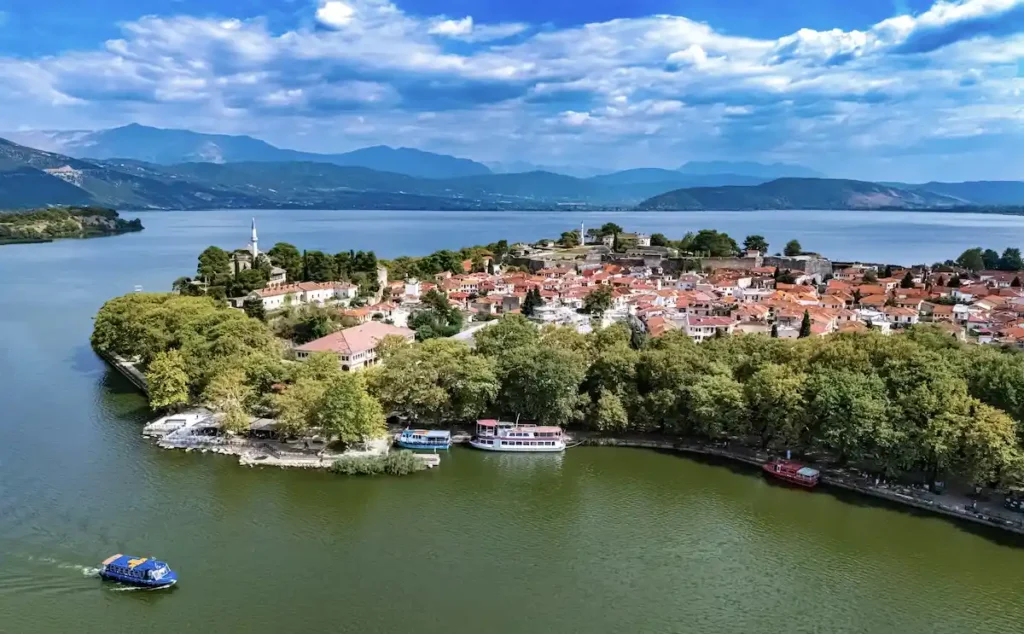
Ioannina has no sea, but Lake Pamvotida gives the city a strong waterfront identity of its own, and beyond the lake lies the mountainous landscape of Epirus, which suits anyone who prefers walking and dramatic scenery to beaches.
Trikala is the clear outsider if a sea view matters to the retirement, but its position gives easy access to mountains, rivers and some of central Greece’s most distinctive landscapes.
The choice here is less coastal versus inland than a question of what weekends should look like. Beach life favours Kalamata, and in a different way, Volos. History and varied excursions favour Nafplio. Mountains favour Ioannina. Easy access to central Greek landscapes favours Trikala.
The Comparison, Weighed
Line the criteria up, and the case is not as evenly balanced as it might look at first glance.
Kalamata wins more of the categories that matter most for a permanent, ageing-in-place retirement than any of the other four. It has the best international air access by a wide margin, a solid regional hospital, one of the two strongest Mediterranean climates on offer, and a city-and-sea combination that does not require a weekend trip to reach. Its costs have risen in the most desirable streets, and its summers are getting hotter, but neither of those outweighs what it offers on the categories that tend to matter most once a move becomes permanent rather than seasonal.
That does not make it the right choice for everyone, and it should not be read that way. Ioannina is the better pick for someone who weighs specialist healthcare and university-city culture above a mild winter, and who does not mind cold, wet months in exchange for it. Trikala is the better pick for someone who wants to keep a car as an occasional convenience rather than a daily necessity, and who is willing to trade an airport for that independence. Volos suits someone who wants a real regional city, the sea and a mountain escape within the same postcode, at the cost of wetter winters and thinner flight options. Nafplio suits someone for whom beauty, history and walkability outweigh housing cost and easy access to specialist care.
What should not survive the comparison is the idea that the five are simply interchangeable, each perfect for someone, with no basis for ranking them against each other. They are not interchangeable. For most retirees moving to Greece permanently, weighing healthcare, climate, connectivity and cost together, Kalamata is the strongest overall choice among the five, and the other four earn their place only for retirees whose priorities depart from that average in a specific and identifiable way.
***
Planning a move to Greece
One practical question usually leads to another when you are planning a move to Greece. The 104-page Greece Retirement Blueprint brings together information on the things you are likely to need to deal with, from taxes and healthcare to housing, banking, driving and everyday life.