
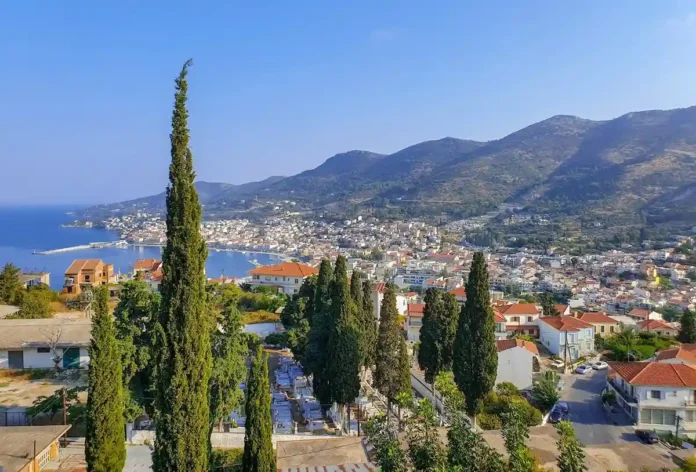
Pine forests, Muscat vineyards and quiet year-round village life, a mile from the Turkish coast
Samos is greener than most Aegean islands. Pine forests reach the sea, vineyards climb stone terraces and the hills of Turkey are close enough to see in detail. About 30,000 people live here all year, and the island has its own hospital, harbours, university departments and farming economy. Summer visitors come, but the island does not depend on them to stay alive.
For a retiree, the first impression is of a working island rather than a resort. Vathy, the capital, and Karlovasi, on the northwest coast, keep shops, offices and services open in January as in July. Mountain villages have stone houses, church squares and kafeneia where neighbours meet every morning.
Samos is also known as a “red” island, in the way Laconia in the Peloponnese is known as royalist. This is because Samos and neighbouring Ikaria give the Greek Communist Party (KKE) a higher share of the vote than anywhere else in the country.
The island’s other famous link is Metaxa. The brandy, created in 1888 and one of the first Greek brands to go international, is built on Samian Muscat wine, and its legacy is visible across the island.
Samos suits retirees who want green scenery, real community and a sense of place, and who are comfortable driving. It suits less those who want a walkable flat town with everything at the door, a large expat social calendar or a Cycladic postcard. Because Samos is a border island, buyers from outside the European Union also need a special permit before buying property.
Getting there and getting around
Samos lies in the eastern Aegean, so close to the Turkish coast that the channel between them is only about a mile wide at its narrowest point. Athens is roughly 300 kilometres to the west, and the nearest island neighbours are Ikaria, Chios and Patmos.
The island has its own airport, a few kilometres from Pythagorio, the seaside town named after Pythagoras, the mathematician born on the island. Flights to Athens take under an hour and operate all year, and this is the most dependable link for hospital appointments, official business and family visits. In summer, seasonal flights from other European cities add connections. In winter, most foreign visitors connect through Athens.
Ferries serve Vathy, Karlovasi and Pythagorio. Sailings to Piraeus are long, often overnight, and strong winter winds can delay or cancel them for a day or more. The ferry to Kuşadası in Turkey runs mainly in the warmer months. Allow a buffer day before any important appointment. There is no train, and public buses thin out outside summer, so a car is close to essential.
For retirees, access is good but not instant. A medical trip to Athens is short, though weather can disrupt flights as well as boats. Visiting relatives usually arrive through Athens in a day. In an emergency, the hospital in Vathy is the first stop, and air transfer to the mainland is available for serious cases.
Climate and the rhythm of the seasons
Summers are hot, dry and long, with daytime temperatures often in the low to mid thirties Celsius from June to September. The meltemi, a steady north wind, brings relief on the coast but can be strong. Mountain villages such as Vourliotes and Manolates sit higher and feel cooler in the evening. Air conditioning is common in rentals, and electricity bills rise in July and August.
Winters are mild by northern standards but wetter than on most Aegean islands, which is why Samos is so green. Grey, windy and rainy spells can last for weeks, and mountain villages can be several degrees colder than the coast, with occasional snow on the highest peaks. Many older houses are damp and hard to heat. Heat pumps, pellet stoves and wood stoves are common, and heating is the main winter energy cost.
Spring and autumn are the easiest seasons. From April to early June and from late September to November, temperatures are comfortable, visitors are fewer, and walking, gardening and village life are at their best.
Seasons set the rhythm of daily life. Errands happen in the morning in summer, and outdoor plans in winter depend on wind and rain. Choosing a house for its winter comfort rather than its summer view is the most useful decision a newcomer can make.
Daily life and local community
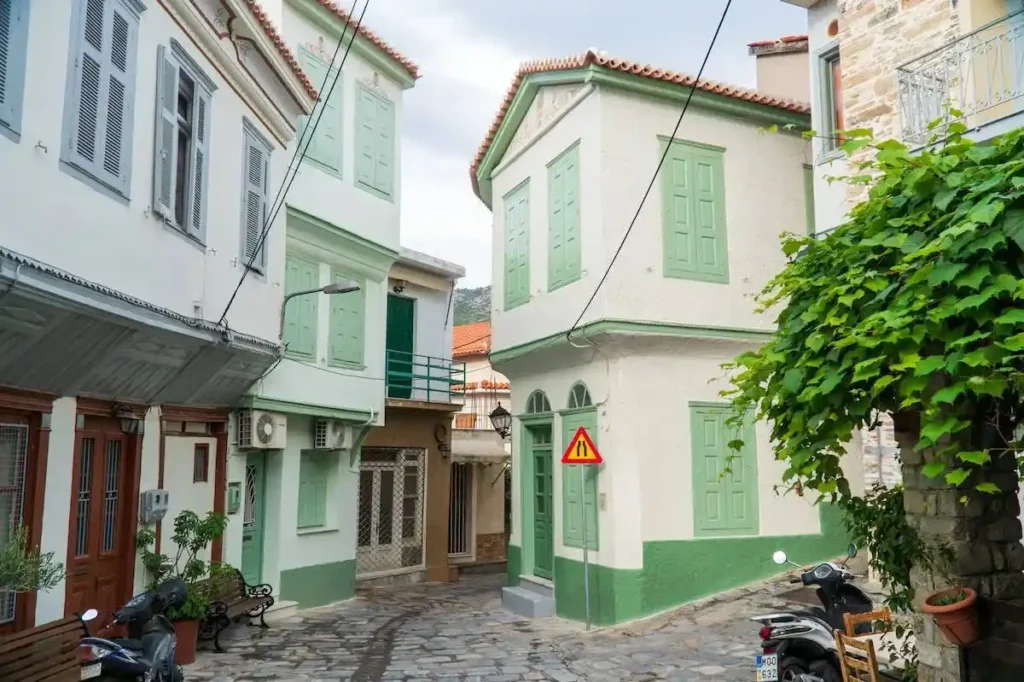
About 30,000 people live on Samos all year. Most are in and around Vathy, Karlovasi and Pythagorio, with the rest spread across mountain and coastal villages. Farmers, teachers, civil servants, fishermen, health workers and university students give the island a steady weekday rhythm that has little to do with tourism.
Summer and winter feel like two different islands. From May to October, tavernas, beach bars and holiday rentals are open, and the population grows. Coastal places such as Kokkari and parts of Pythagorio then quiet down considerably in winter, while Vathy and Karlovasi stay busy with daily business. Winter social life moves indoors and into the villages: kafeneia, family tables, name-day gatherings, hiking and the olive harvest.
Local culture is proud and community-minded. Summer festivals called panigiria, held around village churches on saints’ days, are open to everyone and a good way to meet people. The island is famous for Muscat, a sweet white wine grown on steep mountain terraces, which has long had a following in France. Wine-growers’ cooperatives still matter to the rural economy.
Language rarely stops daily life. Doctors, bank staff, pharmacists and public employees generally speak English, and in any group someone usually does. Still, greetings and basic Greek open doors, especially in villages, where friendships grow through repeated contact: the same café, the same shop, the same neighbours. Newcomers who show up regularly are noticed and welcomed.
Foreign residents form a small community, smaller than on Crete, Corfu or Rhodes. That means fewer organised expat groups, but also a natural push to integrate. Banks, municipal offices and supermarkets work all year in the main towns, and schools follow the school year. Small villages may have a single shop or bakery, and restaurants in resort areas close between roughly November and April.
Healthcare and essential services
Samos General Hospital “Agios Panteleimon” in Vathy is the main public medical facility for Samos and nearby small islands. It offers emergency care, general surgery and a range of basic specialities. Like many island hospitals, it can be short of specialists, so ask local residents which services work well.
Outside Vathy, health centres and rural clinics handle routine care and prescriptions. Karlovasi has a health centre, and larger villages have doctors’ offices. Pharmacies are found in the main towns and many villages, and pharmacists are a helpful first stop for minor problems. Private doctors, including general practitioners, dentists and other specialists, hold consultations in Vathy and Karlovasi.
For complex conditions, such as cancer treatment, specialised surgery or heart procedures, patients usually travel to Athens or another major mainland hospital. The flight is under an hour, but a hospital stay away from home needs planning, and a friend or relative nearby helps.
In an emergency, call 166 for an ambulance or 112, the European emergency number. Ambulances reach the main towns quickly, though mountain villages are farther from help and roads are winding. Serious cases may be flown to the mainland by air ambulance, depending on weather and availability.
Most foreign retirees keep private health insurance in addition to the public system, particularly for private specialists and transfers to Athens. Confirming coverage for medical evacuation before moving is a sensible step.
Cost of living
Samos is generally cheaper than the Cyclades, where Santorini and Mykonos rank among the most expensive places in the country, and somewhat cheaper than central Athens. Island transport adds a premium to some goods. Compared with Athens, the biggest saving is rent. Compared with tourist islands, prices stay steadier because the local economy does not depend on the summer season.
Rent is the biggest variable. Long-term twelve-month rentals for a one- or two-bedroom home often fall between about €350 and €600 a month, depending on location and distance from the sea. Renovated, sea-view and short-term rentals cost more. Many owners prefer holiday tenants in summer, so long-term homes need to be sought early.
Utilities follow the seasons. Summer air conditioning and winter heating are the main costs, and winter bills can be high in older, poorly insulated houses. A heat pump and good insulation lower costs over time.
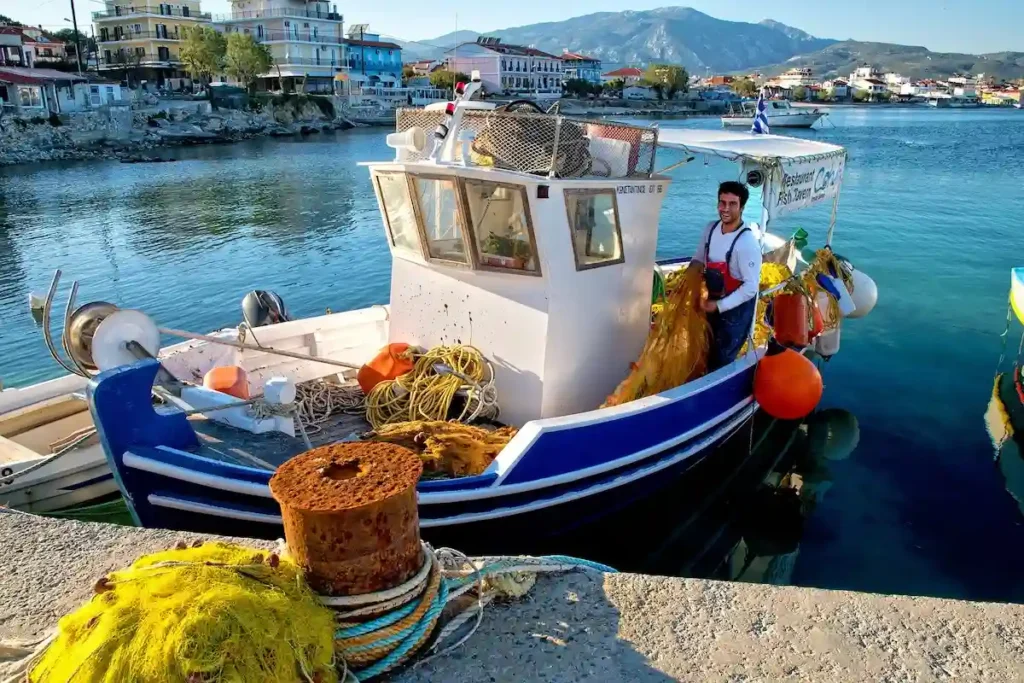
Food is a strong point. Local markets, farms and neighbourhood shops sell vegetables, fruit, olive oil, honey, cheese and fish at reasonable prices, and cooking at home costs much less than dining out. Imported and packaged goods can cost more than on the mainland.
Transport is a real expense. A car is essential, so fuel, insurance, taxes and maintenance all count, and tickets to Athens by air or sea rise in summer.
Costs vary a lot with rent, car use and lifestyle. A couple with low rent, a modest car budget and home cooking can manage on roughly €1,300 to €1,800 a month, but that is a lean budget, not a comfortable one. Comfort, with regular meals out, good heating, travel and a margin for repairs and medical costs, takes noticeably more.
Housing and real estate
Renting first is the sensible way to test the island through a winter before deciding to buy. Long-term rentals are easiest to find in autumn and winter, before owners switch homes to holiday lets for summer.
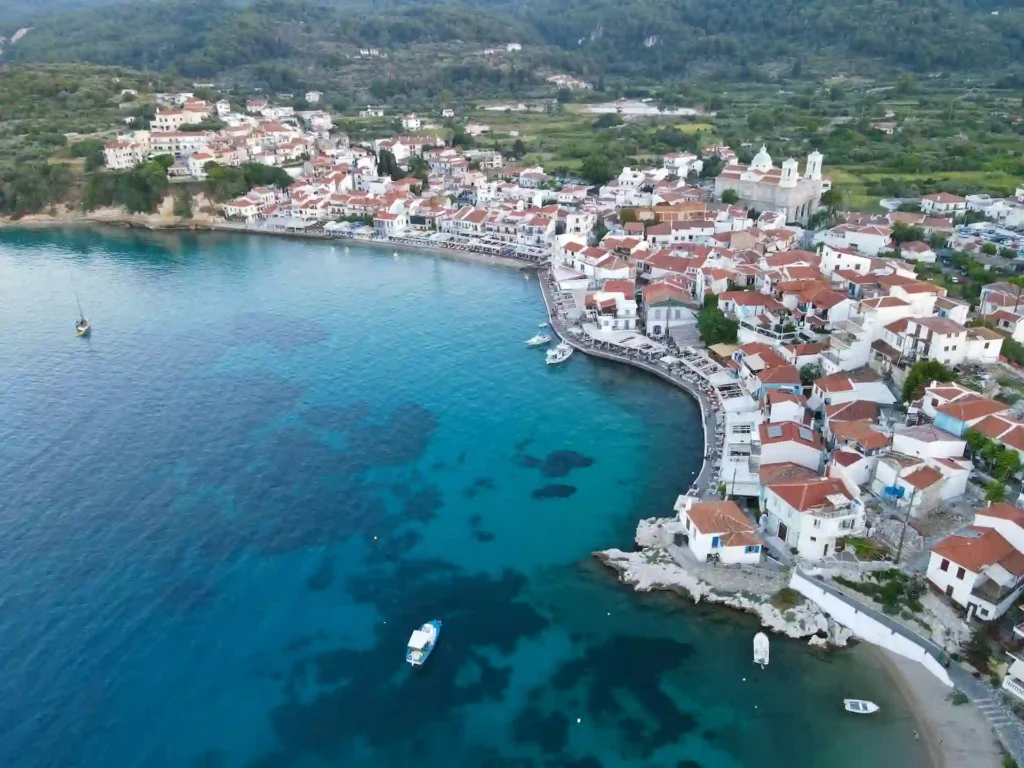
Housing on Samos ranges from stone village houses and older apartments in Vathy and Karlovasi to newer villas along the coast. Village houses can be inexpensive to buy, but renovation is a serious project. Roofs, damp, wiring, water supply and heating often need work, and narrow lanes can complicate deliveries and access. Renovation timelines often stretch, so allow extra time and budget.
Neighbourhoods differ. Vathy has the port, hospital, shops and the most year-round services. Karlovasi is practical, less touristy and home to university departments. Pythagorio is close to the airport and has a pleasant harbour, but it is quiet in winter. Kokkari and the coastal resorts are lively in summer and nearly empty afterwards. Mountain villages are cooler and calm, but farther from services, so a car is essential.
Buyers from outside the European Union need a special permit to purchase property on Samos, because it is a designated border area. Buying property in border areas involves a process that takes months, so it belongs in the purchase timeline from the start.
Lifestyle, nature and leisure
Walkability depends on the place. The waterfront of Vathy and the harbour of Pythagorio are easy to walk, while Karlovasi and the villages have hills and steps. Most retirees still drive for shopping, medical visits and trips between villages.
Café life sets the social rhythm. Mornings begin with coffee at the kafeneio or a waterfront café, and afternoons continue with long lunches, evening strolls and gatherings on name days. Village squares and summer panigiria bring generations together, and it takes little effort to become a familiar face.
Nature is the main daily pleasure. Pine forests, chestnut groves, streams and mountain trails sit within short drives of most homes, and sheltered coves suit swimming from late spring into autumn. Hiking, gardening, foraging and the olive harvest fill the calmer months.
Culture is quietly present. Pythagoras and Epicurus were born on the island, and a 6th-century BC water tunnel cut through a mountain, together with the ancient sanctuary of Hera, are the sites residents show to visiting family. The same goes for Metaxa. The brandy was created in 1888 from a blend that includes Samian Muscat wine, and its Liknon visitor centre, on terraced slopes near Vourliotes, offers guided tastings among the vines. Few residents will go every week, but it is an easy outing for friends and relatives. Liknon opens seasonally, requires advance booking and involves steep stone steps, so it suits those with good mobility.
Local reality check: winter on a border island
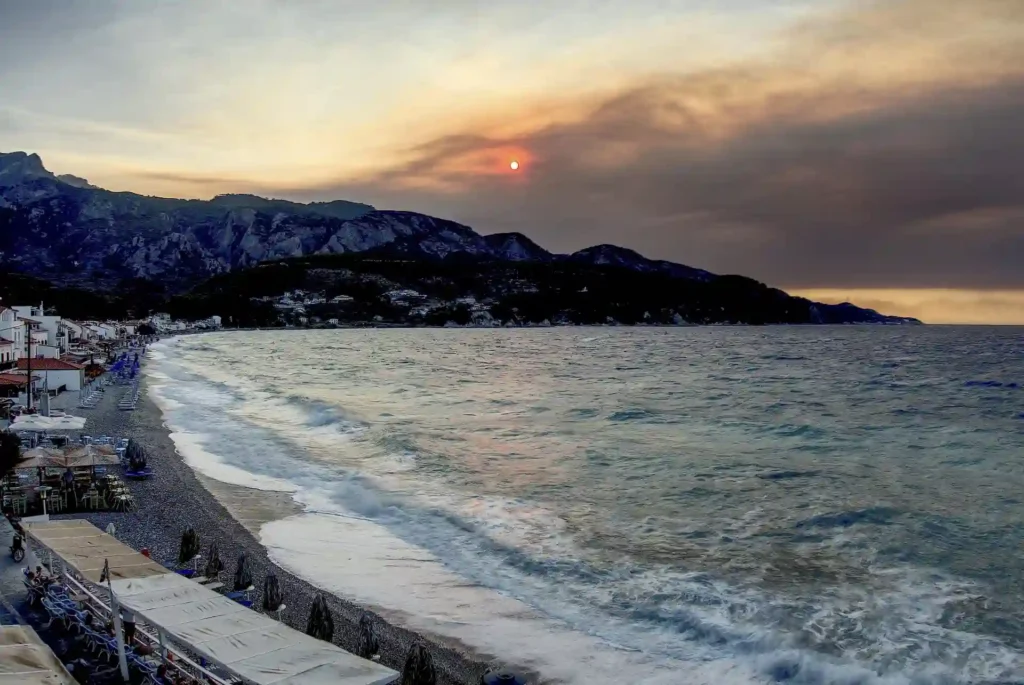
Winter is when Samos shows its real character. From November to April, many coastal tavernas and hotels close, seasonal flights and the ferry to Turkey largely stop, and beaches empty. Vathy and Karlovasi carry on, but the island feels smaller, wetter and quieter. Rough seas can keep ferries in port for days, so supplies and travel plans need a margin.
The border is part of daily life. Turkey lies across the water, close enough to see on clear days, and the coast guard and armed forces are a normal presence. In summer, the short crossing to Kuşadası makes day trips easy. In winter, the island turns more self-contained.
Newcomers who enjoy quiet, and who have a warm house, a car and a few friends, tend to settle in well. Those who need constant activity or fast access to the mainland may find winter long. Spending at least one winter as a tenant before buying is the best test.
Who Samos is best suited for
Samos suits active retirees who enjoy hiking, gardening and village life, and who are happy to drive. It works for budget-conscious retirees, especially those who rent long term, cook with local produce and avoid the most seasonal coastal areas. Culture lovers will find deep history, a wine tradition, living village festivals and a strong local identity. Retirees who want community rather than isolation will find a welcoming, close-knit island, provided they learn some Greek and show up regularly.
Samos suits less those who want to live without a car, those who need frequent specialist care close to home, and those who expect a large expat scene or year-round nightlife. Non-EU buyers should plan for the border-area permit before falling in love with a house.
More about living on big islands
For a year-round, self-sufficient lifestyle, Lesbos in the North Aegean offers rich local heritage, endless olive groves, and vibrant towns that stay open past tourist season. Over in the Ionian Sea, Kefalonia is another great option, pairing dramatic mountain-and-beach scenery with well-connected expat networks. Both are excellent relocation alternatives if you want authentic Greek living alongside full, year-round infrastructure.

***