
A Leper Colony, a Novel, and a View You Will Live With
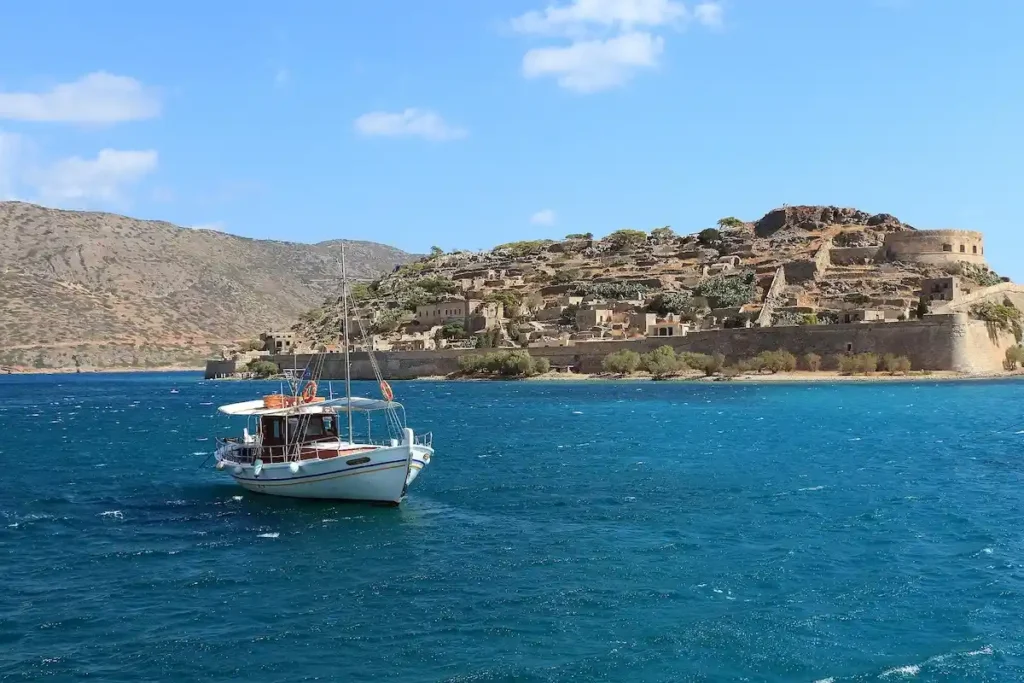
Would you choose a home with a view of a former leper colony? If you settle in Elounda, on the north coast of Crete, that is exactly what you will have. Every morning, across a narrow stretch of water, Spinalonga will be there, silent, walled, and impossible to ignore. For half a century, until 1957, it held people who had been separated from their families and their lives by a diagnosis of leprosy. From the shore, their families could see them. They could not reach them.
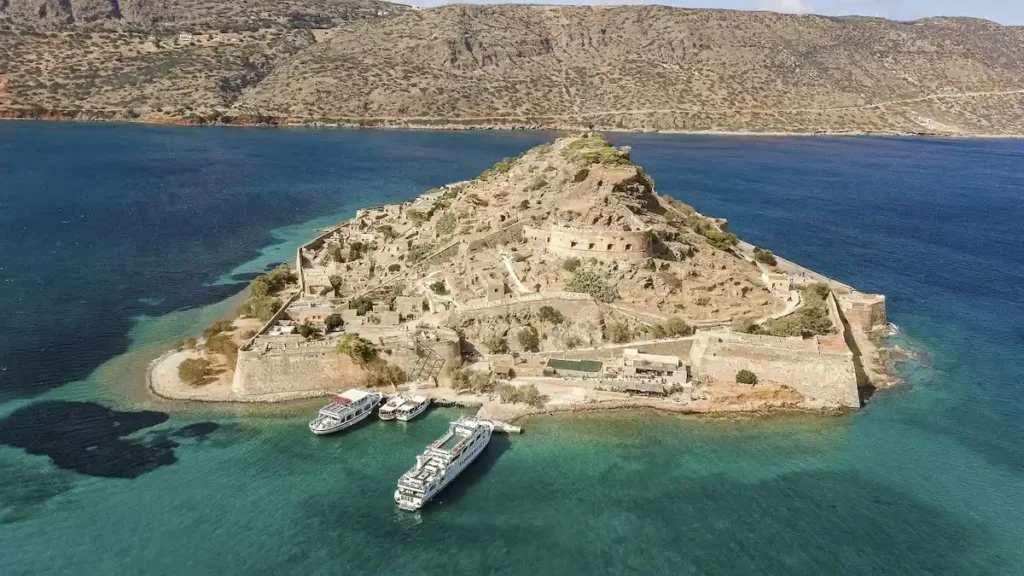
That is the landscape Victoria Hislop walked into as a traveller, and it was enough to hand her a novel. She did not arrive in Crete with a story already formed. She came, she looked across the water, and the silence and the abandoned houses did the rest.
Published in 2005, The Island opens in the present day, with a young British woman named Alexis travelling to the small Cretan village of Plaka, her mother Sofia’s birthplace, in search of a family history that Sofia has spent her entire life concealing. What Alexis uncovers, through an old family friend named Fotini, is a story that begins in 1939, when her great-grandmother Eleni, a schoolteacher, a mother, a woman at the centre of her community, is diagnosed with leprosy and sent to Spinalonga, leaving behind her husband Giorgis and their two young daughters.
Giorgis, a fisherman, becomes one of the men who rows supplies and patients across to the island. He can reach his wife by boat. He cannot bring her home. Meanwhile, his two daughters grow up in opposite directions. Anna is vain, ambitious, hungry for a life beyond the village, and marries into the wealthy Vandoulakis family, a choice that leads to betrayal and ruin. Maria is gentle, selfless, devoted to her father, and just as she is about to marry, she too is diagnosed with leprosy and sent to Spinalonga. It is Maria who finds, against all expectation, resilience and love on the island. It is Anna whose choices unravel everything. The novel moves through the German occupation of Crete, the slow arrival of a cure for leprosy in the 1950s, and a final tragedy that explains why Sofia, the daughter of this story, fled Greece for London and never looked back.
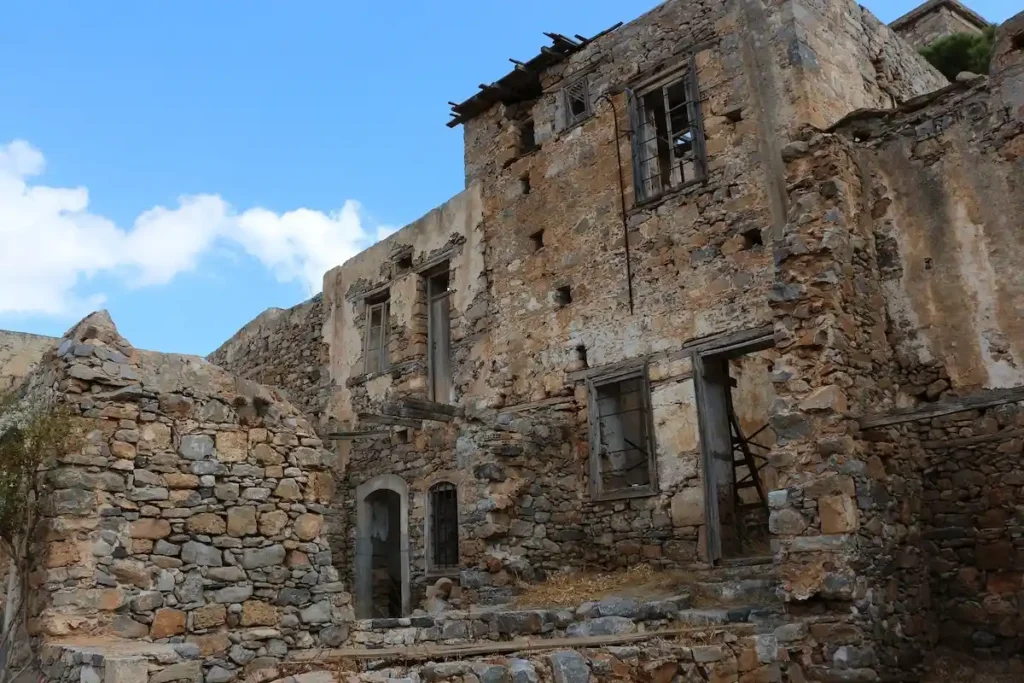
Hislop does not treat Spinalonga as a place of pure misery. The colony had its own internal life, a community that organised itself, built routines, maintained dignity. That is the detail that makes the novel worth reading before you visit, or before you choose to live nearby. The island you will see from Elounda every day was not simply a prison. It was a place where people continued to live.
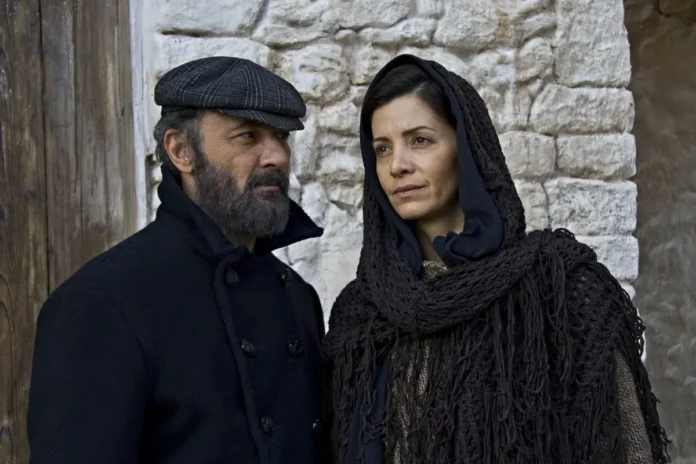
When Hollywood came calling, with offers and a proposal to turn the story into a musical, Hislop declined. She has said she feared a Hollywood version would have turned the lepers into monsters. That was not her story, and it was not Spinalonga’s. She wanted the adaptation to be Greek, filmed in Greece, with Greek creative involvement. The deal with Mega Channel was reportedly agreed within the hour. The resulting series, broadcast across Greece during the 2010–2011 season, ran for 26 episodes and became one of the most ambitious Greek television productions of its time.
Screenwriter Mirella Papaeconomou expanded the novel into a story with 83 speaking parts and over 500 extras, adding subplots around the island’s internal politics, its elections, and the daily lives of lepers arriving from Athens, material that deepens rather than replaces what the book offers. Hislop was involved throughout. Her husband, British satirist Ian Hislop, even appeared in a cameo as Alexis’s father, delivering all his lines in phonetically learned Greek.
Today, Elounda is one of the most upscale resort areas in the Mediterranean. Luxury hotels line the waterfront. Finding your home here means choosing between two distinct lifestyles: the waterfront properties and modern apartments near the coast offer immediate access to the vibrant sea life, while the hillside villages like Epanw Elounda hide beautifully weathered stone houses waiting to be restored, offering panoramic views of the bay at a more relaxed pace.
Daily boats carry tourists across to Spinalonga, where they walk streets that once held an entire isolated world. The contrast is sharp, and it is exactly what makes the novel valuable for anyone considering a move to Crete. The Island strips away the postcard and returns the place its history, the fear, the resilience, the ordinary lives lived under extraordinary circumstances.
For those thinking about retiring to this part of Crete, the book offers something no property listing or travel guide can: the understanding that a place is not only what it looks like today, but everything it has carried to get there. Spinalonga will be part of your view. It is worth knowing its story before you arrive.
Book Title: The Island, Author: Victoria Hislop, Headline Review, 2005.

TV series: The Island (Το Νησί), Mega Channel, 2010–2011.
***
Since you like books and want to know Greece through literature, we have two more pieces for you. Discover how Louis de Bernières’ Captain Corelli’s Mandolin will help you understand the spirit of Kefalonia, and explore the enigmatic atmosphere of Spetses through John Fowles’ masterpiece, The Magus.