
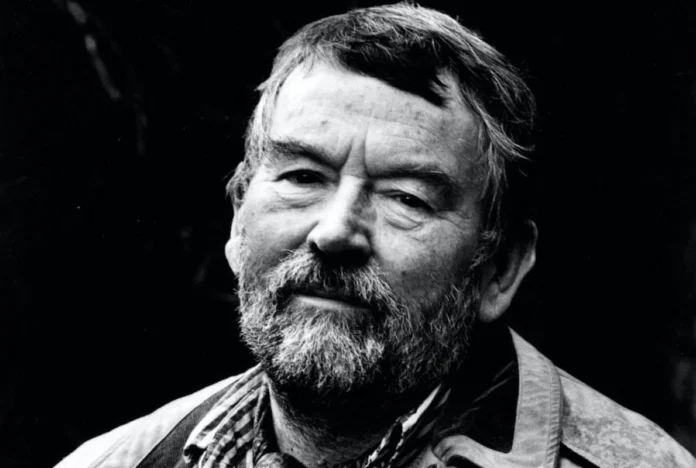
Where the atmosphere of the island meets the world of British author John Fowles
Spetses is an island of measured rhythms. Here, the pine forests don’t just border the sea; they seem to claim it. Between the whitewashed captain’s mansions and the curved, narrow streets, the modern roar of engines is replaced by the clip-clop of horse-drawn carriages and the hum of electric scooters. While visitors praise its elegance, those who stay longer sense a deeper quality: a landscape that feels delightfully self-contained, where the Mediterranean sun slows time and heightens the senses.
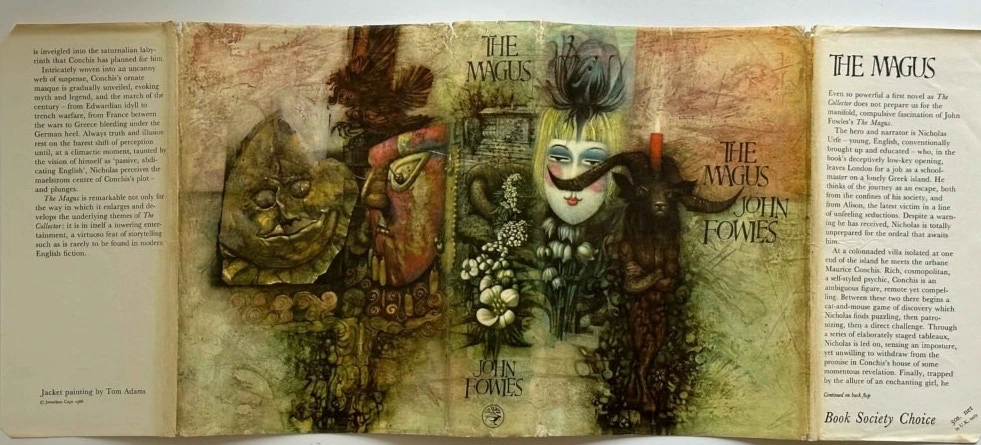
For many, this atmosphere is inseparable from The Magus, the psychological masterpiece by John Fowles. Though the story unfolds on the fictional island of “Phraxos,” the setting is a transparent veil for Spetses, where Fowles lived and taught in the early 1950s. The island didn’t just host the story; it dictated its soul.
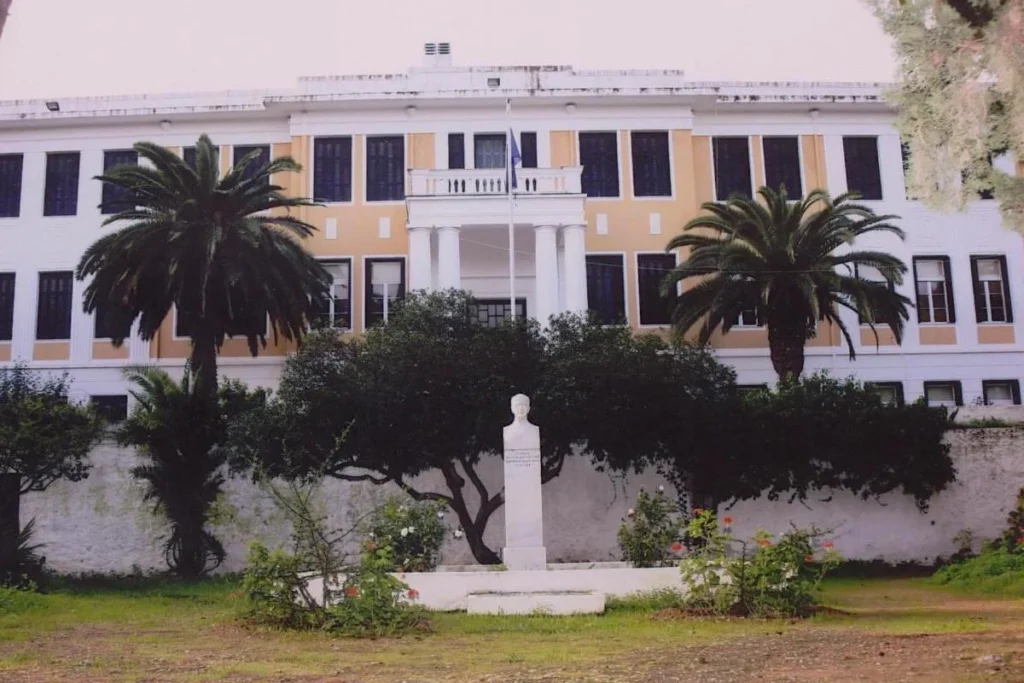
John Fowles arrived in 1951 to teach English at the Anargyreios and Korgialeneios School, a grand neoclassical boarding school perched among the pines. At the time, Greece was still emerging from the shadow of war, and daily life on the islands was a study in beautiful austerity. For a young Englishman, the contrast with the grey dampness of post-war Britain was seismic. Fowles found himself intoxicated by the “Grecian light”, that famous, unforgiving clarity, and the sheer antiquity of the soil. The island’s combination of physical beauty and intellectual isolation became the bedrock for the “god-game” played out in his novel.
If you find yourself walking past the school today, you’ll find that the isolation Fowles felt has matured into a prestigious cultural quietude. It remains one of the most dignified corners of the island, perfect for those seeking a retirement flavored by history rather than high-season tourism. In The Magus, the protagonist Nicholas Urfe arrives at this remote school to escape the “ennui” of his life, a feeling many prospective residents might recognize before they finally make the leap to Greece.
The novel’s most haunting scenes take place at Bourani, a secluded coastal estate where the lines between reality and theater begin to blur. Fowles uses the Spetsiot landscape as an active character: the soughing of wind through the Aleppo pines, the blinding shimmer of the Myrtoan Sea, and the eerie silence of the interior hills. Even if you have never stepped foot on the cobblestones of Dapia, Fowles’s prose makes the island’s physical presence feel like a memory you’ve already lived.
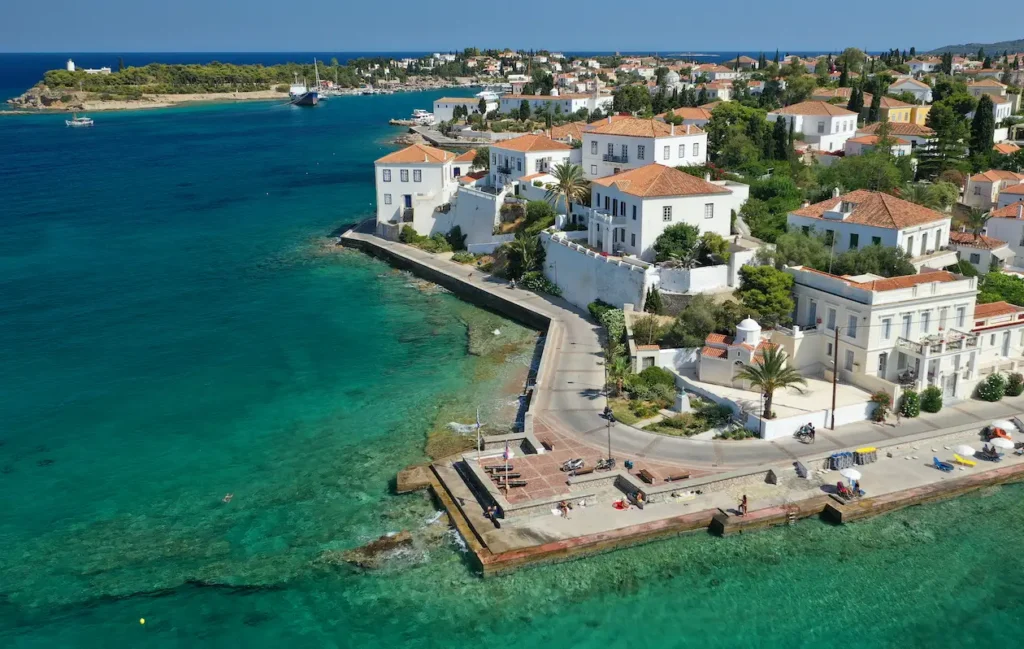
Spetses today is far more accessible than it was in 1951, yet it has been remarkably stubborn about maintaining its character. The ban on private cars in the main town remains a hallmark of its sophisticated appeal. While the school still stands as a sentinel of the past, the waterfront is now lined with chic cafés and sailing yachts that Fowles’s protagonist could only have dreamed of. Yet, the “Phraxos” of the mind still exists. You find it in the quiet hours of the mesimeri or in the stillness of a late-September evening by the sea.
Choosing to settle on Spetses is, in a way, entering your own version of The Magus. You arrive seeking a new chapter, only to find the island testing your perceptions of time and community. Fortunately, unlike the protagonist’s ordeal, the modern challenges are far more pleasant, often involving nothing more strenuous than choosing between the local amygdalota almond sweets or a sunset gin and tonic at the Poseidonion.
John Fowles began his draft in the 1950s and published the first edition in 1965, later releasing a definitive revised edition in 1977 that smoothed out the youthful edges of his original vision, much like the way a long-term resident eventually smooths out their own expectations, finding a peaceful, permanent rhythm in the Saronic Gulf.
Spetses on Screen and On Foot
The artistic allure of Spetses extends into the modern day, most recently as the setting for Maggie Gyllenhaal’s The Lost Daughter. Explore how the island’s sun-drenched landscapes translate to the screen, and consult the Spetses relocation guide for a practical look at making this sophisticated rhythm a permanent reality.
The Magus was first published by Little, Brown and Company (US) in 1965 and Jonathan Cape (UK) in 1966, with a definitive revised edition released by both publishers in 1977.
***