
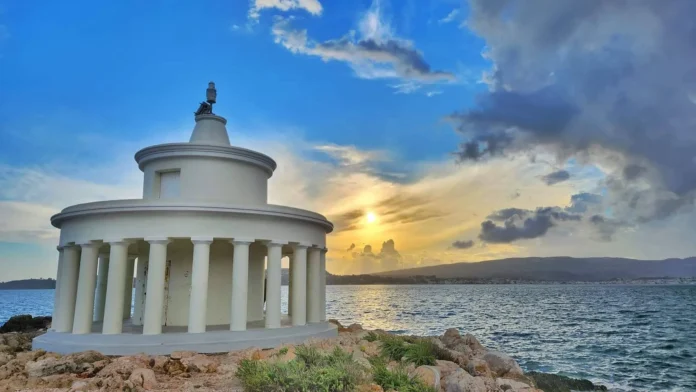
Enos Properties realtors provide an honest look at the property market for retirees moving to the Ionian coastline
In this exclusive interview, real estate experts from Enos Properties in Kefalonia provide a candid look at the island’s evolving property market and year-round infrastructure. We bypass the typical marketing narratives to examine the practicalities of settling in the Ionians—from healthcare accessibility and seasonal rhythms to the specific neighborhoods best suited for retirees. It is an essential roadmap for anyone transitioning from a visitor to a resident.
If you’re a foreign retiree thinking about moving to Greece permanently, what makes Kefalonia a better choice than other islands?
Kefalonia offers a rare balance: it is a large island, which means it doesn’t completely shut down in winter, but it remains authentic. Unlike the Cycladic islands, such as Mykonos or Santorini, it has lush vegetation, abundant water, stunning beaches, beautiful villages, and a more aristocratic and peaceful atmosphere. In addition, it has an international airport with direct flights, which is critical for a foreigner.
Are there parts of Kefalonia that are better for living there full-time than for vacationing or investing?
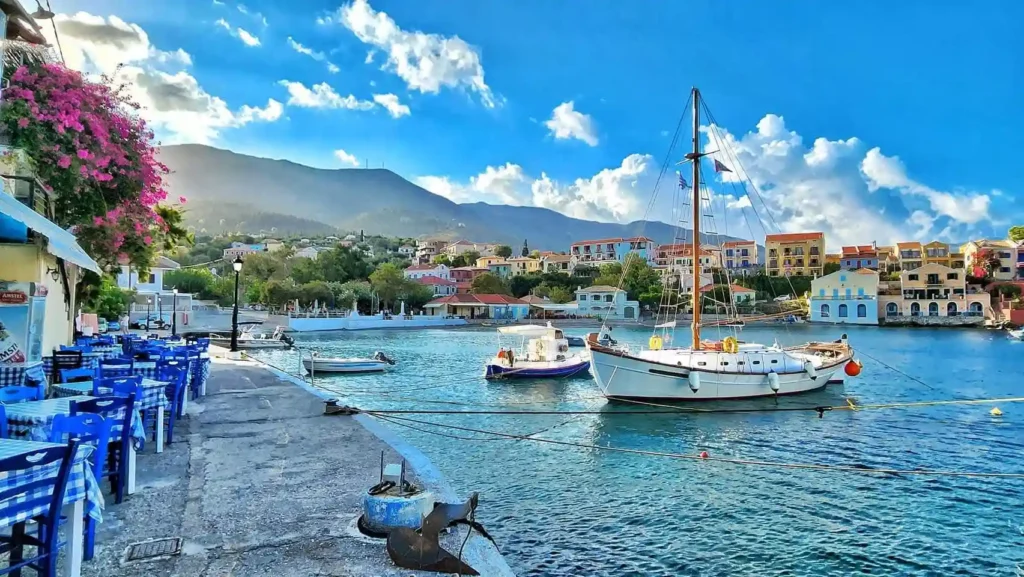
Permanent residence: areas around Argostoli, such as Lassi and Livathou, where services, supermarkets, and doctors operate year-round. Vacation or investment: Fiskardo, Assos, and Agia Efimia. These places are beautiful in the summer but very deserted in the winter.
What kinds of properties do foreigners usually look for? Do they want traditional houses, newly built villas, apartments, or land?
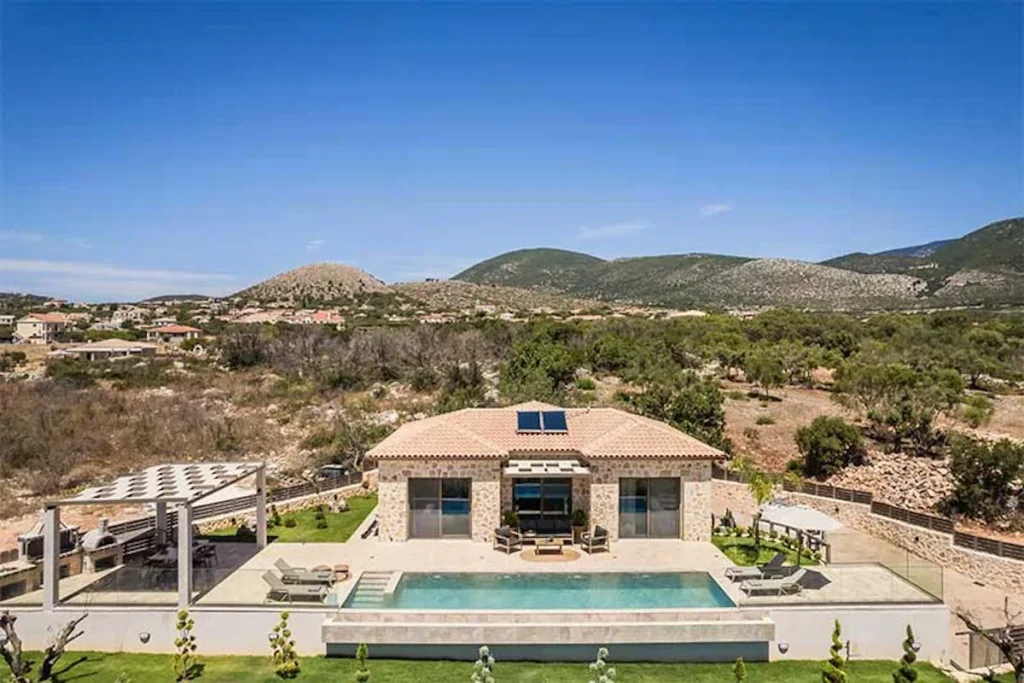
Most are looking for newly built villas with sea views and pools. However, there is growing interest in restoring stone ruins in inland villages, which offer peace and lower costs. Those seeking “zero maintenance” mostly seek apartments in Argostoli.
What are the most important things a foreigner should think about before buying a house in Kefalonia?
Seismicity: Kefalonia has the strictest anti-seismic code in Europe. Make sure the house has been built with a legal permit.
Forest Maps & Archaeology: Many land plots have building restrictions.
Water Access: In remote areas, water supply can be difficult.
How hard or easy is it for people who aren’t Greek to buy a house, and what are the most common mistakes?
The process is now digitized but remains bureaucratic. The most common mistake is relying solely on the agent or using the seller’s lawyer. An independent lawyer is essential.
For those not ready to buy, how easy is long-term renting on the island?
It is difficult. Most owners prefer Airbnb (short-term rentals). To find a house for the whole year, one must start searching in October or November.
What are the current prices for buying and renting in popular areas of Kefalonia?
Purchase: from €2,500 per sqm for older houses to €5,000+ per sqm for luxury villas in Fiskardo. Rent: A decent 2-bedroom house starts from €600–900 per month for long-term rental.
Are foreigners interested in investing in Kefalonia real estate? If so, in what areas (tourism, long-term rental, etc.)?
The interest in Kefalonia properties is particularly high in the luxury tourism sector. Mass tourism has not yet overwhelmed Kefalonia, allowing for potential price growth.
How much does it cost to keep a house on the island up to date every year (electricity, water, municipal fees, and garden)?
Electricity/Water/Municipal Fees: ~€2,500–3,500 annually, depending on heating/AC use.
Garden: ~€500–1,000 annually.
What is the average yearly cost of taking care of a pool?
An average pool costs €1,500–2,500 per year (chemicals, cleaning, pump electricity). During summer, cleaning is required 1–2 times per week.
Is there anything a foreigner should know about how houses in Kefalonia use energy?
Humidity is the biggest problem in Kefalonia in winter, so it is crucial that they get informed about weather realities. A foreigner should invest in a heat pump or excellent insulation and definitely dehumidifiers. Old houses without insulation are costly to heat.
Do you need a car to live on the island? Is public transportation reliable?
A car is necessary. Only in the summer does public transport (KTEL buses) frequent the main axes. For a retiree, the independence a car provides is essential.
Which areas offer better access to services, shops, and medical care?
Argostoli is the center of everything, including hospitals, banks, and public services. Livathou offers the best balance of “nature and convenience.”
How good is the healthcare in Kefalonia, especially for older people?
There is a general hospital in Argostoli and several private diagnostic centers. For serious cases, there are regular connections to Patras (University Hospital) or Athens. Many expats maintain private health insurance. Note: the General Hospital in Argostoli is currently undergoing major renovations.
Are there groups of expats on the island, and do they help newcomers get used to life there?
There is a very active community, mainly British, German, and Scandinavian.
There are Facebook groups, such as “Expats in Kefalonia,” which are extremely helpful for adaptation. Smaller groups exist on WhatsApp and Viber.
What is life like in Kefalonia in the winter? This is something that many people who come to Kefalonia in the summer don’t know.
It is the “real” Kefalonia. It is quiet, green, and often rainy. The pace slows, locals harvest olives, and social life moves to village tavernas and cafes in Argostoli. Anyone who loves nature and tranquility will adore it.
What is the most common misconception foreigners have about buying property on a Greek island?
One common misconception foreigners have is that “it is always sunny and warm in Greece.” In winter, the island is cold and very humid. Furthermore, the purchase process does not take “a few weeks” but often several months.
Do you think Kefalonia is better for the permanent residence of a foreign retiree or more for seasonal stays?
For a retiree, Kefalonia is excellent for permanent residence, provided they choose to live near Argostoli. If they choose a remote village, winter can be a bit difficult and isolated.
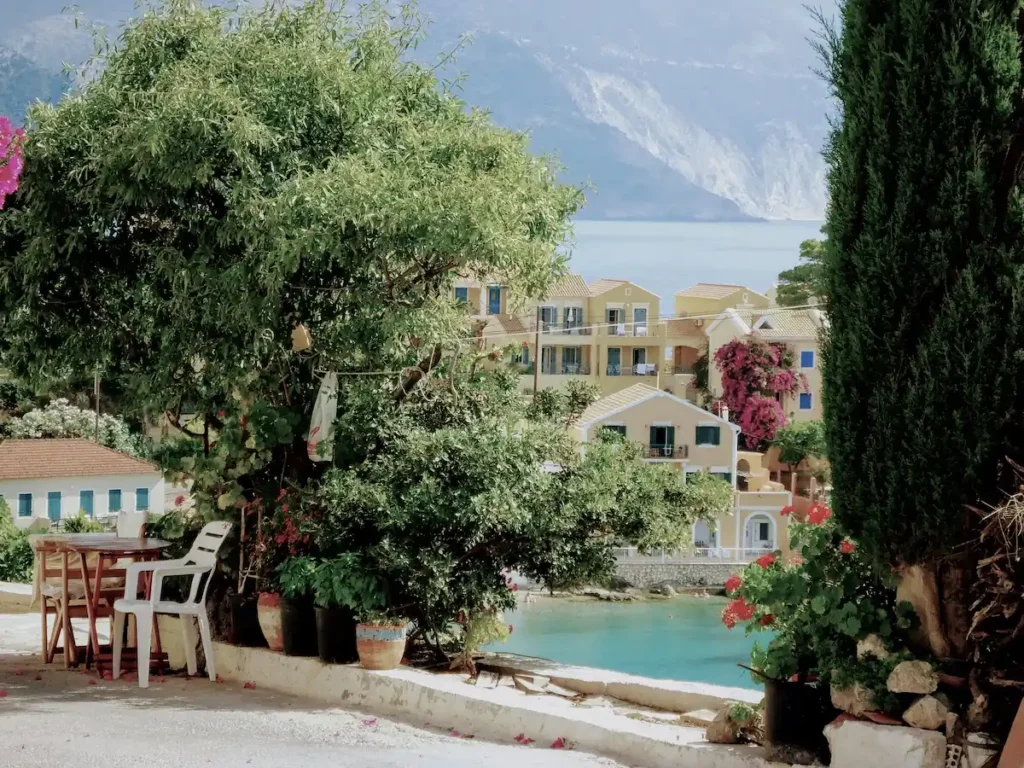
What advice would you give to a foreigner who is taking their first steps to buy or rent a house in Kefalonia?
Rent before buying. Spend a full winter on the island as a tenant to see if the quiet and weather suit you before committing your capital to a property purchase.
Is there something a lawyer ensures in real estate transactions that a real estate agent does not?
The agent wants to sell the property. The lawyer is the only one who will check whether there are encumbrances (mortgages) on the property, whether the title deeds are clear over the past 20 years, and whether the property is 100% legal in planning terms (in collaboration with an engineer). The lawyer safeguards your money; the agent safeguards the transaction.
What towns or areas on the island do foreigners usually want to live in permanently, and why?
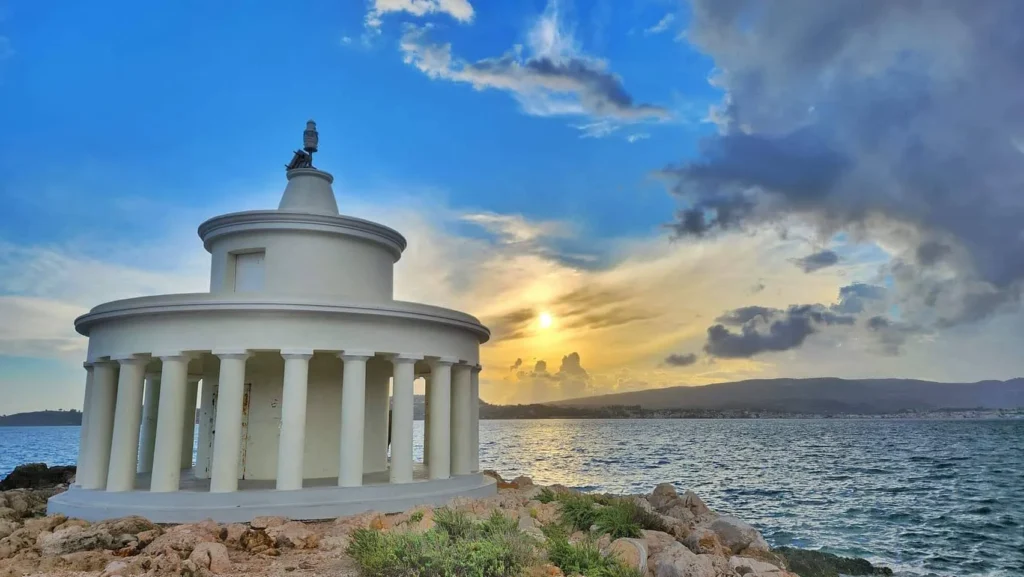
Livathou: The “Golden Mean” of Kefalonia (near Argostoli): Livathou, or Livathos, is a wider area near Argostoli consisting of about 20 beautiful small villages with traditional houses and wonderful gardens. Livathou is the most popular area for the permanent settlement of foreigners, as it combines traditional Ionian beauty with modern conveniences. It is close to Argostoli, which is the capital of the island, the airport, and some of the island’s wonderful sandy beaches. The strategic location of Livathou, just a short distance from the capital and the airport, provides immediate access to hospitals, banks, and international flights.
The quality of life is high, with well-maintained “manorial” villages, such as Kourkoumelata and Lakithra, rich in vegetation and gentle sandy beaches like Avythos and Lourdas, ideal for all ages. There is a strong expat community, which facilitates social integration, language, and mutual support.
Unlike the northern part of the island, Livathou does not “die” in the winter. Distances are short, and basic services remain available all year. Real estate options range from luxurious newly built villas with Ionian views to traditional standalone houses, maintaining high investment value due to demand. In short, it is the ideal choice for anyone who wants to enjoy the tranquility of an island without missing the safety and amenities of an organized society.
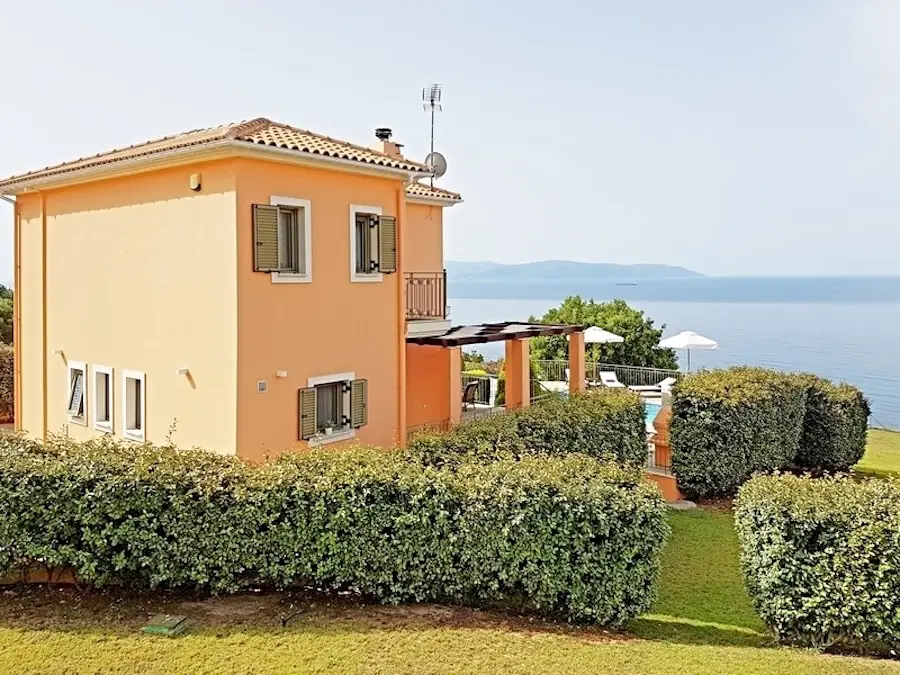
Skala: Skala has transformed from a small village into one of the island’s top tourist resorts while maintaining a very pleasant and organized atmosphere. Its trademark is the giant coastline, over three kilometers, with fine sand and pebbles, surrounded by a beautiful pine forest that reaches the sea. The United Kingdom strongly influences the expat community here. Foreigners have purchased houses on the surrounding hills, and the ubiquitous English language facilitates easy adaptation.
The area has excellent markets and many restaurants, cafes, and bars. In the summer, the area is lively and offers everything “at your doorstep” without needing to go to Argostoli. Unlike Livathou, Skala becomes quite deserted in winter. Many businesses close, and the distance from Argostoli, around 45–50 minutes, makes it somewhat more isolated for permanent residents off-season. Property prices are generally more affordable compared to Fiskardo or Livathou, but there is strong demand for sea-view plots. Houses here usually have a more “modern” and tourist-oriented architecture.
Above the modern village lies Old Skala, destroyed in 1953, which offers stunning views and a quieter, more secluded feel for those who want to avoid the bustle of the center. In short, Skala is ideal for someone who wants to live by the sea in an environment strongly reminiscent of a European resort and who does not mind increased tourist activity in the summer but also enjoys the “excessive” quiet in the winter.
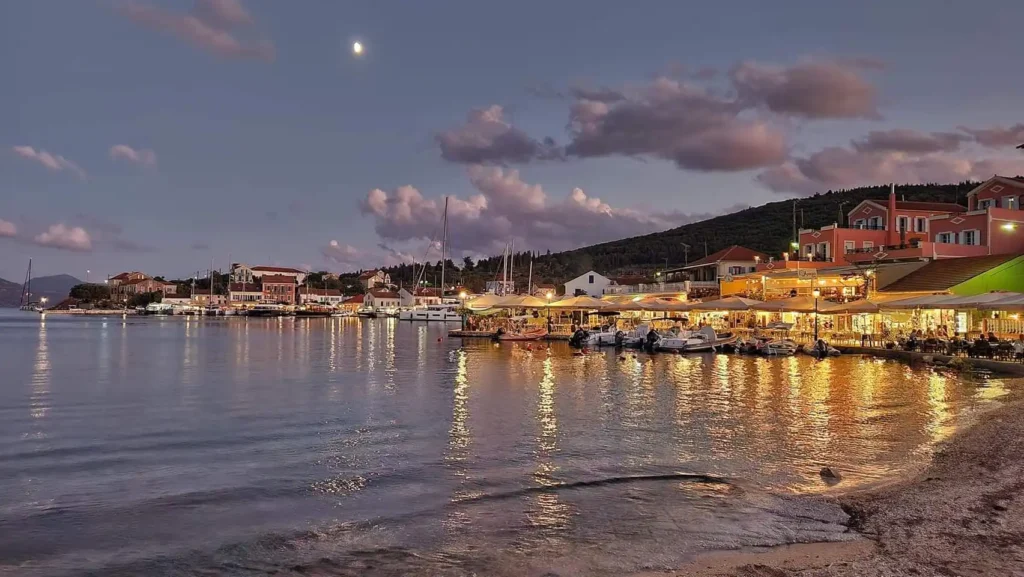
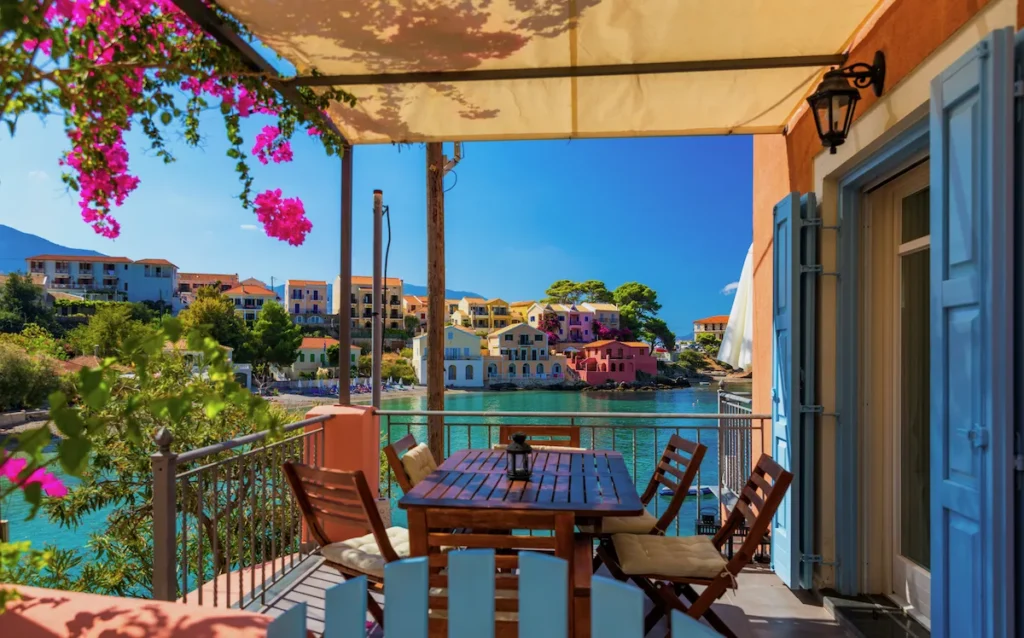
Fiskardo: The “Saint-Tropez” of the Ionian. Fiskardo combines historical heritage with absolute luxury, attracting the international jet set and yachting enthusiasts. It is the most expensive and refined destination. The harbor is full of luxury yachts, branded restaurants, and elegant boutiques. Life here moves at slower, leisurely, yet luxurious rhythms. Fiskardo is a traditional protected settlement with colorful Venetian houses and picturesque alleys.
Its beauty is unique, as it is the only place on the island that transports visitors to 19th-century Kefalonia. The area is surrounded by dense cypress forests that reach the waves. Beaches such as Emplisi and Foki have white pebbles and crystal-clear turquoise waters, reminiscent of lakes amid greenery. It is the most expensive area on the island in terms of real estate. Properties are rare, and demand is high. Prices for restored mansions or modern villas on the surrounding hills, such as Mangano, are very high, offering strong investment security. Fiskardo is located at the northern tip of the island.
In winter, it is hushed, almost isolated, and about 1 hour and 15 minutes from Argostoli. Access is easier toward Ithaca and Lefkada than to the capital of Kefalonia. In short, Fiskardo is ideal for someone looking for exclusivity, historical beauty, and high social standing. It is more of a destination for luxury vacation homes than for a retiree seeking everyday access to urban amenities.
Palliki (Lixouri): Palliki offers the feeling of a “small continent” within the island, as it has everything without the need for frequent travel to the capital. Communication with Argostoli is effortless with the ferry, which runs every 20–30 minutes in summer (less frequently in winter). The journey takes only 20 minutes, offering a pleasant and economical alternative to the one-hour road trip. Palliki hosts some of Greece’s most unique beaches.
Xi and Megas Lakkos stand out for their red sand and clay cliffs, while Petanoi offers a landscape that rivals Myrtos in beauty and waters. In general, Palliki is considered more affordable than Livathou and Fiskardo. Property and rental prices are more accessible, making it an excellent choice for retirees looking to maximize value for money. Lixouri remains lively all year. There is an active social life, with philharmonics, choirs, and cultural associations, which helps a permanent resident never feel isolated.
The terrain is flatter and more agricultural compared to the rest of mountainous Kefalonia, with many vineyards and olive groves, which makes walking and moving around easier. In short, Palliki is the ideal choice for anyone seeking an affordable, autonomous, and socially warm area. It is a place where you will live like a “local,” with all necessary infrastructure nearby.
Curious what life in Kefalonia really feels like year-round? Read the testimonial by a Greek-Canadian expat who spends several months a year on Kefalonia, for a firsthand perspective. Then explore our detailed Kefalonia relocation guide for everything you need to know before making the move, from practical steps to everyday realities.
ABOUT THE EXPERTS
K MELISSARATOS KAI SIA L.P., licensed real estate professionals
Enos Properties & Enos Services in Kefalonia
Public Commercial Registry Number (ΓΕΜΗ): 172550934000
Vergoti 9, Argostoli, Kefalonia 281 00, Greece
info@enos-properties.com
***