
Why mega-project condos are a risky choice
When you picture your retirement home in Greece, you probably imagine having coffee on a terrace, and walking to a nearby village square. What you probably do not picture is waiting ten years for your building to be completed or discovering that it never will be.
Greece has attracted significant international attention in recent years for large-scale residential and resort developments that promise a curated community, a coastal address, world-class amenities, all sold before a single foundation has been poured. For investors with long time horizons, some of these projects eventually deliver. For retirees who need a home they can actually move into, off-plan purchases in mega-projects carry risks that deserve serious consideration before signing anything.
The appeal is real. So are the obstacles.
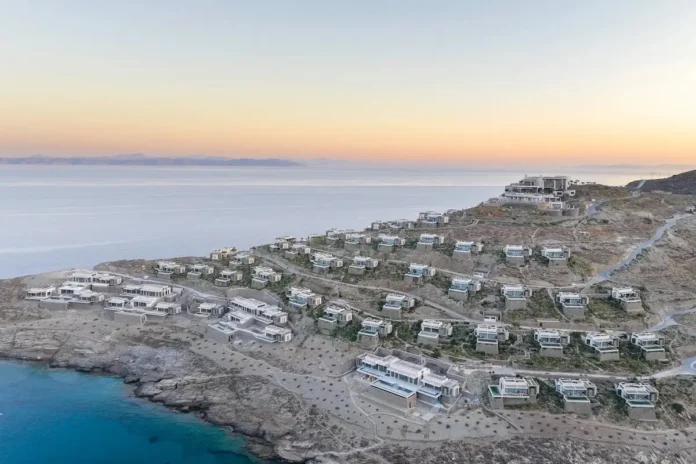
The marketing around mega-projects is sophisticated and, at its best, genuinely aspirational. Projects like Kilada Hills in the Peloponnese or the residential phases of Ellinikon on the Athens Riviera have attracted global interest, with inquiry numbers and reservation figures that developers cite proudly. What the brochures do not highlight is the gap between a reservation and a set of keys: a gap that can stretch into years or decades.
Greece’s legal and regulatory environment for large-scale mixed-use developments is among the most complex in Europe. An integrated tourism-residential project can require approvals from up to five different ministries before construction legally begins. Local municipalities add their own layers of permitting. Environmental assessments trigger separate proceedings.
And at any point in that process, local residents can intervene. Citizens and local groups have legal standing to challenge projects they believe violate environmental or planning law, and such cases are frequently brought before the courts. Each challenge triggers its own proceedings, its own appeals, its own years of waiting.
Environmental law as a structural obstacle
Greece’s constitution places environmental protection in Article 24, and citizen groups take that mandate seriously. Projects near protected coastlines, forests, or water sources routinely face challenges at the Council of State, the country’s supreme administrative court. These are not frivolous objections quickly dismissed. The Itanos Gaia development in eastern Crete has been in and out of legal proceedings for nearly three decades. The Atalanti Hills project in Central Greece, which once planned over 3,000 residential units, has faced sustained opposition and legal challenges related to environmental and infrastructure concerns, significantly delaying its progress. Neither situation is unusual. In island communities in particular, residents have successfully argued that local infrastructure (power grids, water supply, sewage systems) simply cannot support the densities that developers propose. Courts have agreed.
Money, markets, and corporate fractures
Even projects that survive the legal gauntlet face a different set of vulnerabilities. The post-2022 surge in construction costs upended financial models that had been designed for a different economic environment. Labor shortages, particularly for specialized trades, compounded the problem. Projects that had locked in off-plan prices found themselves unable to complete construction without absorbing losses their investors were unwilling to accept.
Corporate structures add another layer of fragility. Large resort and residential developments frequently involve joint ventures between international funds, and Greek development companies. When those relationships run into financing shortfalls or corporate restructuring, as happened at the Kilada Hills project in the Peloponnese, the consequences for buyers already committed can be severe. Assets can be frozen. Timelines evaporate. The entity you signed a contract with may no longer exist in the form it once did. At One&Only Kéa Island, a related development by the same group, buyers of some of the branded private villas are still waiting for delivery after delays caused by a dispute between the developer and the contractor.
Even at Ellinikon, Greece’s largest and best-funded development, the picture is more complicated than the headlines suggest. While the luxury Riviera Tower and other flagship components continue to advance, parts of the wider residential programme have experienced delays. In 2024, Lamda Development shifted strategy by selling more development plots to third parties rather than building them in-house—a move widely interpreted as a response to rising construction costs and the need to strengthen cash flow. The strategy drew criticism from some investors and analysts, underscoring that even Greece’s most visible mega-project is not immune to the financial and execution pressures that can slow large-scale developments.
What this means for a retiree specifically
Retirees are not in a position to wait out a decade of litigation or restructure their finances around a stalled asset. The fundamental problem with off-plan purchasing in a Greek mega-project is one of timing: retirement has a timeline that construction delays do not respect.
If you are relocating to Greece within the next two to three years, an off-plan apartment in a large-scale development is not a housing solution. The timeline simply does not work in your favour. The deposit you pay is real. The apartment you are buying may remain notional for years. There are better options.
A reasonable conclusion
None of this is to say that Greek mega-projects are fraudulent or that no one should ever buy into them. Some will be completed, and some buyers will be satisfied. The point is narrower: for someone who needs a home in Greece within a defined window of time, an off-plan purchase in a project still working its way through permitting, litigation, and corporate restructuring is a choice made on faith rather than evidence.
***