
A Sophisticated Balance of Spiritual Heritage and Coastal Life
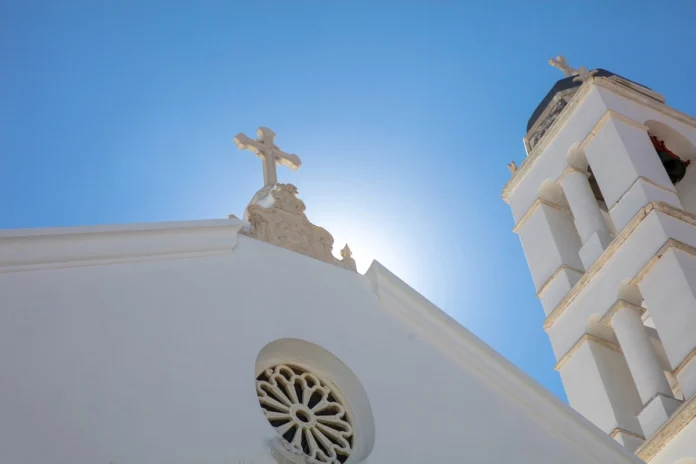
Tinos is known across Greece primarily as a place of pilgrimage. At the center of the main town stands the Church of Panagia, one of the most important Orthodox shrines in the country. Each year, especially around the celebration of August 15, thousands of pilgrims arrive to honor the Virgin Mary.
Many visitors describe the experience as emotional and powerful even when they are not religious, because the atmosphere speaks to culture, history, and collective memory as much as to faith. Visiting the Church of Panagia is not only a religious visit but also a cultural experience that helps explain the soul of the island.
Beyond the pilgrimage, Tinos is a working island with farming, marble craftsmanship, and 45 villages that remain active all year. Retirees often consider it because it feels authentic and grounded, not designed only for tourism. It appeals to people who value quiet daily routines, nature, and a strong local identity, and it may feel too calm for those seeking nightlife or large urban conveniences.
Location, Access & Connectivity
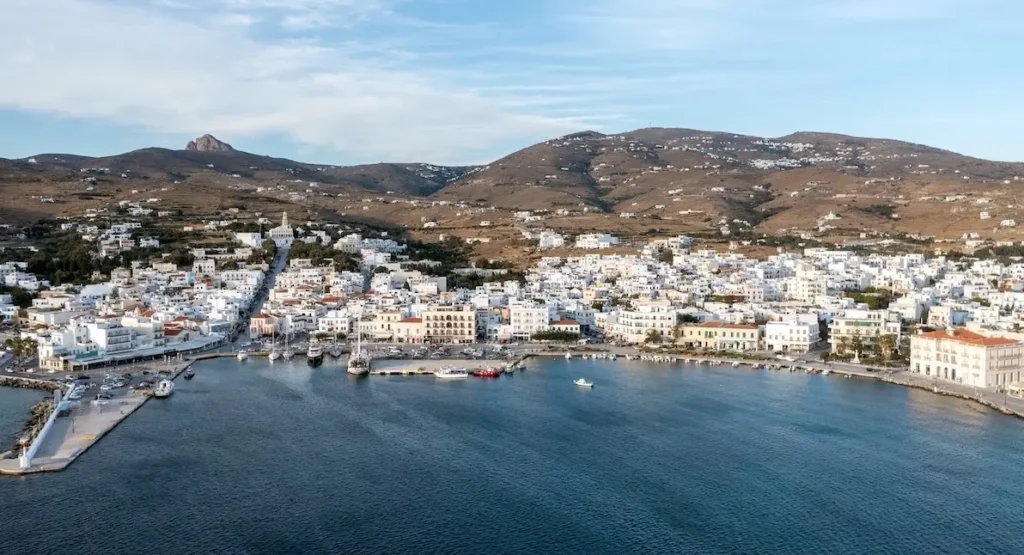
Located in the northern Cyclades, between Andros and Mykonos, Tinos enjoys year-round ferry connections to the port of Rafina near Athens. The journey usually takes between two and four hours depending on the vessel and weather conditions. There is no airport on the island, and residents commonly travel via Mykonos when they need to fly internationally.
Transport is generally reliable, but strong winds can occasionally delay ferries in winter or during meltemi periods. For retirees, this means that travel for medical appointments or family visits is feasible but should be planned with some flexibility. Emergency transfers for serious medical situations are usually arranged to larger hospitals in Syros or Athens.
Climate & Seasonal Rhythm
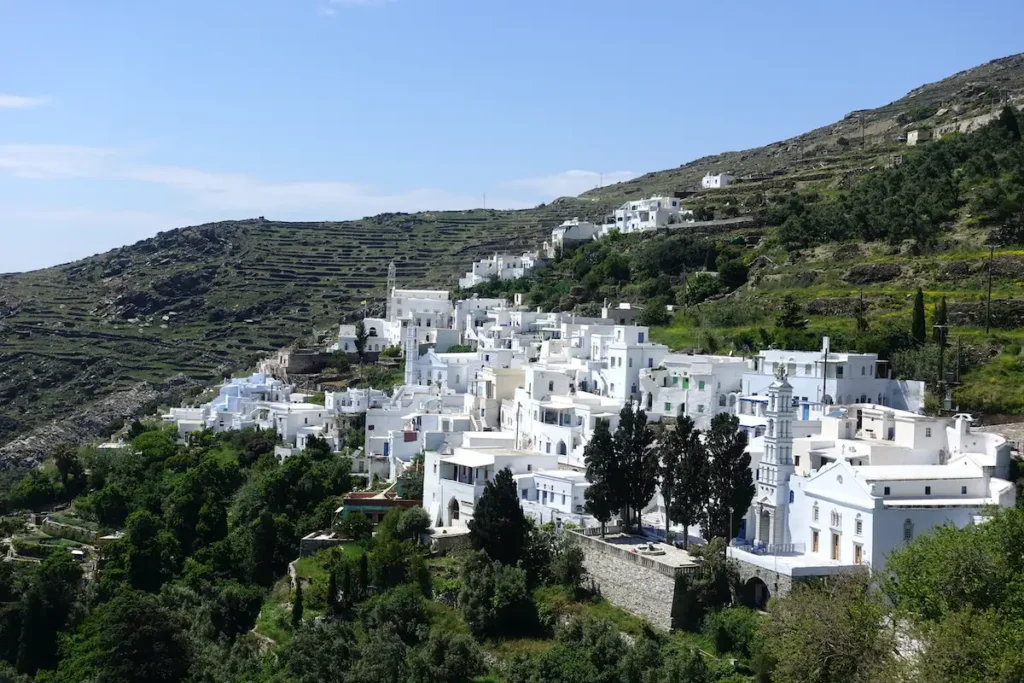
Tinos has a Mediterranean climate, but it is windier than many Cycladic islands. Summer temperatures are warm but often more comfortable than in mainland Greece because of the wind. Spring and autumn are widely considered the most pleasant seasons, with mild temperatures and clear light.
Winter brings cooler weather, rain, and strong winds. A common misconception is that Cycladic islands remain warm all year, but Tinos can feel cold and damp, and snow occasionally falls in the higher villages. The idea that Greek islands never see real winter is a myth, and Tinos is one of the places that proves it. Homes require heating, and insulation becomes an important factor when choosing property. Life continues through winter, but at a slower pace, and daily routines adapt to the weather and ferry schedules.
Daily Life & Local Community
Daily life centers around Chora (Tinos Town) or Pyrgos for the northern villages, where shops, bakeries, and services remain open year-round. One of the most characteristic places is the open-air market at Pallada, where local farmers sell fruits and vegetables every day. The open-air market at Pallada is not just a place to shop but a daily meeting point where residents maintain social ties.
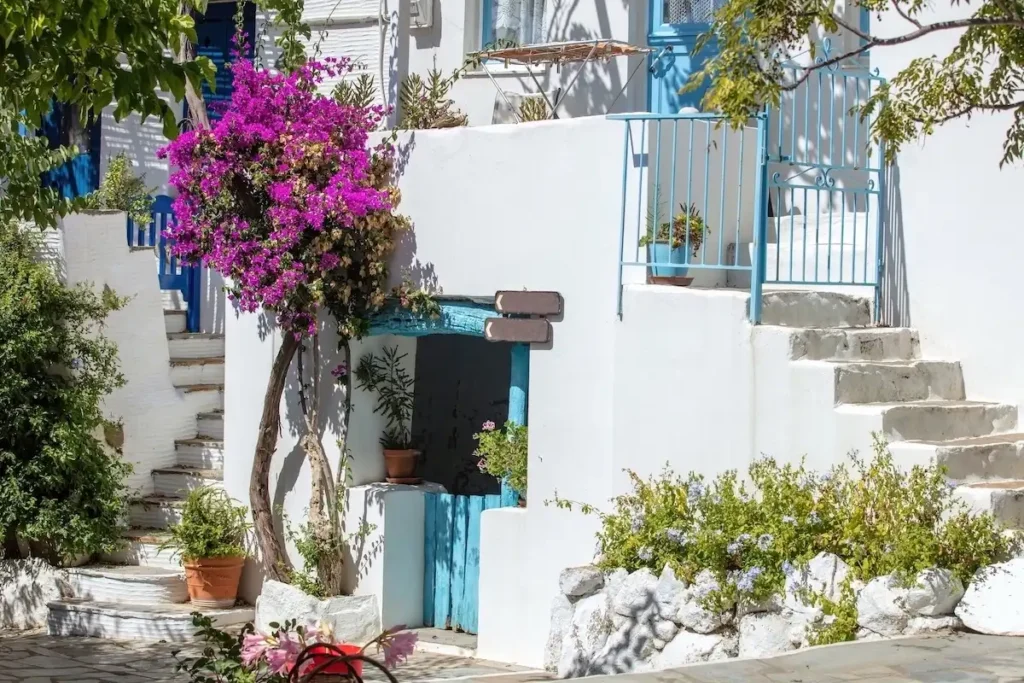
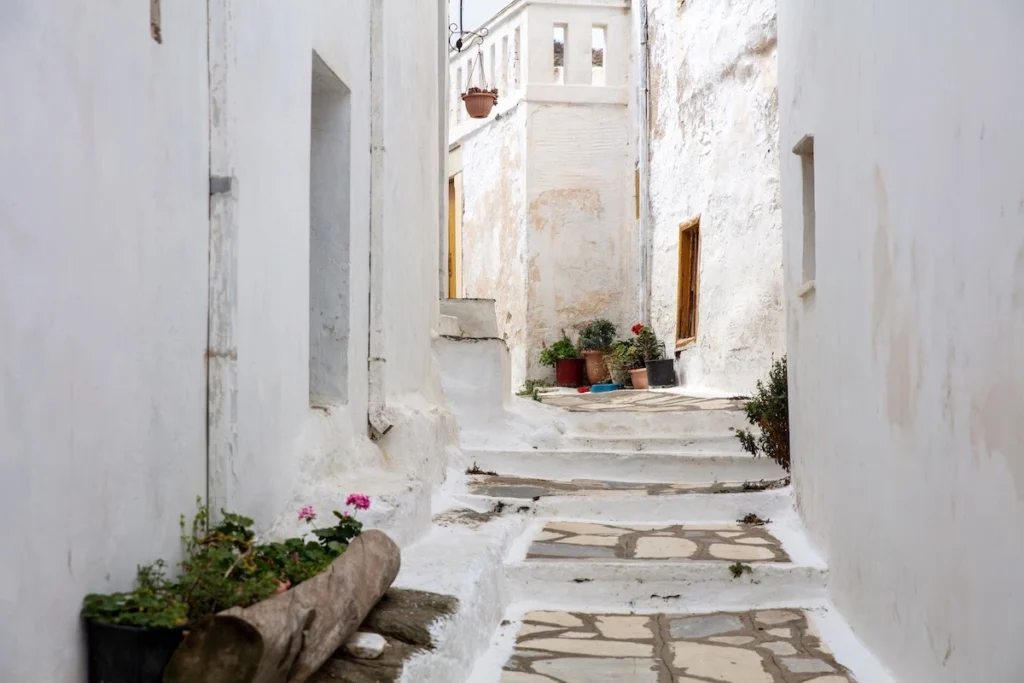
Village life remains essential to the identity of Tinos. Places such as Pyrgos, known for its marble streets, its Marble Fine Arts School, and artistic heritage, or Volax, with its unusual granite formations, show how each settlement has its own character. Road trips across the island reveal a mosaic of small communities rather than one dominant center.
Cultural and experiential initiatives also play a role in helping residents and visitors understand the island. Guided experiences offered by Soul of Tinos provide a deeper understanding of traditions, crafts, and local life beyond tourism.
Foreign residents generally integrate well, especially when they learn some basic Greek and participate in local routines. There is a French expat community on the island, many of whom live there for half the year and have even started their own businesses.
Healthcare & Essential Services
Tinos has a health center that provides primary care, basic emergency treatment, and routine services. The medical staff are very friendly and often go beyond their regular duties to help patients with insurance issues or prescriptions. Pharmacies and general practitioners operate in the main town and Pyrgos, and common medical needs can usually be handled locally.
For specialized examinations, surgery, or complex conditions, patients are referred to hospitals in Syros or Athens. This is standard practice for many islands of similar size. Ambulance services operate on the island, but travel time can be longer in remote villages. Retirees with chronic conditions should plan periodic visits to larger medical centers and factor travel into their healthcare routine. Despite these limitations, basic medical access is stable and predictable.
Cost of Living Overview
The cost of living on Tinos is moderate compared with fancy Cycladic islands but higher than on the mainland. Rent varies depending on location, condition, and whether the property is in a village or the main town. Food costs can remain reasonable, especially when buying local produce and cooking at home.
Utilities are an important part of the budget, particularly in winter, when heating and electricity consumption increase. Transport costs depend largely on lifestyle: living in Chora may reduce the need for a car, while village residents usually rely on one.
Overall affordability often compares favorably with larger tourist islands, though some imported goods cost more than on the mainland. For many retirees, daily life on Tinos remains financially sustainable with careful housing choices.
Housing & Real Estate Landscape
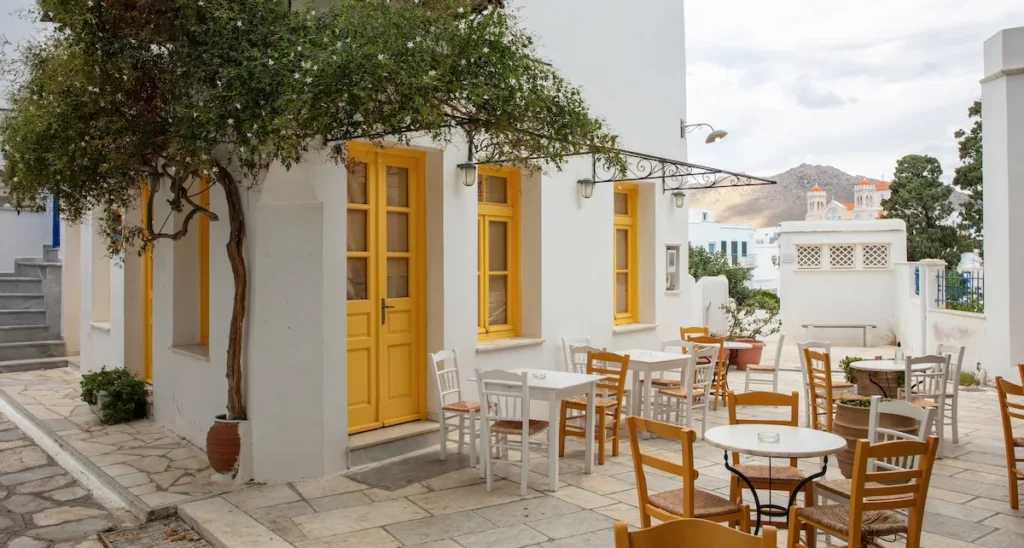
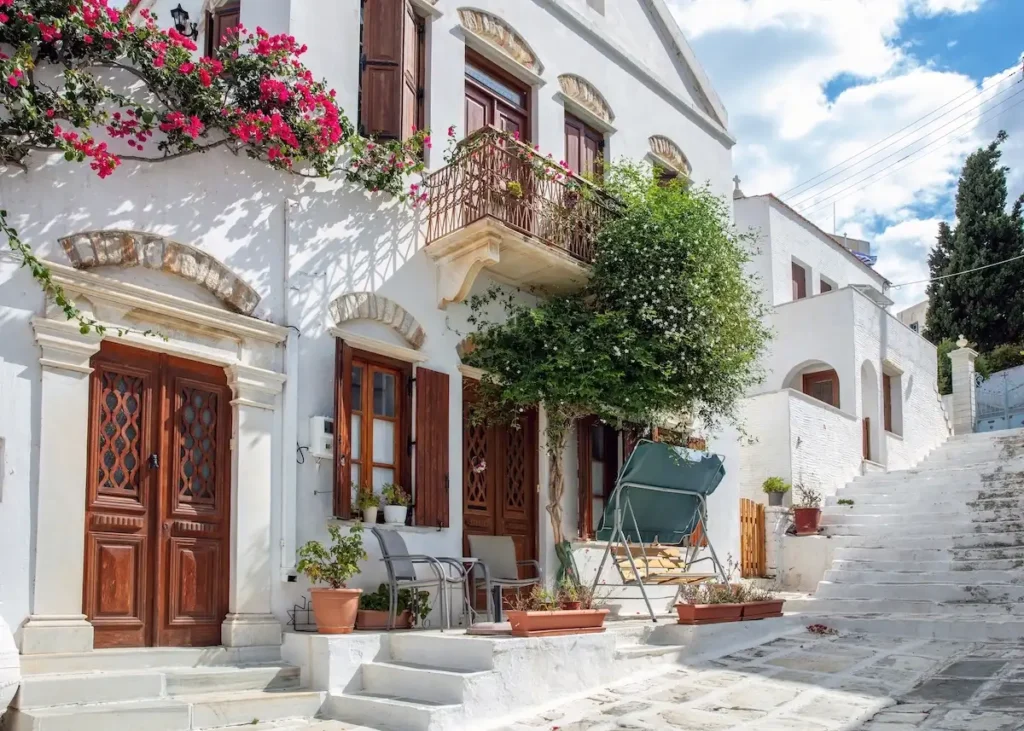
Housing on Tinos ranges from apartments in town to traditional stone houses in villages. Many older homes are structurally solid but may require renovation, insulation, or modernization, particularly to make them comfortable in winter.
Seasonal tourism can affect rental availability during summer months, but long-term rentals exist and are often easier to find through local contacts. It’s easy to find a place from September to May, as many landlords will rent by the day in the high season. Village houses offer space, views, and quiet, while town properties provide convenience and proximity to services. Understanding renovation needs and winter living conditions is essential before buying property on Tinos.
Lifestyle, Nature & Leisure
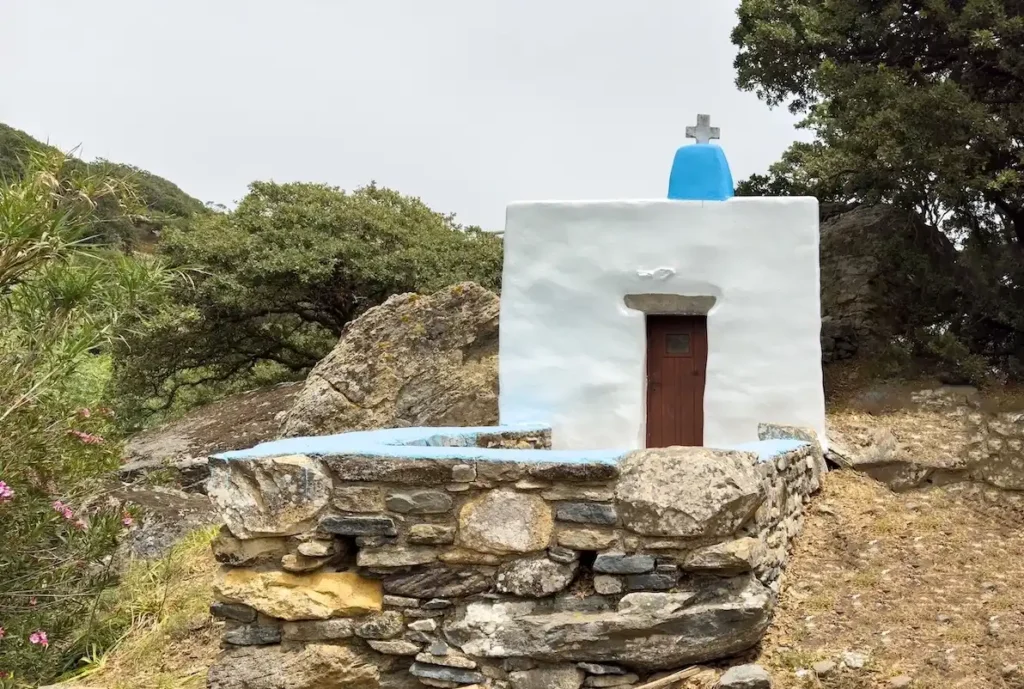
Tinos offers a lifestyle built around movement and observation rather than entertainment. The island has an extensive network of old stone paths connecting villages, chapels, and agricultural terraces, making it one of the best hiking destinations in the Cyclades. The coastline includes many beaches, from accessible sandy shores to remote coves reached by rough roads or short walks. Surfing at Kolymbithra, swimming in quieter northern beaches, and exploring hidden coves are common summer activities.
Food and local products are also part of leisure. Taverns serve dishes based on local cheeses, herbs, and vegetables, and small shops sell traditional products to take home. On Tinos, leisure often means exploring villages, walking ancient paths, and enjoying simple meals rather than seeking organized entertainment.
Local Reality Check
August, especially around the Dormition celebration, changes the rhythm of the island. Pilgrims arrive in large numbers, accommodations fill quickly, and the atmosphere becomes intense and emotional. Streets near the church grow crowded, and the town feels very different from the rest of the year.
Winter is quiet, sometimes windy and damp, and ferry schedules can occasionally be disrupted. Many restaurants close temporarily, but essential services remain open. Life on Tinos alternates between intense spiritual gatherings and long, calm months of ordinary island life.
Who This Destination Is Best Suited For
Tinos is particularly well suited to retirees who appreciate tradition, nature, and a slower rhythm of life. It appeals to people who enjoy walking, exploring villages, and living in a place with a strong cultural and spiritual identity.
It may be less suitable for those who need frequent specialized medical care, dislike wind or winter humidity, or prefer large cities and constant activity.
Tinos is best suited to retirees who want to live in a place with depth, history, and a strong sense of community rather than a purely touristic environment.
***