
The Real-World Settings of the Narrative
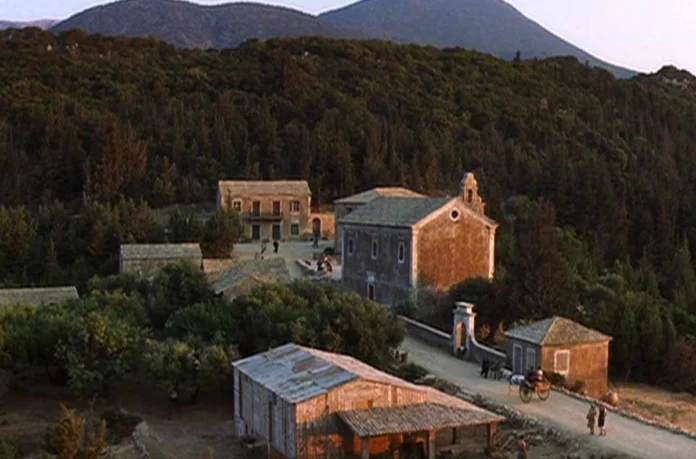
Kefalonia, the largest of the Ionian Islands, is a place of dramatic mountains, bright coves, and quiet villages built of stone. Its history has been shaped by foreign rule, war, earthquakes, and emigration. In Captain Corelli’s Mandolin, both the novel and the film use Kefalonia as the emotional ground on which a story of love and conflict unfolds during the Second World War.
Author Louis de Bernières drew inspiration from the real events of the Italian occupation of Kefalonia between 1941 and 1943. The presence of Italian troops on the island, and the tragic fate of the Acqui Division, offered a powerful historical backdrop. The contrast between the island’s natural beauty and the violence of war gave the story its central tension. When the film adaptation was made, much of it was shot on location in Kefalonia, allowing the landscape itself to shape the tone of the screen version.
The story begins in a small Kefalonian village, where a young woman, Pelagia, lives with her father, the local doctor. Their life changes when Italian soldiers arrive and are billeted in local homes. Among them is Captain Antonio Corelli, an officer who loves music and carries a mandolin, bringing his melodies into a village on an island where singing and music are deeply appreciated and form part of local tradition. What starts as an uneasy occupation slowly becomes more complex, as relationships form between locals and soldiers.
Kefalonia is not a passive backdrop. The narrow streets, the hillside houses, and the wide sea views create both intimacy and distance. The island’s isolation heightens emotions and limits escape. Daily routines continue under occupation, and the rhythm of village life persists even as political loyalties and personal feelings shift. The landscape mirrors the story’s movement between lightness and gravity.
During the war years, Kefalonia was rural and largely self-contained. Most families depended on farming and small trade. News from the outside world arrived slowly, and the island’s separation from the mainland intensified the sense of uncertainty. The war left lasting marks, and the earthquake of 1953 later destroyed much of the traditional architecture seen in the story’s time period.
Today, Kefalonia is more connected and developed. Tourism plays an important role in the economy, attracting visitors to its beaches, caves, and mountain scenery. Some even consider buying property and starting a new life on the island.
Outside the busiest areas, the island still offers a strong sense of local identity. Small villages, church festivals, and family-run tavernas continue to define everyday life. The natural landscape remains much as it was, with Mount Ainos rising above the Ionian Sea.
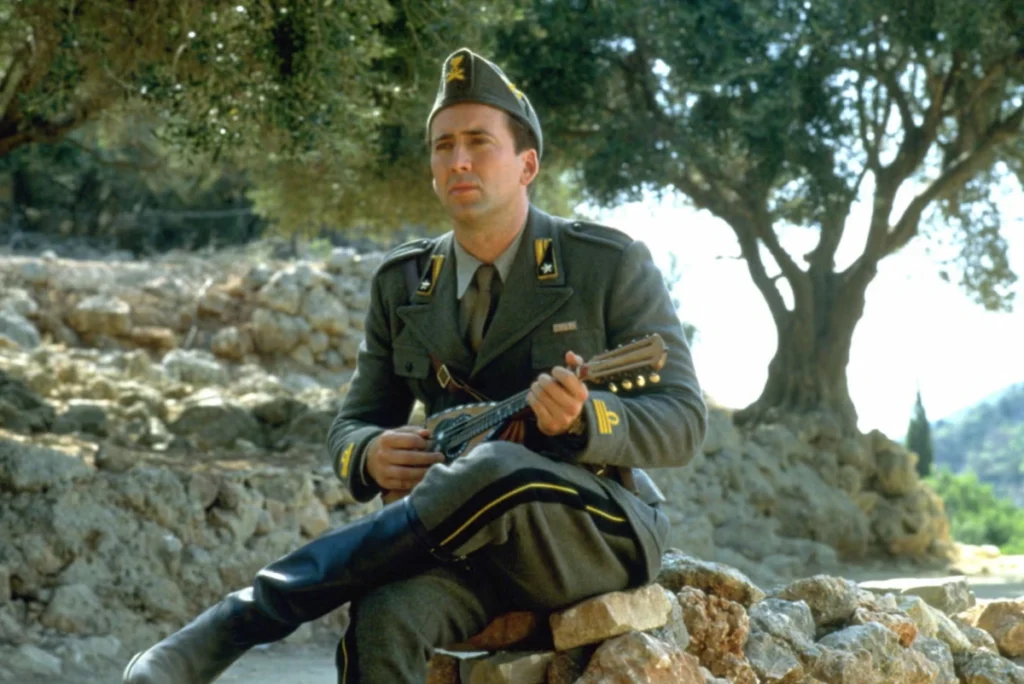
Captain Corelli’s Mandolin shows Kefalonia as a place where personal stories unfold within larger historical forces. The novel and film invite readers and viewers to see the island not only through its beauty, but through its endurance. In doing so, they present Kefalonia as a living place shaped by memory, music, loss, and resilience.
Continue your research on Kefalonia
Explore our complete guide to living on the island, read a retiree’s testimonial on seasonal life, or consult a local real estate interview for market insights. If you decide to settle here, you may even encounter the island’s rare wild horses roaming the slopes of Mount Enos.
Publication / Production Details
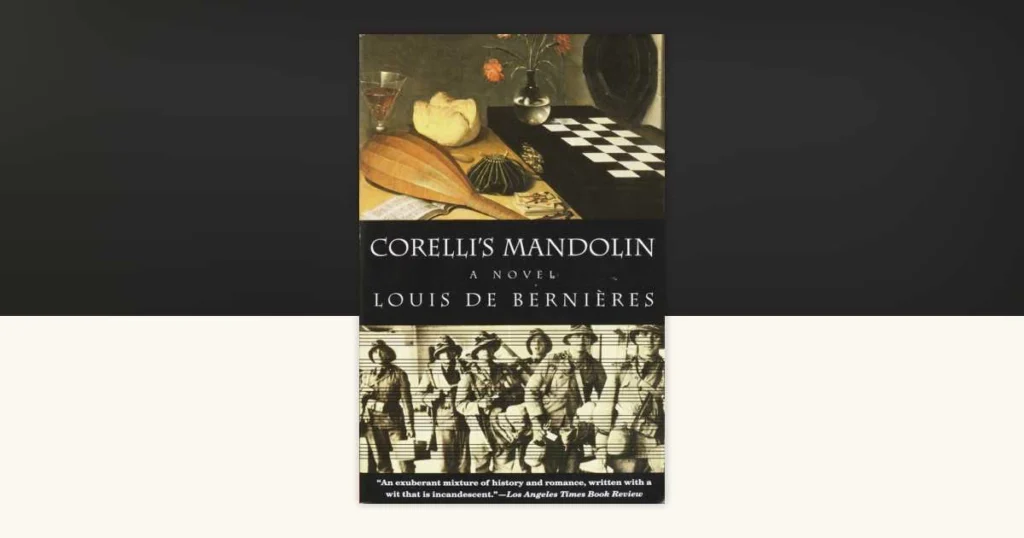
Book: Louis de Bernières, Captain Corelli’s Mandolin. Secker & Warburg, 1994. Film: Captain Corelli’s Mandolin. Directed by John Madden, Universal Pictures, 2001.
***