
The Integrated Heritage of Ancient Messene
According to Euripides, one of ancient Greece’s greatest playwrights, Messinia was Καλλίκαρπος, land of the good fruit. More than two millennia later, the description remains apt.
Mavromati is not simply near an archaeological site; it lies within the broader zone of Ancient Messene, one of the most complete surviving classical cities in Greece. Founded in 369 BC by the Theban general Epaminondas following the defeat of Sparta at Leuctra, Messene was conceived as a political and architectural statement, a free Messenian capital built to endure. It has.
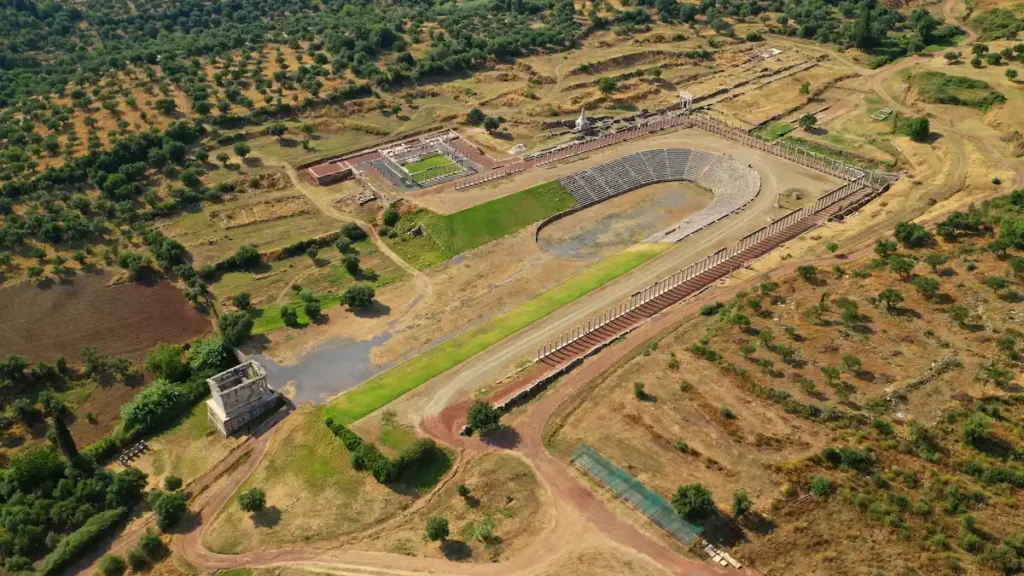
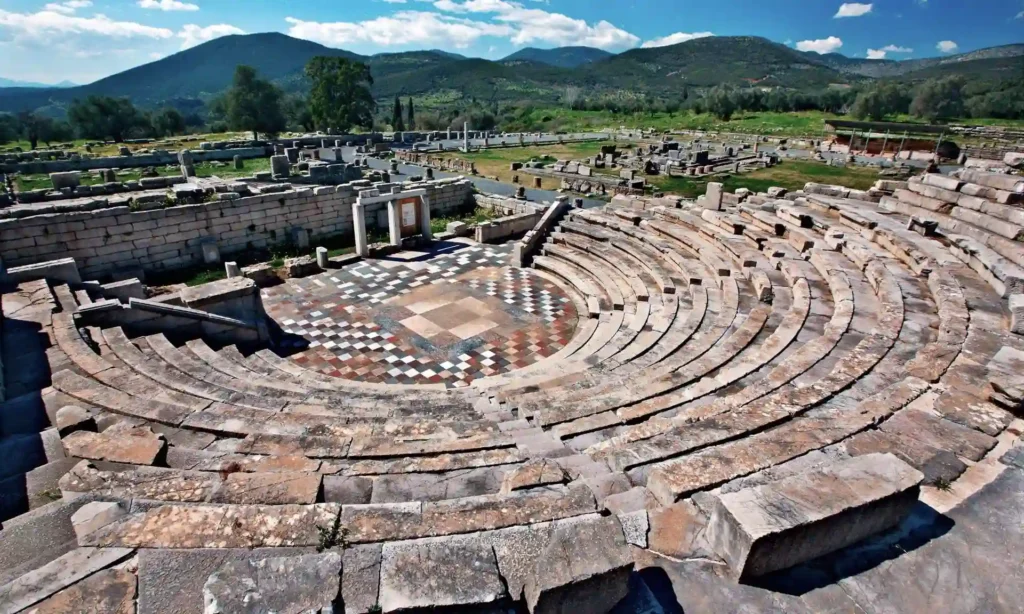
Unlike Delphi or Olympia, Ancient Messene never evolved into a spectacle site. Its scale is expansive rather than theatrical, and its preservation unusually intact. The 9-kilometre fortification walls still rise in long, commanding stretches. The stadium, theatre, Asklepion sanctuary, agora, and gymnasium remain legible within their original urban grid. Visitor numbers, even in summer, remain moderate. In the quieter hours, it is not uncommon to encounter more lizards than fellow visitors.
The Social Anchor: Life Above the Stadium
Mavromati occupies the natural terraces of Mount Ithome immediately above the principal excavation zone. The relationship between village and site is direct and continuous. A short walk from the square leads past colonnades and into the archaeological core. Daily life unfolds against a backdrop of 4th-century BC masonry, not staged but integrated.
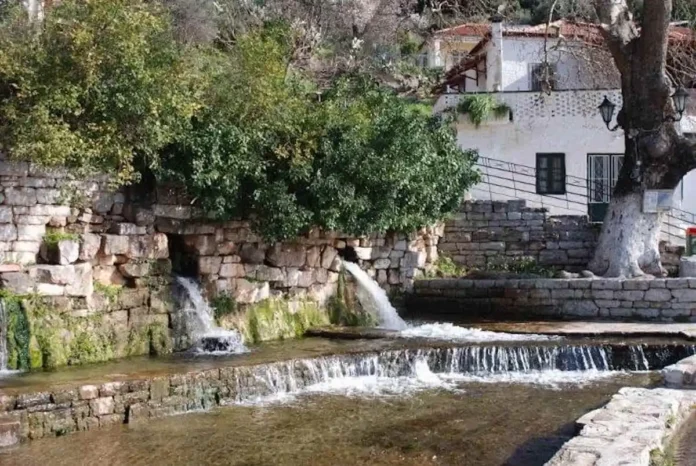
At the centre of the village square, the Klepsydra Spring has supplied water since antiquity. The continuity is practical rather than symbolic; residents still draw from it. The square itself remains the social anchor of the village, with cafés and tavernas overlooking the stadium below. Tour groups tend to arrive mid-morning and depart by early afternoon, restoring a familiar quiet.
The approach to Mavromati passes through the Arcadian Gate, a remarkably preserved military gateway of the 4th century BC, notable for its circular vestibule and original stone threshold. You drive through it. Every time. There is no detour. This is simply the way in. Footpaths extend from the village across olive groves and through the lower slopes of Ithome. Some follow routes that have existed for centuries (linking the settlement with the Monastery of Voulkanos above). These paths are used not as heritage trails but as everyday walking routes, for exercise, reflection, and continuity.
Agricultural Rhythm and Market Realities
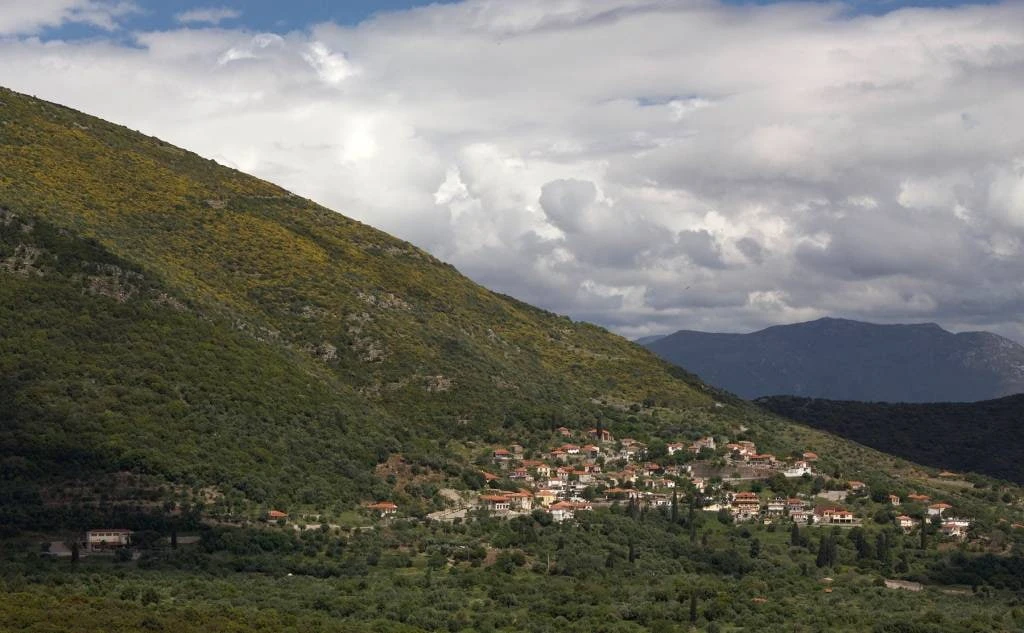
Messinia’s agricultural reputation is longstanding. The region’s fertility underpinned centuries of conflict between Sparta and Messene, and it remains agriculturally productive today. Elevation moderates summer heat, rainfall is sufficient, and soils are deep.
In Mavromati, kitchen gardens are common. Tomatoes, courgettes, aubergines, peppers, and beans flourish in season. Fig and pomegranate trees require minimal intervention. Rosemary, thyme, and oregano seed themselves into stone walls. The Kalamata olive remains the dominant agricultural asset. Even a modest number of mature trees can provide substantial oil for household use. Autumn pressing retains a communal dimension and functions as a point of social integration for new residents.
Seasonal rhythm is marked but not extreme. Figs ripen in August, grapes in September, pomegranates in October. A garden here becomes less a hobby than a calendar. Olive oil is pressed. Jams are put up. Bread is baked, not as performance but as habit. These gestures are neither nostalgic nor staged; they are simply part of how life continues. Winter is quieter, cooler, and distinctly local, a period when the village contracts to its permanent population and daily life resumes an unhurried cadence.
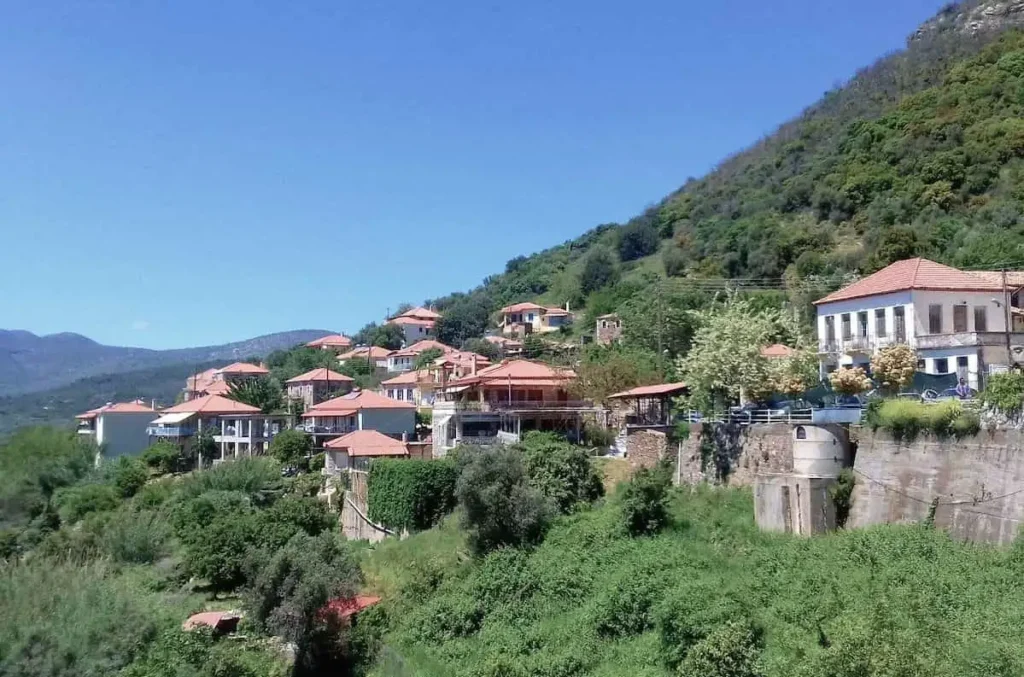
Housing is predominantly traditional stone construction, shaped by archaeological protection guidelines that restrict incongruous development. Renovation is more common than new build. Properties requiring restoration enter the market at lower price points, while completed houses command a premium for location and authenticity.
Asking prices for detached homes begin at approximately €210,000 (around €2,592 per square metre), with variation depending on condition and land. The wider Messinia region has experienced steady appreciation; Mavromati remains comparatively niche, with limited supply due to protected status. When searching for local inventory on realtor websites, users should look under the municipality of “Ithomi” to find listings that may not be indexed under “Mavromati” alone.
Kalamata, with its international airport, hospital facilities, and year-round services, lies approximately thirty kilometres away, typically a forty-minute drive. The balance is unusual: immersion in a 4th-century BC landscape without forfeiting modern infrastructure.
Mavromati does not offer spectacle. It offers continuity. For retirees seeking depth rather than distraction, and a daily life measured not by tourism but by terrain, season, and stone, it represents one of the more intellectually satisfying settlements in contemporary Greece.
Archaeological Connections and Rural Preservation
Mavromati is just one chapter in a much larger story of Greek rural life and preservation. To follow the thread further, we invite you to consult our collection of villages located near archaeological sites. Discover what daily life is like for those living near the ruins of Lindos on Rhodes island, residing beside Delphi on Parnassus mountain, settling near Aphaia on Aegina island, exploring Ancient Corinth in the northern Peloponnese, or moving to Dion at the foot of Mount Olympus.
***