

A Life Integrated with the Sacred City
For many, Mount Olympus is a mythological concept, the legendary home of the twelve gods. For those who choose to live in Dion, it is a staggering physical reality. The village sits directly at the foot of Greece’s highest peak, positioned exactly where the ancient Macedonians established their most sacred site to honor Zeus. To live here is to reside at a rare convergence of alpine majesty and archaeological depth. While Ancient Corinth offers the gravity of a Roman capital, Dion provides something more ethereal: a landscape of running water, dense greenery, and the persistent presence of the “Mountain of the Gods.”
The modern village of Dion, known as Malathria until 1961, is a settlement where history is literally at your doorstep. Unlike the dry, sun-baked ruins of southern Greece, the archaeological park of Dion is a lush, water-rich environment. The ancient city was famously built on the marshes where the river Baphyras emerges from the base of the mountain. Today, residents do not just look at history; they walk through it as part of their daily routine. The ancient sanctuaries of Isis and Demeter are integrated into a landscape of springs and plane trees, creating an atmosphere that is cool, shaded, and intellectually invigorating.
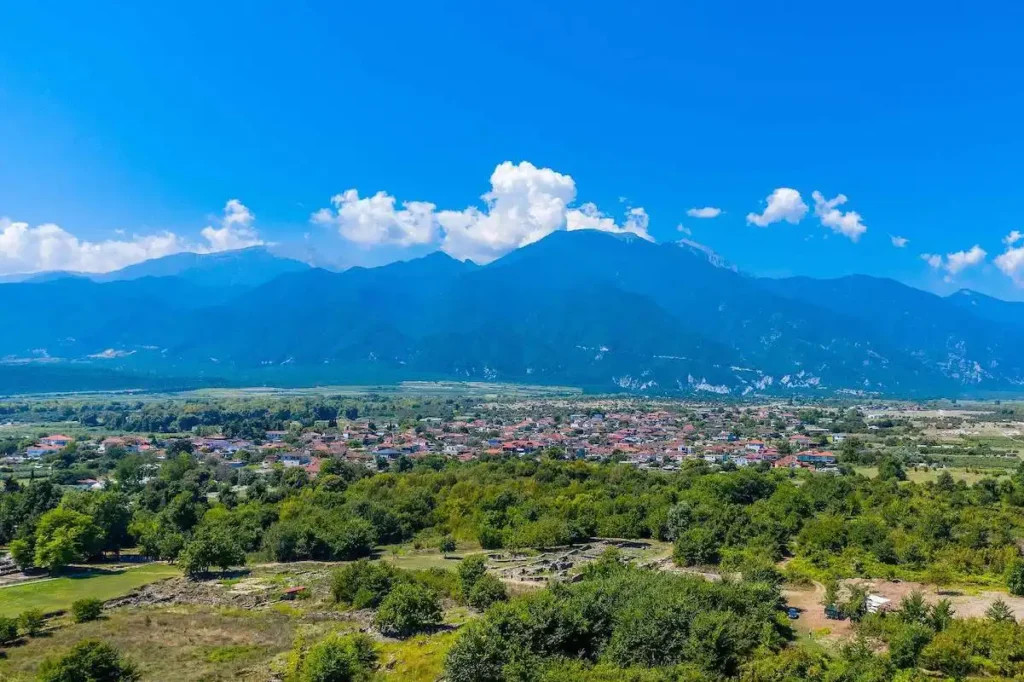
Living here requires an appreciation for the “non-evident” layers of history. Much like the custodial role residents play in Lindos, homeowners in Dion are the modern guardians of a significant heritage zone. Because the village is built alongside the extensive archaeological excavations and the renowned Museum of Dion, the community has developed a sophisticated relationship with its past. The annual Olympus Festival and the Mediterranean Mosaic Center bring a seasonal intellectual hum to the village, attracting scholars and artists without the overwhelming commercialism found in more generic tourist resorts.
The Thermal Balance of the Mountain and the Gulf
The microclimate of Dion is influenced heavily by its elevation and proximity to the peaks. Summers are significantly cooler and more comfortable than in the coastal plains, with evening breezes descending from the mountain. Winters are crisp and distinctly local—a time when the village contracts and the wood smoke from traditional chimneys fills the air. The village is exceptionally well-placed for those who require connectivity; Thessaloniki, with its international airport and world-class hospitals, is only an hour’s drive away via the national highway. Beyond the local clinics, the General Hospital of Katerini is a short 20-minute drive, offering a level of medical security that is essential for long-term relocation. You are at the trailhead of Olympus, but you are also only a few minutes from the beaches of Pieria, allowing for a rare “mountain-and-sea” lifestyle.
Tobacco Fields, Pontic Roots, and Village Rhythms
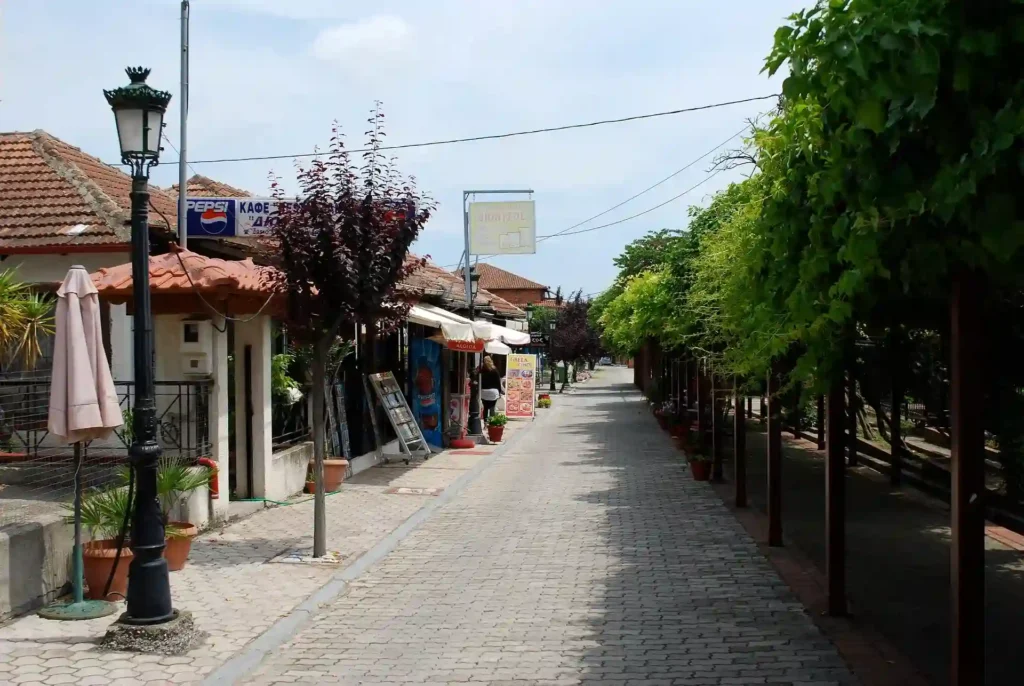
Dion is a “kefalochori”, a head-village, of approximately 1,500 residents, characterized by a quiet, hardworking rhythm. The local economy remains anchored in the fertile soil of Pieria, traditionally focused on tobacco and livestock. This agricultural backbone ensures that the village maintains its authenticity even during the summer months. In the neighboring settlement of Platanakia, the presence of Pontic refugees adds a distinct cultural layer to the area, enriching the local traditions, music, and cuisine. For a retiree, the social anchor is the village square and the local athletic club, “O Dias.” Life here is unhurried. You are 15 kilometers away from the bustling city of Katerini, providing a perfect balance: the seclusion of a mountain village with the logistical convenience of a regional capital.

Restoring a Legacy at the Foot of Zeus
Property in Dion is a study in potential rather than polished luxury. This is not a region of “turn-key” villas, but rather a place for those who enjoy the process of restoration and personalization. It is currently possible to find traditional village houses for under 50,000€. These properties are often in “raw” condition, requiring significant renovation, but they offer a foothold in a protected historical zone for the price of a modest apartment elsewhere. For approximately 135,000€, one can find larger, two-story homes of around 140 square metres on generous plots of land. These homes often provide panoramic views of the mountain and require only a “refresh” rather than a total rebuild.
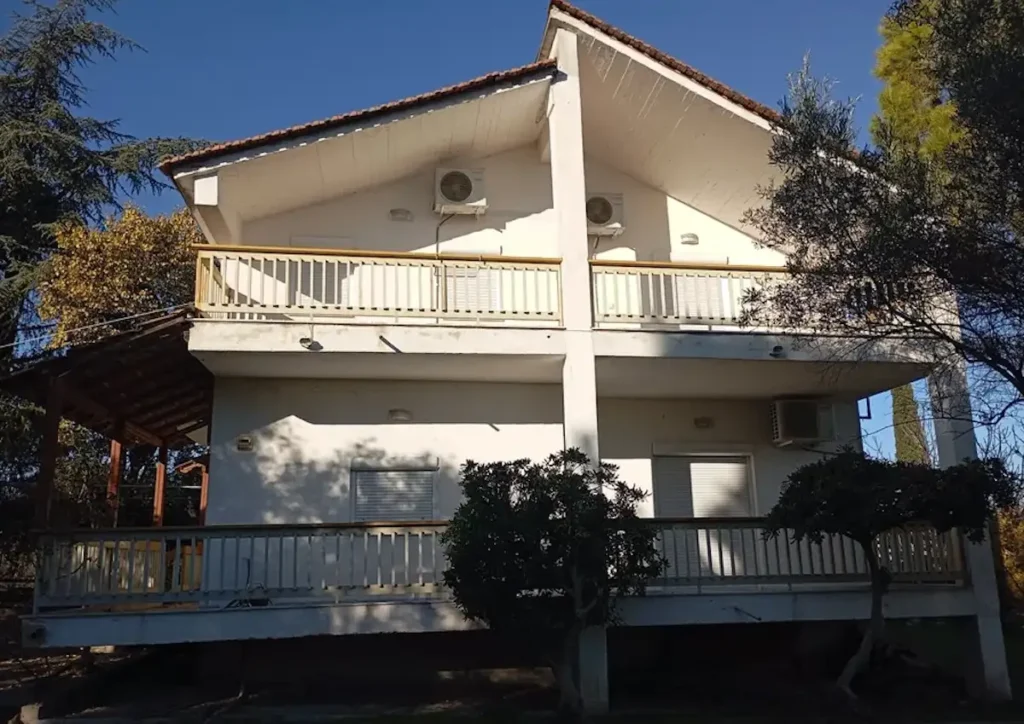
In Dion, you are not buying a luxury estate; you are buying a position. You are paying for the right to wake up at the foot of Olympus, in a village named for Zeus, where the water of the gods still flows through the ancient channels into the modern square. For the retiree who seeks a life of depth, nature, and historic continuity, Dion represents one of the most grounded and rewarding choices in Northern Greece.
***