
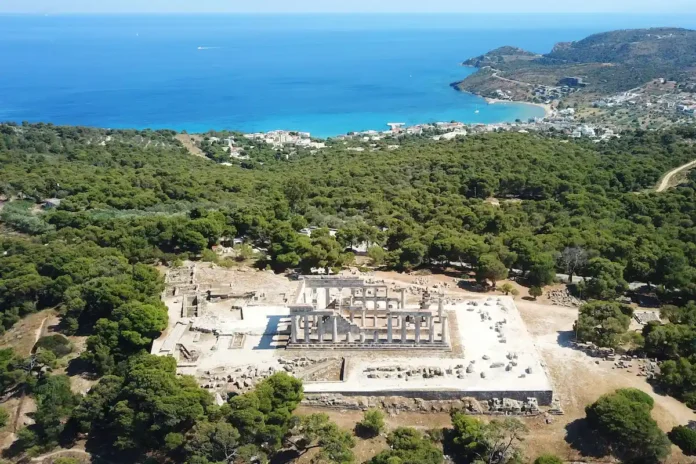
The Equilibrium of Antiquity and Modernity in Aegina island
To live near the Temple of Aphaia is to settle into a landscape shaped by centuries of continuous human presence. Generations have inhabited, cultivated, and walked the hill on the northeastern side of Aegina island. The same paths that today connect houses, groves, and village roads once connected workshops, fields, and places of worship. Living here means stepping into an environment where daily life has unfolded steadily for over two millennia.
The temple itself, built in the early 5th century BC, crowns the hill with quiet authority. It was first dedicated to Aphaia, a local goddess unique to Aegina and central to the island’s early identity. Over time, as beliefs across the Greek world became more unified, Aphaia was identified with Athena and connected to her status as one of the twelve main Olympian gods.
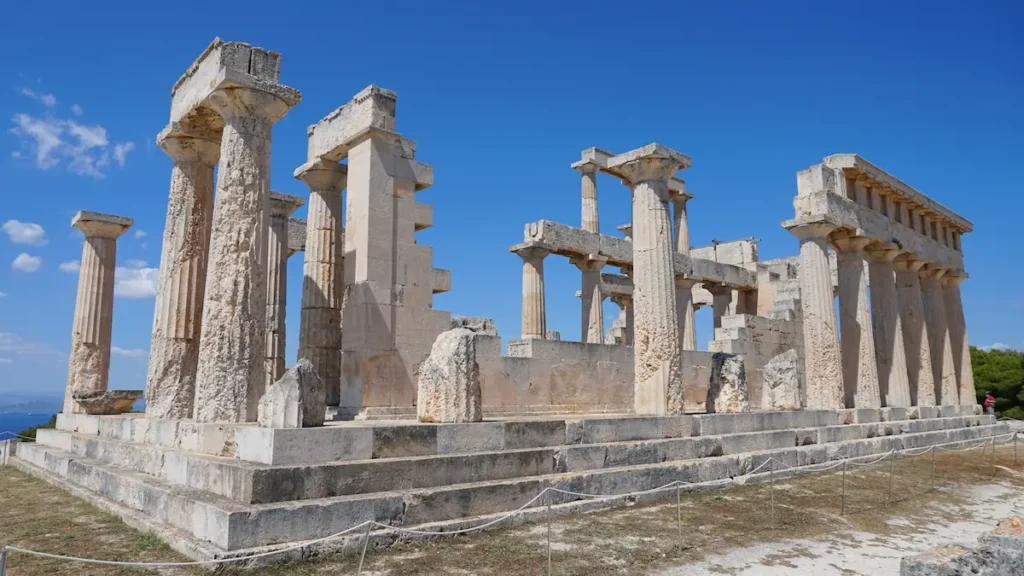
The sanctuary occupied one of the most commanding viewpoints in the Saronic Gulf. Sea and sky stretch outward in long horizons; light moves across the Doric columns from pale morning silver to warm afternoon gold. For people living in the area, the view is an everyday pleasure.
It is not permitted to build immediately around an archaeological temple in Greece, so the area remains open and protected. The nearest residential settlement is Messagros, just a twenty-minute walk away. The distance creates a natural balance: proximity to heritage without intrusion, openness without isolation.
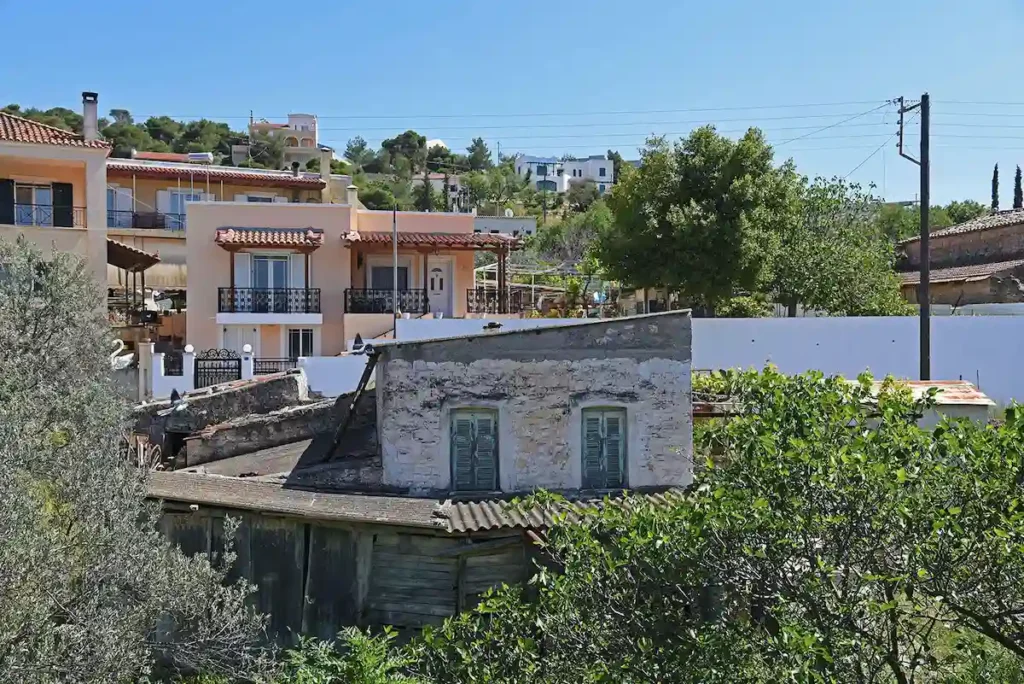
The Green Heart: Pottery, Pistachios, and Local Continuity
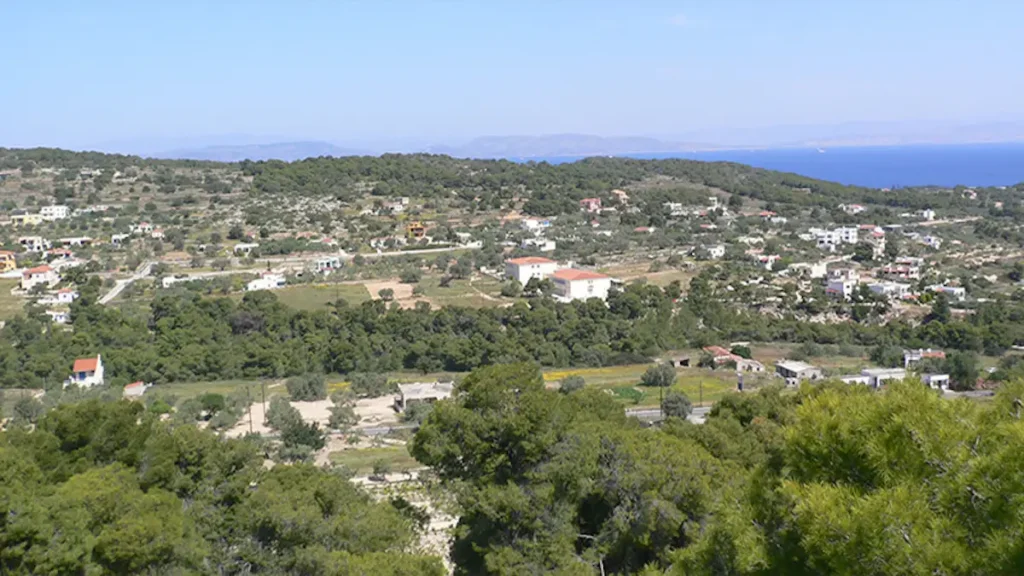
Messagros is one of the island’s largest and most historic villages, with around 500 residents living here year-round and many more during the summer season. The area is notably green, with trees, cultivated plots, and pistachio groves that form part of Aegina’s agricultural identity. Locals continue to work in farming and pottery, sustaining traditions that link present-day life to the island’s past.
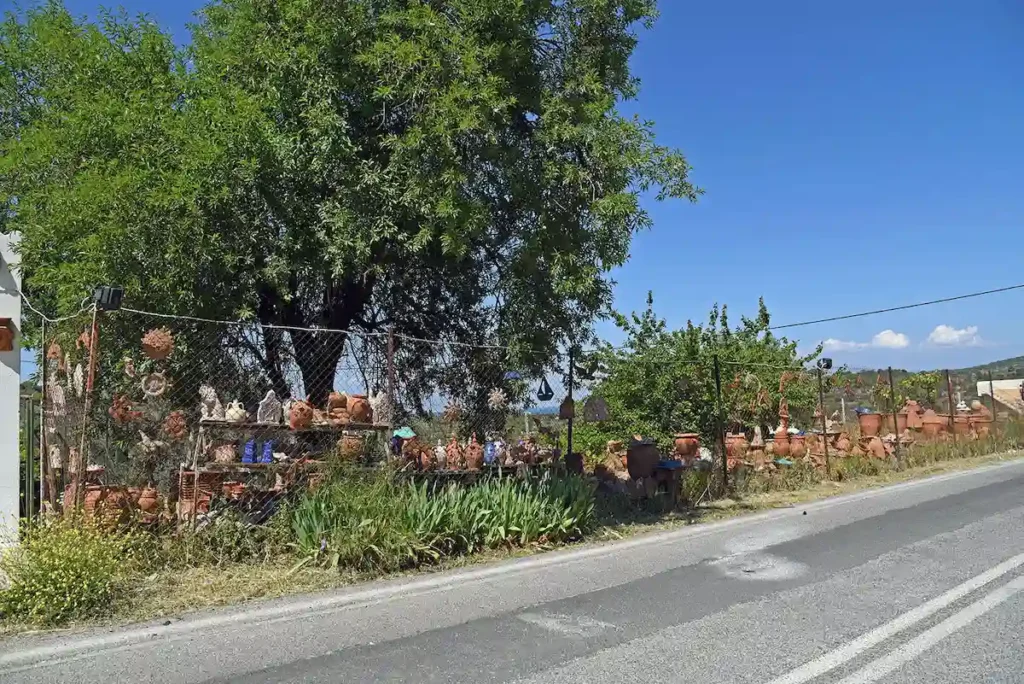
Continuity is particularly visible in ceramics. Aegina was renowned in antiquity for its pottery workshops and the quality of its craftsmanship. The island’s water jugs were famous across the ancient Greek world for their ability to keep water cool. In Messagros and the surrounding area, pottery production continued into modern times.
Some of the island’s potters maintained their workshops here, and a few studios still operate today. The shapes may have evolved, and many pieces are now decorative as well as practical, but the craft itself remains part of the living fabric of the community.
Market Realities: Investment and the Aegina Lifestyle
For those considering relocation, the appeal of this area lies in its equilibrium. Homes in Messagros range from modest renovated traditional houses starting at approximately €90,000 to larger or contemporary properties reaching €600,000. It is important to note that while Messagros offers accessible entry points, luxury villas in other prime areas of Aegina can jump to €2 million.
Investment opportunities often include residences positioned below the temple with open sea views. Plots tend to be more generous than in denser coastal settlements, offering privacy, garden space, and mature trees.
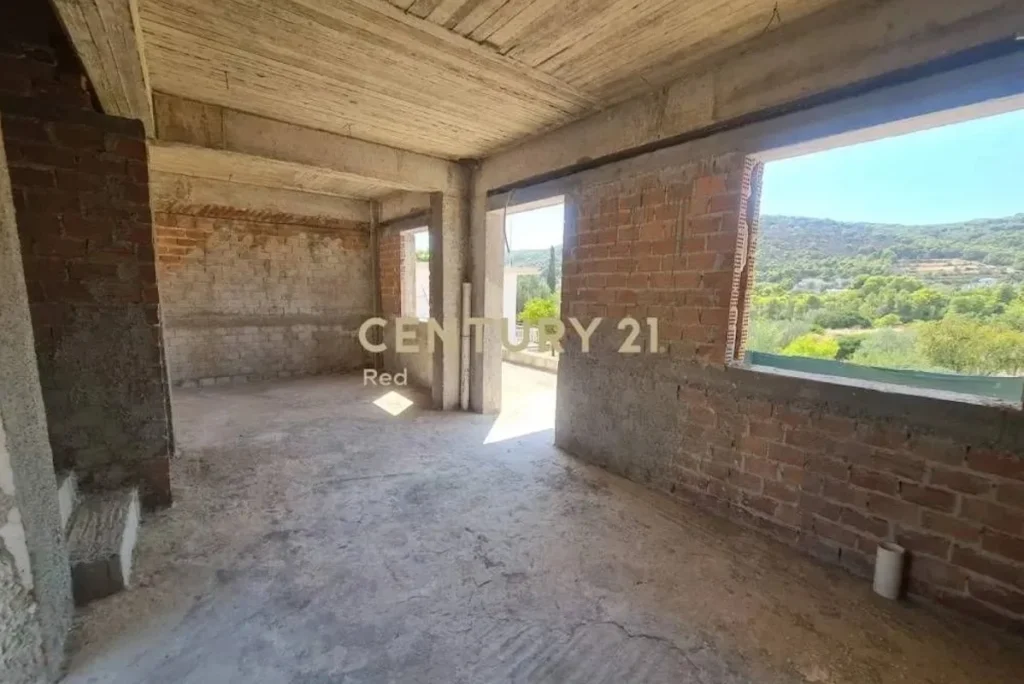
Nearby Vagia, on the coast, property prices generally range between €250,000 and €500,000 depending on proximity to the sea and the condition of the home. Anyone considering a purchase should carefully calculate the additional costs of property transfer and legal fees and keep in mind that many of the listed homes will also require renovation. Living between the hill and the shoreline allows for a daily connection to history without sacrificing the practicalities of modern island life.
***