
Tracing the Literary Echoes and Enduring Resilience of the Lesbos Landscape
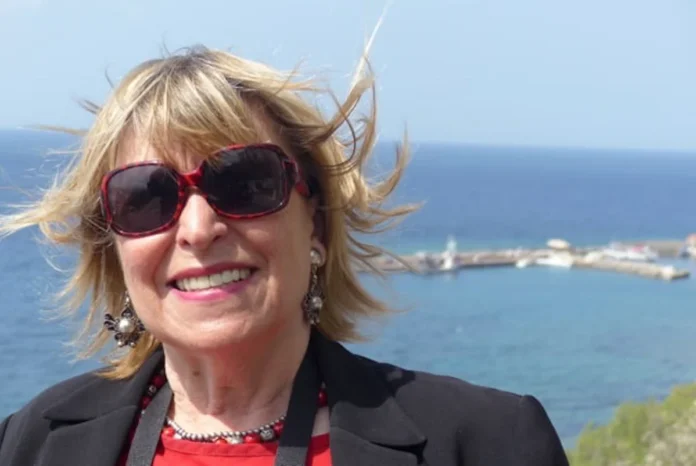
Irena Karafilly (née Friedman) was born in the Urals, grew up in Canada, and spent many years in Greece, on the island of Lesbos, where a planned two-week visit stretched into nearly a decade. The people, landscapes, and history of the island inspired her novel Arrested Song. The book tells the story of one woman’s fight against personal and political tyranny. It takes place during a time of war, civil unrest, and social change, and it is based on the island where Karafilly lived.
Now that she lives in Athens, she thinks about her time living in a foreign country that became her home. She writes about Greece’s beauty, history, and strength. Her work paints a vivid picture of Greek life and culture, showing how a place can deeply affect a story and a life. This makes it especially interesting for people who are thinking about moving to or retiring in Greece.
By Irena Karafilly
The plot of Arrested Song takes place in a highly picturesque Greek village situated on the northeastern Aegean island of Lesbos. Although its official Greek name is now Mythimna, the old Turkish name of Molyvos is still in demotic use.
I arrived in this village as a young tourist, expecting to spend two or three weeks on this beautiful island, but ended up staying for the better part of a decade, married to a Greek man I’d met at a church wedding.
It was while I lived on Lesbos that I began to write Greek stories, one of them inspired by a Canadian poem about a Greek village woman who had immolated herself in the late 70s rather than let the authorities move her to an old folks’ home in the capital. Living in her village, I learned that she had been the local midwife and, long before that, a schoolmistress, reportedly dismissed for her political views during the civil war.
There was a lot of contradictory information, but everyone seemed to agree that she had been beautiful, well-educated, promiscuous, and exceptionally out-spoken. The same woman is said to have inspired Myrivilis’ Greek classic, The Schoolmistress with the Golden Eyes, but the two characters have little in common other than their profession and their golden eyes.
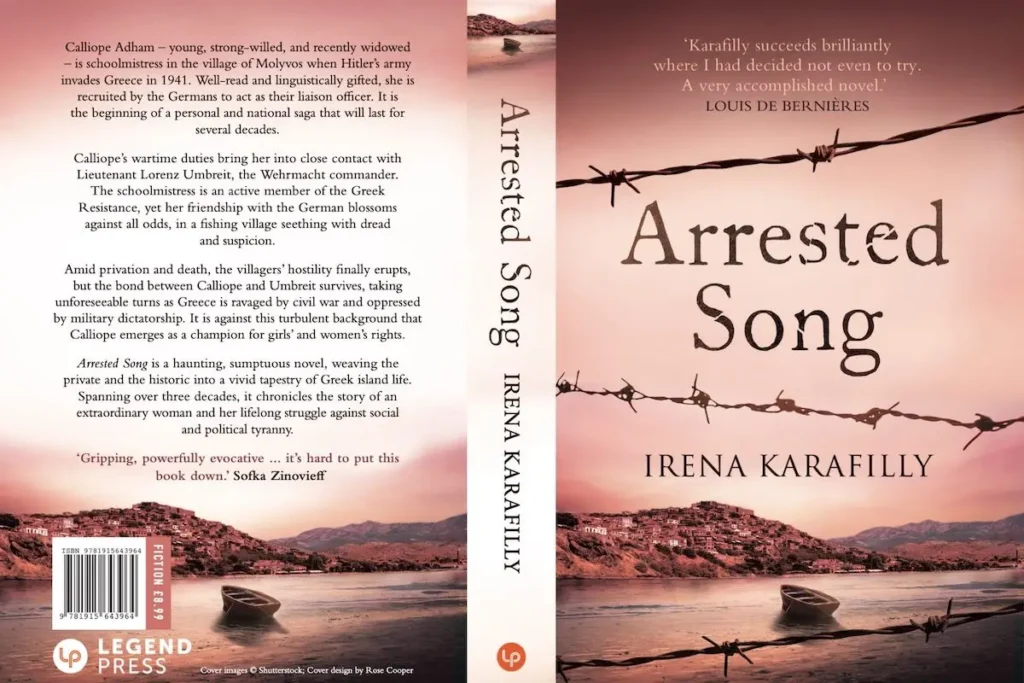
The life of the fierce schoolmistress fascinated me, so I wrote a long story and eventually expanded it into an ambitious historical novel about one woman’s struggle against personal and political tyranny. It is the story of one woman’s tumultuous life, but also of her nation’s suffering during the German Occupation, Civil War, and the Junta era.
The woman who had inspired the idea for the novel was certainly fascinating, but I found it difficult to identify with her character and I did not think I could make her into a sympathetic protagonist. After countless drafts, Calliope Adham emerged as a more idealistic sort of person, but nonetheless an iconoclast; an extraordinary woman who falls in love with a Wehrmacht officer while working for the Greek Resistance during the German Occupation, and who spends the rest of her life struggling for freedom and social justice. The story is mostly fiction, but the historic events have been well documented.
The Story Behind This Molyvos Ruin
To most tourists, this is just another village ruin, but years ago, when I first saw it, there were still benzene cans rolling in the dust, sad reminders of the extraordinary woman who had immolated herself on learning of plans to place her in an old folks’ home in the capital.
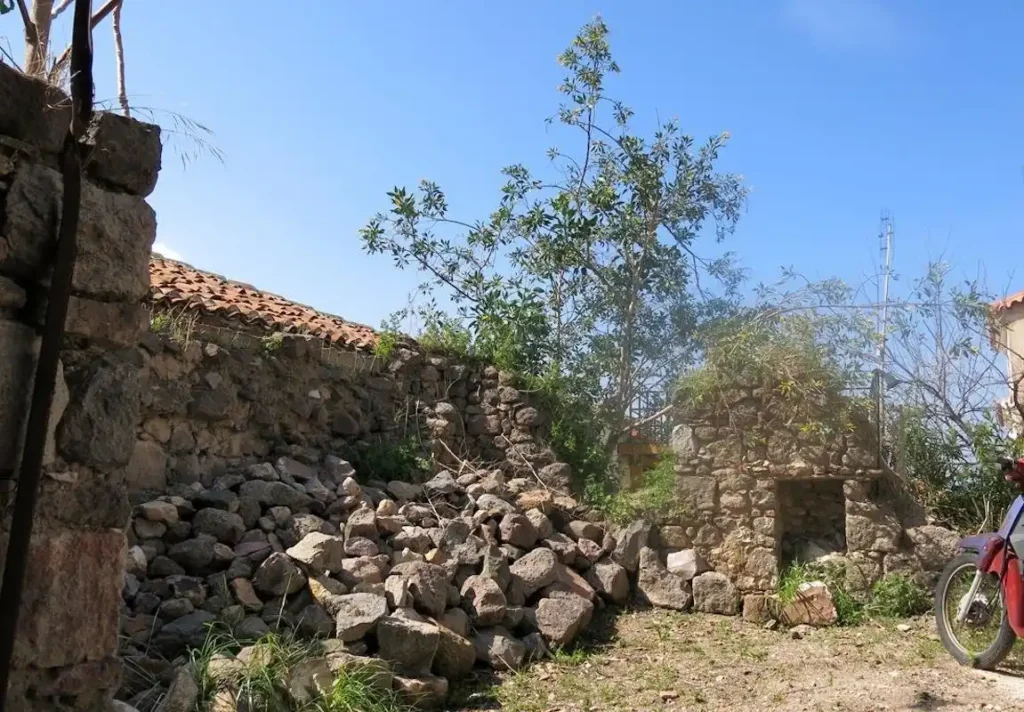
She was by then very old and clearly demented, unable to care for herself, abusive to neighbors who tried to offer help. In her youth, though, she had been the local schoolmistress, a fiery, famously beautiful iconoclast who, during the civil war, had lost her teaching post because of her political views and unconventional conduct.
A Balkan War widow, she’d had an affair with Stratis Myrivilis, who would soon become a famous author after publishing a novel apparently inspired by his affair with the impetuous Stella Ioannidou. Translated into several languages, the book eventually became a Greek classic, titled The Schoolmistress With The Golden Eyes.
After losing her teaching post, the indomitable schoolmistress became a midwife, privy to village secrets, witness to its hypocrisies. A feminist before her time, she spent her life on the island of her birth, becoming something of a tourist attraction as the Greek novel became well known among European tourists.
I was one of the foreigners who had read Myrivilis’ novel, but possibly the only one who went to the trouble of researching her life, eventually writing my own novel, The Captive Sun. My fictional character, Calliope Adham, bears little resemblance to Myrivilis’ heroine, but I can never go past this particular pile of stones without reflecting on the remarkable woman who had once lived here; whose life, to echo George Sand, “resembled a novel more than most novels resemble life.”
ABOUT THE CONTRIBUTOR
Irena Karafilly, Award-Winning Author
Montreal, Canada
Published Books: Quebec Writers’ Federation (QWF) Database
Reference: Official Author Website
***
More On Lesbos
For additional coverage and local insights on the island, see our related reporting. Explore our complete guide to living in Lesbos and read our interview with a Plomari real estate agent on finding homes under 100,000 euros.