
Navigating the Transition from the Capital to the Corinthian Coast and the Evrytanian Mountains
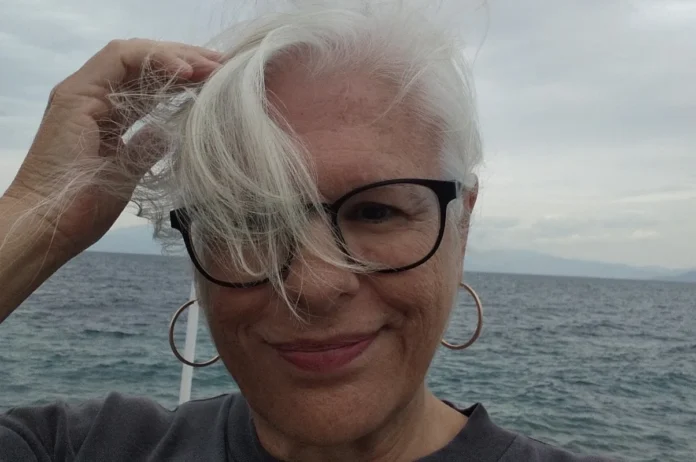
What does it take to leave a busy capital city behind and reinvent your life in the Greek countryside? For veteran journalist Kiki Triantafylli, the answer came gradually, and then all at once. After years of living in Athens, she made a decision many dream of but few act upon: she packed up her life and moved to a small seaside village on the Gulf of Corinth.
Today, she divides her time between Derveni, a charming coastal village nestled between the sea and the mountains, halfway between Corinth and Patras, and Karpenisi, the mountain capital of Evrytania, a region of breathtaking natural beauty in central Greece. Her story is about a profound change in pace, priorities, and well-being, not just a change of address. In this testimony, written for the Greece Retirement Guide, Triantafylli reflects with candour and warmth on what she left behind, what she found, and why she has never looked back. Her experience offers an honest, practical, and deeply personal portrait of rural life in Greece for those considering a similar move.
By Kiki Triantafylli, journalist
Derveni, Corinthia
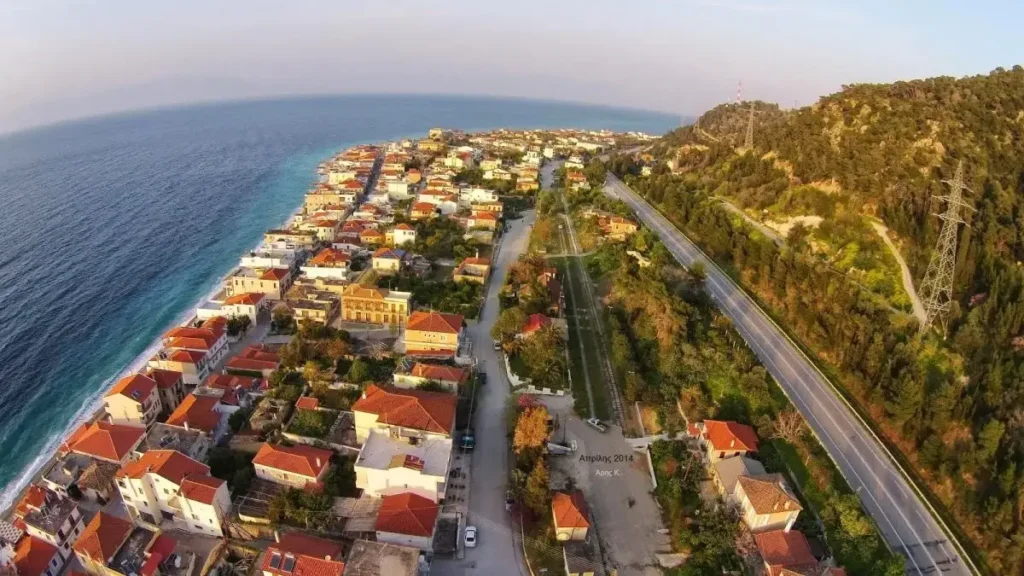
For years, I had the desire to leave Athens and settle somewhere smaller and more human in scale before I finally moved to Derveni in Corinthia, a small village on the Gulf of Corinth, situated almost exactly midway between Corinth and Patras. My brother had taken that step much earlier. He is a tour guide and settled on the island of Rhodes, so you could say I have a foothold there as well.
When the desire became clear to me, my first thought was to move to Naxos, an island I adore in every season. But two things gave me pause: the cost of living and a flight that never quite landed. We reached the island’s airport, but due to weather conditions the plane could not touch down, so we turned back and spent the night at the Eleftherios Venizelos airport hotel. That experience made me reconsider.
Then, one summer, I began visiting Derveni as a guest at a friend’s house. The real test, of course, is whether a place suits you in winter, when conditions are harder. One winter weekend was all it took for me to understand that this was the right place for me. I immediately rented the first house I found, at a reasonable price, right in the centre of the village. I moved my belongings in, and from 25 March 2019, Derveni has been my home. I am still officially registered as an Athenian resident, but I have transferred my tax domicile to Corinth, and I have never regretted it for a single moment.
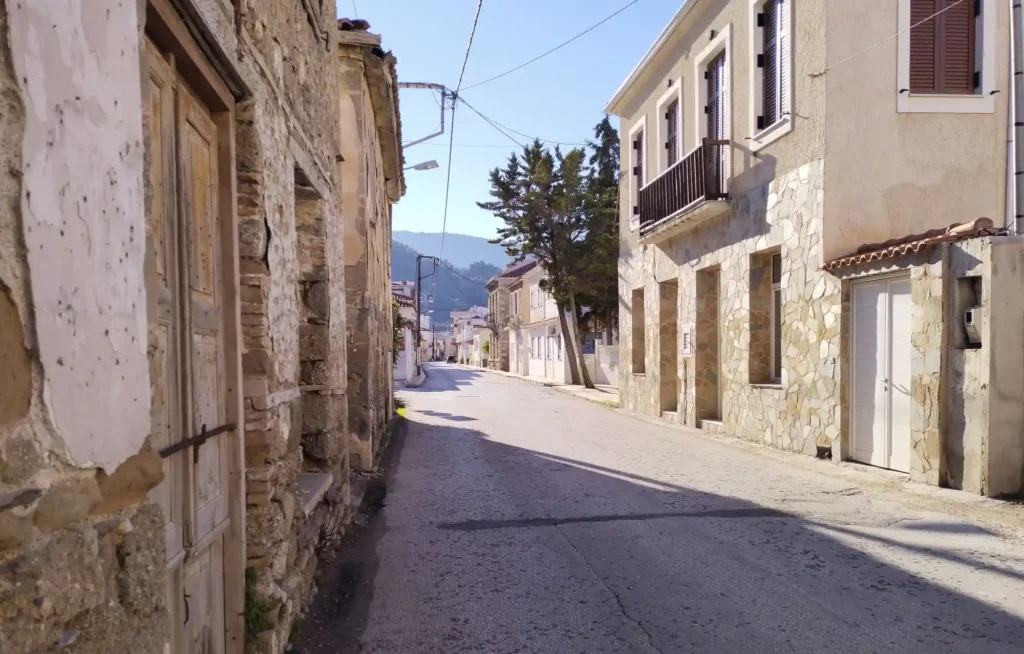
In such a small village, being in the centre matters to me. I admit I dislike the isolation that winter can bring to more remote areas. Just steps from my door, I have everything I need: a bakery, a grocery store, a fruit market, a bicycle shop, a Citizens’ Service Centre (KEP), a hairdresser (which I rarely visit), an excellent gym, shoe shops (the quality genuinely surprised me), underwear shops, and two of those wonderful, all-purpose provincial stores (what I call “pocket malls”) that stock everything from pins to small furniture and rugs, serving the surrounding mountain villages.
Derveni stretches along a narrow strip of land between the sea and the mountains rising behind us. There are also a few cafés, bars, and honest tavernas serving very good food, and above all, warm neighbours who rush to help.
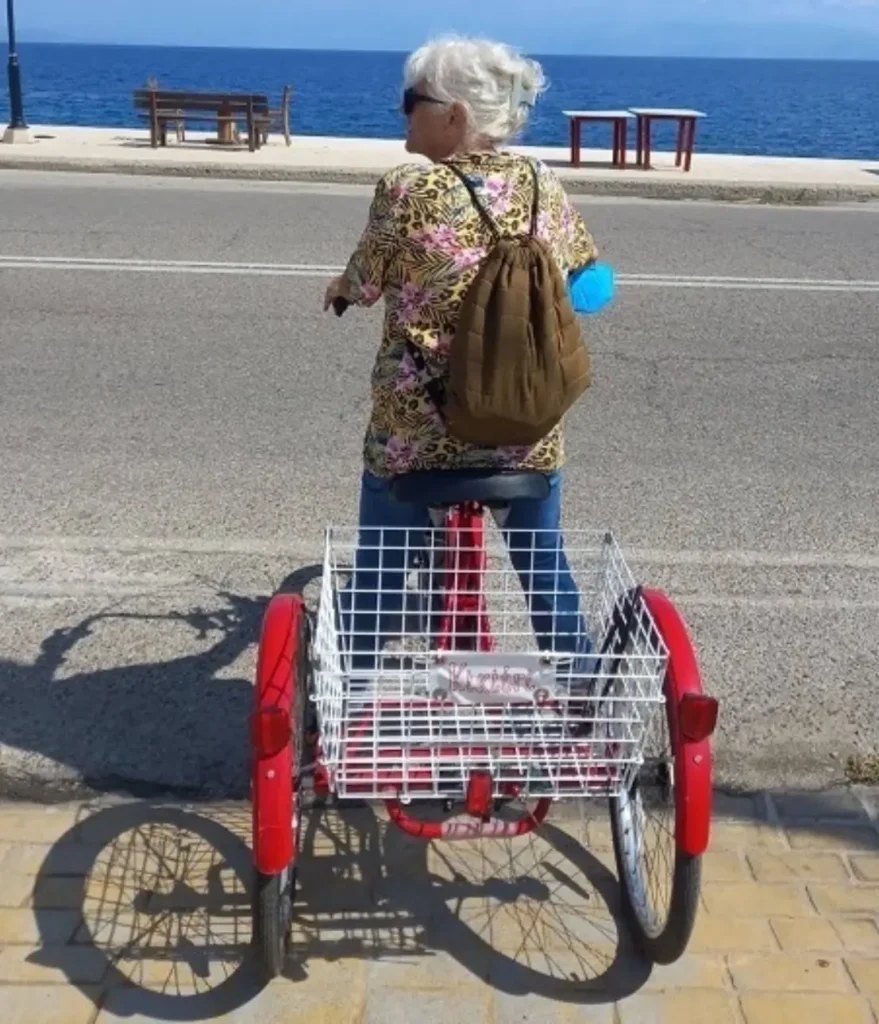
In the first year, I used to come from Friday evening until Monday morning, travelling directly to and from the office. When the pandemic broke out, I packed up my elderly mother and we managed to settle in the village before the lockdown was imposed. It was truly a spontaneous decision. During that period, I also discovered that for blood tests, for example, there is no need to visit a medical laboratory; mine is six kilometres away in the neighbouring town of Akrata. A nurse comes to the house to draw blood and then either brings the results back or sends them directly to the doctor.
The village has two pharmacies, but I found a third one, two villages away, that accepts my insurance fund. In general, the professionals here are very accommodating, calmer than in Athens, and in a better mood, something that has helped me relax as well. It took me a long time to get used to the fact that everything here is easier. I run my errands in no time at all. Wherever I go, I am always between the sea and lemon trees (there are orange trees too, though fewer) and my almost-private beach is just 20 metres from my front door.
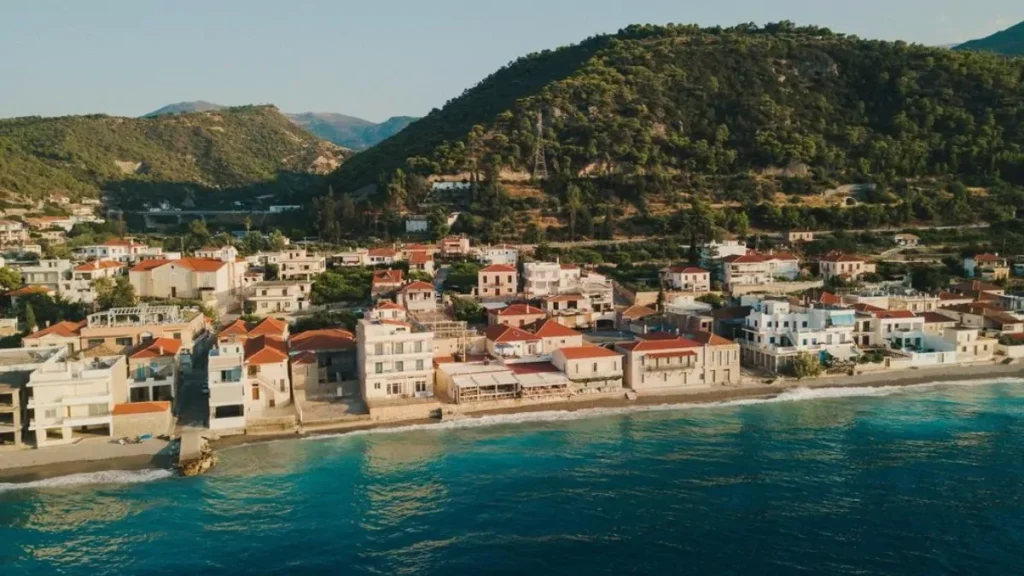
The only downside is the Maistros, the strong northwesterly wind that can sweep you off your feet when it really gets going. On those days, swimming becomes impossible. I have gradually given up winter swimming as a result, though even that wind has its pleasures, especially during my early years here.
Entertainment? I enjoy long walks along the seafront, reading books and newspapers, watching ERTflix, Netflix, and CosmoteTV, and occasionally spending a weekend in Athens or elsewhere to visit friends, watch a film, or attend an exhibition.
Getting to Athens is easy: we are only 140 km away. Sadly, the suburban rail service we had counted on so much is unreliable. By contrast, the KTEL Corinthia bus service is a pillar of the region, running every hour and connecting to Xylokastro and beyond. The bus leaves from the centre of the village and drops you at the Metaxourgeio metro station. From the Kifissos terminal, there are buses to Elaionas metro station and to Omonia Square. As a result, I use my car almost exclusively for local trips and excursions, near and far.
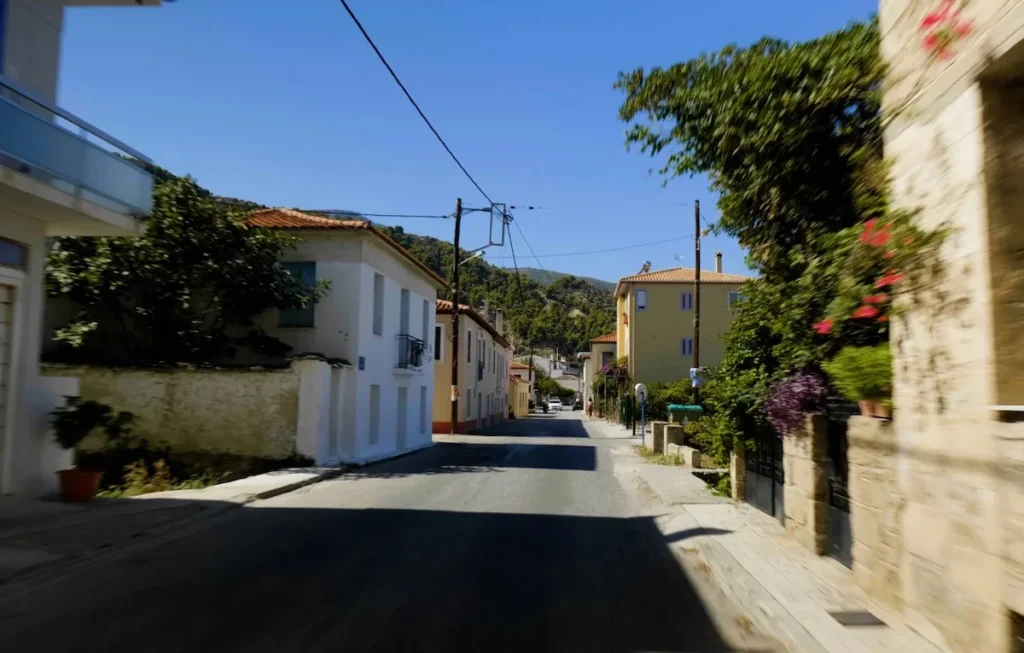
In conclusion, I could not wish for anything better as I grow older. The villages along the Corinthian Gulf are an outstanding choice for relocation. They are not fashionable tourist destinations, although there are tourist spots, mainly for families and older visitors, yet they offer a quality of life far superior to that of any large city. If I had to describe the people in just a few words, I would say they combine urban and small-town sensibilities. There may be more picturesque places, but for me the sea is everything.
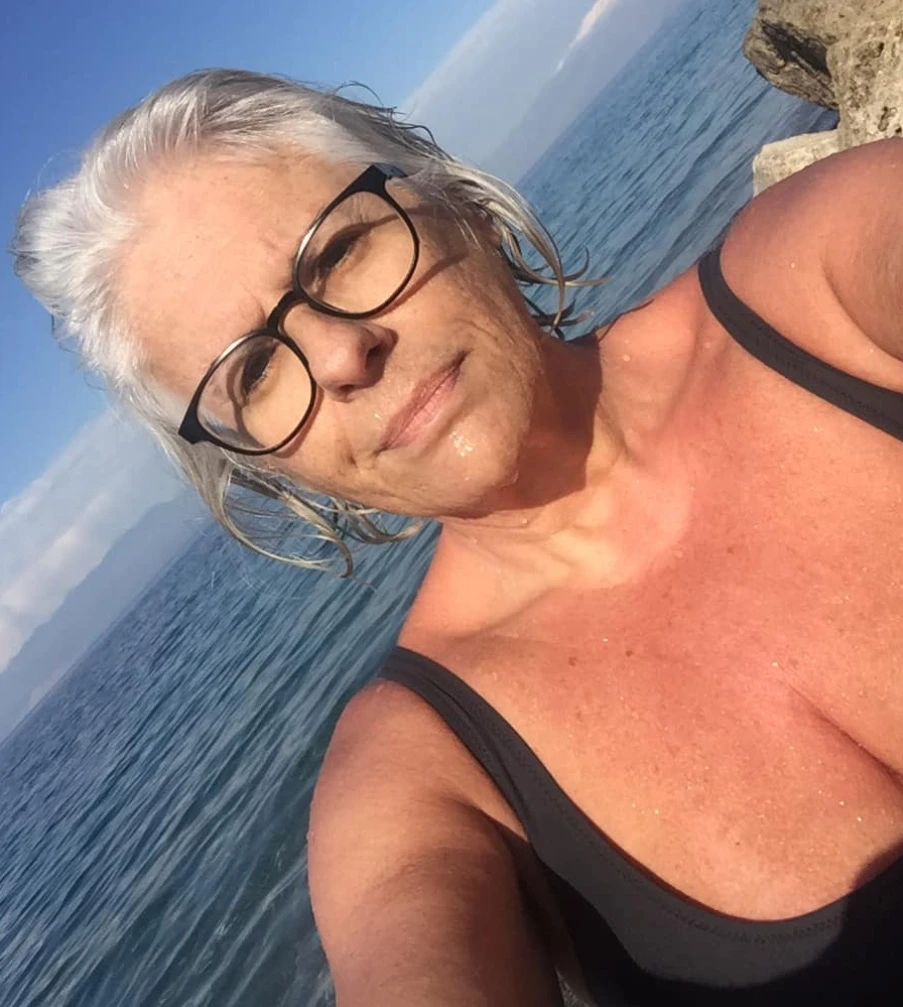
My friends tell me they envy me, and I understand that such a move is not easy for everyone. First and foremost, you need a job that can be done here or the ability to work online. I keep meeting people locally who do exactly that, just as I do. And you need to truly love a place for what it is. After that, it is simply a matter of making the decision.
Karpenisi, Evrytania
My family’s roots in Megalo Chorio, Evrytania, planted the seed of my desire to return. I have relatives, friends, and a tiny house there. But it remains my second choice, my countryside retreat when I long for the mountains and the river.
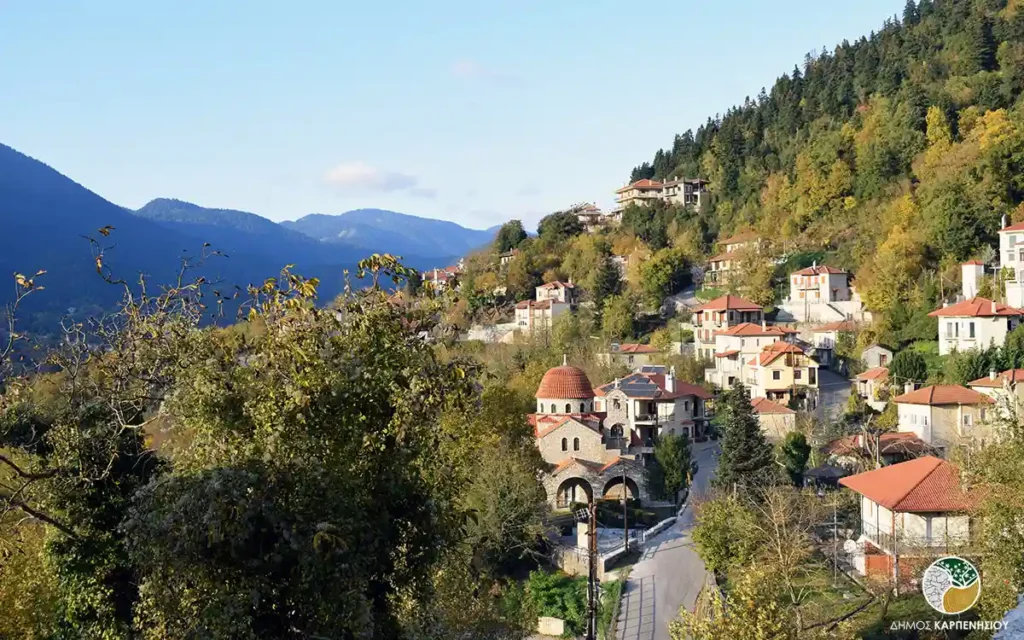
Retired Evrytanians typically return to their village homes from Easter until the end of October or November, avoiding the harshest winter months. Life in the mountains is easier if your house is large enough to keep you comfortable indoors during long stretches of bad weather, but not so large that it becomes impossible to heat.
You need to be able to drive, as public transport connections are no longer reliable. However, taxis serve residents for shopping, medical appointments, and other needs in the regional capital, Karpenisi, which is 12 km from Megalo Chorio. Relocating to Karpenisi itself is a more straightforward option for those who love the mountains and ski resorts. It has a very good hospital (I am told the orthopaedic department is particularly strong), pharmacies, doctors, bars, restaurants, and a fairly well-stocked shopping district. It is 80 km from Lamia and 280 km from Athens.
Wintering in the Greek Mountains and Corinthia
If you found Kiki Triantafylli’s insights on spending winter in a mountain village valuable, explore our detailed guide to Karpenisi for a look at inland mountain living. If you are considering settling in the Corinthia region, read our interview with local realtor Nikol Lafazani, for key market insights and property considerations.
ABOUT THE CONTRIBUTOR
Kiki Triantafylli
Gastronomy Writer
Derveni, Corinthia, Greece
Published Books: Book Index (Biblionet)
Editorial Contributions: Bostanistas, Protagon
***