
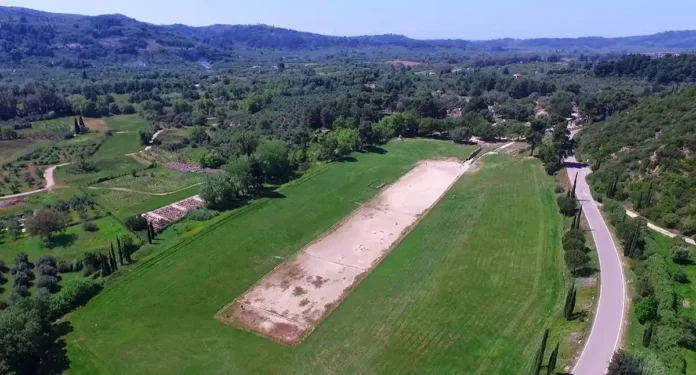
President and Head of Public Relations of the Association of Ilians of Attica Explain What Daily Life There Actually Requires
Ilia is a regional unit on the northwestern edge of the Peloponnese, best known as the home of Ancient Olympia, the sanctuary where the Olympic Games were born nearly three thousand years ago. It stretches from a long Ionian coastline in the west to the semi-mountainous terrain of Foloi in the east, and includes the towns of Pyrgos and Amaliada, the archaeological village of Ancient Olympia itself, and dozens of smaller communities scattered across farmland, forest, and shore.
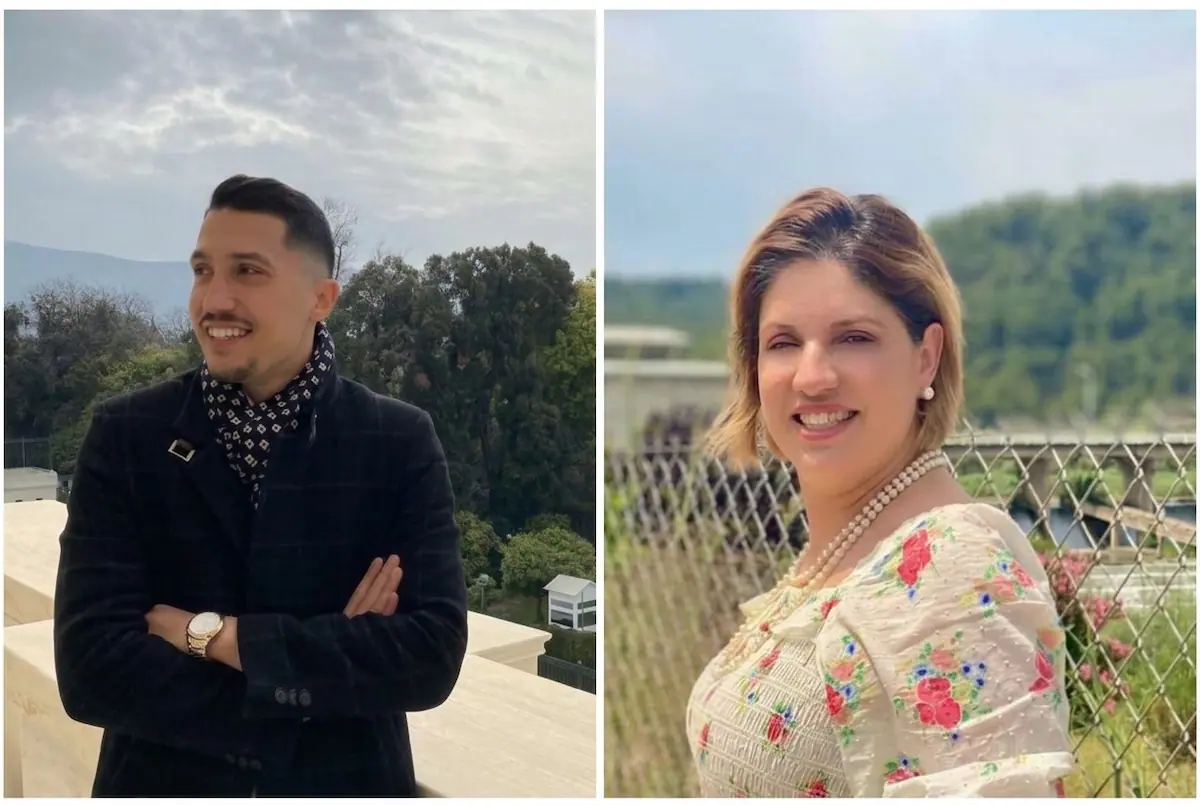
The answers behind this piece come from two people who represent Ilians living away from home, but not far away: Ioannis Misyris, President of the Association of Ilians of Attica, and Eirini Tsipi, Head of Public Relations for the same organization, which brings together people originally from Ilia who have settled in Attica, the prefecture that includes Athens, and who organize dance classes, cultural celebrations, and community events to keep their home region’s traditions alive within reach of the capital. Their perspective sits somewhere between insider and advocate: close enough to the place to speak honestly about its shortcomings, invested enough in its future to argue for what it could become.
By Ioannis Misyris and Eirini Tsipi
Ancient Olympia is not simply an archaeological site that Ilia happens to contain. It functions as symbolic capital, a global association with sport, peace, friendship among nations, and human achievement that shapes how the region sees itself and how it is seen. But we are careful not to overstate what that means for daily life. Proximity to Olympia does not automatically produce warmer hospitality; hospitality is a social practice built from history, economic conditions, family ties, and years of contact with visitors, not from living near a monument. The real opportunity, as we see it, is turning Olympia from a global brand into a local resource, connecting its prestige to the region’s economy, education, culture, and volunteer life, rather than keeping it fenced inside the archaeological park.
That distinction matters for anyone wondering whether an “Olympic spirit” is something they would actually feel living here. Ilia is a normal society, with the same economic pressures, aging population, and uneven access to services found across rural Greece. What keeps Olympic values alive outside the ruins is participation: local cultural associations running traditional dance festivals, regional groups tied into international cultural and sporting initiatives, schools and clubs treating Olympia as a living educational resource rather than a museum piece. The spirit is there, but it has to be practiced, not assumed.
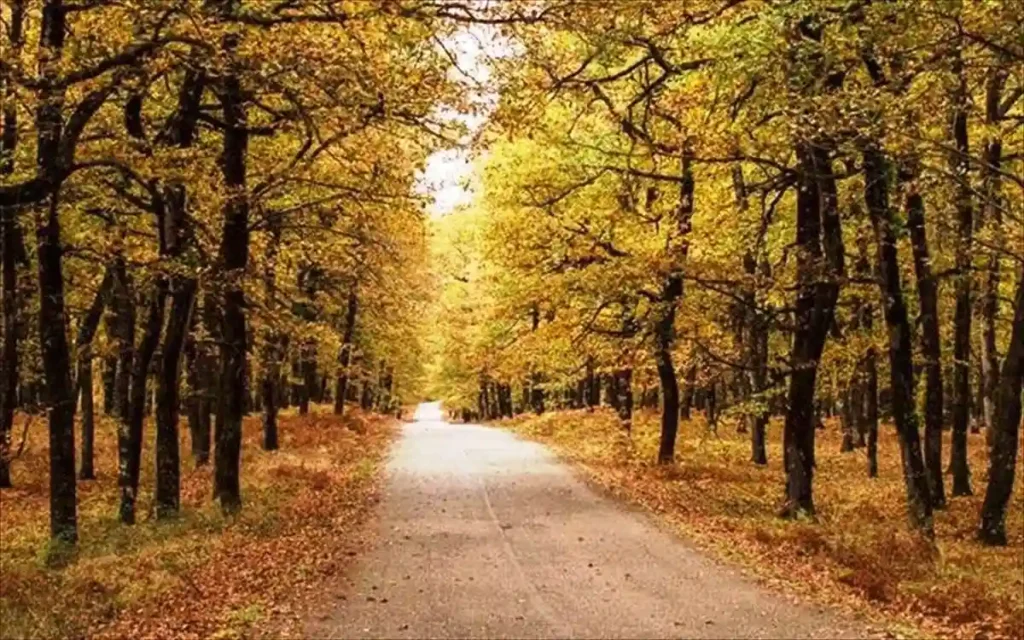
Mountain living in Foloi
For anyone picturing a winter in the hills above Olympia, the honest answer is layered. The Municipal Unit of Foloi is semi-mountainous to mountainous, and it would be unrealistic to expect every small village to keep a bakery, grocery store, and pharmacy open year-round. Permanent residents do have access to local services and gathering places, but mountain living here demands real self-sufficiency, and in most cases the ability to drive to a larger settlement when something specific is needed. This is less a flaw in Foloi than a question of spatial equity that shows up in rural regions everywhere: quality of life depends not only on the scenery but on whether people can reach what they need without excessive time and expense. We see this as exactly the kind of gap that policy could close, through support for small local businesses, mobile services, better digital infrastructure, and transport designed around residents rather than tourists.
Not every part of Ilia carries that same isolation. A genuinely active daily life, with permanent population, everyday commerce, schools, associations, and real social interaction, is concentrated in Pyrgos and Amaliada as the main urban centers, with Ancient Olympia, Krestena, Zacharo, Andritsaina, Gastouni, and Vartholomio functioning as smaller regional hubs. In the mountains around Olympia, several villages serve as local centers in their own right, and the regional bus company, KTEL Ilias, connects Pyrgos with Olympia and other destinations, though how often a bus actually runs varies a great deal from route to route. The demographic trend across all of it is the familiar one for rural areas nationwide: an aging, shrinking population and a primary sector, farming, that still carries more economic weight here than in most places. We are blunt about what this means for anyone hoping for a single feel-good narrative about “revitalizing the villages”: Ilia doesn’t need vague optimism, it needs different policies for different-sized settlements, tailored to their geography and their role as local hubs.
Who else already lives here
Foreign residents are already part of Ilia, though the picture resists a simple label. Census data distinguishes citizenship from place of birth, which matters because someone born abroad may hold citizenship here and vice versa; “foreign resident” isn’t a clean demographic category on its own. Different groups with migration backgrounds coexist across the region: agricultural workers, families who have settled permanently, citizens of other European countries, people who have naturalized. Northern Ilia’s agricultural production has long relied on migrant labor, but we draw a firm line between seasonal farm workers and people who buy or rent a home and settle here for good; the two groups have almost nothing in common in terms of needs.
How those settled residents actually spend their days varies just as widely. Agricultural work remains one path to economic integration in rural areas; elsewhere, settlement connects to small business, services, family ties, or income from a pension or property. But the question we keep returning to isn’t where people work, it’s whether they take part in the community’s social structures. Integration, as we define it, is complete when a new resident stops being only a worker or a consumer and becomes a member of the community: joining associations, knowing neighbors, showing up at local events, building relationships based on mutual support. For a region facing demographic decline, socially integrated newcomers, of any nationality, aren’t just welcome, they’re part of the solution.
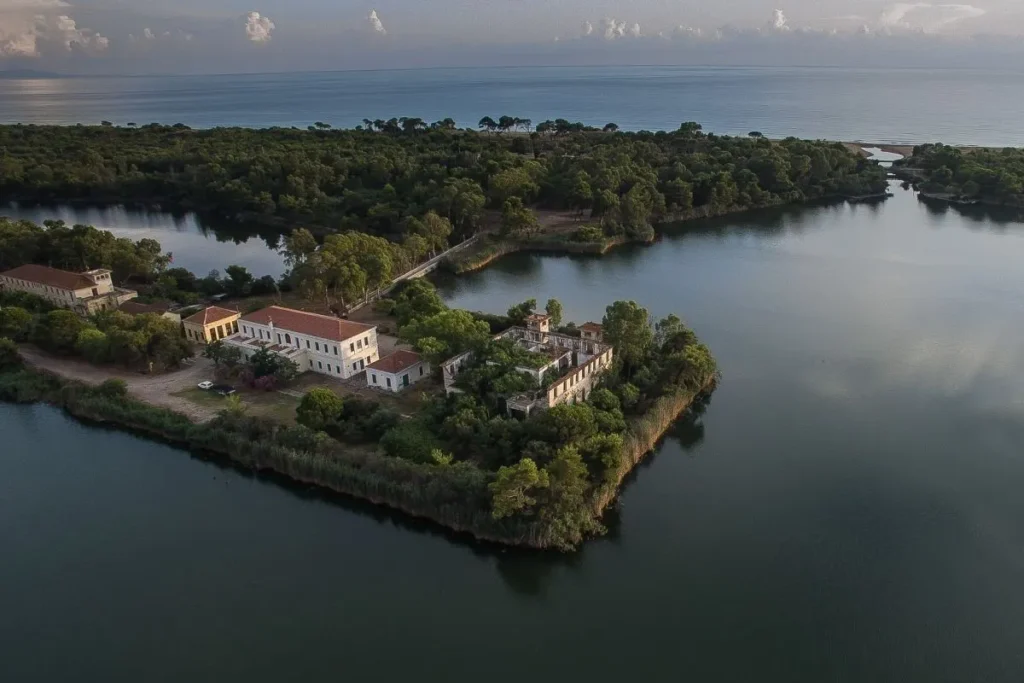
Language, without the sugarcoating
English is far more common in the bigger tourist destinations and urban centers than in the small villages, and it would be a mistake to assume every daily need can be handled in English once you’re off the main routes. We treat this as more than a convenience issue: language is a mechanism of social integration. Being able to talk to the baker, a neighbor, a doctor, the person behind the counter at the local citizens’ service office, or the head of the village association is what turns living somewhere into actually belonging there. At the same time, we don’t put the burden entirely on newcomers: a region that wants to attract permanent foreign residents should build welcoming policies of its own, including basic information in English, settlement guides, accessible services, and language courses where possible. Our own suggestion is to connect Greek lessons with cultural associations, community centers, and municipal services, so that learning the language becomes a way into local society rather than just an administrative hoop.
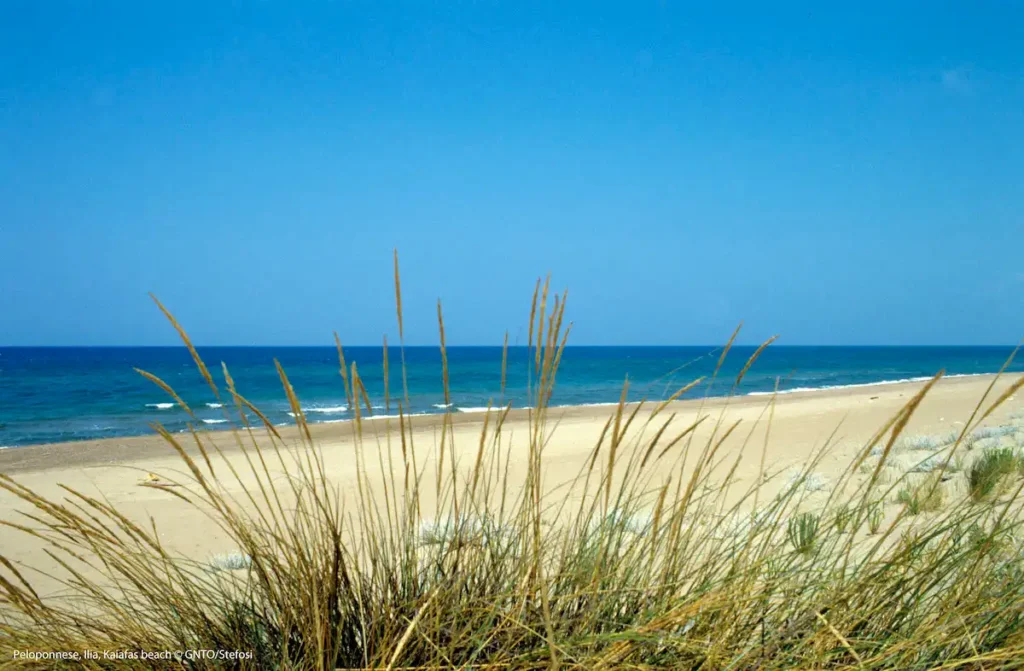
The coast after the crowds leave
Ilia’s hundred kilometers of coastline fill up every August and empty out fast after. We are careful to say that isn’t automatically a failure, it’s a textbook feature of seasonality in the Greek countryside, but we push back against treating the whole coast as a single tourism zone. Some stretches have permanent populations, some are dominated by holiday homes, some depend almost entirely on the summer months. The real test for places like Zacharo, Katakolo, Kyllini, Vartholomio, and Kourouta isn’t how many beachgoers show up in August, but whether they work as places to live for the other eleven months, through gastronomy, sport, wellness, nature tourism, culture, and remote work, not summer traffic alone.
Healthcare and getting around
Foloi and the area around Ancient Olympia are served by an organized primary healthcare network rather than nothing at all: the Ancient Olympia Health Center, plus regional clinics including the one in Koumani (covering Persaina and Foloi) and the one in Lala (covering surrounding communities). For anything beyond primary care, the General Hospital of Elis, the Pyrgos Nursing Unit “Andreas Papandreou,” in Syntriada, is the main facility in the regional unit. So the honest framing isn’t that mountainous Ilia lacks healthcare; it’s that travel time to more specialized care is a real variable, one that matters more the older you are or the more chronic conditions you’re managing. We argue rural health policy needs to combine fixed facilities with mobile units, telemedicine, home care, and dependable patient transport, not just more buildings.Transport tells a similar story.
In the most remote mountain communities, a private vehicle remains close to essential for day-to-day independence. KTEL Ilias runs routes linking Pyrgos with Olympia, Lala, Andritsaina, Zacharo, and Nea Figaleia, with the Pyrgos-Olympia route offering several services a day, but frequency is far from uniform across the network, and public transport can’t cover everything a private car does. Anyone weighing a move to a mountain village should treat this as a real factor in the decision, not an afterthought. We see room here for smarter, smaller-scale solutions rather than simply more large buses: demand-responsive transport, shared services for elderly residents, links to health centers, and routes designed around what residents actually need rather than a fixed schedule.
Community, associations, and what’s left after the fire
This is where we speak with the most personal authority, since it’s exactly what our own association does: organizing celebrations and dance classes for Ilians who now live in Attica. In Ilia itself, active cultural associations and dance groups already exist around Ancient Olympia, and local events weave together culture, religious tradition, and historical memory. In small communities, associations act as intermediary institutions between individuals and the state; they build trust, create social capital, and support people in ways formal services don’t. Our advice for a newcomer wanting to integrate from day one: start not with a tourist activity but with a local association, a hiking group, a dance ensemble, a volunteer initiative. Social integration often begins with something as simple as being invited to share a meal.
Community life isn’t measured by population size alone. Lala, a local center in the Municipal Unit of Foloi, is a good example: cultural associations there stay active in municipal events, evidence of organized social life continuing even where the population itself is small and aging. We are careful not to romanticize this: a strong social fabric doesn’t mean a village is demographically thriving or free of challenges. But for anyone thinking about attracting new residents, it’s the missing piece that houses-for-rent statistics don’t capture: there has to be a community to belong to, not just a property to occupy.
The August 2021 wildfires remain a real reference point for the region, part of a fire season the scientific literature describes as exceptionally severe nationwide. Five years on, we resist both extremes: describing the situation as either total destruction or full recovery would be misleading. Ecosystems and human communities heal on different timelines: vegetation returning doesn’t mean a mature forest has returned, and a village reopening for business doesn’t erase what a disaster cost economically, socially, and psychologically. Our view is that post-fire policy needs to move from restoration to resilience: firebreaks, forest management, evacuation planning, emergency access, and support for the local economy, because in Foloi, where the forest is central to local identity, protecting it isn’t just environmental policy. It’s a policy of habitation.
The practical part: what actually trips people up
Asked what a foreign retiree would run into first beyond the language barrier, we point squarely at administration. Depending on nationality and residency status, settling permanently can mean navigating tax registration, health insurance, banking, housing, and, for non-EU citizens, residence permits. Digital services have eased some of this: citizens’ service centers (KEP) act as administrative support hubs, and platforms like myKEPlive exist to help. But the process still isn’t simple for someone without Greek or without familiarity with how the system works. Getting an AMKA social security number as a third-country national with a residence permit, for instance, requires specific documentation and an in-person visit to a KEP office or e-EFKA, with no shortcuts.
The real obstacle, in our view, isn’t bureaucracy itself so much as the absence of a single mechanism to guide a new resident through it from start to finish. It’s also where we think Ilia has an unclaimed advantage: a bilingual settlement guide covering tax and social security registration, residence permits, healthcare facilities, KEP offices, transport, banking, local associations, language courses, volunteering, and school and family services would help not only foreign retirees, but Athenians, remote workers, families, and members of the diaspora considering a return.
From a place to visit to a place to live
Our closing case for Ilia rests on a combination that’s genuinely rare: Ancient Olympia gives the region global visibility; Foloi and its mountain communities offer a distinctive relationship with nature; the western coastline is a real asset beyond the summer season; agriculture keeps the region anchored in a working economy; and local associations continue to hold the social fabric together. None of that erases the real challenges, including an aging population, uneven access to services, dependence on cars, seasonality, wildfire risk, and the work still needed to integrate new residents, but none of it is hidden behind a tourism-brochure version of the region either.
Our argument, ultimately, is a reframing: the question worth asking isn’t how Ilia attracts more visitors, but how it becomes a place where more people can and want to live year-round. That requires schools, healthcare, transport, digital infrastructure, culture, social care, and functioning administration, not tourism infrastructure alone, plus something harder to put in a policy document: a community’s capacity to welcome newcomers without losing what makes it itself. Ilia already has that capacity, built on deep historical roots and durable community foundations. What it needs isn’t to become one more product on the Greek tourism market, but to turn Olympia’s global prestige, its natural heritage, its agricultural economy, and its social capital into a genuine model for regional living, one where success, in the end, isn’t counted in visitor numbers, but in how many people are able to make this place their permanent home.
Explore more in the Peloponnese
If you want to read more, explore the article about the locations where Christopher Nolan’s The Odyssey was filmed and our Relocation Guide to Kalamata. If you are interested in relocating near ancient monuments, explore our piece on six villages built right at the edge of historic sites.
ABOUT THE CONTRIBUTORS
Ioannis Misyris, President of the Association of Ilians of Attica
Eirini Tsipi, Head of Public Relations of the Association of Ilians of Attica

syllogosilionattikis@gmail.com
***