
A novel offers newcomers a way into the capital’s post-dictatorship years and its people
Maria arrives in Athens at nine, having spent her early childhood in Africa. Anna has returned from Paris. Both girls are Greek, but neither feels entirely at home. They meet at school and become best friends, although “friends” eventually becomes an inadequate word for what they are to each other. They admire, imitate, compete with and hurt one another for decades.
This is the starting point of Amanda Michalopoulou’s Why I Killed My Best Friend, a novel that follows two women from childhood into adulthood while Athens, and the country with it, changes around them. Their friendship develops during the years following the fall of the military dictatorship, and the political atmosphere of the time gradually becomes part of their lives. The Greek Left, radical politics, feminism, demonstrations and changing social attitudes seep into conversations, relationships and rivalries, shaping how Maria and Anna understand themselves and each other.
Through the two women, we see an Athens that is argumentative, political, restless and intensely personal. Much of the story takes place in Exarcheia, an area whose political and intellectual identity was already firmly established when Maria and Anna were growing up. Michalopoulou has explained that she chose it because it was an ideal setting for a political novel.
The relationship between the two women is the novel’s real engine. Anna is charismatic, confident and politically committed; Maria is more hesitant and observant. Rivalry is part of their intimacy from the beginning. They compete over men, ideas, talent and ambitions, while each also borrows something from the other. The title gradually acquires its meaning as their friendship becomes a struggle for independence. Michalopoulou has described the relationship through the metaphor of “totalitarianism and democracy”, an unusually revealing way of describing a friendship in which affection can coexist with domination.
For a foreigner thinking about relocating, Maria’s position is particularly interesting. She is Greek, yet when she returns to the country she experiences it as an outsider. She has to learn how the country works, how people speak to one another and where she belongs. Her experience is obviously very different from that of someone arriving from abroad today, but the underlying question is familiar: when does a place where you have chosen to live become a place to which you feel you belong?
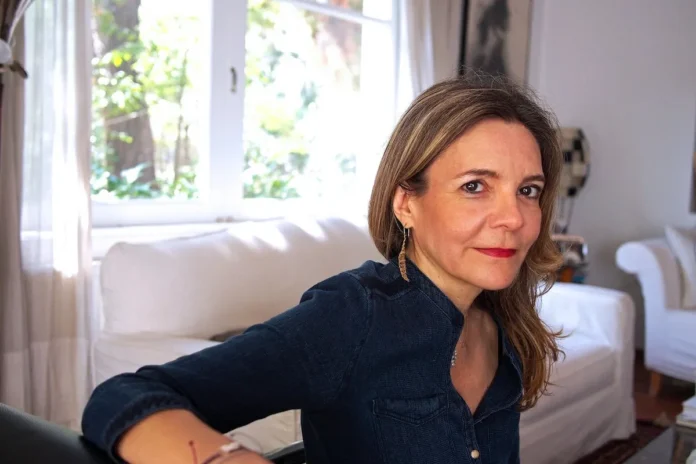
The novel also offers a way into a generation whose formative years coincided with the country’s transition after the dictatorship. Michalopoulou was born in Athens in 1966 and grew up partly in Africa before studying French literature in Athens and journalism in Paris. She has worked as a writer and columnist and now teaches creative writing. Her novel was published in 2003, looking back at the generation to which she herself belonged. More than twenty years later, it can be read both as a story of two women and as an intimate record of a changing Athens.
You do not have to know the political history to enjoy the book. But if you are considering a move, it is useful to encounter the country through people who are not explaining it to you. Maria and Anna simply live in it, argue about it, love it, reject parts of it and carry its contradictions with them. By following them, a foreign reader gets something that no practical relocation guide can provide: a sense of the memories, arguments and experiences that lie behind the city as it exists today.
PUBLICATION DETAILS
Amanda Michalopoulou, Why I Killed My Best Friend, English translation: Karen Emmerich, Open Letter, University of Rochester, 2014
Original title: Γιατί σκότωσα την καλύτερή μου φίλη, Kastaniotis, Athens, 2003
***