
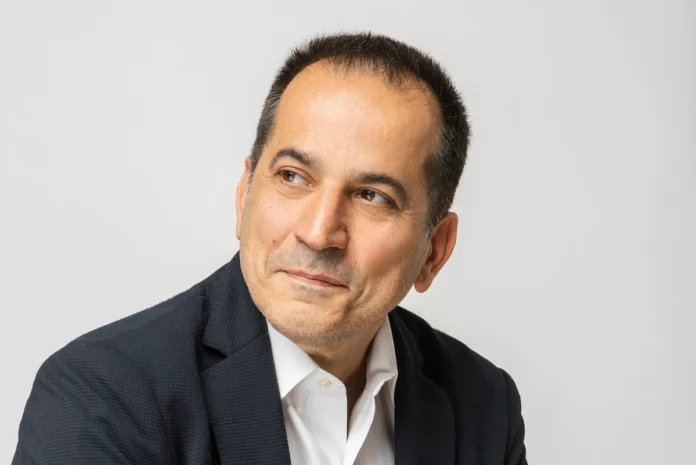
Spiros Pengas, Member of the City Council, Explains Why Thessaloniki Wins Over Foreign Retirees
Thessaloniki rarely tops the list when foreigners picture retirement in Greece, yet those who visit often find themselves quietly won over. Spiros Pengas, a member of the Thessaloniki City Council and former Deputy Mayor for Tourism, has spent years studying what makes the city work for newcomers. In this interview he discusses walkability, healthcare, the newly expanded metro, property prices, and the particular kind of hospitality that keeps foreign residents settled long after their first visit.
Thessaloniki is often described as a city with a high quality of life. What do you consider its most important advantages for a foreigner considering retiring and settling here?
Thessaloniki is one of what are internationally known as “second tier” cities in southern Europe. In recent years, these cities have surpassed in interest and appeal the loud mega-cities that are often cited as popular destinations but which wear visitors down, either with the pace of daily life or with overtourism. Thessaloniki remains a charming slow-living city. A city with an interesting multicultural heritage, a walkable city, a city with excellent local food (a member of the UNESCO Creative Cities Network for Gastronomy), a city on a human scale, welcoming and open to the foreign and the different.
What changes do you believe are needed for Thessaloniki to become even more attractive to international retirees compared to other Mediterranean destinations, such as Spain, Portugal, or southern Italy?
What the city lacks is organized promotion of its advantages. In its metropolitan dimension, Thessaloniki has failed in recent years to agree on a coherent outward-facing narrative and to present it to the world consistently and continuously. So what’s required is a change in mindset. It needs collective will and an understanding of the advantages that can interest and attract foreign visitors, investors, and retirees alike.
Many retirees look for neighborhoods where they can walk safely, enjoy cafés, restaurants, parks, and a seaside walk. Which areas of the urban complex do you think currently offer the best quality of life?
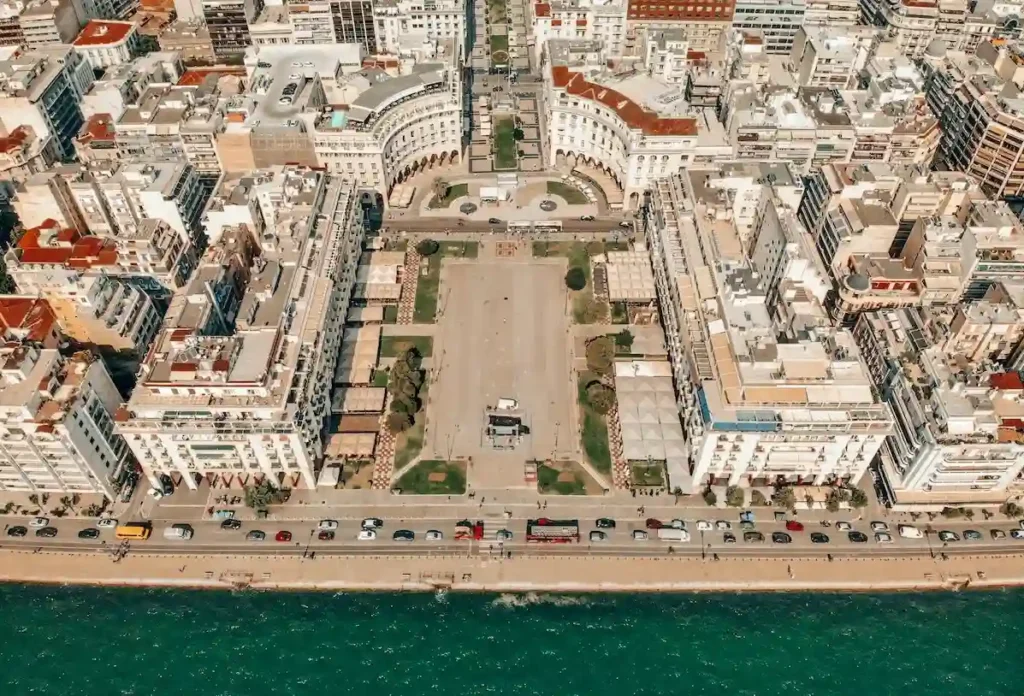
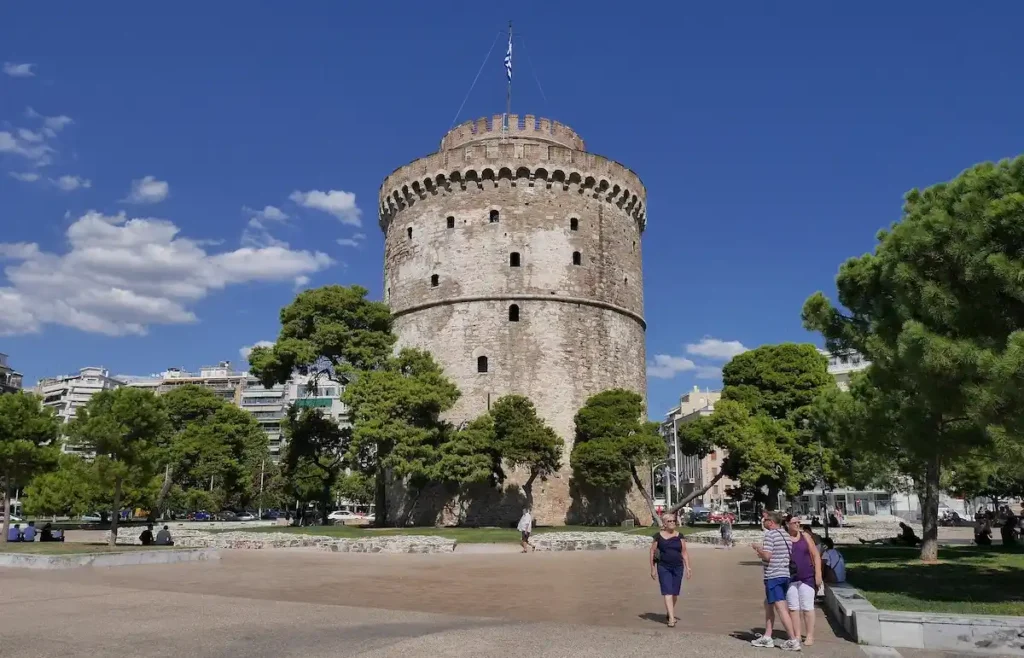
During Yiannis Boutaris’s time as mayor of the city (2011-19), Thessaloniki turned toward a logic of gentle, sustainable urban regeneration. Significant points and neighborhoods of the city were redeveloped in a modern way: traffic-calmed streets, pedestrianized zones, green and bioclimatic redevelopments, and excellent execution of already-planned major regenerations, such as the one along the seafront. Today, both the historic center and the upper town, as well as the affordable residential fifth district, contain neighborhoods with their own friendly ecosystems of services capable of meeting every need of a retiree who doesn’t want to travel long distances. Of course, in its metropolitan dimension and within less than half an hour, the city also offers excellent seaside living (Kalamaria) and access to wonderful beaches (the Thessaloniki Riviera, from Perea to Epanomi).
Access to quality healthcare services is a top priority for most retirees. How do you assess Thessaloniki’s healthcare infrastructure, and what improvements do you consider necessary?
Thessaloniki’s healthcare infrastructure is exemplary within the Balkans and southeastern Europe. Through Aristotle University, the city has and produces excellent doctors across every specialty. Again, the city’s size and the friendliness it radiates create a directness between patient and treating physician that’s unique. Also worth highlighting is the ease with foreign languages, which compares favorably with similar language competence in other countries of southern Europe. I believe, again, that networking and internal organization among doctors and clinics is essential, so they can offer integrated, holistic healthcare “packages.” Beyond the medical expertise found here, which is more than adequate, a better organizational structure is also needed, both to attract foreign retirees and to provide them with complete care.
The operation of the Metro represents a significant change for the city. How do you think it will affect the daily lives of residents and those who choose to settle in Thessaloniki in the coming years?
The Metro’s launch two years ago was indeed a turning point for the city. It’s a project Thessalonians had been waiting for since construction began, for more than 20 years. Traffic congestion in the city center has already dropped by 15%. Now, at the end of summer, the second line is being inaugurated, running east and reaching Kalamaria. This will be a real revolution for the city, as important neighborhoods on the eastern side will gain fast, safe access to the city center. The Metro upgrades quality of life for both residents and visitors. What remains hoped for is its westward extension and its arrival at Macedonia Airport within the next ten years.
A frequent question from foreign retirees is whether they can live comfortably without a car. Do you believe Thessaloniki now offers this possibility?
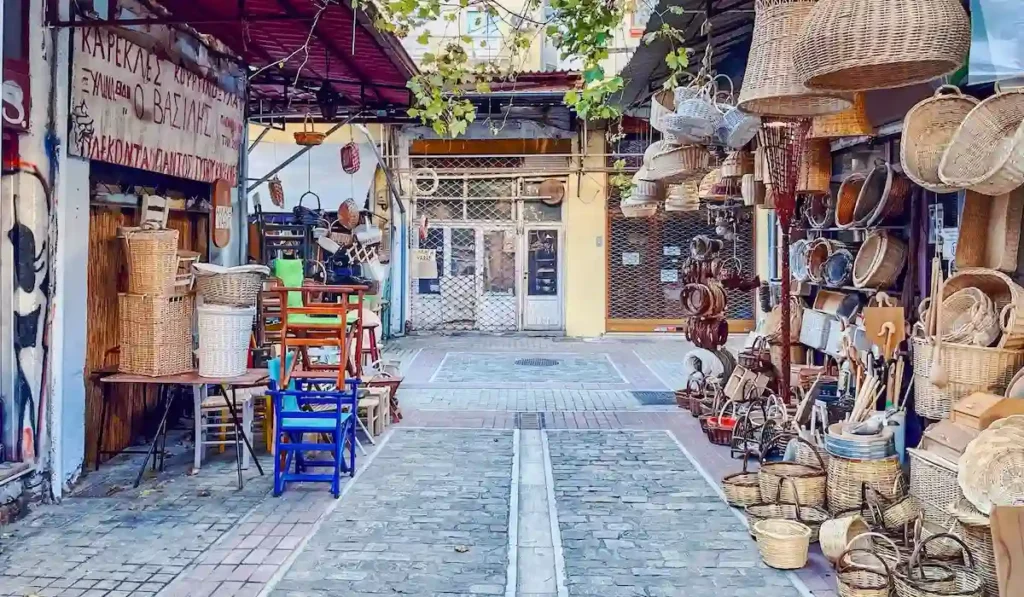
Yes, Thessaloniki is fundamentally a walkable city. Whether you choose its central avenues to take in the movement, energy, and shops, or its calmer seafront, you can get from one point to another in a few minutes without feeling tired or inconvenienced. It’s a city you enjoy walking through. The Metro is now radically shrinking distances, the city’s buses are gradually being renewed and largely converted to electric, and the affordability of the city’s blue taxis, given the short distances involved, offers an additional solution for anyone who doesn’t want to drive.
The Nea Paralia (New Waterfront) is one of the city’s greatest assets. Are there plans or proposals for further upgrading public spaces, bike lanes, and accessibility, particularly for older people?
Right now, the final pedestrianization projects and creation of modern public spaces are underway (the pedestrianization of Agias Sofias and Eleftherias Square), a legacy left by Mayor Yiannis Boutaris’s administration (2011-2019). The city is steadily improving its infrastructure, with extensive maintenance and improvement works underway to overcome the sense of hardship left by the decade-long economic and social crisis. As for bike lanes, I’ll admit I’m not very optimistic. We still have some distance to go in terms of awareness of the benefits of bike lanes and cycling in general within the city.
Many foreigners moving to Greece don’t just want to buy a home, but to integrate into local society. How welcoming do you consider Thessaloniki to be for foreigners, and how can their social integration be further strengthened?
Over the past ten years, in the evaluation surveys conducted by the Thessaloniki Hoteliers Association, the number one asset that consistently emerges for the city is the friendliness of its residents. As a crossroads between East and West, North and South, the city has always carried a cosmopolitanism and openness in its DNA. Here in Thessaloniki, people’s homes and those of their neighbors still open easily to the person next door, to the stranger. At the same time, ease with foreign languages is another competitive advantage. The city has deep roots in both German and French culture, with corresponding academic and intellectual institutions still fully and actively operating. The city is home to the American College and University and the American Farm School, as well as foreign women’s associations with their own activities. The Evangelical Church, the Catholic Church, the renovated Jewish synagogue, the minaret of the Rotonda, and the Orthodox churches—monuments of world cultural heritage that have been operating since the 11th century—demonstrate the city’s enduring interfaith identity, a marker of tolerance and inclusion within a society accustomed to multilingualism and multi-religiosity.
Of course, the corresponding cemeteries are still active too—Orthodox, Catholic, Protestant, and Jewish!
Air quality, traffic congestion, and summer heat increasingly affect quality of life. What interventions do you consider priorities for a more sustainable and human-centered Thessaloniki?
On these issues, to be honest, Thessaloniki still has a lot of work to do. Air quality, affected both by traffic pollution and urban heat islands, isn’t what it should be. Bold and radical initiatives are needed here—decisions that will fundamentally change how residents and visitors of metropolitan Thessaloniki perceive, experience, and move through urban transportation.
Property prices have risen in recent years. How do you see the housing market evolving, and do you believe Thessaloniki can remain an affordable option for foreign retirees?
Of course, property prices are also rising in Thessaloniki—mainly within the boundaries of the Municipality of Thessaloniki. But if someone looks around the city’s periphery, or in up-and-coming areas east and west of the center, they can find excellent opportunities. In any case, prices are rising but remain significantly lower than those in major European, American, and Asian cities. And I won’t even go into detail about the price gap between Thessaloniki and Tel Aviv, or Ankara and Istanbul! These two nationalities in particular have been investing heavily in Thessaloniki in recent years.
One of Thessaloniki’s advantages is easy access to beaches, mountain destinations, and important archaeological sites. Which places in the wider region do you think best showcase the lifestyle a retiree can enjoy?
You sit at a seaside café in Thessaloniki, or at any nearby beach on the Thermaic Gulf, and on most days of the year you can clearly see the mountain of the gods across the water—Mount Olympus, which has just been officially added to the UNESCO World Heritage list. But of course, it’s not just Olympus. Within 45 to 90 minutes of Thessaloniki, one can easily enjoy natural monuments of unique beauty, beaches and lakes, mountain villages, ski areas, or gentle hiking trails. Archaeological wealth begins to emerge right from the heart of the city, while less than an hour’s drive away one finds monuments from the Hellenistic, Roman, Byzantine, and Ottoman eras, all well worth visiting. New museums, such as the one dedicated to Aigai in Veria, presenting the Macedonian dynasties before and after Alexander the Great, are continually opening, while Roman aqueducts and Ottoman madrasas are being renovated and presented anew to international audiences. Finally, I want to mention the unique Kostakis Collection of Russian avant-garde art, housed in the city’s MOMus Museum. For anyone who loves modern and contemporary art, this collection is a must-see.
Thessaloniki has a vibrant cultural life, with festivals, museums, music events, and gastronomy. What elements do you think most captivate visitors and foreign residents?
The city’s museums are a major draw for foreign visitors. Quality events take place at the Thessaloniki Concert Hall and at outdoor venues throughout the summer. But what undoubtedly wins over every visitor, and every new resident, is the local cuisine—Thessaloniki’s unique gastronomic culture. Handmade, imaginative, and affordable, shaped by the city’s rich multicultural history, it has a distinctive character that can only truly be understood by tasting it.
If a retired couple from Canada, the United States, or Northern Europe asked you whether Thessaloniki is ready to welcome more international residents, what would you tell them?
Thessaloniki has been ready for a long time! Throughout its history, the city has hosted and integrated into its social fabric people of different backgrounds and religions. Cosmopolitanism is in its DNA. During a fairly recent negotiation with Lufthansa, which I took part in, aimed at persuading the airline to connect Thessaloniki’s airport with two German cities, I was asked about this and said that the city had only unlocked 15-20% of its potential for hosting foreign visitors, residents, and investors. Since then, the city’s infrastructure has improved further: the airport has been fully modernized, the Metro has launched, and the city’s medical institutions have proceeded to obtain a series of necessary certifications, allowing them to formally—not just substantively—meet the requirements and standards of international insurance funds and companies. The city has become more outward-looking and open, and new international residents will come to confirm and build on these positive developments.
What role do you think foreign retirees can play in Thessaloniki’s future? Beyond their economic contribution, how can they actively participate in the city’s social life?
Foreign retirees, combined with the city’s student population (Thessaloniki has over 150,000 students), create an enviable and balanced mix of residents that can give the city a well-rounded character—outward-looking, lively, yet also convenient and sustainable, as a “second tier” city. Thessaloniki has many organizations, associations, clubs, and groups that create, offer, and enrich the city’s cultural and social life. There are foreign-language institutions, associations, and libraries where foreign residents can find something that matches their interests. Most important, though, remains the friendliness and openness of the people of Thessaloniki, whether at a café or on a bench along the waterfront, in how they communicate with and approach foreigners—confirming the words of the 14th-century Byzantine scholar and statesman Nikephoros Choumnos, who, emphasizing the city’s urban cosmopolitanism, said that “no one remains without a homeland as long as Thessaloniki exists.”
What is your vision for Thessaloniki over the next decade, and what would you like foreign retirees who have chosen the city as their new home to say about it?
My vision for the city moves along two main lines, I’d say. The first has to do with the city’s structural transformation: spatial interventions—not just isolated ones—that will green entire districts, corridors, and thoroughfares, changing the microclimate of every neighborhood and freeing the city once and for all from problems of particulate matter and poor air quality, while raising green space per resident to the high standards of European Union cities. Interventions that will also completely change how people move through the city, strengthening micro-mobility, short bus routes, and the creation of small sustainable-mobility ecosystems around every Metro stop. All of this will change how Thessalonians experience their city—a way of experiencing it that has remained largely unchanged since the 1980s. A way that may carry some charming retro qualities but is a far cry from a modern way for residents and visitors to move about and use public space.
The second line concerns the organizational and communicative dimension of the city’s outward-facing identity. I would like to see two new organizations, “Marketing Thessaloniki” and “Invest in Thessaloniki”, under which the city’s best and most creative minds would work to increase, in a modern way, the city’s international visibility and footprint. The city has the assets, the competitive advantages, and a uniquely favorable location.
I would like the city and the region to become, in the eyes of all foreigners, what I championed as Deputy Mayor for Tourism when speaking about neighboring Balkan markets: to become the California of the Balkans, of southeastern Europe. A region with a wonderful climate, easy access to beaches, friendly and welcoming people with an open culture and tolerance, with social mobility, with creativity ranging from the small local artist to a European Silicon Valley built on its major academic institutions, research centers, and innovative companies!
Beyond the City Limits: Living near Mount Olympus
Discover the mythical home of the gods and the town of Litochoro, just a short journey from the city center. Learn more about the mountain’s surrounding villages and trails in our overview of Mount Olympus.
ABOUT THE EXPERT
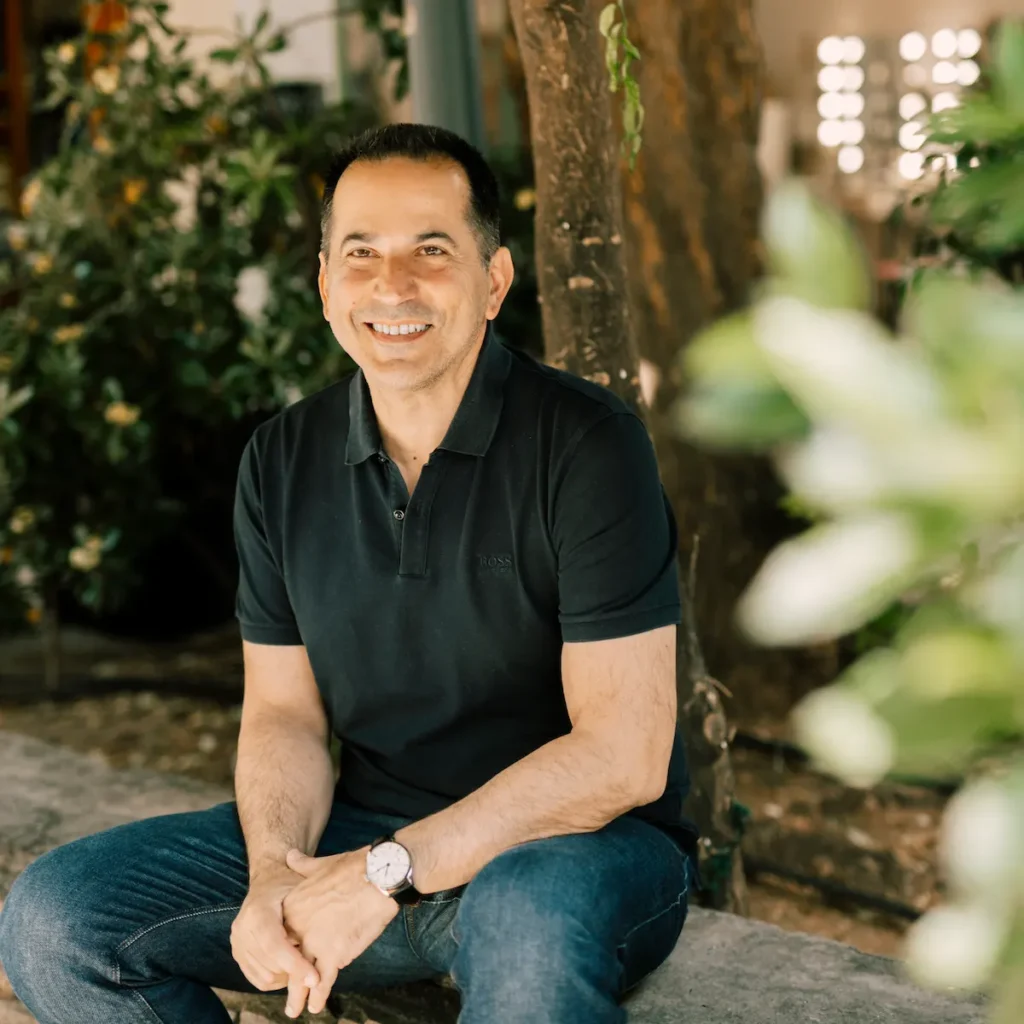
Spiros Pengas, Member of the Thessaloniki City Council
Municipality of Thessaloniki
In office since: 2023, Member of the City Council (Next local elections: 2028).
Previously served as Deputy Mayor for Tourism Development and International Relations starting in 2011.
Founder of Wise Ram – A Destination Marketing Company
spiros@wise-ram.com
***