
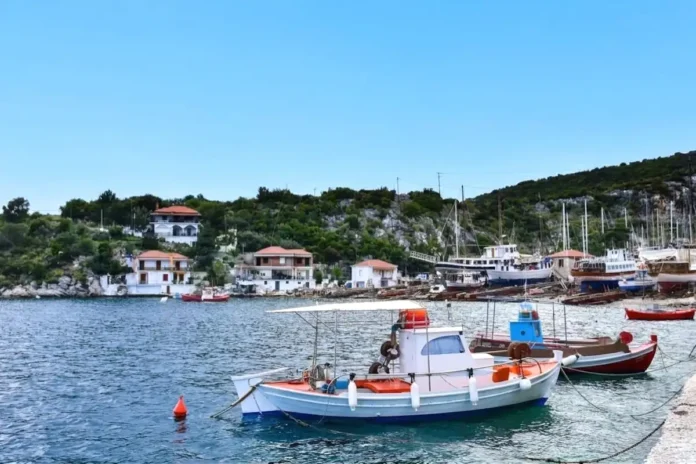
A Community of Thirty Residents Survives Winter on Donkeys, Water Taxis, and Weekly Deliveries
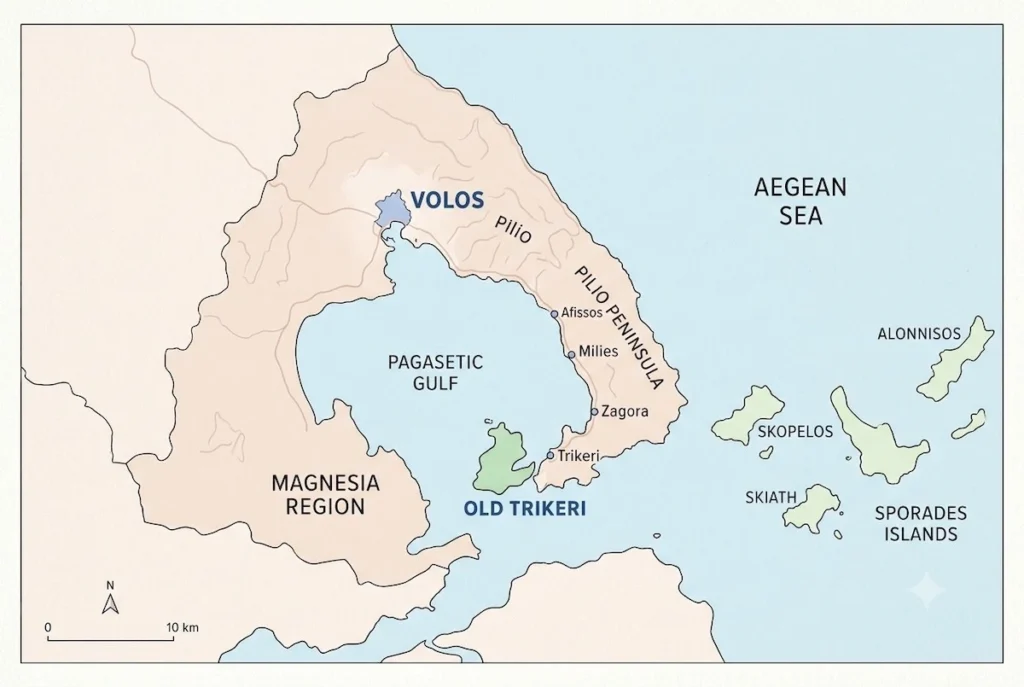
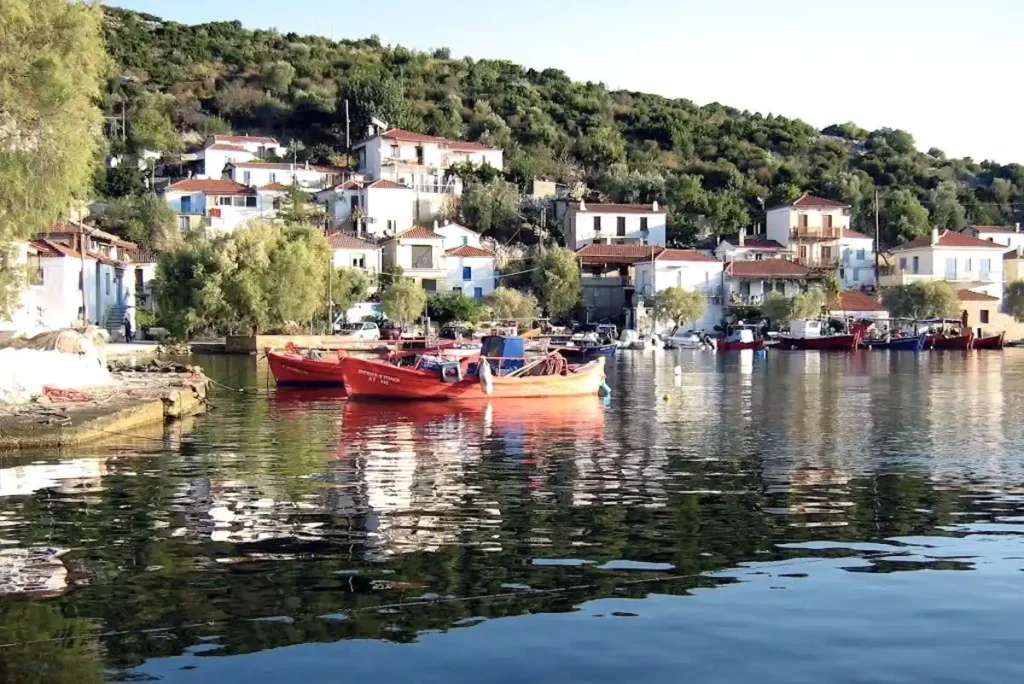
Old Trikeri sits inside the Pagasetic Gulf, close enough to the mainland to see it and far enough to feel like another century. The village has no more than forty houses, a couple of tavernas, and a population that shrinks to somewhere between fifteen and thirty people once the summer crowds leave. For anyone drawn to isolation, meditation, or simply a slower pace, it offers something increasingly rare in Greece: a place with almost nothing to distract you.
Reaching the Mainland by Boat
There are no cars on Old Trikeri, and there never have been. Movement happens on foot, along old stone paths, or with the help of a donkey for anything heavier than a backpack. Visitors leave their cars at Alogoporos, the last point on the mainland road, and cross by water taxi in about five minutes. That short crossing is the island’s only real link to the outside world, and when winter storms close the sea, residents can be cut off for two or three days at a time. People who choose to live here year-round learn to keep a well-stocked pantry and a flexible schedule.
Stocking the Pantry for the Rough Months
The tavernas and small markets that serve summer visitors mostly close once the season ends. Permanent residents do their main shopping across the water, in Agia Kyriaki, Argalasti, or Volos, and coordinate trips around the weather and the boats. Provisions for daily life on the island itself arrive once a week by sea. It is not a hardship exactly, but it does require planning that most newcomers underestimate.
Power Lines and Slow Internet Signals
Electricity reaches the island through an underwater cable, and outages during bad storms are common, though usually resolved within a few hours unless technicians cannot cross the water. Landline internet works but runs slowly. Anyone planning to work remotely from Old Trikeri is better off with a mobile 4G or 5G router, or a satellite connection, both of which perform well in this part of the gulf.
Buying a Home Through Word of Mouth
Real estate here rarely appears on listing sites, since properties are usually registered under the nearby mainland village of Trikeri rather than the island itself. The practical approach is to visit in person, ask around at the harbor, and let arrangements happen on the spot, which is how most sales and long-term rentals are actually settled. Short-term summer accommodation is easier to find and books up quickly in high season. Anyone taking on a renovation should budget extra time and money, since building materials have to arrive by boat and then be carried by hand or donkey to the house.
The Austrian Who Chose Solitude
Old Trikeri has a long history of pulling in foreigners looking for exactly this kind of quiet, mostly from Central and Northern Europe. The tradition traces back to Alfons Hochhauser, an Austrian who first came to the wider Pelion region in 1926 and later leased the island’s abandoned monastery, running it as an eco-hostel for alternative travelers from 1957 to 1969. Today a handful of foreign residents have bought and restored houses on the island, and some of them stay through the winter, living alongside the local fishermen and olive growers.
***