
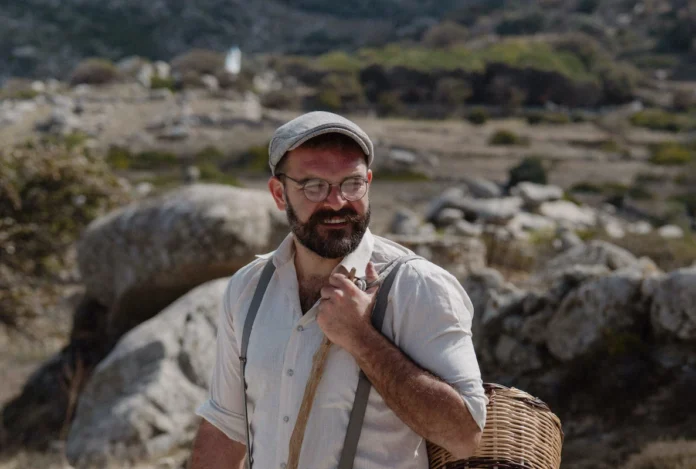
Markos Palamaris: The Founder Of Soul Of Tinos Shares His Expertise
Markos Palamaris was born in 1986 and grew up in Athens, with family roots in villages on the island of Tinos. Since 2022, he has moved to the island and actively participates in its cultural and social life. He studied History in Athens, Management in England, and he worked as an educator at at Lycée Léonin, a prestigious Franco-Hellenic institution with a century-long academic tradition. Today, he channels his academic background and lived experience into Soul of Tinos, an initiative created to share the island’s authentic identity with those who wish to understand it deeply and respectfully.
Through carefully curated, small-scale experiences far from mass tourism, Soul of Tinos offers walks on traditional stone paths, the revival of local customs, and thematic events centered on the history, culture, and spiritual traditions of Tinos. These experiences are designed as meaningful encounters that stay with people long after they leave.
In this exclusive interview, Markos Palamaris speaks about Tinos as a place of year-round life: about community, memory, responsibility, and what it takes for someone from abroad to move beyond being a visitor and become part of a living place. His perspective offers helpful advice for anyone considering Greece as a long-term home.
In your experiences, you avoid crowds and noise. What does a visitor learn about Tinos this way that an ordinary tourist never would?
They learn that Tinos is not a “destination”; it is a living, timeless place.
When the noise fades, you can hear the island: the wind, people breathing, footsteps on the stone paths, the moment you walk to the local grocery, the powerful silence of a small chapel when you light the oil lamp on a Saturday. That is when you understand that beauty here is not just the landscape; it is the relationship between people and stone, land, faith, and community. A tourist sees images. A visitor who comes with respect goes through a cleansing journey, strips things down to the soul, and becomes one with the place.
How important is it for a foreigner thinking of living in Tinos to understand the island’s faith, hard work, and memory?
It is essential, because these are the island’s code.
Faith is not only religion; it is a way of standing in life. Hard work is not just a job; it is dignity, persistence, caring for the land, craftsmanship, traditions, dance, and love. Memory is not nostalgia; it is knowing who came before you and what they left behind.
Without this understanding, Tinos looks like a beautiful setting. With it, Tinos feels like home.
Do you believe that real contact with history, villages, and people helps someone decide more consciously whether life here suits them?
Yes, because only then do you experience Tinos as it truly is, not as it appears in August.
Tinos is villages, everyday life, familiar faces, small responsibilities, winter journeys, shared joys, and shared difficulties. When people remember you in a village, when you sit for coffee “for no reason,” when you help at a celebration or a harvest, you begin to see whether you truly belong. The decision to live here permanently is not made with a view. It is made through bonds.
What is Tinos like in winter? What side of the island reveals itself then?
In winter, Tinos becomes real, stripped of decoration and bare.
The staging disappears and the core remains: people, needs, care. It is quieter, sometimes harsher, but also more human. This is when you see what “community” really means: who checks if you are okay, who helps when things are difficult, who invites you into their home.
Winter here is not the off-season. It is the heart.
What are the greatest advantages and the real challenges of winter life for someone from abroad?
Advantages: real quality of life, more meaningful time, less consumption, deeper relationships; closeness to nature through farming, walking, silence, horizon, and rhythm; community, if you enter respectfully, with warmth, humanity, and solidarity.
Challenges: isolation and weather, especially transport and connections when the island feels cut off; personal struggles that sometimes surface during relocation, including alcohol or substance use by people, locals and foreigners alike, who are trying to escape unresolved inner issues in the wrong way; and the fact that your attitude is very visible in a small community, where inconsistency or lack of respect counts double.
What would you say to someone who fears winter isolation?
I would tell them not to ask how they will endure it, but how they will put down roots.
Isolation is not overcome by activities alone; it is overcome through relationships and purpose. If someone comes willing to offer, to learn, and to follow the local rhythm, winter can be incredibly gentle and warm. And one more thing: winter in Tinos asks you to become friends with silence. If you manage that, it will reward you
Can a foreigner become “one of us” ?
Yes, not through words, but through time and attitude. Being “one of us” is not a title. It means being trusted, being seen as reliable, showing consistency. It means respecting the place without trying to “fix” it according to your own standards. When people see that you love without demanding, the door opens wide, and you suddenly have a thousand homes.
How open is the local society to people from other countries?
Tinos is open, but not careless. There is full acceptance of people regardless of origin, beliefs, or orientation. However, the island will not give you its heart in a week; it will test you. This is not rejection, but a form of protection for a small community that survives on trust and consistency and has often been hurt by people who claimed to “love” it, locals and foreigners alike. Those who come with respect, humility, and a desire to participate usually find their place.
The best ways for a foreigner to integrate and not remain just a visitor?
Learn basic Greek. Be consistent: say what you mean and do what you say. Support the local economy in a meaningful way through small shops, producers, and craftspeople. Participate in festivals, events, clean-ups, associations, and volunteering. Respect the unwritten rules: quiet, balance, politeness, discretion.
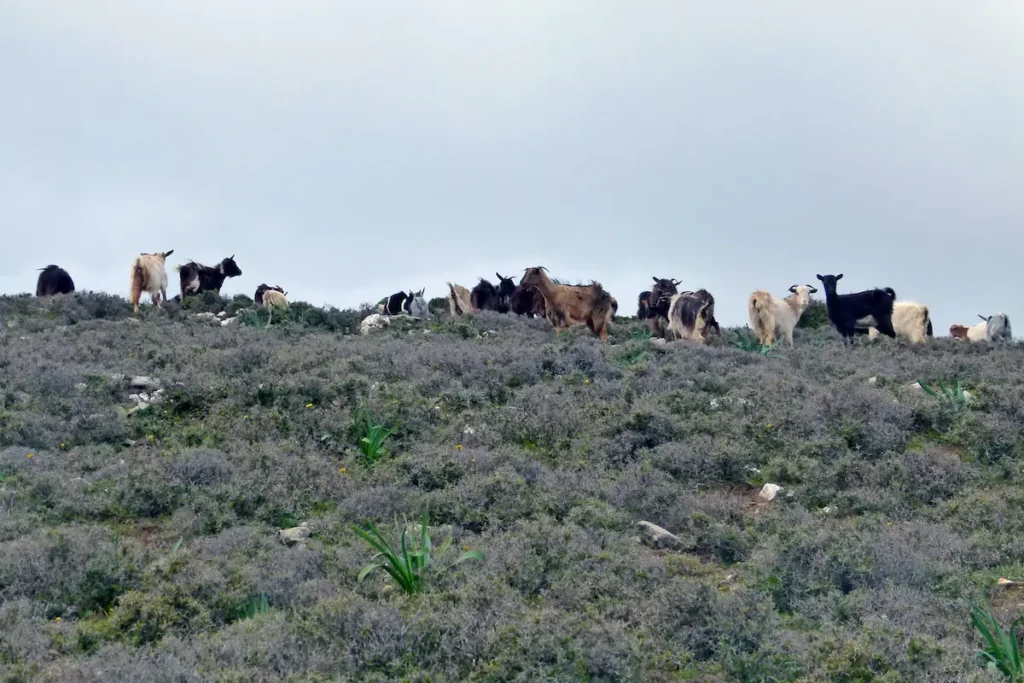
Are there activities, communities, or informal networks that help build connections?
Yes, and they are often unofficial. They grow around cafés and daily routines where familiarity is built; cultural associations, parishes, and volunteer groups; workshops, traditional crafts, local work, and small projects; hiking and nature, which bring people together in Tinos.
The key is to go not to consume, but to belong.
Sustainability and environmental protection are central to Soul of Tinos. How important is this for a new permanent resident?
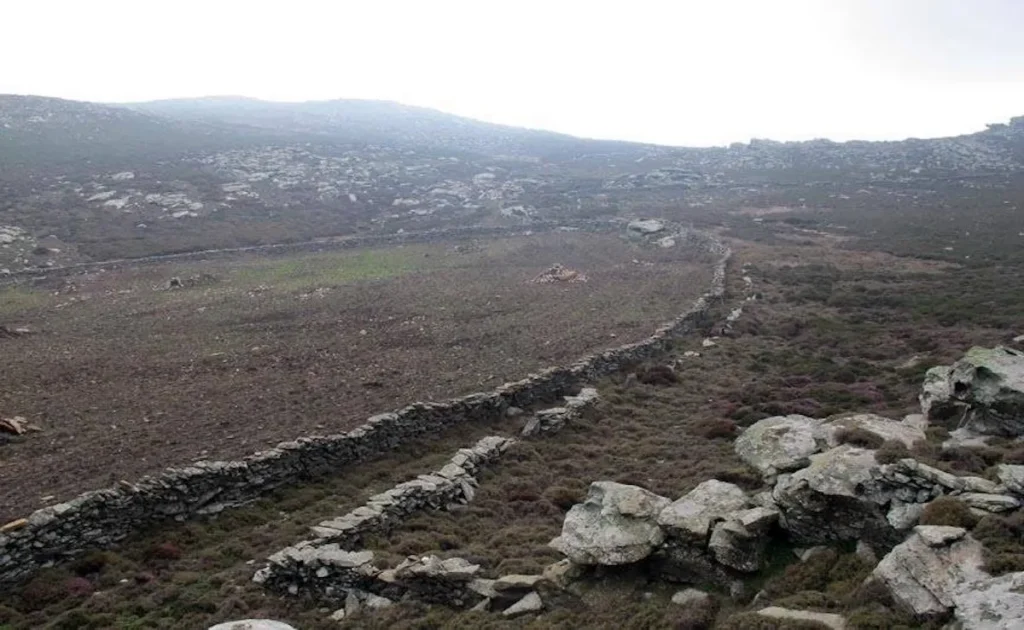
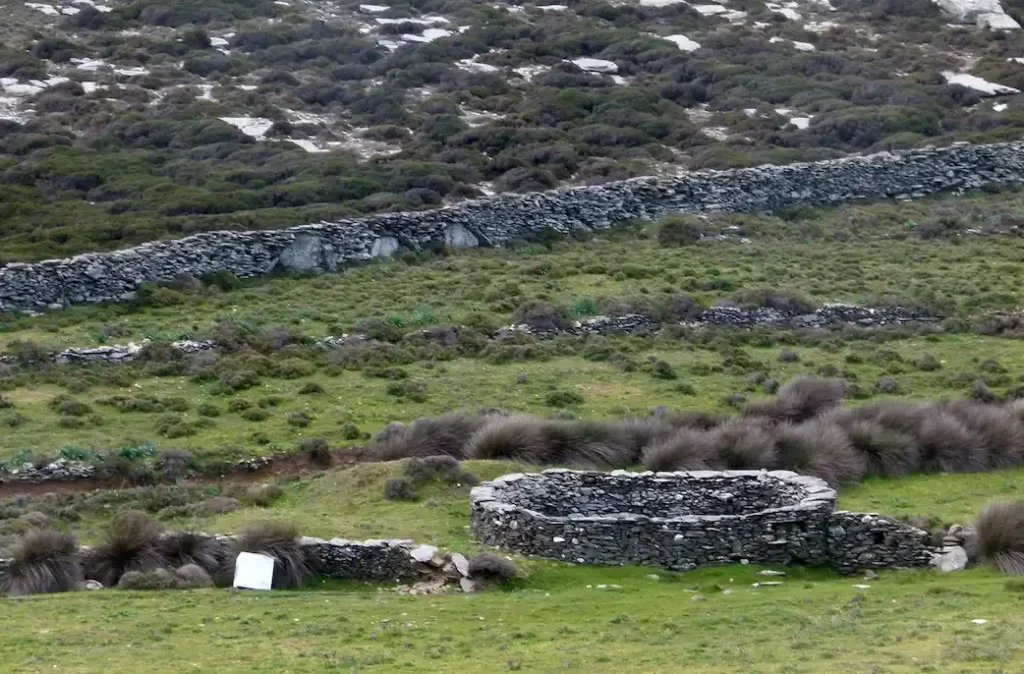
It is crucial, because living here makes you understand that the island is not just scenery; it is a fragile system. Water, stone walls, rural roads, small terraces, beaches, land, all have limits. Sustainability is not an ideology; it is a practical way to ensure there is a tomorrow.
Anyone who wants to stay must live with moderation and care.
What responsibility does a new resident, especially a foreigner, have toward the place that hosts them?
Not to arrive as an “owner of experiences,” but as a guest who becomes a participant.
Responsibility means not pushing the place to become something else, not supporting practices that damage the island, respecting the community, listening before speaking, offering before asking. Above all, remembering that this place has memory, and so do its people.
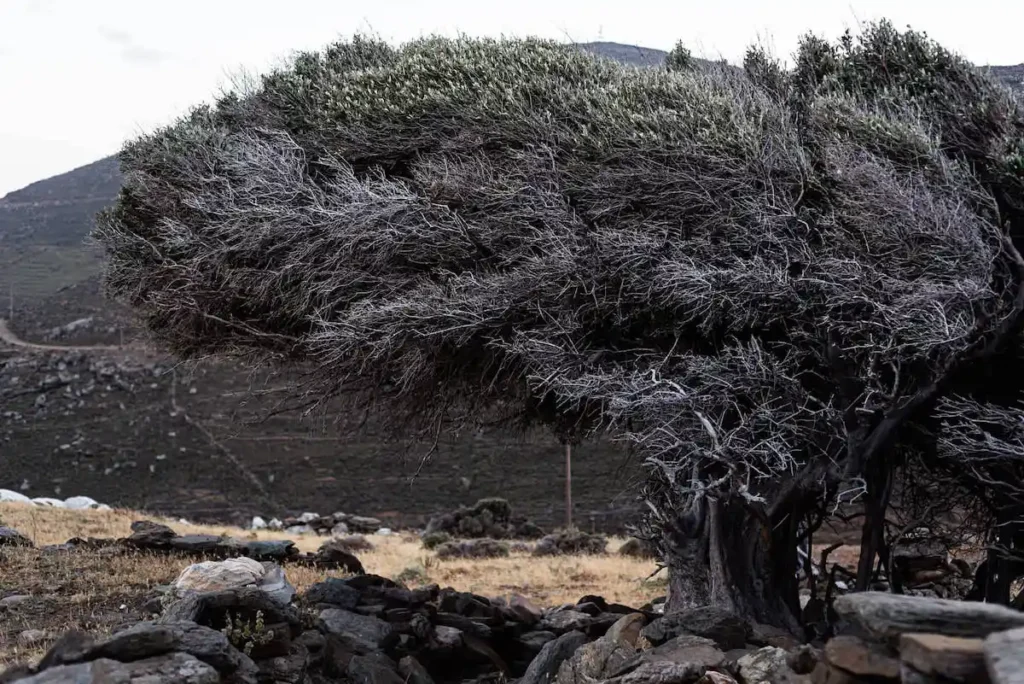
Can the presence of retirees from abroad positively shape the future of Tinos, and under what conditions?
Yes, if it is done in the right way. Positively, it can mean winter stability, support for the local economy, life in the villages, and exchange of experience. But conditions matter: respect for scale, support for the community, no dominant mindset, no pressure for overdevelopment, and real participation in local life. If newcomers arrive as part of the place and not as a parallel world, it can be a blessing.
How would you describe the person who can truly thrive living permanently in Tinos?
Someone who does not constantly need external noise to feel well; who loves simplicity, rhythm, nature, and substance; who tolerates uncertainty and does not panic when things move slowly; who wants to learn, respect, and contribute; who finds joy in small things like a walk, a conversation, a celebration, or working the land. In short, someone who does not come to be saved by the island, but to live alongside it.
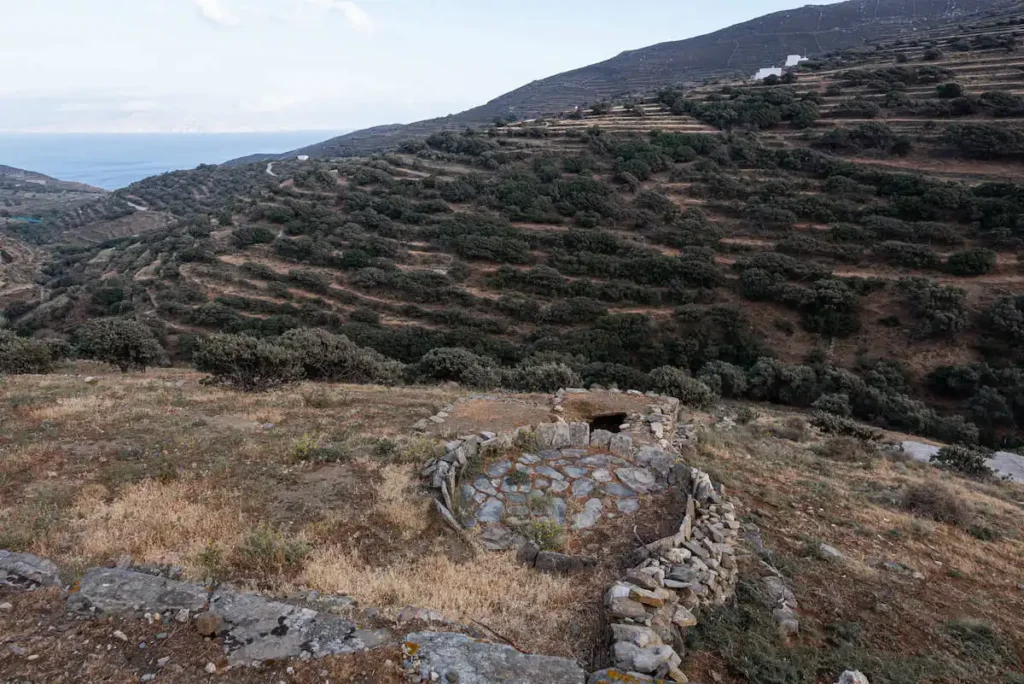
What would you advise someone before making the final decision to settle permanently?
Come to Tinos in winter and stay long enough to see reality. Talk to local people of different ages and villages. Think practically about work or income, transport, healthcare, housing, and daily needs. Arrive with an integration plan: language, participation, a role in the community. And finally, ask yourself one simple question: “Can I love this place even when it does not give me everything easily?” If the answer is yes, then Tinos can become not just a choice, but a root.
For a deeper look at the administrative and social realities of the island, read our complete guide to living in Tinos.
ABOUT THE EXPERT
Markos Palamaris
Educator and Expeditionist
Soul of Tinos
Public Commercial Registry Number (ΓΕΜΗ): 165617738000
souloftinos@gmail.com
***