
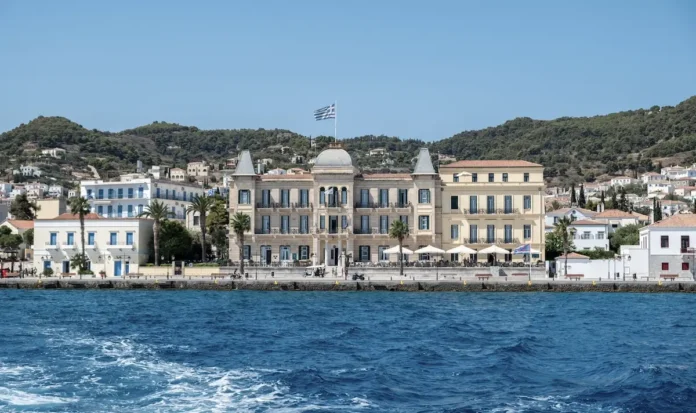
A calm, aristocratic island, close to Athens
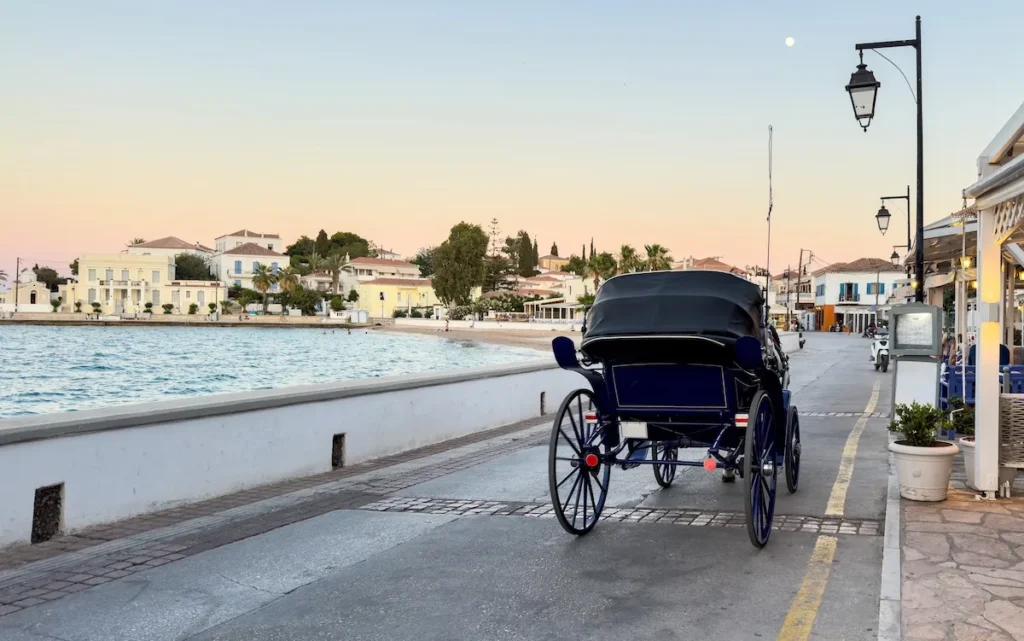
Spetses is one of the most elegant islands in the Saronic Gulf. It lies close to Athens but far from the noise of the capital. Pine forests reach the sea, neoclassical mansions line the waterfront, and the absence of private cars shapes daily life in ways visitors notice immediately.
For retirees, the island offers a rare balance: beauty and culture without the scale and intensity of larger destinations. Spetses has a long history as a maritime and cultural center, and that legacy still shapes its character. It attracts people who enjoy walking, cycling, and spending time outdoors rather than those seeking nightlife or urban energy.
Life here is seasonal but not empty in winter. The permanent population stays active year-round, and the island keeps a quiet rhythm even when tourism fades. Cafés stay open, ferries continue to run, and daily life becomes more local. Spetses suits retirees who value atmosphere, architecture, and a gentle pace. It is less suitable for people who need frequent specialist medical care, rely on driving, or prefer large urban environments.
Location, Access & Connectivity
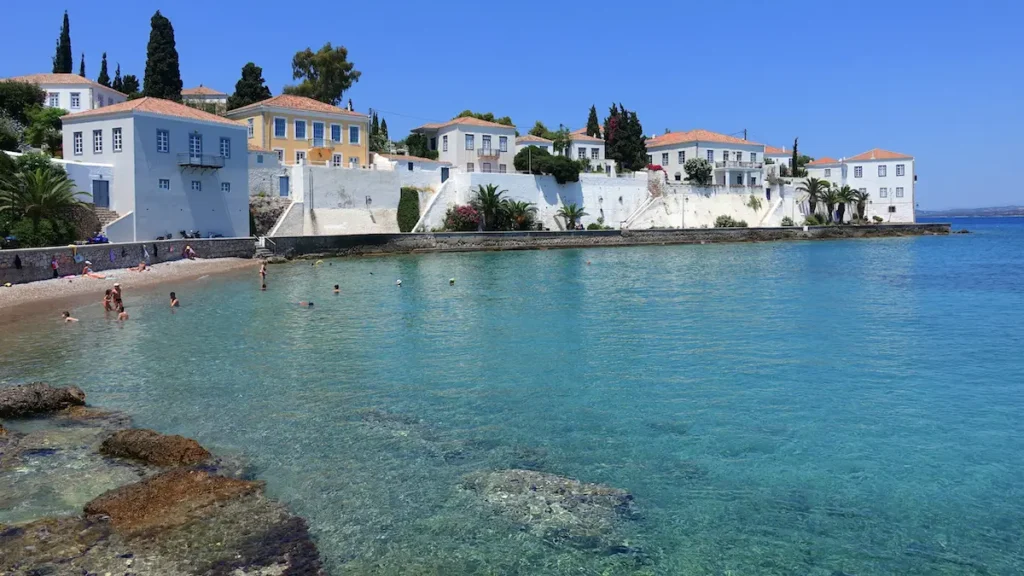
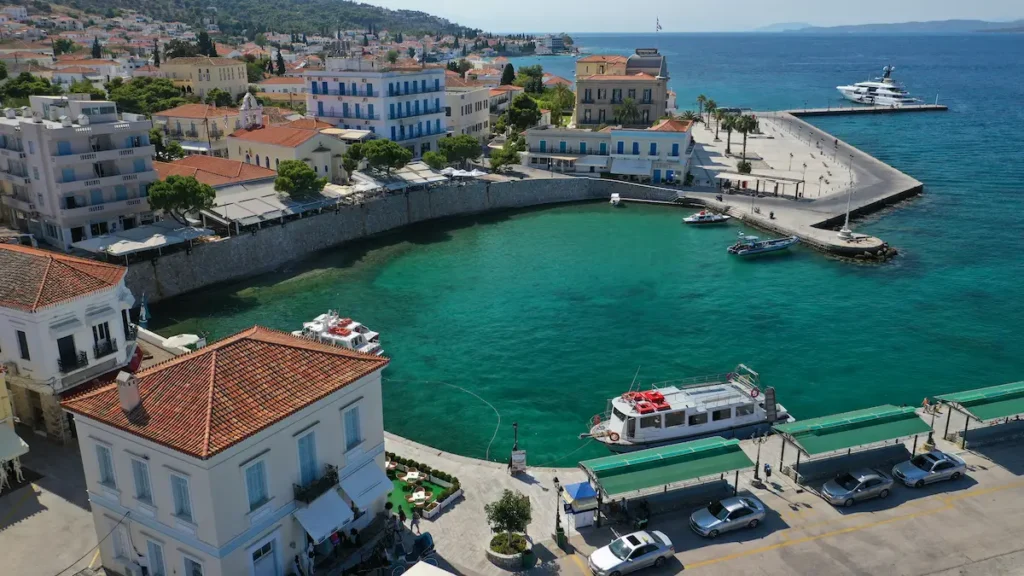
Spetses sits at the southern entrance of the Argolic Gulf, near the Peloponnese coast. There is no airport. Access is by sea. High-speed ferries connect the island with Piraeus year-round, taking two to three hours depending on the vessel and stops. In winter, schedules are reduced, but daily crossings normally continue.
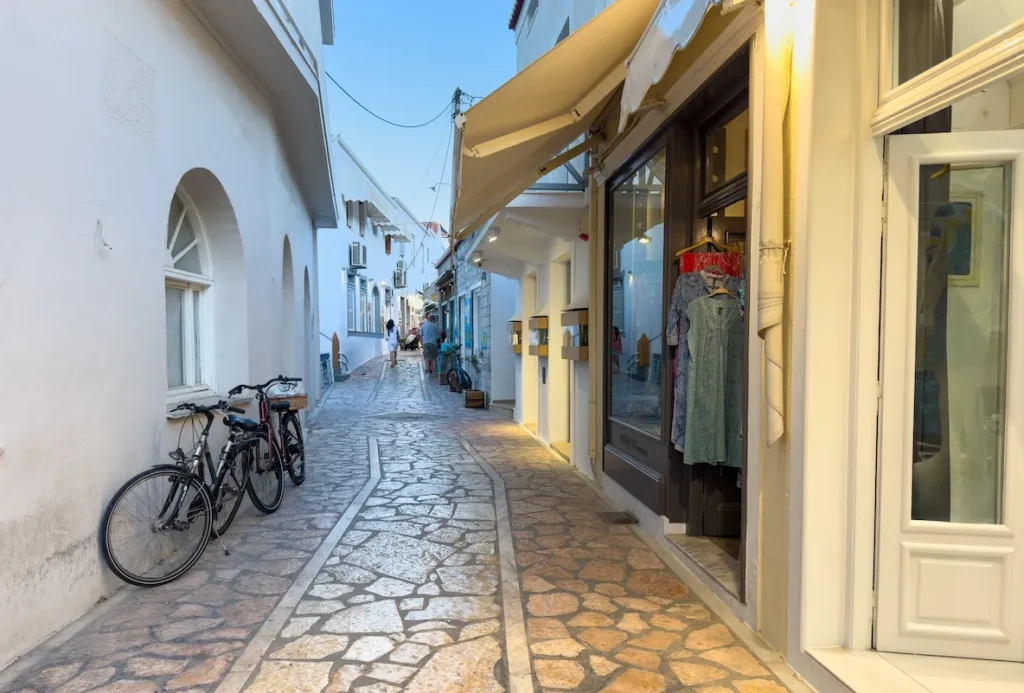
An alternative is to drive from Athens to the mainland port of Kosta, about three hours away, and cross to Spetses by ferry or water taxi in 10 to 30 minutes. Residents often prefer this route for emergencies or late arrivals. Spetses is essentially a pedestrian island. Private cars are tightly restricted. People move on foot, by bicycle, or by local and water taxis. The absence of traffic creates a quieter rhythm rare in most Greek destinations.
For retirees, connectivity is generally good but requires planning. Visiting family can reach the island within half a day from Athens airport, but winter weather can occasionally delay ferries. Medical travel to mainland hospitals is feasible but not immediate.
Climate & Seasonal Rhythm
Spetses has a Mediterranean coastal climate moderated by the sea. Summers are warm but tempered by breezes. Average highs in July and August reach around 29–30°C (84–86°F), with comfortable evenings near the water. Winters are mild. January and February daytime temperatures average around 12–14°C (54–57°F), with cool nights and occasional storms rather than prolonged cold. Rainfall concentrates in winter, and strong winds can affect ferry schedules.
Spring and autumn are often the most pleasant seasons. Temperatures are moderate, walking becomes easier, and the island regains a calm rhythm after summer crowds. Most homes require heating in winter, usually electric or oil-based, but severe cold is rare. Cooling is necessary in midsummer, though many traditional houses remain naturally ventilated. The most significant seasonal change is social rather than climatic. Summer brings visitors, festivals, and activity. Winter brings quiet streets and a slower pace that many retirees either cherish or find challenging.
Daily Life & Local Community
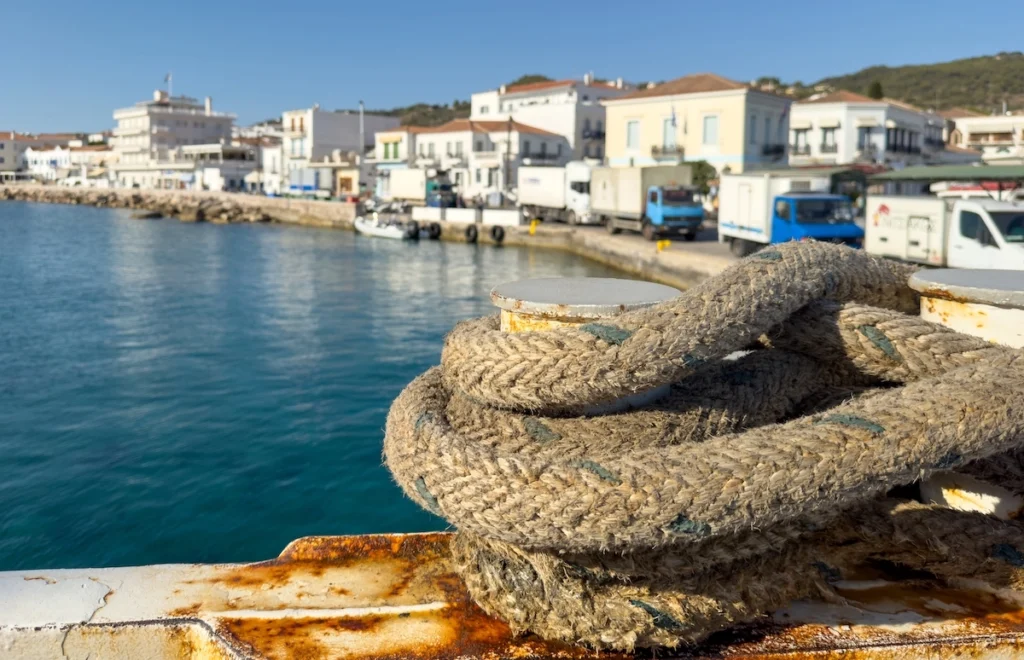
Spetses has a permanent population of only a few thousand. Daily life revolves around a close-knit community. People recognize each other in cafés, shopkeepers know regular customers, and the rhythm of the port structures the day.
One of the island’s most notable landmarks is the Anargyreos & Korgialeneios School of Spetses, a prestigious boarding school founded in 1923. In the 1950s, the school employed John Fowles as an English teacher. During his time there, he drew inspiration that later shaped the setting of his celebrated novel The Magus. This literary and educational heritage gives Spetses a refined atmosphere compared with many tourist islands.
Daily life is simple. Morning errands, walks along the seafront, and afternoon coffee are central rituals. Social life develops naturally through routine. English is widely spoken in shops, restaurants, and services, though Greek becomes important for deeper integration. Foreign residents are present but not numerous, which means newcomers often become visible members of the community rather than remaining anonymous.
Services operate year-round but on a smaller scale in winter. Some restaurants and hotels close, but essential shops, bakeries, and cafés remain open. The absence of private cars makes walking a necessity rather than a hobby. For many retirees, this becomes one of the island’s greatest pleasures.
Healthcare & Essential Services
Spetses has a local health center providing primary care, first aid, and basic medical services. Pharmacies operate year-round, and general practitioners and some private doctors are available on the island.
Specialized treatment, major diagnostics, and surgery require travel to mainland hospitals. The nearest major facilities are accessible via the short crossing to the Peloponnese, followed by road transport. In serious cases, patients are transferred by boat or helicopter depending on conditions.
For retirees in good health, the system is workable. Many residents combine local care with periodic visits to Athens for checkups and specialists. Those with chronic conditions requiring frequent hospital visits should plan carefully.
Cost of Living Overview
Spetses is not a budget destination. Prices reflect its reputation and proximity to Athens. Long-term rents are lower than seasonal lets but higher than mainland towns. Availability tightens in spring and summer.
Utilities are typical for southern Greece. Heating costs in winter are moderate, but summer electricity bills can be significant in older homes. Food costs run slightly above mainland levels. Local markets, bakeries, and small supermarkets cover daily needs, but selection is smaller than in cities. Many residents shop periodically on the mainland for bulk purchases.
Overall, Spetses is comparable to other refined Saronic islands. More expensive than small mainland towns, but less costly than major Cycladic hotspots. For retirees with a stable pension or savings, the island is affordable but not inexpensive.
Housing & Real Estate Landscape
The housing stock includes neoclassical townhouses, traditional island homes, and newer villas on the outskirts. Many properties are older and may require renovation, particularly regarding insulation and plumbing. Rental supply is limited year-round and becomes scarce in summer.
In the movie The Lost Daughter, Olivia Colman arrives at her long-term rental, where Ed Harris, playing an expat who has cared for a house on Spetses for over 30 years, waits to hand her the keys. The bowl of fresh fruit inside, a simple touch many visitors genuinely encounter, reflects the country’s culture of everyday hospitality.
Buying property is possible but often involves older buildings requiring careful inspection and renovation planning. The main town near Dapia offers walkability and proximity to services but can be busy in summer. More distant areas are quieter but require bicycles or taxis.
Long-term rentals typically range from €800 to €1,500 per month for modest to mid-range homes. Purchase prices often fall around €4,000 to €7,000 per square meter or more, reflecting Spetses’ reputation as an upper-class destination long associated with shipping dynasties, prominent Greek families, and occasional visits by European royalty.
Lifestyle, Nature & Leisure
Life in Spetses is lived outdoors for most of the year. Not only along beaches, cafés, and tavernas, but also within the secluded interior courtyards of its mansions, hidden behind tall wooden gates. Tourists never see these spaces. Residents often do.
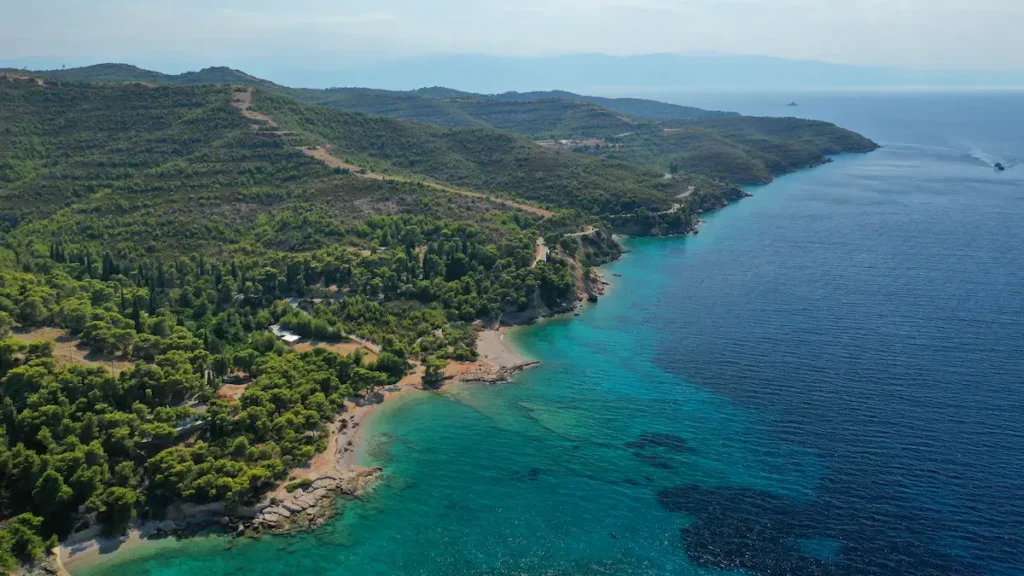
The coastal road circling the island is ideal for walking and cycling, especially in the early morning and evening. Pine forests, small coves, and clear water are part of everyday experience, not weekend escapes. Many residents swim well into autumn.
Cultural life is modest but distinctive. The Armata Festival in September commemorates a historic naval battle with concerts, exhibitions, and the burning of a ceremonial ship in the harbor. The Spetses Mini Marathon in early autumn brings international participants and a friendly energy to the island. Smaller art exhibitions, music evenings, and local celebrations take place through summer. These events give rhythm to the year while preserving the island’s calm character.
Local Reality Check
From November to March, Spetses becomes a different place. Streets are quieter, ferry schedules are reduced, and many restaurants close. Wind can delay travel, and errands may take longer than expected. Social life shifts indoors. Residents rely more on routine, friendships, and small gatherings.
Many Athenian homeowners continue to visit throughout the year, maintaining a steady flow of life even in quieter months. Experiencing the island in winter before deciding to live there is one of the best ways to judge whether Spetses truly fits your lifestyle.
Who This Destination Is Best Suited For
Spetses suits retirees who appreciate a calm, elegant environment and a daily life shaped by walking, sea air, and simple routines. It works well for couples or individuals in good general health who are comfortable traveling occasionally to the mainland for specialist care. People who value architecture and atmosphere, enjoy culture in small doses, and prefer a close-knit community over anonymity often feel at home here.
The island may be less suitable for retirees on a tight budget, those needing frequent hospital visits, or anyone who finds long quiet winters difficult. Spetses rewards those who are content with a life measured in walks, conversations, and the changing light over the sea.
***