
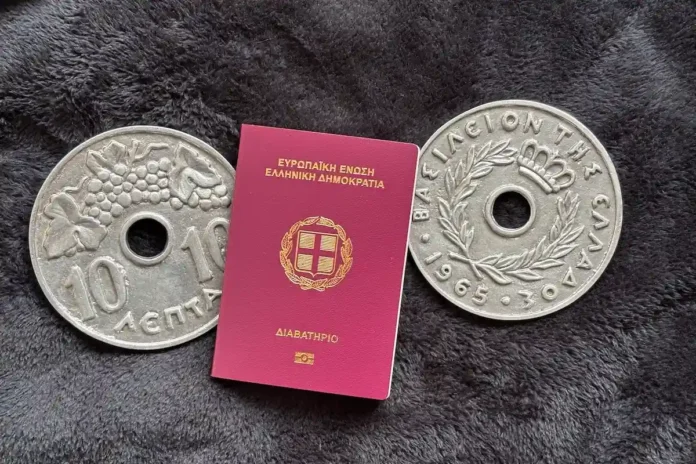
How Heritage Opens the Door to Greece
For many foreigners considering a permanent move to Greece, the question of legal status often comes before anything else. Residence permits, visas, and long-term stability are practical concerns that shape any decision to relocate. Yet for people with Greek roots, there is another path, one that does not depend on investment thresholds or immigration quotas, but on family history. Greek citizenship through ancestry remains a powerful and often misunderstood legal right.
Greek nationality law is built on the principle of jus sanguinis, the right of blood. Unlike countries that grant citizenship based on place of birth, Greece recognizes citizenship as something inherited. This means that a person born abroad may still be Greek in the eyes of the law, even if neither they nor their parents ever lived in Greece. What matters is not geography, but lineage.
Who Can Claim Greek Citizenship by Descent
Greek law does not impose a strict generational limit on citizenship by descent. In theory, a person may claim Greek citizenship even if their last Greek ancestor was a great-grandparent. In practice, however, the further back the ancestry goes, the more demanding the process becomes. The Greek state requires proof of an unbroken chain of Greek nationality, demonstrating that citizenship was legally transmitted from one generation to the next without interruption.
For children of Greek citizens, the situation is usually straightforward. If at least one parent was a Greek citizen at the time of birth, the child is generally entitled to Greek citizenship, regardless of where they were born. The main requirement is proper registration with the Greek authorities. Many people in this category are not “applying” for citizenship so much as asking for its recognition.
Grandchildren of Greek citizens often face a more complex reality. In many immigrant families, Greek parents never registered their children with the Greek state, either because they were unaware of the requirement or because they believed it was unnecessary. As a result, the citizenship chain exists legally but not administratively. In such cases, the Greek authorities may require the parent’s birth and marriage to be registered retroactively, or even the parent’s citizenship to be formally recognized first, before the grandchild’s claim can proceed.
The Central Role of the Greek Municipality
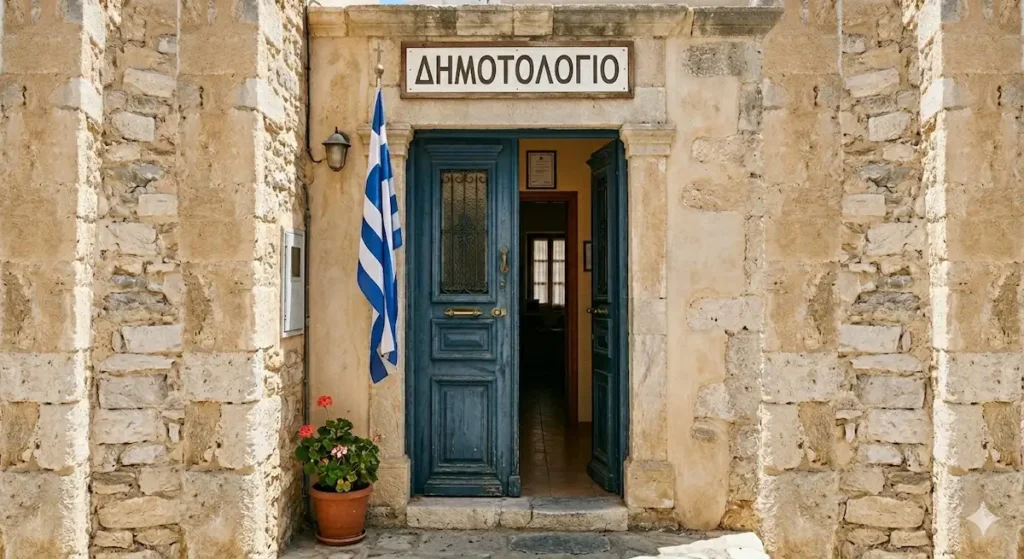
At the core of every successful citizenship-by-descent case lies a Greek municipality, known as the Demotologion. This municipal registry is the official record of a citizen’s legal existence within the Greek state. It documents family status, marital changes, and civic identity. Without a record in the Demotologion, proving Greek citizenship becomes extremely difficult.
Registration in a municipality was automatic for ancestors who were born in Greece. During periods of mass emigration, parents often neglected registration for those born abroad. Many applicants discover that while their grandparent was born Greek and lived as a Greek, the paperwork trail stops at the border.
When municipal records are missing or unclear, the process shifts from simple recognition to reconstruction. Greek authorities may accept alternative documentation, such as old family certificates or church records, but the municipality remains the final authority that must confirm the ancestor’s status.
Documents, Proof, and the Weight of Paper
The citizenship process is, above all, a documentary exercise. Applicants must demonstrate identity, family connection, and legal continuity. This usually requires presenting birth and marriage certificates for every generation linking the applicant to the Greek ancestor. These records explain name changes, confirm parental relationships, and establish the legal passage of citizenship.
Documents issued outside Greece must be formally authenticated, most commonly through an apostille stamp, and translated into Greek. Translation is not a simple linguistic task but a legal one. Only certified translations are accepted, and even small discrepancies in names or dates can lead to delays or requests for clarification.
In older cases, especially those involving early 20th-century migration, civil records may be incomplete or missing altogether. In these situations, baptismal certificates often play a crucial supporting role, particularly in establishing parentage and family ties when state records are unavailable.
Applying Through the Greek Consulate
For applicants residing outside Greece, the process is handled by the nearest Greek embassy or consulate. Applications must be submitted in person and include the full documentary file. The consular officer’s role is not to approve citizenship but to verify the completeness of the application before forwarding it to the competent authority in Greece.
Once submitted, the file is reviewed by the Regional Directorate of Citizenship. This stage can take considerable time. Parent-based applications may be processed within months, while cases involving grandparents or earlier ancestors often require two to three years. The waiting period can feel opaque, but delays are typically administrative rather than substantive.
When the application is approved, the applicant is invited to take an oath of allegiance to the Greek state. This is the final formal step before registration as a Greek citizen and the issuance of identity documents.
Dual Citizenship, Europe, and Practical Consequences
Greek law allows dual citizenship without restriction. Applicants are not required to renounce their existing nationality, making Greek citizenship particularly attractive for those who wish to maintain ties to multiple countries. As Greece is a member of the European Union, Greek citizens enjoy the right to live and work freely across all EU member states, along with access to public healthcare and education systems in Greece once residency is established.
Citizenship as Legal Status and Personal Return
For many applicants, Greek citizenship is not merely a legal convenience. It is a symbolic return, a way of formally reconnecting with a country that shaped their family’s past. Once recognized, citizenship can be passed on to future generations, ensuring that the bond with Greece is not lost again.The process is rarely fast and never effortless. It demands patience, attention to detail, and an acceptance of bureaucracy. However, for individuals of Greek descent, it continues to be one of the rare routes in Europe where history, law, and identity come together to create a gateway, not to a new nation, but to a familiar one.
***
For a step-by-step roadmap to the legal and practical process of retiring in Greece, the Greece Retirement Blueprint provides 104 pages of pure administrative data, legal frameworks, and practical steps based on verified journalistic sources.
Access the PDF Edition | Available on Amazon Kindle