
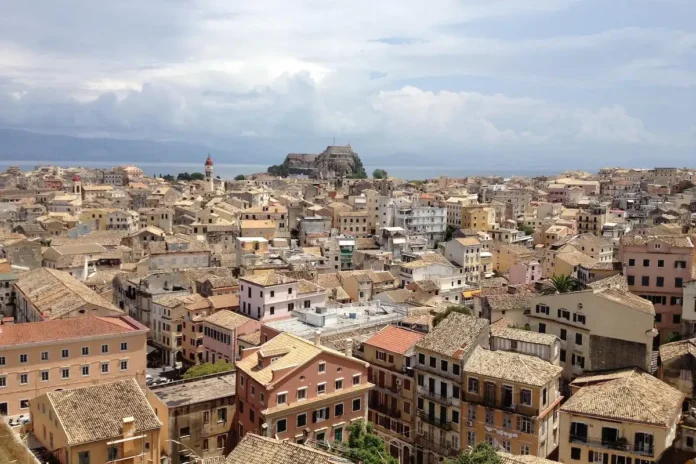
Where four centuries of foreign rule built an easy landing
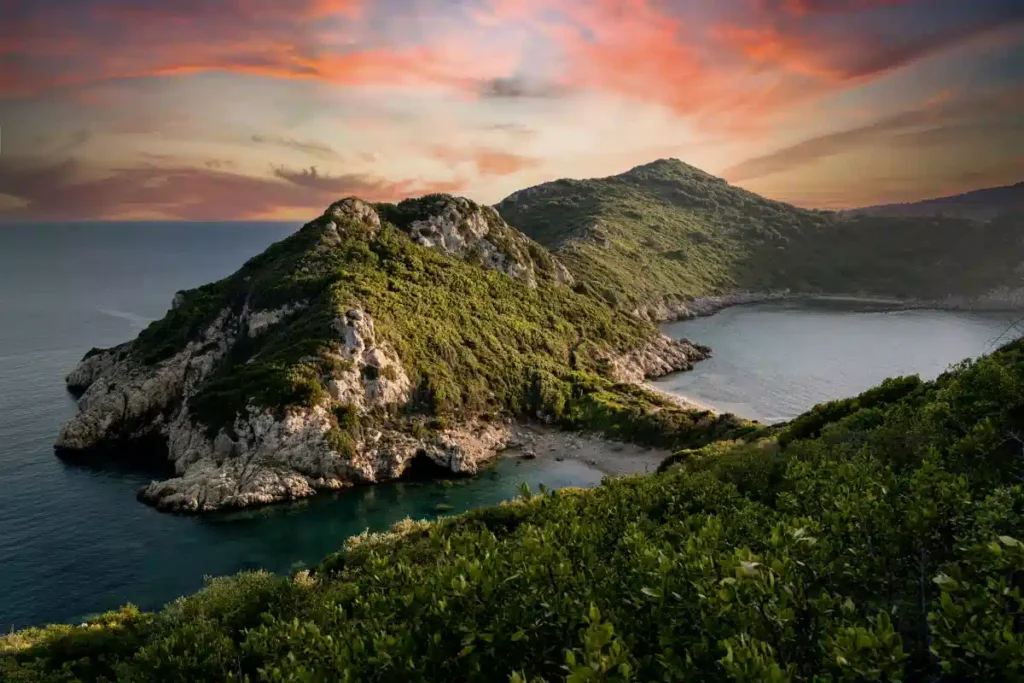
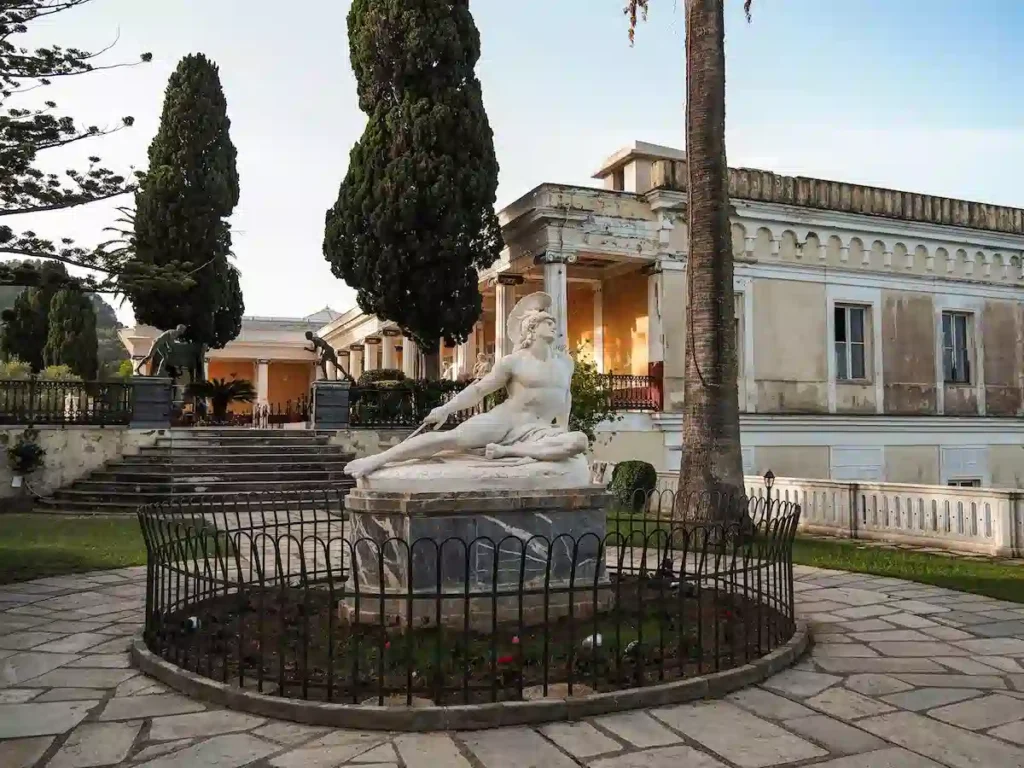
Corfu is green and hilly, carpeted with over four million olive trees, with a working city that has government offices, university, hospitals, and a foreign community that has lived there for centuries rather than decades. The island even kept its own registered aristocracy under Venetian rule, and its old summer palace once belonged to the Greek royal family, a layer of history no other Greek island quite shares. It has a real economy, a real winter population, and a long history of hosting people from other countries.
History matters. Under Venetian, French, and British rule for over four centuries, the island developed an international character long before modern retirement migration began. English is widely spoken across generations, not just among the young, and it is common to find shops, doctors, and professionals used to dealing with foreign clients.
This island suits someone who wants a genuine change of country without giving up easy contact with the rest of Europe, and who is happy trading a strictly rural, quiet island life for a place with an actual town centre. It is less suited to someone chasing the cheapest possible island life, or someone who wants total isolation. Corfu rewards people who value infrastructure, culture, and connection as much as scenery.
Location, access and connectivity
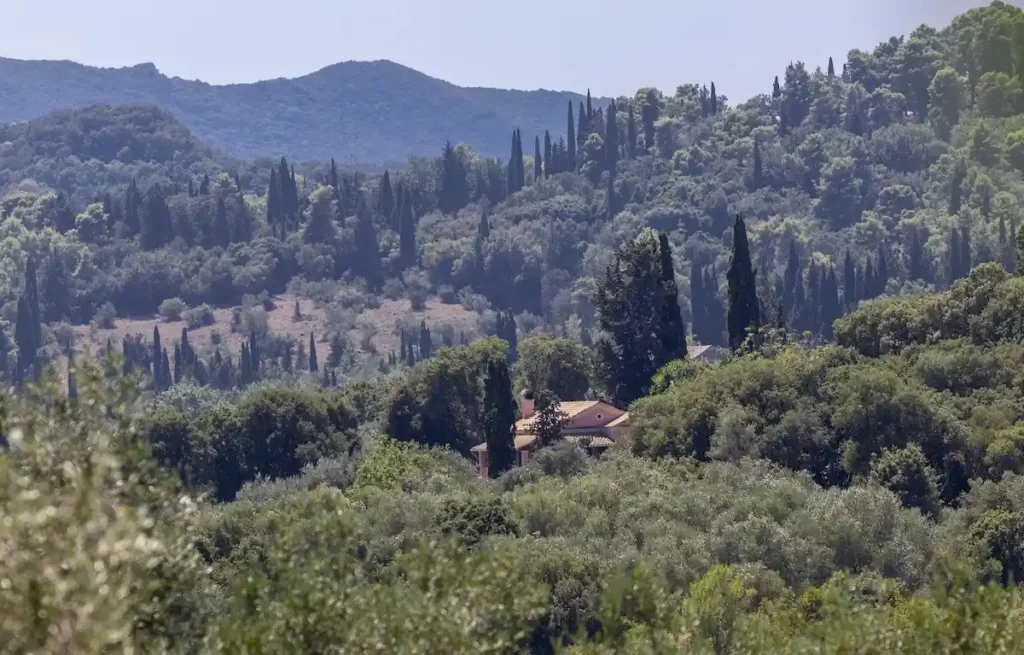
Corfu sits in the Ionian Sea, close to the coast of Albania and within reach of mainland ports. Corfu International Airport runs year-round flights to Athens and adds direct seasonal connections to major European cities between April and October. This direct air link to Europe is one of the island’s biggest practical advantages for a foreign retiree who still needs to visit family or handle affairs abroad.
Ferries connect the port of Corfu to Igoumenitsa on the mainland throughout the year, with an additional direct route to Ancona and Bari in Italy. That Italy route matters for a particular kind of retiree: the ones willing to drive their own car over and spend half the year on the island, splitting their time between two countries without ever needing to fly or leave the vehicle behind.
For a retiree, this connectivity has practical value beyond travel for pleasure. It shortens the journey for medical referrals to Athens or the university hospitals in Ioannina, and it makes visits from children or grandchildren far simpler to plan than on islands reachable only by long ferry crossings. Winter can still bring flight and ferry disruptions in bad weather, so anyone considering the island should ask how often services are cancelled outside summer, not assume the June schedule holds all year.
Climate and the rhythm of the seasons
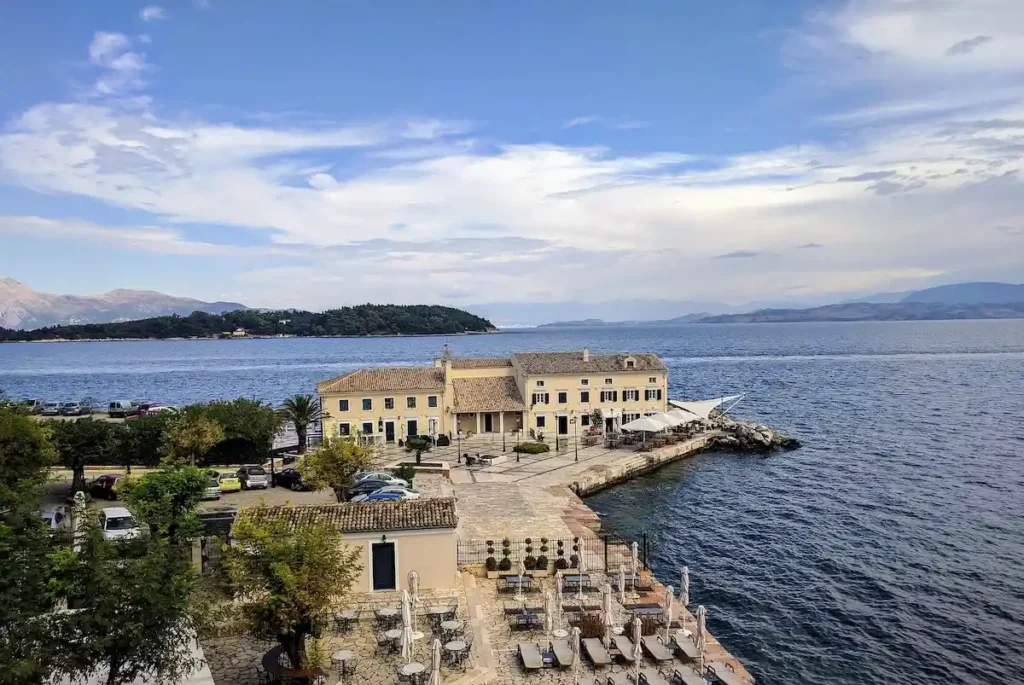
Summers on Corfu are warm and sunny, typically between 28°C and 33°C, softened by sea breezes. Winters are mild by northern European standards, generally 8°C to 14°C, but they are wet. Corfu receives far more winter rainfall than the drier islands of the Aegean, which is exactly why it stays so green. That same rainfall brings damp, and damp brings a real heating bill.
This is worth taking seriously rather than romantically. A house that feels perfect in July can feel cold and humid in January, and heating oil or electricity for heat pumps becomes a genuine monthly cost between November and March. Anyone seriously considering a property here should ask directly how the building performs in winter, not just how it photographs in summer.
The shoulder seasons, spring and autumn, are often described by residents as the most comfortable months: warm enough to be outside, quiet enough to feel like a real place again. For daily life, the practical question is not whether the weather is pleasant, but whether a home is genuinely livable through a damp, rainy winter, since that is the season that tests a retirement decision, not the season that sells it.
Daily life and the local community
Corfu has one of the largest permanent foreign retiree populations of any Greek island, and that changes the texture of daily life considerably. Rather than being one of a handful of foreign households in a small village, a new arrival is joining an established international presence with its own social rhythms: sailing clubs, cricket matches on the town parade ground, hiking groups along the 220-kilometre Corfu Trail, amateur theatre, and a strong classical music culture supported by eighteen active local marching bands.
English is spoken widely and across age groups, a legacy of long contact with Britain and the rest of Europe, so day-to-day communication is rarely a serious barrier, even for people who never learn more than basic phrases. That said, learning some of the local language still opens doors that English alone does not, particularly outside Corfu Town.
Corfu Town itself functions as a genuine year-round city, with shops, professionals, cultural venues, and services that do not disappear once the tourist season ends. This is a meaningful difference from islands where the main settlement empties out after September. Someone can live in a quieter village or coastal area and still have real urban life within a short drive.
Where people settle shapes the experience considerably. The northeast coast, around Kassiopi, San Stefano, and Kalami, has such a concentration of British and northern European homeowners that locals sometimes call it “Kensington-on-Sea.” Central villages like Pelekas or the Ropa Valley offer a quieter, greener, more traditional setting with smaller expat pockets, while the south tends to feel less shaped by the international resort image altogether.
Healthcare and essential services
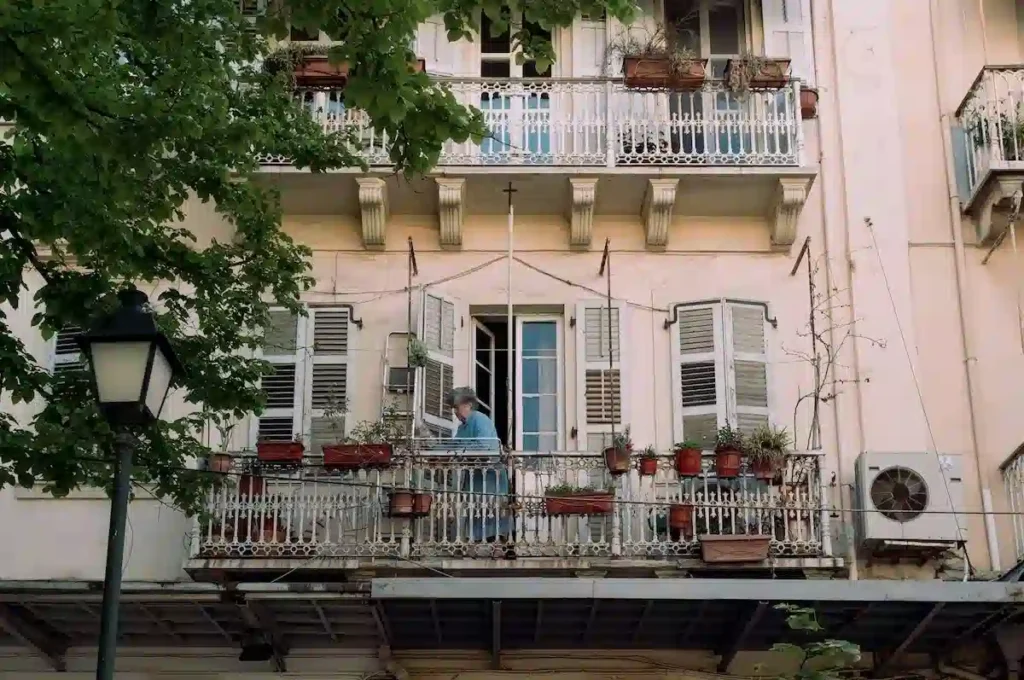
Corfu General Hospital, in Kontokali, provides emergency and standard medical care around the clock and is the main public healthcare facility on the island. Like most island hospitals, it can feel stretched during the busiest summer months, so it helps to understand this seasonal pressure before relying on it as a primary plan.
Private diagnostic centres and clinics operate in and around Corfu Town, and some are specifically noted for English-speaking staff, which matters for anyone not confident navigating medical conversations in the local language. Private international or local health insurance is not simply a sensible precaution here — it is generally required to obtain and renew a long-term residence visa, so most foreign residents already carry it well before healthcare becomes a daily concern.
For complex surgery or specialised treatment, such as advanced oncology, residents typically travel to Athens by air or cross to the university hospitals in Ioannina on the mainland, reached via the ferry to Igoumenitsa. This is honest to state plainly: Corfu does not have the specialist depth of a major mainland city, and no island does. What it does offer is a working hospital, an established private sector, and unusually fast routes off the island when something more is needed. For a retiree weighing healthcare risk, that combination is a real asset even if it is not a complete substitute for a city hospital.
The cost of living
Corfu’s cost of living varies enormously depending on where and how someone chooses to live, from a modest inland village budget to a high-end coastal one. As a general reference, a retired couple can generally live comfortably on roughly €1,800 to €2,600 a month, covering housing, groceries, dining out, utilities, and private health cover — though this range shifts significantly with location, as the housing figures below show.
Rent varies significantly by location. A comfortable one- or two-bedroom home in a smaller inland village typically runs €500 to €900 a month, rising to €900 to €1,500 for a town residence or a coastal property near the sea. As with any island shaped by tourism, proximity to the water and to Corfu Town pushes prices up sharply, while inland and southern areas remain considerably more affordable.
Winter heating deserves its own line in any budget, given how damp the season is; costs for oil or electric heat pumps climb noticeably between November and March. Beyond housing, everyday costs such as groceries, transport, and dining are broadly comparable to other mid-sized destinations, with the local produce and olive oil culture keeping fresh food relatively accessible. The clearest financial lesson for a prospective retiree is not that Corfu is expensive or cheap in absolute terms, but that its cost of living depends heavily on exactly where on the island someone chooses to settle.
Housing and the real estate landscape
Property prices on Corfu vary enormously depending on location and condition, and a retiree should treat this as a spectrum rather than a single island-wide figure. Traditional village homes or inland apartments needing modernisation start in the lower range per square metre, restored apartments in Corfu Town or detached suburban homes sit considerably higher, and prime coastal real estate along the northeast corridor commands the highest prices on the island by a wide margin.
Long-term, year-round rentals around Corfu Town run at a fairly consistent rate per square metre per month, though this can shift depending on the season and how much of the local rental stock is pulled toward short-term tourist lets instead. That seasonal pressure on the rental market is worth understanding before committing to a location, since availability and price can shift noticeably between winter and peak summer.
Foreigners, both from the EU and outside it, can buy property here without unusual restriction, and non-EU retirees often use the Golden Visa investment route or apply through the Financially Independent Person visa pathway. The honest framing for a retirement guide is that Corfu is not a bargain island; the interesting opportunities tend to sit slightly inland, in villages or less fashionable corners, where a buyer is paying for year-round livability rather than a holiday view.
Lifestyle, nature and leisure
Daily pleasures on Corfu lean toward green and social rather than purely coastal. The island’s abundant olive groves, cypress trees, and woodland give it a lush, almost countryside feel that is unusual among Greek islands, and it suits people who enjoy walking, gardening, and time outdoors beyond the beach. The 220-kilometre Corfu Trail draws a steady community of hikers, and sailing, cricket, and amateur theatre all have active local followings that welcome newcomers.
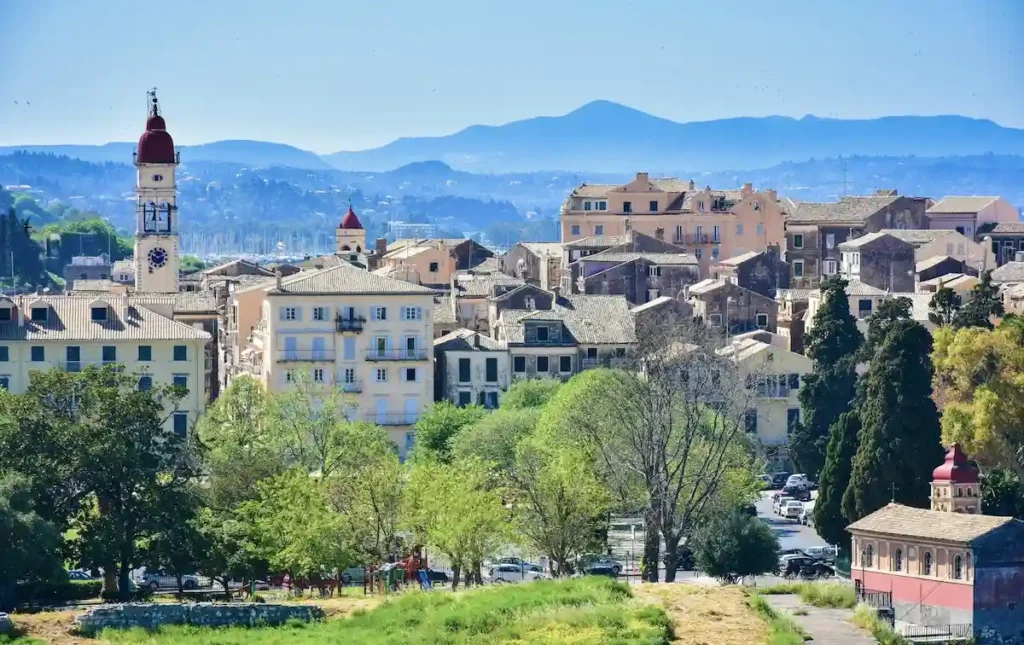
Corfu Town itself carries genuine architectural and cultural weight, with its Venetian fortresses, the Spianada square, and the arcaded Liston promenade giving daily café life a distinctly different backdrop from a typical island town. Life here is walkable in the historic centre, with cafés functioning as informal social hubs the way they do throughout the country.
Music runs deeper here than almost anywhere else in the country, to the point that Corfu is often called the island of music. Eighteen philharmonic bands are active across the island, each with its own history and following, alongside a number of music schools and choral societies that keep classical training and choir singing part of everyday community life rather than something reserved for concert halls. For a retiree with any interest in music, whether as an audience member or a participant, this is a genuinely rare depth of local culture to plug into.
The kitchen carries the same Venetian imprint as the architecture. Local plates lean on slow-cooked sauces and spice blends rarely found elsewhere in the country — rooster or beef simmered for hours with cinnamon and cloves, or fish poached simply in olive oil and lemon. The kumquat, a small citrus fruit brought to the island in the nineteenth century, has become something of a local emblem, turned into liqueurs, marmalades, and spoon sweets sold across Corfu Town. For a retiree who enjoys cooking or simply eating well, this is one of the more distinctive food cultures anywhere in the country.
What stands out is how much of this cultural and natural life continues outside the tourist calendar. Music, walking groups, and community events run through the quieter months as well as the busy ones, which is not something every island destination can claim.
Life when the summer crowd leaves
Corfu’s international popularity is genuinely useful for a retiree, but it comes with the classic island trade-off: parts of the economy and daily life shift hard between summer and winter. Anyone seriously considering the island should visit in January or November, not just June, and ask blunt questions before committing. Which shops and restaurants stay open through winter? What happens to bus routes once the season ends? Does the specific property feel damp, and how far is it from the hospital and Corfu Town when a car is not an option? Those questions, not the sea view, are what actually determine whether daily life here works in February as well as it does in August.
Who this island is best suited for
Corfu tends to suit retirees who want an established international community rather than the sole foreign household in a village, and who value having a real town nearby for shopping, culture, and services. It works well for people who want direct flight access back to family in Europe, and for those drawn to greenery, walking, and a cooler, wetter climate than the drier islands offer. Culture-minded retirees will find genuine depth here, from Venetian architecture to classical music traditions. It suits people less well if they are hoping for the cheapest possible island life, want to avoid a car entirely outside Corfu Town, or are looking for the quiet isolation of a small, undeveloped island.
***