
Getting Connected and Choosing a Supplier
You have the keys and the house is yours. Now, how do you get the electricity switched on, or transferred into your name, so you can plug in the kettle and get on with settling in?
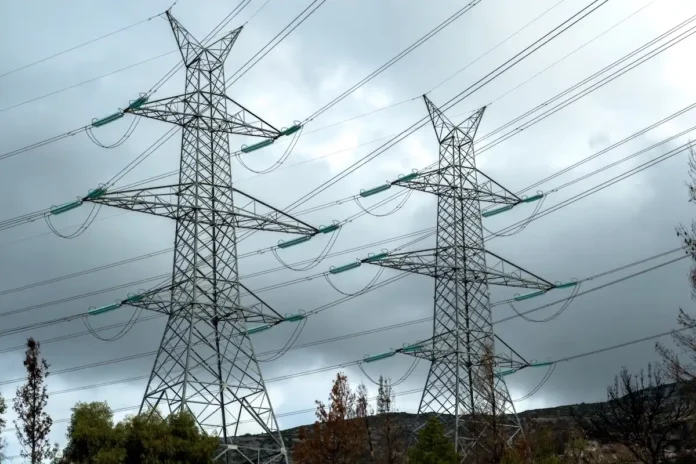
Electricity reaches homes through Greece’s national distribution network of overhead and underground cables, and the way power is managed is split cleanly into two separate functions. One company owns the physical lines and is responsible for delivering electricity to your meter; another company serves as your chosen supplier, with whom you hold a contract and pay your bi-monthly bill.
You have no choice over the network operator, but you do choose your supplier. This distinction matters practically: when something goes wrong with the physical infrastructure, a line comes down in a storm, or a neighborhood loses power, you contact the network operator, not your supplier. HEDNO’s customer service and fault-reporting line is 11500, operates around the clock, and is worth saving in your phone before you actually need it.
Setting Up Your Account
Before opening an account with any electricity provider, you will need a few core documents that appear regularly on every newcomer’s administrative checklist. Registration requires your AFM (your Greek tax number), along with your passport or residence documentation. You will also need a copy of your lease agreement or proof of property ownership, as suppliers cannot open an account in your name without these.
You will also need the unique electricity supply number for your property, known in Greek as the Arithmos Parochis. This reference number identifies your home’s specific physical connection point and is stamped directly on the meter box or printed on any previous utility bill for the property. Your landlord or estate agent can easily provide it during handover.
Keep it written down somewhere accessible, as every supplier and the network operator will ask for it during any customer service interaction.
If a property has been vacant for an extended period and the previous contract was officially closed, the physical supply may have been disconnected. In that case, you must request a formal reconnection through HEDNO. Your chosen supplier can usually guide you through the process, though it typically takes a few business days and may require a brief scheduled visit from a technician. These reconnections generally carry a small administrative fee in the range of €50 to €100.
If you are moving into a property where an active contract already exists under a previous occupant’s name, the process is simpler: you open a new contract in your own name with your chosen provider, which automatically triggers the closure of the old account.
Choosing a Supplier
The Greek electricity market has been gradually liberalised over the past two decades, with competition expanding significantly in recent years. Multiple providers now compete for customers, offering tariffs designed to suit a range of household consumption patterns.
Public Power Corporation, widely known as PPC or DEI, is the former state monopoly and remains the dominant supplier for most Greek households. Many newcomers choose PPC as their starting point because it is the most familiar and straightforward option. It maintains a wide network of customer service centres across the country, offers a functional mobile app for account management, and has staff at many branches who can assist in basic English.
Among the main independent alternatives, Protergia (part of the METLEN energy group and the largest private electricity supplier in Greece) has developed a strong reputation among expatriates for its reliable service and user-friendly online management. Heron, NRG, Zenith, and Volton are also active competitors worth considering. Shopping around can yield meaningful long-term savings, particularly for households with higher energy consumption. That said, it is often most practical to evaluate alternative providers after your first few months in the property, once you have a realistic picture of your seasonal usage patterns.
Some smaller non-interconnected islands still have limited supplier competition and rely heavily on PPC, although that number continues to shrink as new submarine cable interconnections are completed. New residents on certain remote islands may therefore find fewer options than on the mainland.
Understanding the Plans
A variable-rate plan means your price per kilowatt-hour moves month by month in line with the wholesale energy market. When European energy prices fall, your bill may decrease accordingly, but when demand spikes in winter or global gas prices rise, costs can climb significantly. For those living on a fixed retirement income, this unpredictability can create uncomfortable financial volatility, especially if you rely heavily on air conditioning or electric heating.
A fixed-rate plan locks your unit price for a set contractual period, typically 12 months. Your total bill will not be entirely insulated from all fluctuations, as regulated infrastructure charges and municipal taxes sit outside the supplier’s control, but the largest variable component, the supply charge itself, stays stable. The trade-off is that if market prices fall significantly during your contract term, you will not benefit from those reductions, and early termination penalties may apply if you switch before the contract expires.
For newcomers still learning their seasonal energy habits, a fixed-rate plan during the first year can provide useful financial predictability.
Comparing Plans and Costs
The most reliable way to compare live market rates is through the official tariff platform operated by Greece’s energy regulator, RAAEY, accessible at energycost.gr. By entering your postcode and an estimate of your expected monthly consumption, you can compare active tariffs side by side. The interface is primarily in Greek, but standard browser translation tools make it reasonably straightforward to navigate.
When comparing plans, keep in mind that the main figure varying between suppliers is the underlying supply charge, the price per kilowatt-hour consumed. Most other charges on the bill, including network distribution fees, public service levies, VAT, and municipal taxes, are set nationally and remain broadly similar regardless of which supplier you choose. Accurate comparisons should therefore focus primarily on the supply charge, while also noting any discounts or promotional conditions attached.
Bills are issued every two months. For a couple in a standard two-bedroom apartment using seasonal air conditioning, ordinary appliances, and electric water heating, bi-monthly bills often fall in the range of approximately €80 to €150 during moderate seasons, though costs can rise considerably during periods of heavy summer cooling or winter electric heating.
Most suppliers offer small discounts for paperless billing and automatic direct debit (pagia entoli in Greek). Bills can generally be paid through online banking, local ATMs, ELTA post offices, or authorised payment points such as convenience stores.
Switching Suppliers
Once you are settled and have a clearer sense of your annual consumption, switching suppliers is relatively straightforward if a more attractive tariff comes along. You contact the new supplier directly, provide your meter number, and sign a new contract. The incoming provider handles the transition without any need to contact your old supplier yourself. Your physical electricity supply is not interrupted, the switch typically takes effect within two to three weeks, and there is no switching fee under Greek law.
***
Everything You Need to Move to Greece, All in One Guide
If you’re looking for everything you need to know about moving to Greece in one place, check out the Greece Retirement Blueprint. This 104-page guide covers key topics like finance, housing, healthcare, residency, and taxation—available directly from our website.