
The ancient town at Rhodes island was the first to attract foreign celebrities
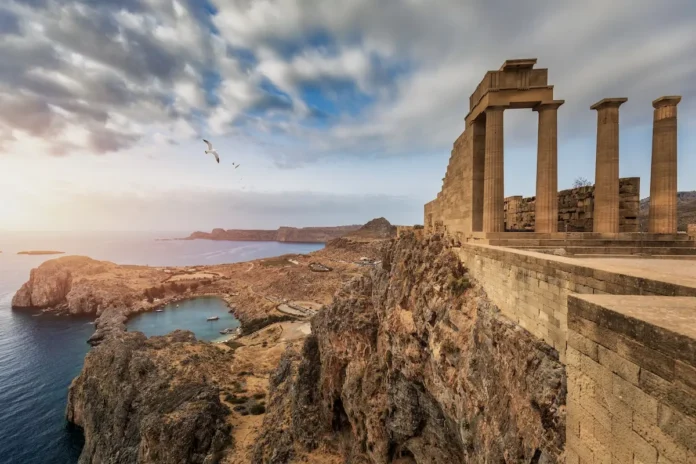
On the island of Rhodes, one village has been continuously inhabited since antiquity — and you can still move in, if you can afford it. You do not visit the Acropolis of Lindos. You live beneath it. Every morning, from whatever window your house offers, the Temple of Athena Lindia is there on its 116-metre rock, in the same position it has occupied since the 10th century BC. The cobblestones under your feet when you walk to buy bread are the same stones that organised this settlement in the Middle Ages, following a street plan that has not been revised since antiquity. There is no museum to enter, no ticket to buy. The ancient world here is simply the fabric of the place.
A Continuity Built in Stone
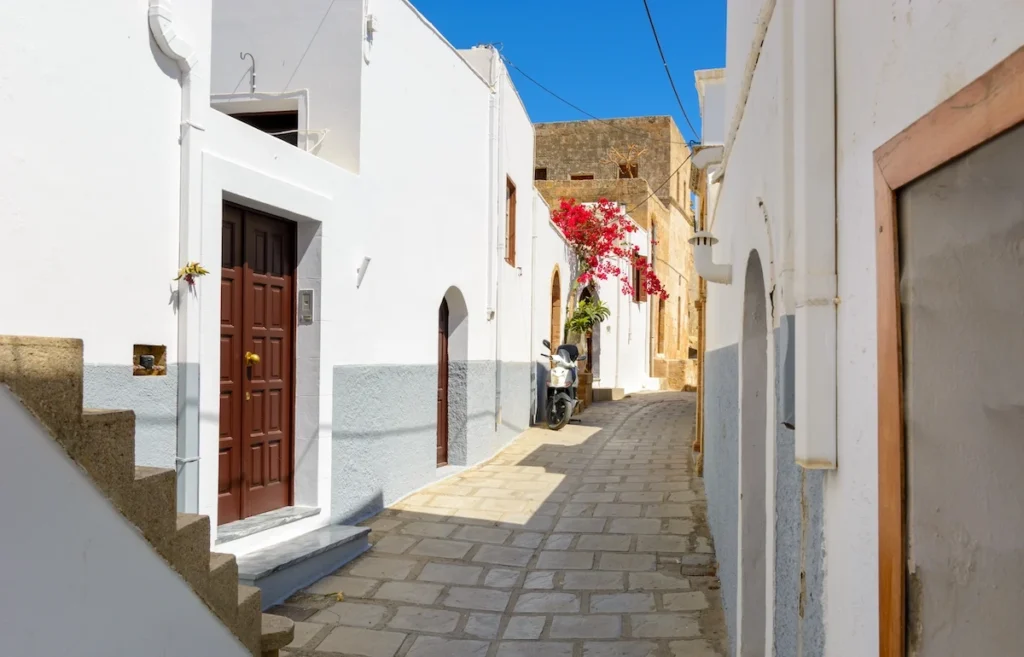
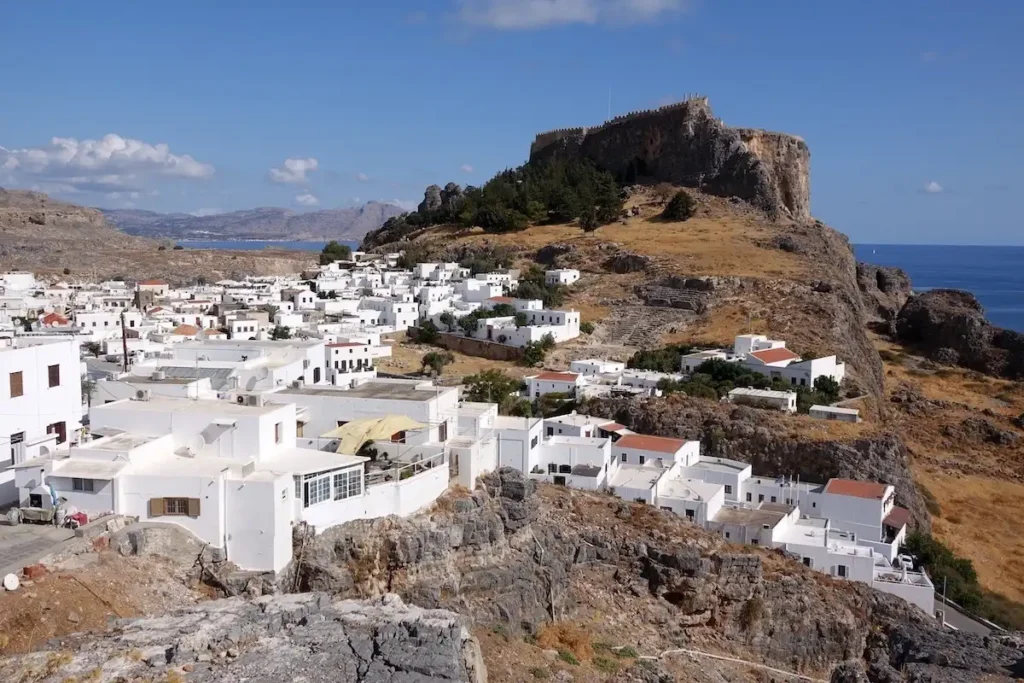
The houses that cluster at the foot of that rock were built by sea merchants in the 17th century, and they were built to last. The Captain’s Houses — with their thick defensive walls and their intricate votsaloto courtyards of hand-laid black-and-white pebble mosaic — were designed for dynasties, not seasons. They have outlasted their original owners by four centuries. The architecture is more Cycladic than Dodecanese in feeling: white, compact, vertical, shaped by the hill it climbs rather than the sea it faces. Motorcycles and cars are technically banned from the settlement’s alleys, though not everyone observes the rule with equal enthusiasm. You are still expected to walk, as everyone here has always walked.
The Archaeological Service enforces a different kind of continuity with considerably more rigour. Even a minor exterior repair requires a formal permit. Residents become custodians by law, and most, after a short period of adjustment, come to regard this not as a burden but as a contract with the place itself.
The Village That the World Discovered First
From the 1950s onward, Lindos became the Greek headquarters of the international jet set — not as a resort, but as a place to actually inhabit. Onassis, Niarchos, and Kennedy were regulars. Giovanni Agnelli could be found at a taverna table in floral swim trunks debating the day’s menu. Sophia Loren, Barbra Streisand, and the members of Pink Floyd were part of the ordinary scenery — so ordinary that a waiter once refused to serve the band, dismissing them as unkempt strangers whose fame meant nothing against the village’s own internal rhythm.
But the more lasting transformation came from an altogether different kind of visitor: the ordinary northern European woman on a summer holiday. The local young men had a reputation — and a philosophy, captured in the half-boastful, half-comic motto of the Greek kamaki: sea, sun, sand and sex. What began as a summer flirtation frequently turned into a winter invitation, and the winter into a life. Many of these women never went home. They learned Greek, raised children, buried husbands, and became Lindians. The phenomenon — affectionate, complicated, and very real — was chronicled decades later in a documentary; those who want to understand what these cross-cultural romances built, and what they cost, will find it told with rare honesty in Colossi of Love. Their legacy is a community that switches languages mid-sentence and holds passports from half of northern Europe.
Climate and Practicalities
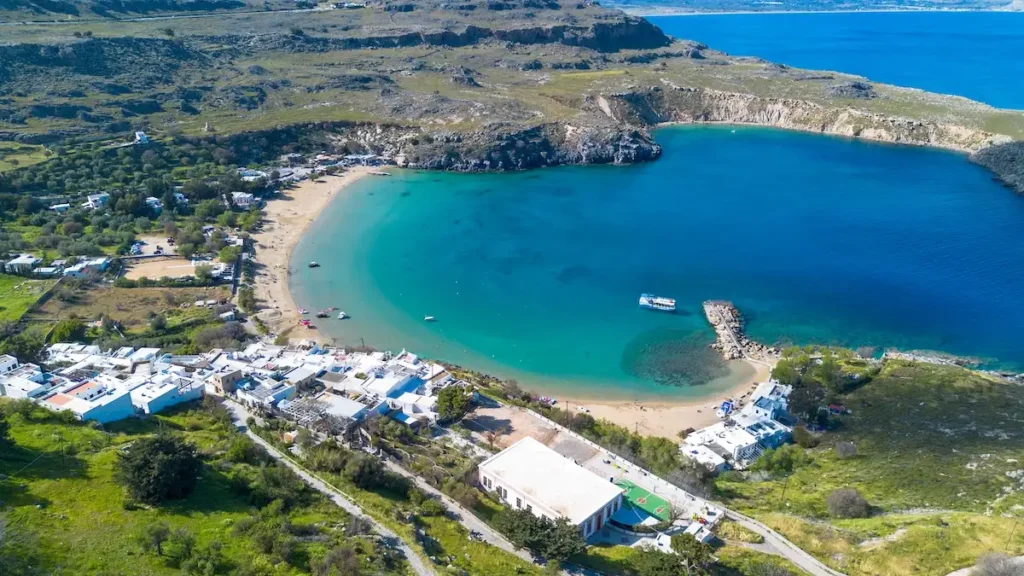
Lindos benefits from one of the most sheltered microclimates on Rhodes. Summers are long and reliably hot, with July and August averaging 33°C (91°F) by day, cooled by the meltemi wind off the sea. Spring and autumn are mild and luminous — April sits around 18°C (64°F), October around 23°C (73°F). Winters are short and gentle by northern European standards, rarely dropping below 10°C (50°F), with enough clear days to make the Acropolis a year-round morning companion rather than a seasonal one.
The nearest full hospital is in Rhodes Town, approximately 55 kilometres away — around an hour by road. For a village of this size, the distance is standard, but it is a consideration for older residents or those with ongoing medical needs.
The Price of a 3,000-Year-Old Address
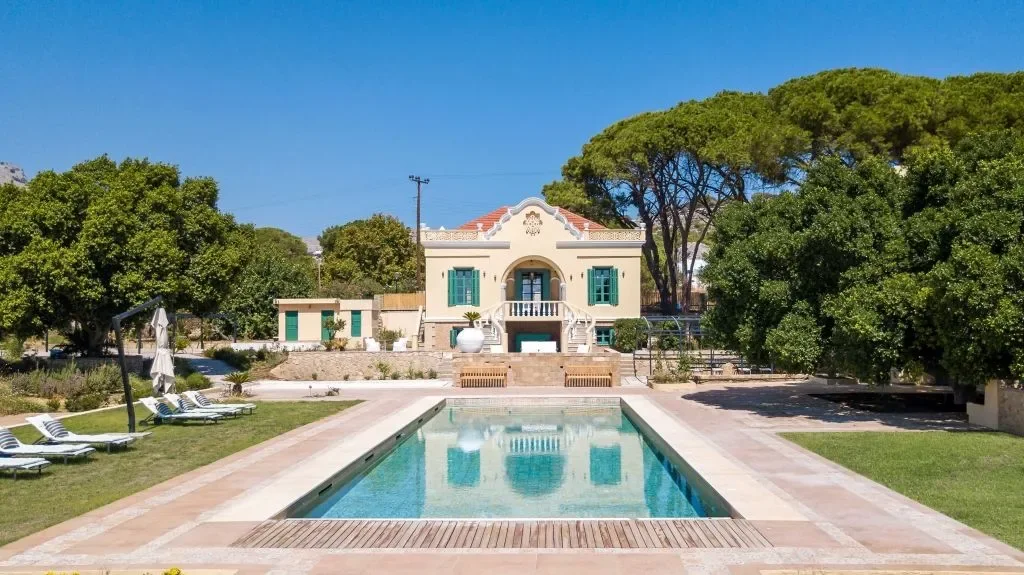
Lindos is the most expensive address in the Dodecanese, and inventory is almost permanently empty — listings within the settlement routinely number zero. When a property does appear, a 40-square-metre studio opens at €300,000. A Captain’s House with a pool reaches €4 million. The cost per square metre sits at around €10,000.
That figure reflects something that cannot be reproduced elsewhere at any price. You are not buying a view of an archaeological site. You are buying a place inside an unbroken chain of habitation that stretches back three millennia — the right to wake up each morning under the same Acropolis, on the same stones, in the same arrangement of alleys that has served this hill since before the classical world gave it a name.
Elsewhere in Greece, the ancient world can be a neighbour at a modest price. In Lindos, it demands a serious one.
***